What an Ion Exchange System Does in a Fertilizer Plant
An ion exchange system for fertilizer wastewater is a reversible, stoichiometric separation in which a target ion — NH4+, NO3-, F-, PO43-, UO22+ — displaces a benign counter-ion (H+, Na+, Cl-, OH-) fixed to a synthetic polymeric bead (Condorchem, 2026). The working envelope is bounded: a standard gel-type resin retains roughly 50 g CaCO3 per litre of resin before exhaustion, which makes the process economic on dilute streams — fertilizer condensates at 200–3,000 mg/L NH4+, scrubber blowdown at 10–200 mg/L F-, and phosphogypsum pond water at 1,000–5,000 mg/L PO43- — rather than on raw acid or slurry streams.
Where biological nitrification-denitrification stalls above ~2,000 mg/L NH4+ and is inhibited by F- above ~20 mg/L, and reverse osmosis loses recovery above 3,000 ppm TDS, ion exchange sits in the middle band: selective, regenerable, and compatible with nutrient recovery. Feaster and Hawks at Lawrence Livermore National Laboratory (2025) demonstrated the same logic on agricultural runoff using ion-exchange-membrane electrodialysis to split nitrate-rich water into a clean permeate and a concentrated fertilizer precursor, validating the commercial case for resin-based recovery rather than destruction.
Influent Map: Contaminants in Ammonia, Urea, NPK and Phosphoric Acid Wastewater
The first design step is matching the resin envelope to the actual stream. Fertilizer plants generate four chemically distinct wastewater sources, and the contaminant windows below set the design envelope:
| Stream | Key contaminants & typical range | Temperature / pH | Resin pre-treatment required |
|---|---|---|---|
| Ammonia / urea plant condensate | NH4+ 200–3,000 mg/L; free CO2 50–400 mg/L; low TSS | 30–60 °C; pH 7–9 | Cool to <40 °C; CO2 degasser; residual Cl2/H2O2/O3 stripper |
| NPK granulation scrubber blowdown | NH4+, NO3-, F- 10–200 mg/L; SS 200–800 mg/L | 25–45 °C; pH 5–8 | multi-media pretreatment filter + DAF for SS and FOG |
| Phosphoric acid plant / phosphogypsum pond water | F- 1,500–8,000 mg/L; PO43- 1,000–5,000 mg/L; SO42- 2,000–6,000 mg/L | 25–40 °C; pH 1–3 | Lime/silica co-precipitation to drop F- below ~50 mg/L; cartridge filtration |
| Cooling-tower blowdown | NH4+ 20–150 mg/L; Ca/Mg hardness 400–1,200 mg/L as CaCO3; silica 20–80 mg/L | 25–35 °C; pH 7–8.5 | Side-stream filtration; chlorine reduction |
Condorchem (2026) flags that synthetic resins are damaged by oxidants and high temperatures, so condensate streams must be cooled below ~40 °C and any residual Cl2, H2O2, or O3 stripped before the bed. Suspended solids, fats-oils-grease, and hardness must be knocked down with a DAF and multi-media pretreatment filter to prevent irreversible fouling. Bolto and Pawlowski (Springer, 1985) established the recovery-economics baseline for fertilizer duty: roughly 0.3% of global ammonia production and 1.3% of nitric acid is lost to wastewater, a scale that justifies a regeneration loop rather than a once-through disposal path.
Resin Selection Matrix: Which Resin Fits Each Fertilizer Contaminant
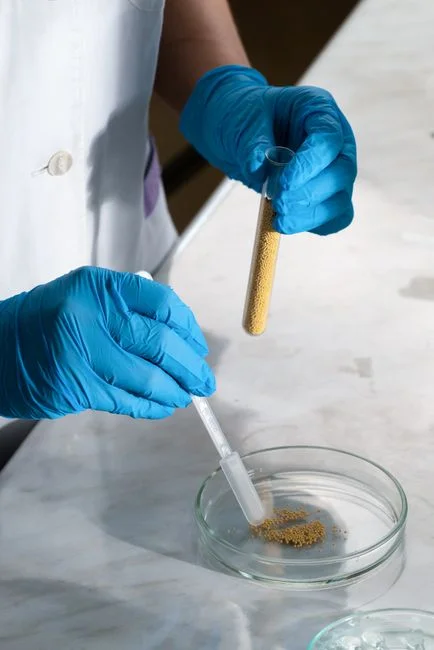
Each fertilizer contaminant has a preferred resin family. The matrix below is the working tool for selection; cycle capacities reflect manufacturer's nominal operating capacity at 10–20 BV/h service flow.
| Contaminant | Resin family | Form / regenerant | Typical influent (mg/L) | Typical effluent (mg/L) | Working capacity |
|---|---|---|---|---|---|
| NH4+ (ammonia condensate) | Strong-acid cation (SAC), gel-type | Na+ form / NaCl | 200–3,000 | <10 | 1.0–1.8 eq/L |
| Ca, Mg, NH4+ (cooling-tower blowdown) | Weak-acid cation (WAC) | H+ form / HCl or H2SO4 | Hardness 400–1,200 as CaCO3 | <20 as CaCO3 | 2.0–3.5 eq/L |
| NO3- (NPK polishing) | Strong-base anion (SBA), Type I | Cl- form / NaCl | 50–200 | <5 | 0.8–1.2 eq/L |
| PO43-, SiO2 | Weak-base anion (WBA) | Free base / NaOH | 20–500 | <2 | 1.2–1.6 eq/L |
| F-, trace U, heavy metals | Chelating (iminodiacetic, aminomethylphosphonic) | H+/Na+ form / HCl or H2SO4 | F- 10–50 (post-precipitation); metals 0.5–10 | F- <2; metals <0.1 | 0.5–1.0 eq/L |
SAC in Na+ form is the workhorse for ammonia capture: regeneration with NaCl yields an (NH4)2SO4 or NH4Cl brine that can be sold directly as 10–15% N liquid fertilizer — a recovery loop, not a waste. WAC is preferred on high-hardness, high-alkalinity streams where SAC would waste acid; co-removes Ca, Mg, and ammonia-bound alkalinity at a higher working capacity (Condorchem, 2026). SBA Type I in Cl- form polishes nitrate on NPK streams to <5 mg/L from 50–200 mg/L influent using NaCl regeneration. WBA is selective for phosphate and silica at lower chemical cost than SBA but cannot strip strong acids. Chelating resins — iminodiacetic and aminomethylphosphonic functional groups — drop fluoride below 2 mg/L and recover trace uranium and heavy metals from phosphogypsum pond water, a duty Condorchem specifically highlights as the differentiating application for modified chelates. For hardness pretreatment upstream of the ion exchange train, an industrial water softener skid sized to the cooling-tower bleed keeps the SAC bed from being consumed by Ca/Mg.
Process Train and System Configuration
Resin choice dictates the skid layout. A single-pass SAC + SBA train polishes ammonia condensate to demineralised quality, with a downstream mixed-bed polisher producing <0.1 µS/cm rinse water for boiler-feed reuse. On higher-TDS NPK streams, a two-pass configuration is standard: first-pass SAC strips NH4+ and hardness, an intermediate forced-draft degasser removes CO2 to lower the second-pass anion load, then a second-pass WBA + SBA pair strips phosphate, silica, and nitrate to <5 mg/L combined anion residue.
Counter-current regeneration (Schwebebett, UPCORE, or Amberpack-style packed beds) delivers 20–40% lower regenerant consumption and 10–20% better effluent quality than co-current, at the cost of a more complex multi-port valve nest. Continuous duty during regeneration is handled with twin-tank lead-lag arrangement — the lead vessel is online while the lag vessel is on standby, exhausted, or regenerating — sequenced by an automatic regenerant dosing skid with conductivity and flow interlocks. A resin and control valve spares package on the critical-inventory list keeps mean-time-to-repair on multi-port valves under four hours.
Regeneration, Brine Management and Nutrient Recovery Loop
The accounting question that determines whether ion exchange survives a CAPEX review is what happens to the spent brine. At a fertilizer plant, the answer is almost always "recover and sell."
| Resin | Regenerant | Spent-brine composition | End use / fate | Brine volume per cycle |
|---|---|---|---|---|
| SAC (Na+ form) | NaCl 8–12% | NH4Cl or (NH4)2SO4; 120–180 g NaCl / L resin per cycle on 1,000 mg/L NH4+ | Liquid fertilizer (10–15% N as NH4); direct to granulation or off-take | 3–5 BV |
| WBA | NaOH 4–6% | Na3PO4 solution | Routed to evaporation/crystallisation, returned to NPK granulation | 2–4 BV |
| SBA (Cl- form) | NaCl 6–10% | NaNO3 brine; 80–150 g NaCl / L resin on 100 mg/L NO3- | Liquid fertilizer feedstock; or routed to LLNL-style electrodialysis for concentration | 3–5 BV |
| Chelating (IDA / AMP) | HCl or H2SO4 5–8% | Metal sulphate/chloride concentrate; F- desorbate | Metal recovery off-take; F- routed to lime precipitation | 3–6 BV |
SAC regeneration produces (NH4)2SO4 / NH4Cl that is directly marketable as liquid fertilizer, the recovery argument Bolto and Pawlowski (1985) used to justify N-recovery economics at scale. WBA regeneration with NaOH recovers phosphate as a sodium phosphate solution, which can be crystallised and returned to the granulation loop. Where off-take is not viable — remote sites, low-tonnage operations — spent brine is reduced in a vacuum evaporator (Condorchem, 2026) for zero-liquid-discharge compliance; the energy penalty is high (50–80 kWh/m3 evaporated) but the volume reduction is 90–95%.
Operating Cost and ROI Snapshot for 2026
For a 10 m³/h fertilizer-condensate ion exchange train in 2026, CAPEX lands in a USD 180,000–350,000 envelope — skid, resin first-fill, dosing, and instrumentation — based on packaged SAC/SBA system quotes. OPEX is regenerant-dominated: NaCl/NaOH/HCl at USD 0.6–1.2 per cubic metre of treated water, resin life 3–5 years with proper pretreatment. Equivalent RO on the same stream loses 25–35% of feed to brine and consumes 0.4–0.7 kWh/m³, and its brine cannot be marketed as fertilizer. Ion exchange at 50–200 mg/L target-ion windows is usually cheaper once nutrient recovery is monetised, especially at sites with on-site granulation that can absorb the (NH4)2SO4 directly.
The compliance dividend is the second leg of the ROI. Sub-10 mg/L NH4+ and <2 mg/L F- discharge meets EU IED BAT-AELs for the fertilizer sector (per EU 2017/2117 conclusions) and Indian CPCB / MoEFCC fertilizer effluent thresholds, removing consent-renewal risk. Budget for a resin and control valve spares package at 8–12% of CAPEX for a two-year commissioning buffer; this is the line item most often under-scoped in vendor quotes. For a deeper dive on the biological side of the upstream train, see the AAO biological nutrient removal reference and the struvite scaling field guide for crystalliser-side losses, and the phosphorus removal engineering guide for the front-end chemical-precipitation step that protects the WBA bed.
Frequently Asked Questions
Which resin removes ammonia from fertilizer condensate most economically?
Strong-acid cation (SAC) gel-type resin in Na+ form, regenerated with NaCl, is the standard. On a 1,000 mg/L NH4+ condensate it delivers <10 mg/L effluent at 1.0–1.8 eq/L working capacity, and the spent NH4Cl brine is sold as 10–15% N liquid fertilizer, turning an OPEX line into a revenue line.
How low can ion exchange push fluoride and phosphate on phosphogypsum pond water?
A two-stage train — lime/silica co-precipitation to drop F- to 10–50 mg/L, followed by an iminodiacetic chelating resin — reliably delivers F- <2 mg/L and trace uranium/heavy metals to <0.1 mg/L. WBA on the parallel anion leg polishes PO43- to <2 mg/L from 20–500 mg/L influent.
What pretreatment does an ion exchange bed require on NPK scrubber blowdown?
Suspended solids must drop below 10 mg/L and free chlorine below 0.1 mg/L before the bed to prevent resin fouling and oxidative damage. A DAF + multi-media filter train plus an activated-carbon polisher for residual oxidant is the standard package; the resin supplier will void the warranty on chlorinated feed without it.