Why Struvite Scaling Is the Most Expensive Plug in the Plant
Struvite (MgNH₄PO₄·6H₂O) is the white, sand-like deposit that forms whenever warm, magnesium-rich, ammonium-rich, and phosphate-rich liquor sits at pH above 7—and it is routinely the single most expensive unplanned-maintenance event at a plant with anaerobic digestion. The Ohlinger & Mahmood OWP/CSUS model, still the 2026 reference for scaling potential, frames the cost impact in three categories that map directly to an operator's P&L: reduced capacity (a 6 mm scale layer in a 100 mm centrate pipe cuts cross-section by 24% and roughly doubles pumping energy per unit flow), equipment damage (impeller erosion in centrifuges, heat-exchanger tube thinning, valve seat scoring), and system downtime (digester shutdown for descaling typically costs $20,000–$80,000 per day at a 50 MGD plant once lost treatment capacity and emergency hauling are added up).
The unit processes where struvite shows up are predictable: anaerobic digester piping and recirculation loops, dewatering centrate lines, post-digestion heat exchangers, sludge holding tanks, and any phosphorus-recovery side stream. The working rule of thumb is simple—anywhere warm (>25 °C), Mg-rich, NH₄-rich, and PO₄-rich liquor flows and pH rises above 7, struvite can and will form.
The Chemistry Behind Struvite — Just Enough to Fix It
Struvite precipitation depends on a specific chemical equation and pH window. The activity quotient for struvite is QSP = {Mg²⁺}{NH₄⁺}{PO₄³⁻}, and the conditional solubility product is Ksp ≈ 10⁻¹³·²⁶ at 25 °C (per the OWP/CSUS model). When QSP exceeds Ksp, the liquor is supersaturated and struvite will precipitate; when QSP sits at or below Ksp, existing crystals will dissolve. Most centrate streams at a municipal WWTP run QSP 10–1000× above Ksp, which is why scaling is not a question of if but where.
pH is the master variable. Below pH 7, struvite is highly soluble and risk is low; between pH 7 and 10.7, the liquor is supersaturated and scaling accelerates, peaking near pH 8.5–9.0 where PO₄³⁻ speciation is most favorable; above pH 10.7, PO₄³⁻ speciation shifts and risk drops again (per Temesgen's 2024 ScienceDirect review of pH-window kinetics). Temperature matters too—a 10 °C rise in centrate roughly doubles the struvite solubility drop, which is why warm digesters, side-stream heat exchangers, and centrate lines leaving the dewatering building scale first. One more label to internalize: MAP (magnesium ammonium phosphate) is the engineering and fertilizer-grade synonym for struvite—vendors and chemical suppliers use the two terms interchangeably, so a "MAP reactor" and a "struvite reactor" are the same piece of equipment.
Symptom → Cause → Diagnostic → Fix Decision Table
Operational symptoms can be mapped directly to chemical causes to streamline the repair process. Run your symptom down the first column, confirm with the on-site diagnostic, and apply the fastest fix in column four before the night shift loses another heat exchanger.
| Symptom | Most Likely Cause | On-Site Diagnostic | Fastest Fix |
|---|---|---|---|
| Heat-exchanger fouling / flow loss on centrate | Centrate pH 7.5–8.5 with high PO₄³⁻ | Measure pH and orthophosphate on centrate at HX inlet | Dose sulfuric or hydrochloric acid to pH 6.5–7.0 at the HX inlet via an automatic chemical dosing system for pH suppression and anti-scalant injection |
| White gritty deposit in centrifuge cake or centrate | Mg release from cell lysis during dewatering | Measure Mg²⁺ in centrate, verify > 50 mg/L | Switch to polymer-only dewatering or install a struvite precipitation reactor upstream of the centrifuge |
| Digester gas piping condensate blockage (rare but documented) | Ammonia stripping raising pH in condensate traps | Check condensate pH > 8 and white crystals at low points | Install condensate flush with low-pH water (pH 5–6) on a daily timer |
| Phosphorus recovery reactor plugged | Over-dosing MgCl₂ or insufficient wash cycles | Measure residual Mg > 200 mg/L in reactor effluent | Reduce Mg feed to 1.0–1.2× stoichiometric, add weekly reactor wash cycle |
| Storage tank / pipe scaling at ambient temperature | Seasonal pH rise in centrate return line | Confirm pH 7.5–9.0 in return line over 24 h | Install an airlift eductor on the return line or continuous pH trim with CO₂ |
The summary version for the wall: if you see white orthorhombic crystals, the pH is above 7, and QSP is more than 1.5× Ksp, do not just hydroblast and walk away—suppress the chemistry, or the crystals will be back inside 30 days.
Field Diagnostic Procedure You Can Run in 30 Minutes
This field procedure provides a standardized sequence for technicians to diagnose scaling events unsupervised.
Step 1 — Visual inspection. Log the location, color, and crystal morphology of any deposit. White orthorhombic crystals are struvite; white amorphous or powdery scale is usually calcium carbonate or calcium phosphate. Note the pipe orientation—scaling on the top inner surface of a horizontal run points to settled crystals, scaling all around points to bulk precipitation.
Step 2 — Inline measurement. Measure pH, temperature, and conductivity at the scaling location and 10 m upstream. A 0.5+ pH rise across a pipe run is the smoking gun for in-pipe precipitation, and a 5 °C temperature drop from a heat exchanger to the next sample point confirms the HX as the supersaturation source.
Step 3 — Grab samples for the lab. Pull orthophosphate (PO₄³⁻), NH₄⁺, Mg²⁺, Ca²⁺, alkalinity, and TSS at the same locations. Calculate QSP using an online struvite scaling potential calculator (the OWP/CSUS spreadsheet is the free standard). If QSP > 1.5 × Ksp and pH > 7.3, you have a confirmed scaling event, not a one-off.
Step 4 — Cross-check operating logs. Pull WAS flow, dewatering schedule, digester temperature, and any recent polymer or anti-scalant dose change. A new polymer, a digester temperature drop, or a centrate flow reroute are the usual triggers.
Step 5 — Decide and act. Chemical suppression, mechanical cleaning, or design change. Use the rule: if QSP > 1.5 × Ksp and pH > 7.3, do not just clean—suppress the chemistry or change the hydraulics, otherwise you will be back in 30 days.
Removal Methods: Mechanical, Chemical, and Hybrid
Scale removal options are categorized by mechanical, chemical, and hybrid methods based on equipment geometry and water chemistry.
| Method | Typical Conditions | 2026 Cost Range | Best For |
|---|---|---|---|
| Hydroblasting (mechanical) | 3,000–10,000 psi, rotating nozzle | $80–$150 per metre of pipe cleaned (contract) | Thick deposits in straight pipe runs, digester overflow lines |
| Dilute HCl or sulfamic acid (chemical) | 5–10% acid, 1–4 h circulation at 30–45 °C | $15–$40 per kg of scale removed (chemical only) | Heat-exchanger bundles, complex geometry, scale in valves |
| Low-pressure acid + polymer dispersant (hybrid) | 2–4% acid, 1–2 mg/L polyacrylate dispersant, 6–12 h | $25–$55 per kg of scale removed | Recirculation loops, plate heat exchangers, sensitive metallurgy |
One hard rule: never use sulfuric acid in a centrate line with high calcium. Gypsum (CaSO₄) scaling is a worse problem than struvite—lower solubility, harder crystals, and it forms in the acid-cleaning circuit itself. Always confirm Ca < 200 mg/L before authorizing a sulfuric acid circulation, or switch to hydrochloric.
Prevention: Stop Struvite Before It Forms in 2026
Prevention strategies focus on long-term stability through chemical, mechanical, or biological controls. The 2026 playbook is built in three layers, and the right combination depends on flow rate, downstream discharge limits, and whether you can sell the recovered product.
| Strategy | 2026 CAPEX (5–50 m³/d centrate) | 2026 OPEX | Payback Drivers | P-Recovery Credit |
|---|---|---|---|---|
| pH suppression (acid or CO₂ to pH 6.5–7.0) | $30K–$120K (dosing skid + injection quill) | $0.10–$0.25 per m³ of centrate | Avoided cleaning + avoided downtime | None |
| Side-stream fluidized bed reactor (controlled precipitation, 1.0–1.2× stoich MgCl₂) | $80K–$400K | $20–$60 per m³ (chemical + power) | Recovered struvite revenue + avoided cleaning | $80–$200 per tonne of recovered struvite |
| Airlift eductor + high-velocity flush on centrate return | $15K–$60K per site | ~$0 (pump air only) | Avoided cleaning + reduced pump cavitation | None |
Anti-scalants (polyacrylates, phosphonates) at 2–10 mg/L are a last-resort chemical option—they slow nucleation but do not stop it, and they add OPEX plus a downstream phosphorus load that can blow your NPDES permit. For industrial high-strength streams (poultry, rendering, landfill leachate), Mg:N:P ratios are unbalanced relative to municipal digesters; side-stream precipitation is almost always more economic than continuous acid dosing because the struvite you produce is a sellable co-product. For a deeper look at integrating these strategies with upstream dewatering, see the sludge treatment engineering guide for industrial wastewater and the sludge thickener installation and commissioning field guide; a plate and frame filter press for sludge dewatering upstream of struvite control is often the most economical place to drop the bulk P load before it ever reaches the centrate line.
Struvite Recovery as a Side Benefit (P-Rich Era 2026)
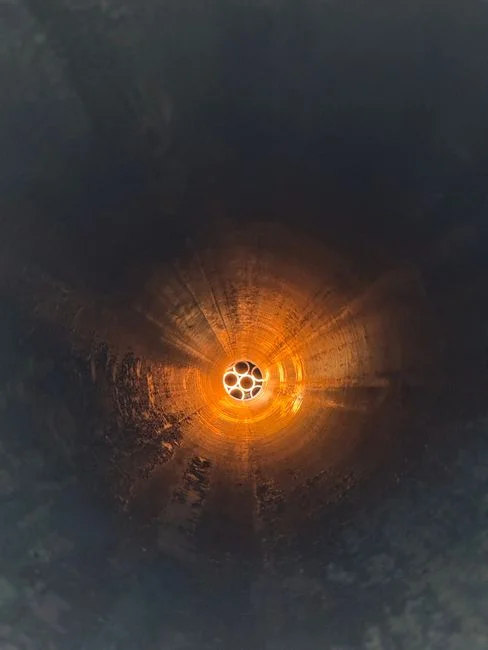
Recovered struvite functions as a 5-5-10 (N-P-K-Mg) slow-release fertilizer with EU and US fertilizer registration pathways active in 2026. The recovered product trades at $80–$200 per tonne as bulk fertilizer—higher for premium horticultural grades. Phosphorus is on the EU Critical Raw Materials list and on the US DOE critical minerals list, so recovery is increasingly tied to permit compliance, not just economics. In the 2026 capex environment, the goal is to stop struvite from forming in the wrong place and recover it where it can be harvested.
Frequently Asked Questions
What pH prevents struvite scaling? The operational target is pH 6.5–7.0 at the point of highest supersaturation; below pH 7 struvite is highly soluble, between pH 7 and 10.7 supersaturation is high and scaling risk peaks near pH 8.5–9.0, and above pH 10.7 PO₄³⁻ speciation shifts and risk drops (per Temesgen's 2024 review).
How do you