

Why the DAF vs Clarifier Question Is Different for Semiconductor Wastewater
Semiconductor fab wastewater is not food-plant or refinery wastewater, and the standard DAF-vs-clarifier comparisons in the top search results miss this. The four dominant fab streams behave nothing like FOG-laden food effluent or pulp-mill fiber slurry: CMP slurry is high in colloidal silica and ceramic with low FOG; copper-bearing rinse is low-TSS but carries 1–50 mg/L dissolved copper; photoresist developer waste pushes TOC to 500–5,000 mg/L with variable pH (10–13); and equipment-cleaning waste delivers intermittent slugs of FOG and IPA/NMP. Most Athens-area operations are precision-assembly or back-end test/packaging rather than front-end wafer fab, so photoresist, IPA/NMP, and copper rinse tend to dominate the daily mass balance, but the same DAF-vs-clarifier logic applies. The particle-specific-gravity profile (CMP at 1.0–1.3, photoresist flakes below 1.0) is the decisive variable, and the existing product literature for the DAF system cites food, paper, and petrochemical service (HydropureWater, 2026), leaving fab coverage as a clear gap. For 2026 Athens fabs the question is not "which is cheaper" but "which protects the downstream UF/RO reclaim train," and that re-framing changes the answer.
Athens Fab Wastewater in 2026: Stream Characteristics That Drive the Decision
Four fab streams drive the unit-selection question, and each has a different settling-vs-floating tendency that maps directly to DAF or clarifier economics. The table below summarizes typical 2026 values from Athens-area precision-manufacturing sites; particle specific gravity (SG) is the single most predictive column for primary-unit choice.
| Stream | TSS (mg/L) | Particle SG | Key Contaminant | pH | DAF-Favored? |
|---|---|---|---|---|---|
| CMP slurry waste | 200–2,000 | 1.0–1.3 (colloidal silica) | SiO₂, CeO₂, alumina | 6–9 | Yes (borderline settle) |
| Copper-bearing rinse | <50 | Dissolved Cu, low TSS | Cu 1–50 mg/L | 2–5 | Partial (needs precip. first) |
| Photoresist developer waste | 100–500 | <1.0 (buoyant flakes) | TOC 500–5,000 mg/L | 10–13 | Yes (will not settle) |
| Equipment cleaning FOG/sludge | 500–3,000 | <1.0 (oils, IPA) | FOG, NMP, IPA | 5–9 | Yes |
Two operating realities matter for Athens in 2026. First, summer inlet-water temperatures of 22–28 °C slightly lower DAF saturation efficiency, so operators run a 25–30% recycle ratio at 4–6 bar to keep micro-bubble density high (HydropureWater engineering data, 2025). Second, HF-bearing streams must be neutralized to pH 6.5–8.5 before the polymer stage; outside that window the floc is too weak to hold the bubble blanket and the float collapses (HydropureWater engineering data, 2025). Athens fabs running gravity clarifiers on CMP slurry report floating-blanket carryover to the downstream RO, which is the failure mode that drives most retrofits to DAF.
How Each Technology Works on Fab Wastewater
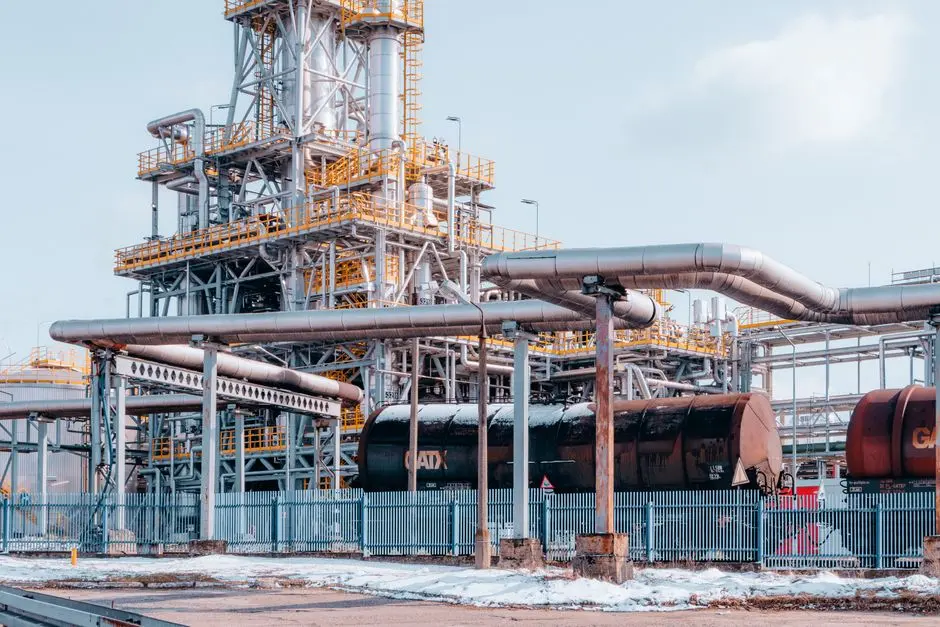
DAF and a lamella clarifier separate on different physics, and the difference matters for low-SG particles. A DAF unit pressurizes 10–30% of clarified effluent to 4–6 bar, saturates it with air, then releases it into the flotation tank at atmospheric pressure. The pressure drop generates 20–100 μm micro-bubbles that attach to flocculated CMP and photoresist particles and lift them to the surface in under 15 minutes; the float is skimmed while clarified water exits the bottom (HydropureWater engineering data, 2025). A lamella clarifier relies on gravity sedimentation, requires particle SG above 1.0 to settle at all, and needs 2–4 hours of retention. Colloidal silica at SG 1.0–1.3 sits at the boundary, and photoresist flakes below 1.0 do not settle at any practical retention time. That is why a DAF unit running at 5–15 m/h surface loading treats the same flow in roughly one-fifth the footprint of a clarifier running at 1–2 m/h. Polymer demand is also lower: 0.5–5 mg/L cationic or anionic polymer produces a buoyant floc for DAF, while a clarifier on the same fab stream needs higher coagulant doses to force settling, which raises sludge mass and disposal cost.
DAF vs Clarifier: Head-to-Head Comparison for Athens Fabs
The matrix below is the one to paste into a Friday memo. The DAF column reflects the DAF system at 4–300 m³/h; the clarifier column reflects a typical lamella clarifier at the same nominal flow.
| Parameter | DAF System | Lamella Clarifier |
|---|---|---|
| TSS removal | 92–97% (HydropureWater field data, 2025) | 70–80% on same stream |
| FOG removal | Up to 95% (HydropureWater field data, 2025) | ~70% (Ecologix, 2026) |
| Surface loading | 5–15 m/h | ~1–2 m/h (20–40 m/h with lamella plates, but limited on low-SG) |
| Footprint | 20–25% of clarifier (HydropureWater engineering data, 2025) | 5× larger for same flow |
| Sludge dryness | 3–5% float solids | 1–2% underflow solids |
| Energy | 0.2–0.5 kWh/m³ (recycle pump + compressor) | 0.05–0.1 kWh/m³ (passive) |
| Chemical demand | 0.5–5 mg/L polymer | Higher coagulant dose, more sludge mass |
| CAPEX (4–300 m³/h) | $50,000–$500,000 (HydropureWater, 2026) | 30–50% lower CAPEX |
| OPEX driver | Energy + polymer, offset by sludge volume | Sludge hauling dominates OPEX |
| CMP slurry fit | Strong (handles SG 1.0–1.3) | Weak (floating blanket carryover) |
| Photoresist fit | Strong (buoyant flakes lift readily) | Poor (particles will not settle) |
| RO-fouling protection | High (low TSS, low FOG to UF/RO) | Moderate (TSS breakthrough on slugs) |
The score: DAF wins 9 of 12 rows for fab wastewater. The clarifier wins only on pure CAPEX, passive-operation simplicity, and energy per cubic meter. For a 2026 Athens fab, those three rows do not outweigh the RO-fouling and sludge-disposal penalties that show up within the first 18 months of operation.
Decision Framework: When an Athens Fab Should Pick DAF, Clarifier, or Both
The choice collapses to a three-branch decision tree keyed to the stream's physical behavior rather than to its name.
- Stream contains FOG, photoresist, CMP slurry, or emulsified oils → DAF. The micro-bubble mechanism is purpose-built for buoyant and low-SG particles, and the 25–35% cake-solids output from a downstream plate and frame filter press keeps disposal contracts manageable (HydropureWater field data, 2025). For a 50 m³/h Athens fab, a DAF system typically lands in the lower third of the $50,000–$500,000 CAPEX band.
- Stream is heavy inorganic grit, sand from CMP conditioner drains, or settling-basin sludge → lamella clarifier. Inert mineral solids above SG 1.5 settle readily and do not justify the polymer and energy cost of a DAF unit; a high-efficiency sedimentation tank handles these at 20–40 m/h with no polymer demand.
- Stream is mixed or site has legacy clarifier → hybrid DAF + clarifier. Use a clarifier to drop the heavy grit, then polish with a DAF unit for the colloidal and FOG fraction; this is the configuration most Athens fab retrofits converge on once the floating-blanket problem appears in the existing clarifier (Ecologix, 2026).
The Athens-specific override is the 2026 Attica regional pretreatment permit. EYDAP-discharge sites in the Metamorphosis, Paiania, and industrial-fringe corridors now enforce tighter TSS and copper limits than the national defaults, and a DAF float polish ahead of discharge is the lowest-cost way to demonstrate compliance on jar-tested streams. For a 50 m³/h reclaim RO, even one avoided membrane-cleaning event at $5,000–$15,000 materially shifts the ROI arithmetic (HydropureWater field data, 2025).
CAPEX, OPEX, and ROI for a 2026 Athens Fab Installation
For the Athens fab engineer writing a Friday memo, the numbers below are defensible against vendor quotes and current 2026 pretreatment-permit baselines. A DAF system sized to 50 m³/h for a mid-sized precision-assembly plant typically lands near the lower third of the $50,000–$500,000 CAPEX band (HydropureWater, 2026). Annual OPEX is dominated by three line items: 0.2–0.5 kWh/m³ for the recycle pump and air compressor, 0.5–5 mg/L of polymer, and sludge hauling, where the 3–5% float-solids concentration cuts hauling volume 50–70% versus a clarifier (HydropureWater engineering data, 2025). A lamella clarifier carries 30–50% lower CAPEX and negligible energy cost, but its 5× footprint, higher coagulant dose, and 1–2% underflow solids drive OPEX in the opposite direction. The published 1.5–3 year ROI for DAF (HydropureWater engineering data, 2025) holds for food and dairy; for an Athens fab the sludge-disposal line is smaller (less FOG than food), but the avoided RO-membrane-cleaning events at $5,000–$15,000 each typically close the gap within 18–24 months. In practice the clarifier's CAPEX advantage is erased inside two years of operation once downstream RO membrane replacement and sludge hauling are priced in.
Implementing DAF at an Athens Fab: 2026 Pitfalls and Best Practices
Five operational items separate a DAF installation that runs at design removal from one that drifts into RO-fouling territory within six months.
- Protect the nozzles. Install a rotary mechanical bar screen ahead of the DAF unit on CMP slurry lines; colloidal silica and photoresist flakes will blind air-injection nozzles within weeks without screening (HydropureWater engineering data, 2025).
- Lock the polymer charge. Run jar tests quarterly because fab chemistry shifts with each wafer start; an anionic polymer on a cationic-demand stream produces a "cloudy" effluent and a collapsing float blanket.
- Tune the recycle ratio to Athens summer. Run 25–30% recycle when inlet water is 22–28 °C (May–September) and drop to 20% in winter; under-saturated recycle is the most common cause of poor TSS removal in hot Attica summers (HydropureWater engineering data, 2025).
- Dewater the float. Route DAF float to a plate and frame filter press to reach 25–35% cake solids; this is the difference between monthly and quarterly sludge pickups.
- Disposal contract. Send the dewatered cake to a licensed Attica industrial waste hauler; the 50–70% volume reduction versus clarifier underflow materially changes the annual disposal line item (HydropureWater engineering data, 2025).
Frequently Asked Questions
What TSS removal can a DAF system reliably hit on fab wastewater in 2026?
A properly sized DAF system removes 92–97% of total suspended solids on fab streams at 5–15 m/h surface loading, versus 70–80% for a lamella clarifier on the same feed (HydropureWater field data, 2025; Ecologix, 2026). On CMP slurry specifically, expect the upper end of that range when polymer charge is jar-test matched.
How much does a DAF system cost for a 50 m³/h Athens fab in 2026?
CAPEX for a 4–300 m³/h DAF unit falls between $50,000 and $500,000 depending on material (SS304 vs. SS316) and automation level, and a 50 m³/h DAF system typically lands in the lower third of that range (HydropureWater, 2026). Add 15–25% for installation, instrumentation, and Athens permitting.
When does a lamella clarifier still make sense for a fab?
A lamella clarifier wins on heavy inorganic grit, CMP conditioner sand, and settling-basin sludge where particles have SG above 1.5 and do not justify polymer or air-saturation energy. For mixed streams with colloidal silica, photoresist, or FOG, a clarifier alone typically produces floating-blanket carryover to the downstream RO (HydropureWater engineering data, 2025).
What operating pressure and recycle ratio does a 2026 Athens DAF need?
Run the air-saturation loop at 4–6 bar with a 25–30% recycle ratio in Athens summer (inlet water 22–28 °C) and 20% in winter; lower saturation efficiency at higher temperatures is the most common cause of under-sized bubble blankets (HydropureWater engineering data, 2025).
How does primary-unit choice affect downstream RO or UF?
A DAF primary typically drops TSS to <30 mg/L and FOG to <15 mg/L ahead of the UF/RO polish train, while a clarifier on the same feed often allows 80–150 mg/L TSS breakthrough on production slugs. Each avoided RO membrane cleaning saves $5,000–$15,000 on a 50 m³/h reclaim system, and that line item is what closes the DAF ROI in 18–24 months for most Athens fabs (HydropureWater field data, 2025). For fab readers ready to scope equipment, the DAF system is the unit class to specify on a 50 m³/h baseline.