Why the DAF-vs-Clarifier Question Is the First Decision in Sharpsville
For a 2026 Sharpsville food or beverage factory, choose DAF when the binding parameter is FOG or emulsified oil, and choose a lamella clarifier when the load is mostly settleable TSS at steady flow. Properly coagulated DAF removes 70-95% of FOG versus 20-40% for a clarifier on emulsified streams (HydropureWater field data, 2026), and the Shenango Valley Sewer Authority enforces FOG and TSS limits that often force DAF for dairy, meat, sauce, and snack plants.
The pretreatment decision sits inside a fixed regulatory envelope. Industrial discharges in the Shenango Valley fall under the Shenango Valley Sewer Authority (SVSA) rules and Pennsylvania DEP's Chapter 92 (PA DEP, Title 25, Chapter 92) program, which mirror the model used by Philadelphia's IWS pretreatment program: FOG, TSS, BOD, COD, and pH are the named parameters, and a plant that misses any one of them faces surcharges or enforcement. The unit that sits between headworks and any downstream biological polishing is therefore either a packaged DAF system, a HydropureWater high-efficiency lamella clarifier, or a hybrid of both — and the rest of the train is sized off that single choice.
Sharpsville's food and bottling operations are also physical-constraint cases. Most plants run out of converted Shenango Valley mill buildings with single-bay footprints of 2.5-3 m wide, low ceilings, and limited overhead clearance for plate-pack removal. That envelope alone often pushes the answer toward a packaged DAF skid before anyone runs a jar test. Footprint is a binding constraint, not a footnote.
How a DAF System Removes FOG and Light Solids
A DAF unit generates a side stream saturated with air under pressure (typically 4-6 bar) and then releases that stream through needle valves or nozzles into the main flotation tank. The pressure drop flashes the dissolved air into a cloud of micro-bubbles — generally 10-100 µm across packaged and custom industrial units, with 30-50 µm being the common range in commercial packaged DAF systems (Clearwater/SigmaDAF, 2026).
Those bubbles attach to oil droplets, grease globules, and flocculated colloidal matter that would otherwise stay in suspension. The combined bubble-particle agglomerate has a bulk density below water and rises to the surface, where paddle skimmers scrape the float layer into a trough. Heavier settleable matter that does not float out instead drops to a bottom collection zone and is augered out as sludge. Standard construction is 304 stainless, with 316 stainless, polypropylene, or FRP available where the chemistry or temperature warrants it (Clearwater/SigmaDAF, 2026).
Performance is a function of chemistry, not just hardware. Properly coagulated DAF routinely delivers 70-95% FOG removal on food streams (HydropureWater, 2026), and a published high-oil food processing case study reports 95% oil and grease removal against a clarifier's 70% on the same stream (Ecologix, 2026). At local SVSA limits, a PLC-controlled coagulant and flocculant dosing skid is non-optional — without it, neither the 70% nor the 95% case-study result is repeatable.
How a Clarifier (and Lamella Clarifier) Handles Settleable Solids
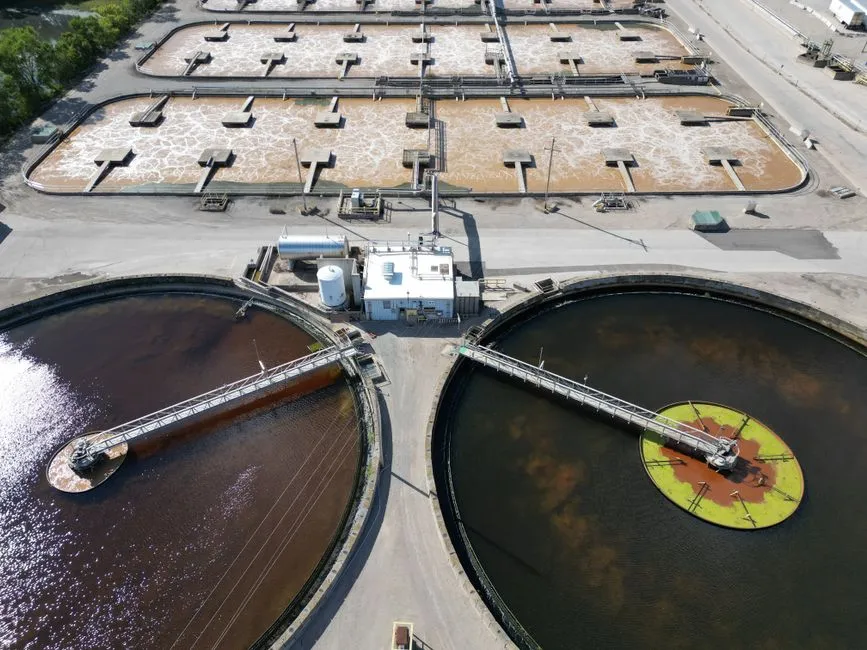
A conventional clarifier is a rectangular or circular tank in which gravity does the work: denser particles settle into a sludge hopper over a residence time of 2-4 h, the supernatant flows over a weir, and sludge is pumped out on a timer or density signal. No compressed air, no saturator, no skimmer. On settleable TSS this geometry is hard to beat for first cost.
A lamella clarifier inserts a pack of inclined plates at 55-60° into the same tank. The plates shorten the effective settling path so each particle has only a fraction of the vertical distance to fall before it hits a surface and slides down. The result is a 3-5x increase in effective surface loading — a typical lamella rates at 20-40 m/h, against 1-3 m/h for a plain clarifier — and a hydraulic residence time of roughly 60-120 minutes in the lamella zone (HydropureWater, 2026).
Clarifiers are credible on their home turf. Properly sized units deliver 50-85% removal of settleable TSS at moderate cost, with simpler operator skill and no air system. Where a clarifier fails is emulsified FOG: 20-40% removal on emulsified oils is the typical band, and that will not hold a strict oil-and-grease limit on a dairy, meat, or sauce line (HydropureWater, 2026). A standalone HydropureWater high-efficiency lamella clarifier fits bottling, sugar refining, and grain dry-processing; it does not fit a high-FOG SKU on its own.
Side-by-Side: DAF vs Clarifier on the Parameters That Move a 2026 Sharpsville Purchase
The table below consolidates the parameters a Sharpsville procurement committee will actually weigh. Values are typical operating ranges for packaged units in food/beverage duty drawn from manufacturer data and EPA 832-R-12-011 technology classifications (EPA, 2013-03); site-specific numbers will shift with flow, FOG load, and materials of construction.
| Parameter | DAF (packaged skid) | Lamella / conventional clarifier |
|---|---|---|
| Primary mechanism | Micro-bubble flotation of oils, grease, floc | Gravity settling on inclined plates or in a plain tank |
| FOG removal | 70-95% (with proper coagulation) | 20-40% (poor on emulsified FOG) |
| TSS removal | 50-85% on the float layer | 50-85% (stronger on settleable TSS) |
| Surface loading | 10-25 m/h | 20-40 m/h (lamella); 1-3 m/h (conventional) |
| Hydraulic residence | ~20-40 min in the flotation zone | ~60-120 min (lamella), 2-4 h (conventional) |
| Footprint for 4-50 m³/h | Small; packaged skid fits a 2.5-3 m × 6-8 m bay | Larger rectangular tank; needs 1.5-2 m overhead for plate removal |
| CAPEX band | Moderate-high (skid + saturator + skimmer) | Low-moderate (tank + plates + sludge pump) |
| OPEX drivers | Polymer/coagulant dose, saturator pump energy, compressed air, nozzle maintenance | Polymer dose, sludge pumping, periodic plate cleaning |
| Operator skill | Moderate (chemistry + air system tuning) | Lower-moderate (sludge wasting, plate inspection) |
| Flow-spike sensitivity | Moderate (equalization strongly recommended) | High (hydraulic surges resuspend settled solids) |
| Permit risk at SVSA | Defensible for high-FOG SKU on its own | Defensible for low-FOG bottling; fails high-FOG envelope alone |
| Best-fit duty | Dairy, meat, bakery, snack, sauce, produce wash, any emulsified FOG | Beverage bottling, grain dry-processing, sugar refining, low-FOG settleable TSS |
Two anchors from published case studies frame the upper end of those bands: 95% DAF oil and grease removal on a high-oil food stream, and 70-90% solids reduction in clarifier case studies where the load was settleable rather than emulsified (Ecologix, 2026). Plan to those as the best case and to the band midpoints as the design case.
Sharpsville-Specific Constraints: Footprint, Permit Envelope, and Headworks Discipline
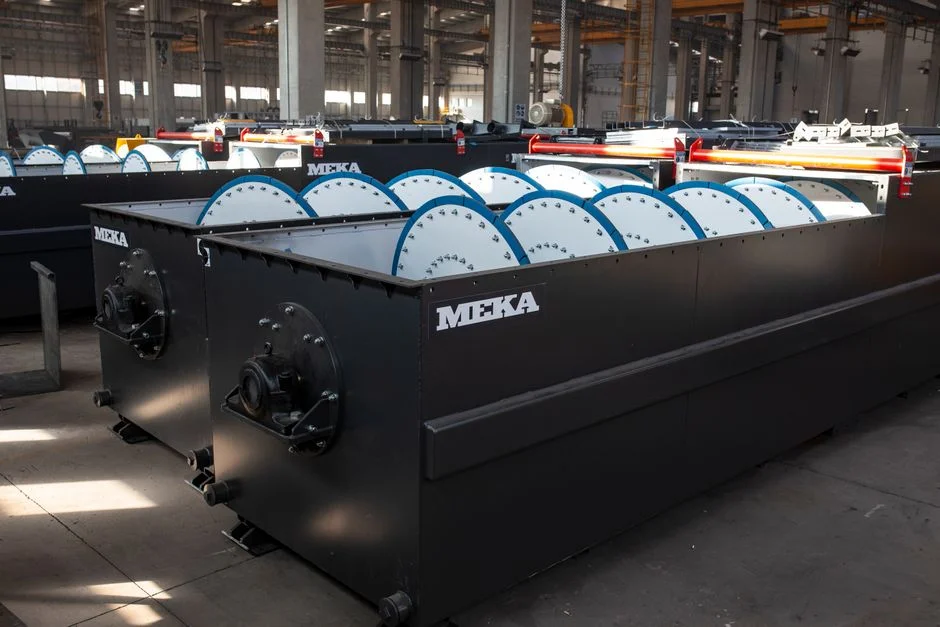
Headworks come first, every time. Mechanical screening, pH adjustment, and flow equalization precede either DAF or clarifier, and equalization alone can cut influent variability by 50-70% (HydropureWater, 2026). On a Sharpsville line that runs CIP cycles, weekend sanitation, and variable SKU schedules, that 50-70% smoothing is the difference between a stable float and a permit excursion. A GX series rotary mechanical bar screen upstream keeps rags, packaging fragments, and pulp out of both the skimmer trough and the lamella plates.
Footprint is the second Sharpsville-specific fact. Converted Shenango Valley mill buildings rarely offer a clean rectangular tank bay with 2 m of overhead; most give you a single 2.5-3 m × 6-8 m bay under a low ceiling. A packaged DAF system drops into that bay with the saturator, skimmer, and controls on one frame. A lamella clarifier of equivalent flow needs a larger rectangular footprint plus 1.5-2 m of overhead clearance for plate-pack removal, and that overhead is frequently the deal-breaker in legacy Mercer County food plant bays.
Permit envelope behavior is the third. FOG and TSS are the binding SVSA parameters at the primary pretreatment step; BOD and COD sit downstream of the primary unit and are handled by biological polishing; pH is handled in equalization before either flotation or settling. A PLC-controlled coagulant and flocculant dosing skid belongs in the same CAPEX line as the primary unit — neither DAF nor lamella will hold Mercer County discharge limits on food streams without it (HydropureWater, 2026).
CAPEX and OPEX Bands a Sharpsville Buyer Should Plan Around in 2026
CAPEX is best framed as a band relative to design flow (m³/h) and FOG load, not as a sticker price. The variables that move both the DAF and clarifier numbers are stainless grade (304 SS vs 316 SS), skid packaging versus field-erected tankage, and instrument scope (basic PLC vs full SCADA integration with online FOG or TSS probes) (HydropureWater, 2026).
| Cost driver | DAF (packaged skid) | Lamella clarifier |
|---|---|---|
| CAPEX band (relative) | Moderate-to-high; 304 SS skid + saturator + skimmer + controls | Low-to-moderate; tank + plate pack + sludge pump + controls |
| Polymer + coagulant dose (chemistry drives performance) | Polymer dose (lower than DAF on settleable TSS) | |
| Dominant OPEX line 2 | Saturator pump energy + compressed air | Sludge pumping energy |
| Dominant OPEX line 3 | Nozzle maintenance and air-system inspection | Periodic plate cleaning and inspection |
| Downstream impact | Filter press sees similar cake solids and polymer demand regardless of upstream primary unit | Filter press sees similar cake solids and polymer demand regardless of upstream primary unit |
DAF OPEX is dominated by chemistry, saturator pump energy, compressed air, and nozzle maintenance. Clarifier OPEX is dominated by sludge pumping, polymer dose, and plate cleaning — typically lower than DAF in a low-FOG plant. A plate-and-frame filter press downstream of either primary unit sees similar cake solids and polymer demand, so the dewatering scope does not change with the primary choice.
Decision Rule: When to Pick DAF, Clarifier, or Hybrid in Sharpsville
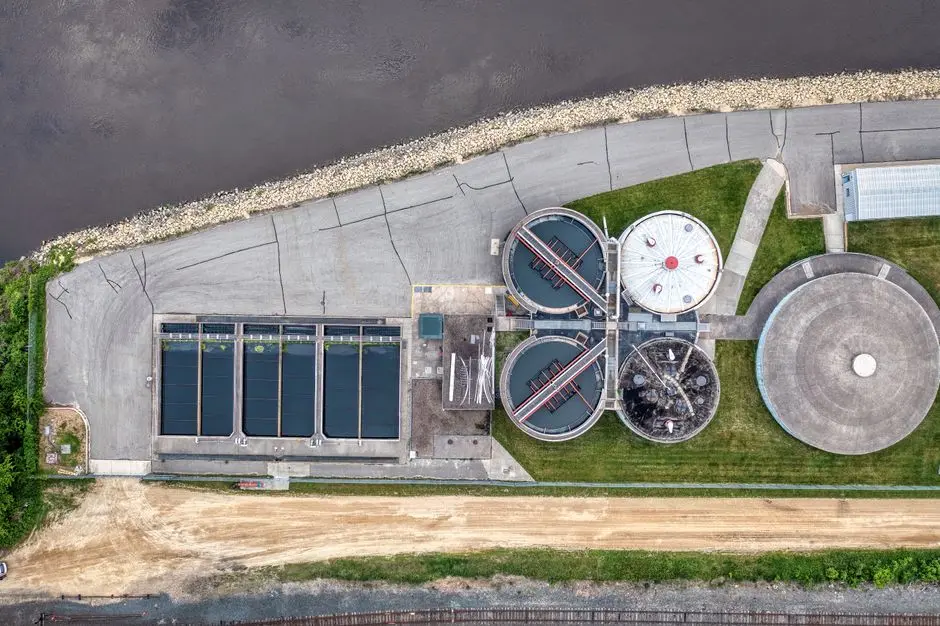
Pick DAF when influent FOG is above ~200 mg/L, emulsified oils are present, available footprint is constrained, or the plant runs multiple SKUs with variable effluent. DAF is the correct call when the SVSA oil-and-grease limit cannot be met by settling alone and the plant cannot afford a hybrid train (HydropureWater, 2026). A packaged DAF system in the 4-300 m³/h range covers most Sharpsville food and beverage capacities (HydropureWater product data, 2026).
Pick a lamella clarifier when FOG is low, the load is mostly settleable TSS, hydraulic flows are steady, and a tank bay is already prepared. The HydropureWater high-efficiency lamella clarifier fits beverage bottling, sugar refining, and grain dry-processing where first cost and simplicity win.
Pick the hybrid (lamella then DAF polish) when the plant has both a TSS problem and a FOG-spike problem — neither unit alone closes the envelope in one pass. Always precede either unit with rotary mechanical bar screening, flow equalization, and pH control (HydropureWater, 2026). For a 2026 vendor meeting, the one-sentence rule is: choose DAF on FOG, choose lamella on settleable TSS at steady flow, and choose hybrid when both problems show up in the same jar test.
Frequently Asked Questions
Which removes FOG better — DAF or a clarifier?
A properly coagulated DAF commonly removes 70-95% of FOG in food streams, while a lamella clarifier typically removes only 20-40% on emulsified oils (HydropureWater, 2026). A published high-oil food plant case study put DAF at 95% oil and grease removal against 70% for a clarifier on the same stream (Ecologix, 2026). If the SVSA oil-and-grease limit is the binding parameter, DAF — or a clarifier followed by a DAF polish — is the defensible answer.
Can a clarifier alone handle a high-FOG food stream under Mercer County / SVSA limits?
Generally no. A clarifier delivers 20-40% removal on emulsified FOG, which is below the oil-and-grease envelope that SVSA enforces on dairy, meat, sauce, and snack lines (HydropureWater, 2026). Clarifier-only trains are defensible for beverage bottling, grain dry-processing, and sugar refining, where the load is mostly settleable TSS and the FOG is low.
What is the smallest packaged DAF skid that fits a Sharpsville mill-building bay?
A packaged DAF system typically drops into a single 2.5-3 m × 6-8 m bay with overhead clearance for the saturator, and the DAF product line covers 4-300 m³/h across 13 standard models (HydropureWater product data, 2026). That is the only practical way to get a primary FOG step into most converted Shenango Valley mill buildings without a structural retrofit.
Which has lower OPEX — DAF or lamella?
Lamella is generally lower-OPEX in a low-FOG plant because its recurring costs are sludge pumping, polymer dose, and plate cleaning. DAF OPEX adds saturator pump energy, compressed air, and nozzle maintenance on top of a higher polymer and coagulant demand (HydropureWater, 2026). The OPEX gap closes quickly once FOG rises above ~200 mg/L, because the clarifier's poor FOG capture forces more chemistry and sludge handling downstream.
When does a lamella-then-DAF polish make sense in a Sharpsville plant?
The hybrid route — a lamella clarifier removing the bulk settleable TSS, followed by a polishing DAF for residual FOG and emulsified oil — fits a plant that has both a TSS problem and a FOG-spike problem. Neither unit alone closes the SVSA envelope in one pass on a high-FOG, high-TSS stream (HydropureWater, 2026). The hybrid is also the right answer when CIP surges carry emulsified cleaners through a clarifier that otherwise performs well on the average shift.