Why the DAF-vs-Clarifier Question Matters for Philadelphia Food & Beverage Plants
Philadelphia food & beverage plants in 2026 choose between a dissolved air flotation (DAF) unit and a gravity/lamella clarifier based on three local constraints rather than generic equipment catalogs. First, the Philadelphia Water Department (PWD) Industrial Wastewater Sewer Discharge (IWS) program sets enforceable local limits on FOG, TSS, BOD, COD, and pH for any facility discharging to the PWD sanitary system. Second, the IWS envelope exists because industrial loadings feed the Northeast Water Pollution Control Plant (and Southwest WPCP), so non-compliance triggers surcharges and enforcement. Third, older Philadelphia food plants are often packed into legacy process rooms with single-bay footprints of 2.5–3 m × 6–8 m and low ceilings, which makes the physical envelope of the primary unit a binding design constraint. ChemREADY's Philadelphia/Greater Delaware Valley service coverage confirms that local industrial programs are engineered around TSS, FOG, BOD, COD, and pH at the DAF/clarifier step (ChemREADY, 2026). The right answer for a Philly food plant is site-specific: DAF for FOG- and emulsion-heavy streams in tight bays, lamella clarifier for settleable-solids streams where lowest first cost wins.
What Each Unit Actually Does to Food & Beverage Wastewater
A DAF unit generates a stream of micro-bubbles (typically 10–100 µm) that attach to oil droplets, grease globules, and light suspended matter, floating them to the surface for removal by a skimmer. A conventional clarifier relies on gravity settling, with denser solids falling to a sludge hopper; a lamella clarifier adds inclined plates at 55–60° to shorten the effective settling path, increasing surface loading rates by a factor of 3–5 over a plain tank. Typical surface loading for a packaged DAF in food/beverage duty sits in the 10–25 m/h band, while lamella clarifiers are commonly rated at 20–40 m/h, giving the lamella an advantage in hydraulic throughput per square meter. DAF excels at floatable capture, with FOG removal commonly reported at 70–95% in properly coagulated food streams, whereas gravity clarification is superior for heavy, settleable grit, pulp fibers, and inorganic TSS. These technologies are complementary; choose DAF when the binding parameter is FOG or emulsified oil, and choose a clarifier when the binding parameter is settleable TSS at steady hydraulic load. A packaged DAF skid for food & beverage FOG removal is the right starting point for the first case.
Philadelphia Pretreatment Envelope: PWD IWS, FOG, and the Northeast WPCP
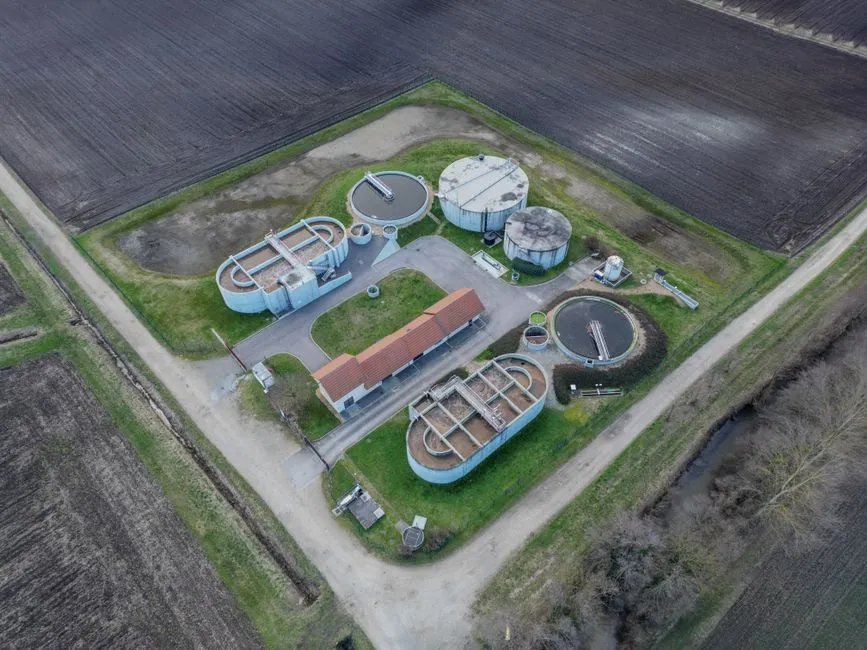
The PWD Industrial Wastewater Sewer Discharge (IWS) program governs every significant industrial discharger to the PWD sanitary system, and its limits on oil & grease, TSS, BOD, COD, and pH define the design point for primary pretreatment. Industrial loadings flow to the Northeast Water Pollution Control Plant (and Southwest WPCP), so the IWS pretreatment envelope sets the compliance line. ChemREADY's documentation for the Philadelphia service area lists headworks, flow-equalization (EQ) basins, DAF units, biological processes, clarification, and dewatering as the program components local plants are routinely engineered around (ChemREADY, 2026). Every food/beverage pretreatment train in the PWD service area starts with screening, pH adjustment, and flow equalization, as equalization alone can cut influent variability by 50–70% and improve removal consistency. Without that headworks discipline, neither DAF nor clarifier can hold the IWS envelope on a variable SKU schedule. A coagulant and flocculant dosing system for DAF or clarifier is non-optional at the IWS discharge limits Philadelphia plants must hit.
DAF vs Clarifier: Side-by-Side Comparison for Food & Bev Streams
The decision matrix below consolidates parameters that move a 2026 Philadelphia food plant purchase: removal performance, footprint, hydraulic residence time, surface loading, CAPEX/OPEX, operator skill, and flow-spike sensitivity. These values represent typical operating ranges for packaged units in food/beverage duty based on manufacturer data and EPA technology classifications; site-specific numbers will vary with flow, FOG load, and materials of construction. EPA 832-R-12-011 classifies DAF as an established physical/chemical technology, with ballasted and hybrid variants listed as innovative derivatives (EPA, 2013-03).
| Parameter | DAF (dissolved air flotation) | Lamella / conventional clarifier |
|---|---|---|
| Typical FOG removal | 70–95% (with proper coagulation) | 20–40% (poor on emulsified FOG) |
| Typical TSS removal | 60–90% | 50–85% (stronger on settleable TSS) |
| Surface loading | 10–25 m/h | 20–40 m/h (lamella) |
| Hydraulic residence time | ~20–30 min | ~60–120 min (lamella), 2–4 h (conventional) |
| Footprint (per m³/h duty) | Small; packaged skid fits a 2.5–3 m × 6–8 m bay | Larger rectangular tank; more headroom for plate removal |
| CAPEX band (relative) | Moderate–high (skid + saturator + skimmer) | Low–moderate (tank + plates + sludge pump) |
| OPEX drivers | Polymer/coagulant dose, saturator pump energy, compressed air, nozzle maintenance | Polymer dose, sludge pumping, periodic plate cleaning |
| Operator skill required | Moderate (chemistry + air system tuning) | Lower–moderate (sludge wasting, plate inspection) |
| Sensitivity to flow spikes | Moderate (equalization strongly recommended) | High (hydraulic surges resuspend settled solids) |
| Best-fit food streams | Dairy, meat, bakery, snack, sauce/produce wash, any emulsified FOG | Beverage bottling, grain dry-processing, sugar refining, low-FOG settleable TSS |
Stable performance for both clarifiers and DAF units depends on right-sized coagulant and flocculant dosing. Neither unit alone always closes the IWS envelope; a high-FOG, high-TSS plant may need a lamella-then-DAF polish to hit both limits in one pass. A high-efficiency lamella clarifier for food plant TSS removal is the right starting reference for the settleable-solids case.
Cost, Footprint, and Operating Reality in a Philadelphia Plant
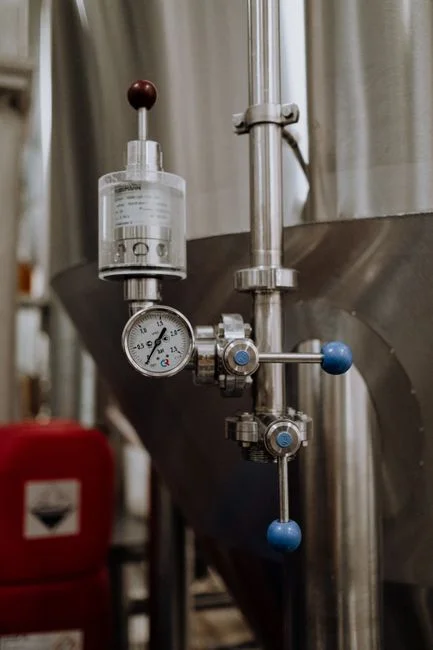
CAPEX should be framed as a band relative to design flow (m³/h) and FOG load, dictated by stainless grade (304 vs 316 SS), skid packaging versus field-erected tankage, and instrument scope. DAF OPEX is dominated by polymer/coagulant dose, saturator pump energy, compressed-air supply, and nozzle maintenance. Clarifier OPEX is driven by sludge pumping energy, polymer dose, and periodic plate cleaning, which is typically lower than DAF in a low-FOG food plant. Footprint in a Philly plant is the deciding physical fact: a packaged DAF skid typically drops into a single 2.5–3 m × 6–8 m bay, while a lamella clarifier of equivalent flow needs a larger rectangular tank footprint plus 1.5–2 m of overhead clearance for plate-pack removal. A sludge dewatering filter press downstream of DAF or clarifier sees similar cake solids and polymer demand regardless of the upstream choice.
Decision Framework: When to Choose DAF and When to Choose a Clarifier
Choose DAF when influent FOG is above ~200 mg/L, emulsified oils are present, available footprint is constrained, or the plant runs multiple product SKUs with variable effluent. DAF is the correct call when the IWS oil-and-grease limit cannot be met by settling alone and the plant cannot afford a hybrid train. Choose a lamella clarifier when FOG is low, the load is mostly settleable TSS, hydraulic flows are steady, and a tank bay is already prepared. The hybrid route — lamella clarifier followed by a polishing DAF — fits the plant that has both a TSS problem and a FOG-spike problem. Always precede either unit with rotary mechanical bar screening, flow equalization, and pH control, consistent with ChemREADY's headworks-first design philosophy for Philadelphia and Greater Delaware Valley plants (ChemREADY, 2026).
Frequently Asked Questions
Is DAF or a clarifier better for FOG removal in a Philadelphia food plant?
DAF is the better choice for FOG. A properly coagulated DAF commonly removes 70–95% of FOG in food streams, while a lamella clarifier typically removes only 20–40% on emulsified oils. If PWD IWS oil-and-grease limits drive the design, DAF — or a clarifier followed by a DAF polish — is the defensible answer.
What PWD IWS parameters most affect the DAF-vs-clarifier choice?
The binding IWS parameters are FOG (oil & grease) and TSS, because those are the parameters PWD enforces for any significant industrial discharger feeding the Northeast WPCP. BOD/COD typically sit downstream of the primary unit, and pH is handled in equalization ahead of either DAF or clarifier.
How much floor space does a packaged DAF need versus a lamella clarifier?
A packaged DAF skid for food/beverage duty typically fits a single 2.5–3 m × 6–8 m bay with overhead clearance for the saturator. A lamella clarifier of equivalent flow needs a larger rectangular footprint plus 1.5–2 m of overhead clearance for plate-pack removal. In older Philadelphia plants, that footprint difference is often the deciding physical factor.
What is the typical CAPEX difference between DAF and a lamella clarifier in 2026?
CAPEX should be treated as a band relative to flow and FOG load rather than a fixed number. DAF CAPEX runs moderate-to-high, while lamella clarifier CAPEX runs low-to-moderate. The variables that move both numbers are stainless grade (304 vs 316 SS), skid packaging, and instrument scope.
Can a food plant run a clarifier and skip DAF entirely?
Yes, when FOG is low, flows are steady, and the load is mostly settleable TSS — beverage bottling, grain dry-processing, and sugar refining are the typical fits. When FOG or emulsified oils are present, a clarifier alone will not hold the IWS oil-and-grease limit, and a DAF becomes mandatory for compliance.
Related Equipment
- packaged DAF skid for food & beverage FOG removal — specifications, capacity range, and technical data
- high-efficiency lamella clarifier for food plant TSS removal — specifications, capacity range, and technical data
- coagulant and flocculant dosing system for DAF or clarifier — specifications, capacity range, and technical data
- sludge dewatering filter press downstream of DAF or clarifier — specifications, capacity range, and technical data