How Saskatoon Treats Domestic Sewage Today
Domestic sewage treatment in Saskatoon in 2026 typically pairs a biological stage (MBR, SBR, or packaged A/O) with screening, disinfection, and sludge handling, sized for 1–500 m³/day and designed for sub-zero winter operation. MBR systems deliver near-reuse-quality effluent at <1 μm filtration in a 60% smaller footprint than conventional activated sludge, while packaged A/O units (1–80 m³/h) remain the lowest-cost option for residential and small commercial sites across the Saskatoon region.
Inside city limits, every flush flows through the sanitary sewer network to the City of Saskatoon Wastewater Treatment Plant, which lifts the flow with pumping stations and discharges treated effluent to the South Saskatchewan River, protecting people, property, and downstream users along the corridor (per saskatoon.ca). The City is mid-build on the Biosolids Pipeline Corridor Project, replacing aging pipelines that move biosolids between the plant and the Biosolids Handling Facility in the RM of Corman Park, which is a useful benchmark for any private operator sizing sludge logistics.
Outside the service area — rural subdivisions, acreages around Martensville, Warman, and the RM of Corman Park — domestic sewage is handled on-site through septic tanks or package plants permitted by the province. That is the bulk of new residential and small-commercial work in 2026, and it is the scope of the rest of this guide.
Saskatchewan Rules Every Domestic Sewage System Must Meet in 2026
The Saskatchewan Water Security Agency (WSA) holds primary authority over wastewater and on-site sewage discharge in the province, with municipal bylaws layering on site-specific setbacks, connection rules, and haulage limits. A 2026 domestic project in the Saskatoon region is typically engineered to meet three benchmarks at once: provincial effluent quality targets, municipal bylaws from the RM or city fringe, and a defensible conservative envelope for emerging contaminants.
Heavy-metal thresholds are a useful proxy for what the WSA expects on sensitive sites. A 2020 study of three Eastern Cape municipal plants reported mean effluent cadmium of 0.11–0.12 mg/L against a 0.01 mg/L threshold for domestic wastewater discharged to environmental water — all three plants exceeded the limit (Water, 2020-10, doi 10.3390/w12102746). A Saskatchewan designer targeting reuse or river discharge should design to the conservative end of that envelope, not the median. The same study found 80–90% of influent heavy metals accumulate in sewage sludge, which sets the case for proper dewatering and cake handling on every site, even small ones.
For sensitive receptors — hospitals, care homes, schools — the EU Urban Waste Water Directive 91/271/EEC is the comparable compliance benchmark referenced in the medical wastewater specification, where tighter BOD, TSS, and microbiological limits are called out for facilities handling infectious waste. Even outside Europe, that framework is defensible in a Saskatoon design report when justifying capital spent on MBR-grade polishing.
Process Options for Domestic Sewage Treatment in Saskatoon
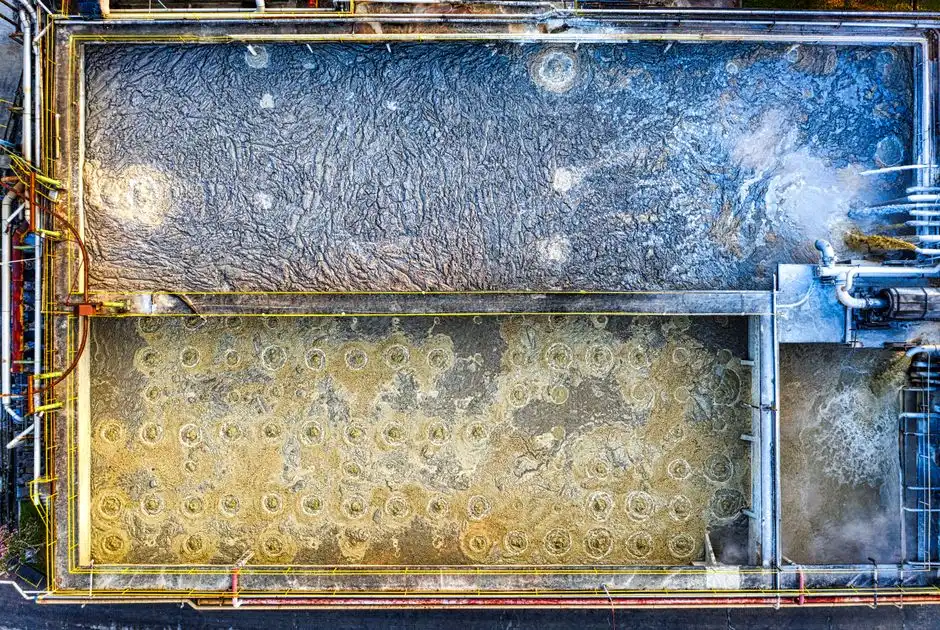
For 1–500 m³/day domestic flows in the Saskatoon region, three process trains cover the realistic decision space in 2026: packaged anoxic/aerobic (A/O) for low-cost residential and hotel duty, sequencing batch reactors (SBR) for small communities with variable loads, and membrane bioreactors (MBR) for sites that need reuse-quality effluent or are discharging to tight receiving-water targets.
Packaged A/O is the default. The WSZ series underground packaged A/O sewage plant combines anoxic/aerobic contact oxidation with sedimentation and disinfection in a single buried unit, runs fully automated with no on-site operator, and covers 1–80 m³/h — that is 24–1,920 m³/day on a 24-hour basis — for residential clusters, hotels, and rural institutional sites. It is the lowest capex option and the right answer when the receiving environment is not sensitive.
MBR is the choice when effluent quality or reuse is driving the design. The integrated MBR membrane bioreactor delivers <1 μm filtration in a 60% smaller footprint than conventional activated sludge at 10–2,000 m³/day capacity. The DF series flat-sheet MBR modules run 0.1 μm PVDF pore size, integrate the aeration box for continuous membrane scouring, use 10–20× less energy than external cross-flow systems, and produce 32–135 m³/day per cassette. SBR batch plants fill the middle ground for small communities with diurnal peaks; the same biological envelope as A/O but with a swing basin that buffers hydraulic surges.
Vermifiltration is documented in the literature as a low-cost, decentralised option for septic-tank effluent in semi-arid regions (IntechOpen, doi 10.5772/intechopen.103920), but it is not a primary option for Saskatoon in 2026 — earthworm populations, freeze-thaw cycling, and biosolids handling under snow load make it a research reference, not a procurement specification.
| Process | Flow range | Typical effluent BOD/TSS | Filtration grade | Operator requirement | Best fit in Saskatoon region |
|---|---|---|---|---|---|
| Packaged A/O (WSZ) | 1–80 m³/h (24–1,920 m³/day) | ≤30 mg/L | Clarifier only | None (fully automated) | Residential clusters, hotels, rural schools |
| SBR batch plant | 10–500 m³/day | ≤20–30 mg/L | Clarifier only | Periodic visits | Small communities with variable loads |
| MBR (with DF modules) | 10–2,000 m³/day | ≤5–10 mg/L | <1 μm (0.1 μm PVDF) | Quarterly membrane service | Reuse, tight discharge, hospitals, schools on small lots |
Designing a Saskatoon System for Prairie Winters
Aerobic biology drops sharply below 10 °C, with nitrification rates roughly halving for every 10 °C drop in that envelope; winter design in Saskatoon must keep mixed-liquor suspended solids in a heated or insulated envelope, sized for January lows that routinely hit −30 °C with wind chill below −40. The cheapest way to do that is burial.
The WSZ series is rated for below-grade installation with landscaping above, or trailer-mounting for mobile deployment, both of which use soil or skid mass as thermal storage. The 1.5–2.5 m bury depth typical for Saskatchewan frost-protected shallow foundations is sufficient, provided the biological chamber sits below the design frost depth and the access risers are insulated and frost-trapped. For above-grade MBR skids, specify an insulated walk-in enclosure with trace heating on the permeate and backwash lines; freeze risk on buried pipework between septic tanks and the biological stage is the single most common cold-climate failure mode and is solved by minimum 2.4 m bury depth plus rigid foam insulation over the pipe crown in the frost zone.
Headworks protection is non-negotiable. A rotary mechanical bar screen in an insulated, heated enclosure removes rags, wipes, and plastics before they reach the biological stage, and grit removal upstream of the biological reactors protects diffuser membranes and MBR cassettes from abrasion. In Saskatoon, the screen wash water must drain to a heated sump or be returned to the biological stage; freezing of the screenings handling area is a documented operating headache on northern municipal plants.
| Parameter | Summer design (May–September) | Winter design (October–April) | Saskatoon-specific note |
|---|---|---|---|
| Influent temperature | 10–18 °C | 4–10 °C | Snowmelt and groundwater intrusion can push winter temps lower |
| Mixed-liquor temperature target | 15–25 °C | 8–12 °C minimum | Insulate or heat below 10 °C to protect nitrification |
| Bury depth for biological chamber | Frost-line + 0.3 m | ≥2.4 m or full burial | Frost depth in Saskatoon region approaches 2.4 m in exposed locations |
| Headworks enclosure | Open or unheated | Insulated, trace heat on sump | Prevents screenings freezing to conveyor |
| Disinfection contact time | 30 min at peak flow | 45–60 min (cold water CT) | UV dose and ClO₂ residual both rise in cold water |
Matching Equipment to the Process Train
A defensible 2026 equipment list for a Saskatoon domestic plant has five blocks: pre-treatment, biological stage, disinfection, sludge handling, and chemical conditioning. Each block maps to a specific product line so the vendor conversation is concrete.
Pre-treatment is a rotary mechanical bar screen in an insulated enclosure, sized to handle peak diurnal flow with a 6 mm aperture; finer apertures protect downstream MBR cassettes but require more frequent screenings handling. The biological stage is a WSZ packaged A/O plant for flows under 80 m³/h, or an MBR with DF flat-sheet modules when reuse is in scope. Disinfection is either an on-site chlorine dioxide generator rated 50–20,000 g/h for residual disinfection in cold water, or a UV sterilizer in pipeline or open-channel configuration where chlorinated by-products are a concern downstream.
Sludge handling is a plate-and-frame sludge filter press, which is the right call even at small flows because 80–90% of influent metals partition to the sludge cake (Water, 2020-10) — a small dewatering footprint reduces hauling cost and improves landfill classification. Chemical conditioning is handled by an automatic chemical dosing system for coagulant, pH adjustment, and nutrient addition in cold weather. For a deeper cross-process comparison the same equipment logic shows up in the MBR vs conventional activated sludge comparison for similar flow ranges.
Capex, Opex, and Lifecycle Trade-offs in 2026
Packaged A/O plants are the lowest capex option for 1–80 m³/h and have near-zero operator cost because the WSZ series is fully automated with no on-site operator required. MBR capex is roughly 1.8–2.5× higher at the same flow, but the 60% smaller footprint cuts civil-works cost on tight urban infill sites, and the <1 μm effluent quality eliminates most downstream polishing — for a school or hotel near a sensitive watercourse, the avoided tertiary stage pays back the membrane premium inside the first 10 years.
Energy is the second decision driver. DF series flat-sheet MBR modules use 10–20× less energy than external cross-flow systems because the integrated aeration box scours the membrane continuously with the same blower that supplies process air; in a Saskatoon winter where building heat is already at design load, that efficiency margin is a real opex line, not a brochure number. Sludge handling is the third: a plate-and-frame press reduces wet sludge volume by 75–85% and concentrates the metals into a stackable cake, which lowers hauling cost and makes the sludge easier to characterize for land application or landfill disposal.
| Cost line | Packaged A/O (WSZ) | SBR | MBR (with DF modules) |
|---|---|---|---|
| Relative capex (same flow) | 1.0× (baseline) | 1.1–1.3× | 1.8–2.5× |
| Footprint | Standard clarifier footprint | Equalising basin adds 20–30% | 60% smaller than conventional activated sludge |
| Operator labour | None (automated) | Periodic visits | Quarterly membrane service |
| Energy intensity | Low | Low–moderate | 10–20× lower than external cross-flow MBR |
| Effluent reuse readiness | Limited (needs tertiary) | Limited (needs tertiary) | Built-in (<1 μm) |
| Sludge handling | Press recommended | Press recommended | Press recommended (80–90% metals to cake) |
For residential clusters in the Saskatoon region the lifecycle math usually favours packaged A/O; for schools, hospitals, and any site targeting reuse or discharging upstream of a sensitive reach, MBR earns its premium. The same head-to-head framing shows up in the buyer-side literature, and a broader effluent treatment plant buyer's guide covers the same decision logic in a different cold-climate jurisdiction.
Frequently Asked Questions
Do I need a City of Saskatoon connection for a new residential development in 2026?
Inside the city service area, yes — every flow goes to the City of Saskatoon Wastewater Treatment Plant through the sanitary sewer network (per saskatoon.ca). In the RM of Corman Park and surrounding rural municipalities, the project usually needs a private package plant approved by the Saskatchewan Water Security Agency, with site-specific bylaws layered on top.
What effluent quality should I design for in 2026?
Target BOD and TSS under 30 mg/L as a baseline for a packaged A/O or SBR system; MBR systems can reach under 10 mg/L with near-reuse quality at <1 μm filtration. For sites discharging near the South Saskatchewan River or any sensitive tributary, design to the conservative end of the envelope — the Eastern Cape study found all three surveyed plants exceeded the 0.01 mg/L cadmium threshold for environmental discharge, which is a useful cautionary benchmark.
Can a packaged plant work in Saskatchewan winters?
Yes. WSZ series units are rated for below-grade installation with landscaping above, or trailer-mounting for mobile deployment, are fully automated, and require no on-site operator when sized and insulated correctly. The biological chamber must sit below the local frost depth (about 2.4 m in exposed Saskatoon locations) and headworks need an insulated, trace-heated enclosure.
How often does sludge need to be removed from a domestic package plant?
Typically every 6–12 months depending on hydraulic and organic load, with the exact interval driven by sludge age and wasting rate rather than a fixed calendar. Dewater with a plate-and-frame press to cut hauling volume; the 80–90% metals partitioning to the cake (Water, 2020-10) means cake handling deserves the same rigour as the water side.
Is Saskatoon domestic sewage safe to reuse for irrigation?
With MBR followed by UV or chlorine dioxide disinfection, reuse-quality effluent is technically achievable. Provincial approval from the Water Security Agency and a site-specific risk assessment are still required, and the design must address storage, setback, and crop-type restrictions before any reuse goes online. For cold-climate residential reuse outside Canada, the residential wastewater treatment in cold climates reference covers a parallel regulatory track.