
Why Edible Oil Refinery Wastewater Defeats Conventional Pretreatment
Edible oil refinery effluent routinely arrives at the pretreatment stage with 15,000–18,300 mg/L COD, 4,570 mg/L oil and grease, and TSS up to 10,200 mg/L (Green & Sustainable Chemistry review, 2013; rose oil and sunflower refinery data). These streams carry emulsified oil droplets stabilized by free fatty acids, soaps, and refining surfactants, plus dissolved organics that do not respond to skimming. Mechanical and gravity separation rely on density differences that collapse once droplet size drops below ~20 µm and surface charge keeps the emulsion stable — exactly the condition that a properly designed electrocoagulation system for edible oil wastewater is built to break. Existing chemical coagulation programs pile on Al2(SO4)3 or FeCl3, drive large hydroxide sludge volumes, and still miss the discharge envelope that food processing plants must meet. In the United States the relevant envelope is EPA 40 CFR Part 432 subcategory limits for oil and grain processing; equivalent anchors for an international audience include QCVN 40:2011/BTNMT (Vietnam) and CONAMA Resolution 430/2011 (Brazil). A single EC stage, correctly sized and coupled to a DAF and an UF or RO polish, is what closes that gap.
How Electrocoagulation Removes Oil, COD, and Suspended Solids
Electrocoagulation (EC) is an electrolysis-driven process in which a sacrificial anode — typically aluminum or iron — dissolves to release coagulant metal ions directly into the wastewater (Verma et al., Green & Sustainable Chemistry, 2013; Anand & Tewari, ScienceDirect, 2024). Three mechanisms act on the same oil droplet at the same time:
- Charge-neutralization coagulation. At the aluminum anode, Al → Al3+ + 3e−; at the cathode, 2H2O + 2e− → H2 + 2OH−. The Al3+ hydrolyzes to Al(OH)3 floc that sweeps emulsified oil and destabilizes the negative surface charge keeping droplets dispersed.
- Electroflotation. Cathodic H2 bubbles attach to oil-coated flocs and lift them to the surface as a float layer that a downstream DAF or mechanical skimmer can capture.
- Electrooxidation. Anode-side oxidation breaks down phenols, color bodies, and refractory organics, which is why an EC reactor also reports COD and color reductions beyond what charge neutralization alone would predict.
Aluminum- and iron-based EC was patented in the US in 1909 (Verma et al., 2013), so the technology is industrially mature. The headline numbers for edible oil matrices — 91.4% COD, 96.8% color, 52–59% oil and grease, and near-complete TSS removal — come from batch and laboratory work on canola, sunflower, rose oil, and petroleum refinery streams (Sharma et al., IOP Conf. Ser., 2018; Ngcobo, Durban University of Technology, 2025).
Electrode Material, Current Density, and pH: The Operating Knobs
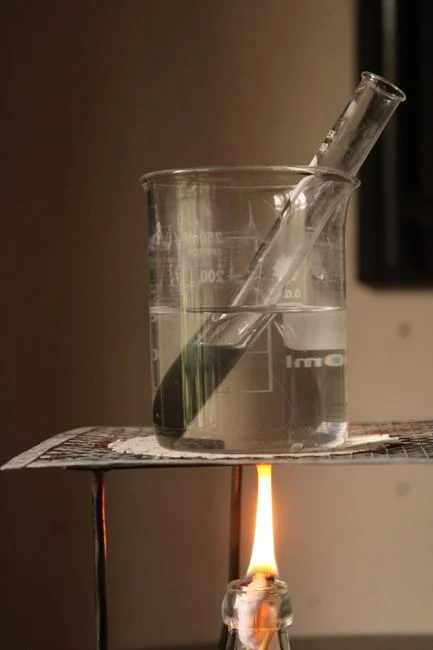
Electrode choice, current density, and pH are the three parameters that decide whether an EC cell performs on a given edible oil stream. Aluminum and iron both work; on canola oil wastewater, aluminum reached the same removal as iron in less contact time (Sharma et al., 2018). On petroleum refinery effluent, double-blade aluminum electrodes at 80 min and 250 rpm delivered 91.41% COD, 96.77% color, and 94.53% phenols (Ngcobo, 2025). Hybrid Al/Fe configurations are increasingly specified where a single-metal cell struggles with high chloride or high organic loading, because iron contributes stronger coagulation of color bodies while aluminum generates a denser, faster-settling floc.
Current density is the main lever on contact time. Raising current density shortens coagulation time but increases both kWh per cubic meter and electrode mass consumed (Sharma et al., 2018; Verma et al., 2013). The published operating envelope for edible oil streams is 10–300 A/m², with most lab work clustering between 50 and 150 A/m².
pH behavior is more forgiving than most engineers expect. Stable removal is generally observed in the near-neutral to mildly alkaline range, but a batch EC reactor with aluminum electrodes has been documented to treat sunflower oil refinery wastewater at a natural pH of 1.4 and COD of 15,000 mg/L (Verma et al., 2013). The rose oil case (initial pH strongly acidic, COD 18,300 mg/L, conductivity 41 mS/cm) was stabilized with 10 mg/L cationic polymer and 200 mg/L bentonite as supporting aids (Verma et al., 2013). Sodium chloride is the most common supporting electrolyte in published edible-oil studies, because it raises conductivity without adding the sulfate or phosphate counter-ions that chemical coagulation programs have to live with (Sharma et al., 2018).
Before an engineer writes a specification, the influent dataset should include: oil & grease, COD, BOD, TSS, pH, conductivity, and temperature. Without conductivity, you cannot estimate kWh; without oil & grease you cannot confirm that the EC stage is the right tool versus a plain DAF.
| Electrode configuration | Typical current density | Contact time | Best-fit edible oil stream | Key trade-off |
|---|---|---|---|---|
| Aluminum (Al–Al) | 50–150 A/m² | 30–80 min | Canola, sunflower, neutral to mildly alkaline pH | Denser floc, faster float; higher sludge Al content |
| Iron (Fe–Fe) | 50–150 A/m² | 60–120 min | High color, high phenol refinery streams | Stronger color/phenol removal; iron-rich sludge |
| Hybrid Al/Fe (alternating plates) | 75–200 A/m² | 40–90 min | Variable pH, mixed FOG and COD loadings | Most flexible, highest unit cost |
| Double-blade Al (refinery case) | 100 A/m², 250 rpm | 80 min | Petroleum refinery wastewater benchmark | Reference data: 91.4% COD, 96.8% color, 94.5% phenols (Ngcobo, 2025) |
Expected Removal Performance on Edible Oil Streams
Performance numbers for a single EC stage cluster in a defensible range that a process engineer can use for a feasibility study. The four anchor data points below come from peer-reviewed and thesis work on real edible oil and refinery matrices.
- Canola oil wastewater (Al and Fe electrodes): >80% organic carbon removal, near-100% TSS removal, 52–59% oil and grease removal (Sharma et al., IOP Conf. Ser., 2018).
- Oil refinery wastewater (double-blade Al electrodes, 80 min, 250 rpm): 91.41% COD, 96.77% color, 94.53% phenols (Ngcobo, Durban University of Technology, 2025).
- Sunflower oil refinery wastewater (Al electrodes, batch): influent pH 1.4 and COD 15,000 mg/L treated successfully — a useful lower-bound pH data point (Verma et al., Green & Sustainable Chemistry, 2013).
- Rose oil processing wastewater (Al electrodes + 10 mg/L cationic polymer or 200 mg/L bentonite): initial COD 18,300 mg/L, O&G 4,570 mg/L, TSS 10,200 mg/L — the high-end influent envelope (Verma et al., 2013).
Reading these together gives a defensible design assumption for a single EC stage on edible oil streams: 80–95% COD, 50–70% oil and grease, 90–100% TSS. The residual is handed to a DAF and a membrane polish rather than asking EC alone to meet a 40 CFR Part 432 daily-maximum envelope.
| Stream / source | Influent COD (mg/L) | Influent O&G (mg/L) | Influent TSS (mg/L) | Electrode / conditions | Reported COD removal | Reported O&G removal |
|---|---|---|---|---|---|---|
| Canola oil wastewater | high (not specified) | high (not specified) | high (not specified) | Al or Fe, NaCl supporting electrolyte | >80% (organic carbon) | 52–59% |
| Petroleum refinery wastewater | refinery envelope | refinery envelope | refinery envelope | Double-blade Al, 80 min, 250 rpm | 91.41% | not reported (phenols 94.53%) |
| Sunflower oil refinery | ~15,000 | refinery envelope | refinery envelope | Al, batch, natural pH 1.4 | documented feasible at high COD | not reported |
| Rose oil processing | 18,300 | 4,570 | 10,200 | Al + 10 mg/L cationic polymer or 200 mg/L bentonite | documented in this envelope | documented in this envelope |
Process Flow: EC Plus DAF, UF, or RO for Full Compliance
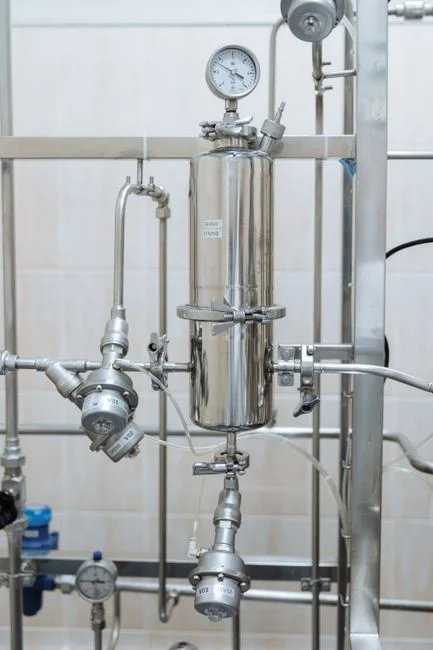
EC is a pretreatment node, not a stand-alone discharge solution. The 2026 process train that edible oil refineries are writing into specifications is: rotary bar screen → flow equalization → electrocoagulation reactor → DAF unit for oil and floated sludge capture → ultrafiltration polish after EC and DAF → optional RO for water reuse. EC drops COD and oil & grease to a band that DAF and UF can finish reliably; DAF captures the floated sludge; UF or MBR polishes residual organics and TSS; RO closes the loop for non-potable reuse. Integrated EC + membrane or adsorption systems have been reported to deliver up to 20% higher pollutant removal than EC alone (Anand & Tewari, ScienceDirect, 2024). EC flocs are also larger and denser than chemical-coagulation flocs, so they settle and dewater better, which lowers the loading on the downstream plate-and-frame press for EC sludge and reduces press cycle count (Anand & Tewari, 2024).
Cost, Energy, and Sludge: The 2026 ROI Picture
EC operating cost is two opposing line items: kWh per cubic meter driven up by current density and contact time, and avoided chemical coagulant cost (Al2(SO4)3, FeCl3, or polymer) driven down because the reactor generates its own coagulant in situ. For most edible oil streams, an optimized cell running 40–80 minutes at moderate current density is competitive with chemical coagulation once sludge handling is priced in (Sharma et al., 2018; Verma et al., 2013).
Sludge is the second economic lever. Because EC introduces only metal ions and hydroxide — no sulfate, chloride, or polymer counter-ions — the resulting sludge is lower-volume and higher-solids than chemical-coagulation sludge (Anand & Tewari, 2024; Verma et al., 2013). For a refinery already running a plate-and-frame press, that translates directly into fewer cycles, lower polymer conditioning dose, and reduced landfill tonnage. The 2026 spec should also budget for a pH and conductivity dosing skid to keep the EC cell inside its operating envelope, so the engineer doesn't discover that requirement during commissioning. For broader context on how food and beverage plants are meeting pretreatment limits, see the 2026 pretreatment compliance for food and beverage plants field guide.
Sizing Checklist and Specification Inputs for a 2026 EC Tender
Use this list as the request-for-quotation skeleton. The supplier will need every line; the engineer should not have to backfill it during evaluation.
- Design inputs: flow rate (m³/h), influent COD, BOD, oil & grease, TSS, pH, conductivity, temperature, target effluent quality, available footprint, power supply (V/phase/Hz).
- Supplier deliverables to require: electrode material and plate configuration, rectifier sizing (V and A), reactor hydraulic retention time, expected kWh/m³, expected sludge yield (kg DS per m³ treated), material certificates for wetted parts, and a guaranteed removal envelope at the design point.
- 2026 control expectations: PLC with current and voltage trending, pH and conductivity probes on the cell outlet, automatic electrode-cleaning cycle, and remote alarm or SCADA integration. The reactor should log every batch for EPA or local regulator reporting.
- Cross-linkage: ask the same supplier to deliver the downstream DAF unit for oil and floated sludge capture and the ultrafiltration polish after EC and DAF, so controls, warranties, and single-point accountability are consolidated. For the upstream DAF-vs-clarifier decision on high-FOG streams, the DAF vs clarifier selection for food and beverage plants guide and the MABR pretreatment for high-FOG food wastewater guide cover the design rationale.
Frequently Asked Questions
What removal efficiencies can a single electrocoagulation stage achieve on edible oil wastewater?
A single EC stage on canola, sunflower, rose oil, and refinery streams has been reported at 80–95% COD, 50–70% oil and grease, and 90–100% TSS (Sharma et al., IOP Conf. Ser., 2018; Verma et al., 2013). On petroleum refinery wastewater with double-blade aluminum electrodes at 80 min and 250 rpm, the reported envelope is 91.41% COD, 96.77% color, and 94.53% phenols (Ngcobo, 2025). The remainder is normally polished in a downstream DAF and UF or RO stage.
How do aluminum and iron electrodes compare for vegetable oil effluent?
Both work, but on canola oil wastewater aluminum reached the same removal as iron in less contact time (Sharma et al., 2018). Iron tends to be favored where color and phenol removal dominate; aluminum is favored where fast float and dense floc are the priority. Hybrid Al/Fe plate configurations are increasingly specified for variable edible oil streams (Anand & Tewari, ScienceDirect, 2024).
What current density and contact time should a 2026 EC specification target?
Published edible oil work clusters at 50–150 A/m² and 40–80 minutes of contact time, with 80 minutes reported for the highest-performing petroleum refinery case at 91.41% COD removal (Ngcobo, 2025). Higher current density shortens time but raises kWh/m³ and electrode consumption, so the right setting is the lowest current density that still hits the design removal target within the available reactor volume (Sharma et al., 2018).
Can electrocoagulation handle highly acidic or high-COD edible oil wastewater?
Yes. Sunflower oil refinery wastewater with a natural pH of 1.4 and COD of 15,000 mg/L has been treated in a batch EC reactor with aluminum electrodes (Verma et al., Green & Sustainable Chemistry, 2013), and rose oil processing wastewater at COD 18,300 mg/L, O&G 4,570 mg/L, and TSS 10,200 mg/L has been treated with Al electrodes plus 10 mg/L cationic polymer or 200 mg/L bentonite as supporting aids (Verma et al., 2013).
How does EC sludge volume compare with chemical coagulation sludge?
EC sludge is meaningfully lower in volume and higher in solids than chemical-coagulation sludge because no sulfate, chloride, or polymer counter-ions are added — only metal ions and hydroxide from the dissolving anode (Anand & Tewari, 2024; Verma et al., 2013). EC flocs also settle and dewater better, which reduces plate-and-frame press cycles and landfill tonnage for a refinery already running a dewatering line.