Why a Napier mining retrofit is really a footprint problem
Brownfield concentrators around Napier inherit conventional activated sludge (CAS) trains built in the 1990s or early 2000s, with aeration basins and one or two secondary clarifiers locked inside fixed bund walls, cable trenches, and chemical dosing skids. The 2026 retrofit question is therefore not "can the biology cope?" but "can a new technology fit inside the rectangle the existing civil draws?" (HydropureWater mining MBR field reference, 2026). A 1,000 m³/day flotation tail water reuse target typically cannot accommodate a second clarifier within that envelope, and that single civil fact drives the technology selection more than any biological or cost argument.
The typical retrofit envelope in 2026 is 500–10,000 m³/day of flotation tail water or thickener overflow, with influent TDS routinely sitting between 0.5% and 5% (5,000–50,000 mg/L) on arid Western US concentrators that already recycle process water and draw brackish makeup. The reagent load carried by that feed is unforgiving: residual potassium ethyl xanthate at 5–20 mg/L, dithiophosphate (DTP) collectors, frothers, plus dissolved Pb, Zn, Cu, and Cd at concentrations that vary with ore body and reagent scheme. The same feed envelope applies to Napier-area brownfield sites, where MBR vs CAS for mining wastewater in Coatesville is a useful cross-check on footprint math for a comparable Pennsylvania brownfield. A copper-lead-zinc or precious-metals train at this scale is the operating envelope this guide is sized to.
The regulatory floor for a 2026 Napier mining discharge
Any 2026 Napier mining or metals discharge sits on a three-tier compliance floor. The federal baseline is 40 CFR Part 437 (Metal Mining Point Source Category), which sets effluent limitations for TSS, total recoverable metals, and pH on active ore mining and milling operations, including the flotation tail water streams that dominate the Napier feed envelope. Fabricated-metals sites that share the same influent corridor fall under 40 CFR Part 433 (Metal Finishing), which carries its own TSS and metals ceilings and which an engineer should cite explicitly when the plant ships semi-finished product rather than concentrate. On top of that federal layer, Iowa NPDES permitting applies the antidegradation and water-quality-based standards that govern Napier-area receiving streams, and USGS Abandoned Mine Land (AML) reporting may apply where the brownfield sits on legacy workings (per EPA 40 CFR Part 437 and 40 CFR Part 433).
The 2026 reuse driver is what closes the loop on technology selection. Grinding dilution water and heap-leach makeup both require feed below 500 mg/L TDS to protect downstream mills and agglomeration drums from salinity upset, and that target forces a brackish-water reverse osmosis (BWRO) polisher downstream of the biological step. MBR permeate at 5,000–20,000 mg/L TDS is the correct feed strength for that RO; CAS effluent at 5–15 mg/L TSS needs an additional media filter first, which partially erodes the CAPEX gap. The 40 CFR Part 437 metals ceilings, the Iowa NPDES antidegradation review, and the <500 mg/L TDS reuse target together are the three compliance pegs a 2026 Napier proposal must clear before the MBR vs CAS question even gets scoped.
How a submerged MBR actually works on a mining feed
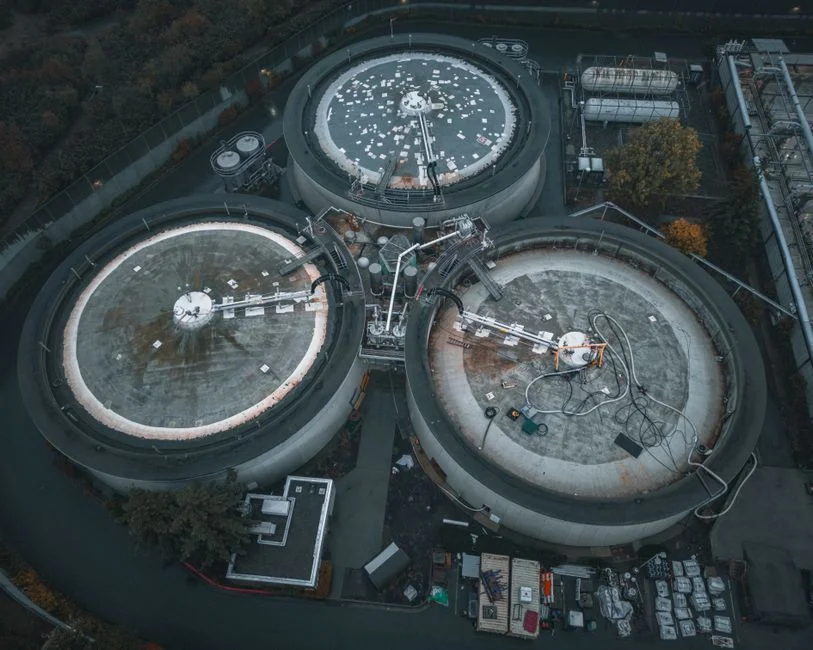
An integrated membrane bioreactor (MBR) on a Napier feed is a suspended-growth activated-sludge reactor with submerged flat-sheet PVDF microfiltration membranes, typically 0.1 µm nominal pore, that replace the secondary clarifier entirely. The flat-sheet modules are mounted vertically in cassettes and submerged directly in the mixed liquor; a vacuum-driven permeate pump draws water through the membrane into a permeate manifold, and the membrane cake layer forms on the outside of the sheets. The same activated-sludge biology that runs a CAS basin does the upstream work; the membrane simply provides an absolute physical barrier for solid/liquid separation, which is why an integrated MBR wastewater treatment system can hold 8,000–12,000 mg/L MLSS without losing biomass in the effluent (Napier-Reid product page).
Fouling control is the operational discipline that decides whether an MBR runs cleanly or eats membrane life. Medium-bubble diffusers mounted in an aeration block beneath the flat-sheet modules scour the membrane surface continuously, and the permeate pump is switched off for a few minutes at regular intervals while the air scour continues, allowing the membrane to relax and shed accumulated solids (Napier-Reid product page). Academic work on 0.04–0.2 µm submerged MBRs confirms that bacteria and viruses are practically completely retained at this pore range, which is the physical mechanism behind the <1 mg/L TSS guarantee (Montpellier thesis 2012MON20265). The combination of high MLSS and 30+ day SRT supports the slower-growing degraders that strip residual xanthate and DTP — biology that gets washed out of a CAS basin held at 5–10 day SRT. For a Napier engineer selecting modules, the DF series flat-sheet MBR cassette at 32–135 m³/day per module and 80–225 m² area is the default building block on 500–10,000 m³/day mining duty.
MBR vs CAS at a Napier concentrator: head-to-head numbers
The numbers below are the comparison a Napier engineer can lift directly into a project memo. They are drawn from the HydropureWater 2026 mining MBR field reference and the Napier-Reid module data, with the Montpellier thesis anchoring the absolute-barrier TSS claim.
| Parameter | Integrated MBR (2026) | Conventional Activated Sludge (CAS) |
|---|---|---|
| MLSS | 8,000–12,000 mg/L | 2,000–4,000 mg/L |
| SRT | 30+ days | 5–10 days |
| Footprint share at 1,000 m³/day | ~60% | 100% (baseline) |
| Effluent TSS | <1 mg/L (membrane barrier) | 5–15 mg/L (clarifier + polymer aid) |
| Residual potassium ethyl xanthate (PEX) | <1 mg/L | 2–4 mg/L (incomplete degradation) |
| Total N removal (with supplemental C) | >75% | 50–70% |
| Heavy-metal removal (Pb, Zn, Cu, Cd) | 70–95% (biosorption + bioaccumulation) | 30–60% (sludge-bound) |
| Membrane area per 1,000 m³/day | 1,800–3,200 m² (DF series cassettes) | N/A |
| Installed CAPEX per m³/day (2026) | USD 800–2,500 | 30–50% lower membrane-free; closes to ~half the gap with civil + tertiary filter priced in |
| Aeration share of OPEX | 36–68% | 40–60% |
The MBR TSS line is an absolute physical barrier: the 0.1 µm membrane will not pass suspended solids, so the <1 mg/L figure is structural, not probabilistic. The CAS figure of 5–15 mg/L TSS is what a well-tuned secondary clarifier with polymer aid typically delivers, and a sludge blanket upset can push it higher in a single shift. Aeration is 36–68% of MBR OPEX because coarse-bubble scour across flat-sheet modules is required continuously, but that scour energy is 10–20× lower than the membrane-aeration energy of external cross-flow configurations (per the 2022-05 Global NEST pilot, DOI: 10.30955/gnj.004278; HydropureWater mining MBR field reference, 2026). On abrasive 500–5,000 mg/L TSS mining feed, flat-sheet MBR is the default because hollow-fiber UF/MBR has higher packing density but loses to flat-sheet on mechanical robustness and CIP recoverability after abrasive upset (HydropureWater mining MBR field reference, 2026). For a separate treatment of the upstream clarification question, the DAF vs clarifier for mining wastewater in Winfield article covers the trade in a comparable envelope.
Heavy metals and residual reagents: where the biology does the work
The metallurgist's standing objection to a biological step on a Napier feed is that biology is "soft" on dissolved contamination. The mechanism rebuts that. In an MBR, dissolved heavy metals are removed by biosorption onto the membrane cake layer and onto the biomass itself, contributing 30–60% of total Pb, Zn, Cu, and Cd removal before the permeate is polished downstream; bioaccumulation inside the cells makes up the balance, and total removal lands at 70–95% when influent pH is held at 6.5–7.5. Denitrification is supplemented by methanol or waste-process glycerol to push total nitrogen past 75% on mining feeds with an unfavourable C:N ratio (HydropureWater mining MBR field reference, 2026).
CAS relies on the same biosorption principle but onto wasted activated sludge, so total removal is capped at 30–60% and the dissolved organics — xanthate, DTP, frothers — pass through largely untouched because the 5–10 day SRT washes out the slower-growing degraders before they can establish. The standard work-around is chemical precipitation upstream of CAS, which hits the metals target but generates 3–8 kg of dry hazardous solids per m³ treated and does not address the reagent load at all (HydropureWater mining MBR field reference, 2026). On a Napier site with downstream RO and a closed-loop reuse driver, the MBR's combined metals-plus-reagents removal is the single largest operational advantage in the comparison and the one a 2026 proposal most often understates.
The three-stage train around the biological step
The MBR vs CAS decision sits in the middle of a near-identical train, so the real procurement question on a Napier retrofit is module selection and polishing rather than the biological step in isolation. Upstream, a dissolved air flotation unit in the 4–300 m³/h range removes 60–80% of influent oil and 30–50% of TSS ahead of either technology, which extends MBR cleaning intervals from weekly to monthly and cuts chemical clean-in-place (CIP) consumption 50–70% (HydropureWater mining MBR field reference, 2026). The same DAF protects a CAS clarifier from sludge loss during shock loads, so the upstream choice does not move the needle between the two technologies.
The biological step is where the two technologies diverge: MBR or CAS at 500–10,000 m³/day, with the DF series flat-sheet cassette as the default mining-duty module. Downstream, MBR permeate at 5,000–20,000 mg/L TDS feeds an industrial RO system at 70–85% recovery to bring the stream below 500 mg/L TDS for grinding dilution or heap-leach makeup; CAS effluent at 5–15 mg/L TSS typically needs an additional media filter ahead of the RO to protect the membranes, and that filter partially erodes the CAS footprint advantage. For zero-liquid-discharge (ZLD) finishing, RO concentrate at 30,000–60,000 mg/L TDS feeds an evaporator or crystallizer, and this final stage is technology-agnostic between MBR and CAS. The pretreatment-limit question at the front of the train, including how regional plants clear 2026 ceilings, is covered separately for a comparable jurisdiction in the guide on how mining and metals plants near Skiatook meet 2026 pretreatment limits.
2026 CAPEX and OPEX brackets for a Napier retrofit
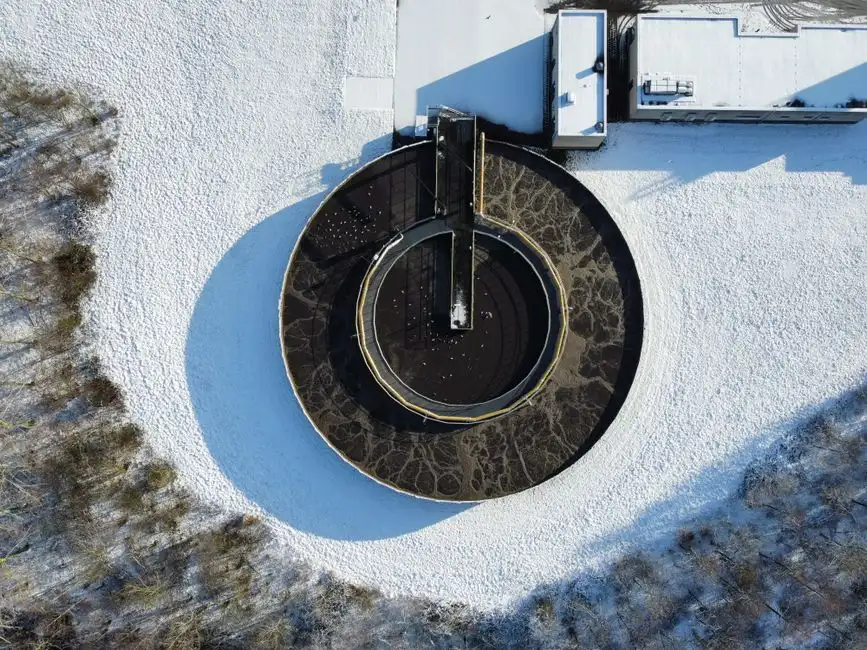
For a Napier-area mining or metals site treating 500–10,000 m³/day of flotation tail water, total installed CAPEX in 2026 for an integrated MBR typically runs USD 800–2,500 per m³/day of capacity. The wide range is driven by influent variability, seismic class for the site, the scope of the automation package, and whether the build is containerized or a full skid-mounted plant with on-site civil (HydropureWater mining MBR field reference, 2026). A CAS upgrade on the same throughput typically runs 30–50% lower on membrane-free CAPEX, but it adds clarifier civil works, polymer dosing skids, and a tertiary media filter ahead of any RO polishing, which closes roughly half of the headline gap.
OPEX is where the comparison gets asymmetric. MBR aeration at 36–68% of operating cost is a real line item, dominated by coarse-bubble scour across the flat-sheet modules, but a poorly trained operator pool can convert that steady energy bill into a single unplanned membrane-replacement event that dwarfs years of aeration cost. CIP chemical consumption in kg per m³ treated is the OPEX line that most often gets buried in vendor proposals as a bundled number; a Napier engineer should request it as a separate line item, alongside a CAPEX/OPEX split, before signing a 2026 purchase order. The 2022-05 Global NEST pilot data (DOI: 10.30955/gnj.004278) confirms that coarse-bubble scour on submerged flat-sheet MBR runs 10–20× lower than external cross-flow aeration, which is the engineering basis for keeping the aeration share of OPEX in the 36–68% band rather than at the 80%+ level an external-loop design would impose.
When CAS is still the right call in 2026
There are four 2026 scenarios in which a Napier-area mining or metals plant should still buy CAS rather than an MBR. First, where the existing clarifier volume has 20+ years of remaining service life and there is no flow increase, re-rastering the aeration basin to an MBR is hard to justify on CAPEX alone. Second, where influent TDS sits under 5,000 mg/L and the plant does not run a closed-loop reuse target, the heavy-metal and reagent removal advantages of the MBR are not yet needed and a well-tuned CAS will meet the discharge consent. Third, where the operator pool has no membrane CIP training, the 36–68% aeration share is dwarfed by unplanned membrane-replacement events when CIP discipline is poor — a Napier site that has not run a membrane skid in the past five years should hold the CAS line until training is in place.
Fourth, where there is no RO polishing downstream, the <1 mg/L MBR TSS advantage is wasted because the effluent is going to a polishing pond or a controlled surface discharge rather than back into the process. In any of these four scenarios, upgrading the existing CAS — adding a selector zone, fine-bubble diffusers, and a polymer dosing skid — delivers more value per dollar than a greenfield MBR. The test is civil, not biological: the right answer is whichever technology fits the rectangle the existing bund walls draw and matches the downstream reuse or discharge path.
Five-step selection checklist for a Napier-area mining retrofit
This is the Monday-morning tool to apply the article to a specific site. Run it before opening a vendor proposal.
| Step | Action | Trigger to pick MBR | Trigger to hold CAS |
|---|---|---|---|
| 1 | Measure the existing civil rectangle: bund walls, cable trenches, dosing skids | Second clarifier will not fit; aeration basin volume constrained | Clarifier volume has 20+ years of life; no flow increase planned |
| 2 | Characterise the feed: TDS, residual xanthate, dissolved Pb/Zn/Cu/Cd | TDS >5,000 mg/L; PEX 5–20 mg/L; reagent load non-trivial | TDS <5,000 mg/L; no closed-loop reuse target |
| 3 | Confirm the downstream reuse target | Grinding dilution or heap-leach makeup required at <500 mg/L TDS → plan BWRO downstream | Effluent goes to polishing pond or controlled discharge; no RO |
| 4 | Audit the operator pool for membrane CIP capability | Trained operators or budgeted training in place | No membrane experience; CIP discipline will be poor |
| 5 | Request 2026 vendor numbers in the right format | CAPEX per m³/day, OPEX share by line item, CIP chemical consumption in kg per m³ treated — as separate line items, not bundled totals | Bundle-only proposals; vendor cannot break out CIP kg/m³ |
If two or more steps flip to the MBR column, the MBR is the defensible 2026 default for that site. If three or more flip to the CAS column, hold the CAS line and price the CAS upgrade against a greenfield MBR. If the answers are mixed, the deciding step is almost always Step 3: the presence or absence of a downstream RO polishing target, because that single decision drives the MBR TSS and reagent-removal advantages to be load-bearing or redundant.
Frequently Asked Questions
What is the actual footprint ratio of an MBR versus a CAS train at 1,000 m³/day?
An integrated MBR occupies roughly 60% of the footprint of an equivalent CAS train at the same throughput. The mechanism is the 8,000–12,000 mg/L MLSS operating range, which eliminates the large secondary clarifiers a CAS train needs and shrinks the aeration basin for the same food-to-microorganism ratio (HydropureWater integrated MBR field data, 2026).
Does an MBR remove the need for a downstream RO on a Napier mining feed?
No. MBR permeate still sits at 5,000–20,000 mg/L TDS, and the <500 mg/L TDS target required for grinding dilution water or for surface discharge under most 2026 mining-jurisdiction limits forces a brackish-water RO to follow the MBR. The MBR's job is to deliver a clean, low-TSS, low-reagent feed to the RO so the RO can run at 70–85% recovery without fouling.
How much residual xanthate does an MBR actually remove?
A properly sized MBR running at 10,000 mg/L MLSS and 30+ day SRT removes 85–95% of residual xanthate and DTP, reducing potassium ethyl xanthate from 5–20 mg/L in the feed to below 1 mg/L in the permeate. The 30+ day SRT is the load-bearing parameter, because the slower-growing degraders that strip xanthate and DTP get washed out of a CAS basin held at 5–10 day SRT (HydropureWater mining MBR field reference, 2026).
Are flat-sheet MBR modules the right choice for abrasive mining feed?
Yes. Flat-sheet PVDF MBRs handle 500–5,000 mg/L TSS at flux 15–25 L/m²·h on monthly CIP cycles. Hollow-fiber UF/MBR has higher packing density but loses to flat-sheet on abrasive mining duty, so flat-sheet is the default building block for 500–10,000 m³/day mining trains (HydropureWater mining MBR field reference, 2026).
When is CAS still the right 2026 call for a Napier-area site?
CAS still wins when all four conditions hold simultaneously: the existing clarifier has 20+ years of service life remaining, influent TDS stays under 5,000 mg/L with no closed-loop reuse target, there is no downstream RO polishing, and the operator pool has no membrane-CIP training. In any of those conditions, a CAS upgrade — selector zone, fine-bubble diffusers, polymer dosing — delivers more value per dollar than a greenfield MBR (HydropureWater mining MBR field reference, 2026).