
What counts as 'domestic sewage' in Hamilton, and which rules apply?
Domestic sewage in Hamilton, Ontario is the waterborne waste from washrooms, kitchens, laundries, and the sleeping or living areas of residential, institutional, and light-commercial buildings — blackwater plus greywater, and nothing stronger. It is distinct from industrial process wastewater (which can carry heavy metals, solvents, or high-temperature streams) and from stormwater, which is excluded from sanitary sewers under City of Hamilton bylaws. Misclassifying a project is the most common compliance mistake: a small bakery or auto shop that produces FOG or solvents will be treated as a non-domestic discharge and routed through the pretreatment program even if the daily flow is identical to a household.
Two jurisdictions share authority. The Ontario Building Code (OBC) Part 8 governs on-site sewage systems serving buildings with a daily design flow up to 10,000 L/day, using the 450 L/person·day unit loading and Class 1–5 leaching bed classifications (per OBC 8.1.2.1, current 2024 edition). The Hamilton WW Sewer Use By-Law (No. 14-090, as updated) governs any discharge — including treated effluent from a private package plant — that enters the municipal sanitary sewer. Federal layers apply to federal facilities under the Wastewater Systems Effluent Regulations (WSER, SOR/2012-139), and Conservation Authority permits are required for any edge-of-city work that touches a regulated floodplain or wetland. Hamilton-area projects that fall outside City sewer service areas — the rural fringes of Flamborough, Glanbrook, and the Niagara Escarpment lots — sit entirely under OBC Part 8 plus the local Conservation Authority.
Hamilton WW 2026 effluent and pretreatment limits at a glance
Hamilton WW's Sewer Use By-Law sets a 25 mg/L ceiling on BOD₅ and 30 mg/L on total suspended solids for any domestic-strength discharge entering the municipal sanitary sewer; the by-law also caps total Kjeldahl nitrogen at 8 mg/L, total phosphorus at 1.0 mg/L, and E. coli at 200 CFU/100 mL in the treated stream (per Hamilton WW 2024 Sewer Use By-Law fact sheet — typical published limits, confirm with Hamilton WW before final design). On-site systems under OBC Part 8 work to a tighter effluent quality objective: secondary treated effluent targets BOD₅ ≤ 15 mg/L and TSS ≤ 15 mg/L, with Level IV tertiary treatment pushing toward BOD₅ ≤ 10 mg/L and TSS ≤ 5 mg/L when subsurface drip dispersal or surface irrigation is proposed.
Three triggers will move a project from "domestic" into "non-domestic" territory and force a pretreatment study: FOG ≥ 50 mg/L in the raw stream, total suspended solids > 350 mg/L after preliminary settling, or any average flow > 50 m³/day (per Hamilton WW Sewer Use By-Law discharge criteria). For context on the cost of under-sized infrastructure, the 2024 Hamilton County Tennessee WWTA Consent Decree settled at roughly $300 million in federal penalties and upgrades (per WWTA 2024 annual notice) — a reminder that the cheapest initial design often becomes the most expensive over a 20-year asset life.
| Parameter | Hamilton WW Sewer Use By-Law (discharge to sanitary sewer) | OBC Part 8 Level II (secondary) | OBC Part 8 Level IV (tertiary) |
|---|---|---|---|
| BOD₅ | ≤ 25 mg/L | ≤ 15 mg/L | ≤ 10 mg/L |
| TSS | ≤ 30 mg/L | ≤ 15 mg/L | ≤ 5 mg/L |
| Total Kjeldahl nitrogen | ≤ 8 mg/L | — | — |
| Total phosphorus | ≤ 1.0 mg/L | — | ≤ 0.5 mg/L (target) |
| E. coli | ≤ 200 CFU/100 mL | — | ≤ 100 CFU/100 mL |
| Free chlorine residual | 0.5–1.0 mg/L (if chlorinated) | — | — |
Site and flow characterisation before picking a process
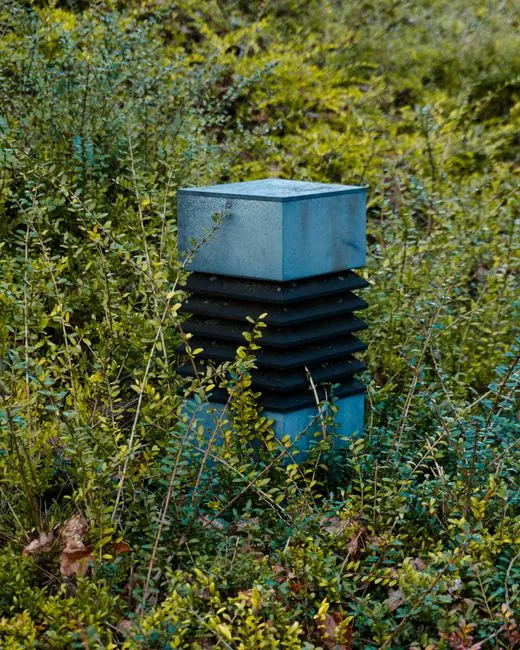
Every defensible process selection in Hamilton starts with three numbers: average daily flow, peak hourly flow, and the available footprint above the high water table. The OBC Part 8 default is 450 L/person·day for residential occupancy; schools typically use 70 L/student·day, offices 75 L/employee·day, and restaurants 125 L/seat·day (per OBC Table 8.1.2.1). Apply a 2.5× peaking factor for residential gravity systems and a 10–20% surcharge for infiltration/inflow when connecting to an older combined or partially-separated collection system — Hamilton's older central neighbourhoods still have significant I&I in clay-pipe laterals.
Once the design flow is fixed, the equipment decision is usually a single threshold. Flows under 10 m³/day from a single dwelling or a duplex can usually be served by a septic tank plus Class 4 leaching bed, provided the native soil gives at least 1.0 m vertical separation to the high water table or bedrock. Flows from 10 m³/day to 100 m³/day — small subdivisions, schools, hotels, small commercial — land in the WSZ underground A/O package plant range of 1–80 m³/h, or in the lower end of an integrated MBR system at 10–2,000 m³/day. Above 100 m³/day, a packaged unit becomes uneconomical and a site-built activated sludge or SBR with on-site laboratory and a Class II operator is the more honest answer.
| Average daily flow | Typical source | Recommended packaged option |
|---|---|---|
| < 10 m³/day | Single residence, duplex | Septic + Class 4 leaching bed, or single-house WSZ-A/O |
| 10–100 m³/day | 50-unit subdivision, school, hotel, small commercial | WSZ-A/O (1–80 m³/h) or MBR (10–100 m³/day) |
| 100–500 m³/day | Larger subdivision, hospital, campus | MBR modular skid or engineered SBR |
| 500–2,000 m³/day | Multi-building institutional, large resort | MBR modules in parallel, with on-site lab |
Process options for Hamilton domestic sewage: a head-to-head comparison
Five process trains realistically cover the Hamilton flow envelope, and the choice is driven by discharge limits, footprint, and operator availability — not vendor preference. Conventional septic with a Class 4 leaching bed still has a place on rural lots with suitable soil: BOD₅ removal typically lands at 60–80%, there is no operator cost, and the capital cost is the lowest of the five options, but the system needs at least 1.0 m of native soil above the high water table — a condition that is increasingly rare inside the urban boundary.
Packaged A/O plants — the WSZ series being the typical buried configuration — combine anoxic and aerobic contact oxidation in a single tank, with built-in sedimentation and chlorine or UV finishing. They deliver 85–95% BOD₅ removal and 90–95% TSS removal, run fully automated with no full-time operator, and are buried below grade with landscaping above, which matters in cold-climate Ontario where freezing would damage exposed process units. Footprint runs roughly 0.05–0.1 m² per m³/day of design flow for the standard WSZ envelope.
MBR systems push treated water through DF series PVDF flat-sheet membrane modules at sub-micron pore size, so BOD₅ and TSS removal both exceed 97% and the effluent is near-reuse quality — suitable for toilet flushing or restricted irrigation. The footprint is roughly 60% of a comparable CAS plant because the membrane replaces the secondary clarifier, but membrane aeration adds 0.2–0.4 kWh/m³ to the energy bill, and the modules need a clean-in-place cycle every 6–12 months depending on the FOG load. SBR (sequencing batch reactor) hits 90–95% BOD₅ removal and handles variable flows gracefully — useful for campuses, seasonal resorts, or camp operations with 4–10× swings between shoulder and peak season — but it does need a PLC and roughly 0.5 FTE of operator attention. The rotating biological contactor (RBC) is robust, low-energy, and well-suited to small institutional flows in the 50–200 m³/day range; the trade-off is a larger footprint and a media-replacement event every 15–20 years.
| Process | BOD₅ removal | TSS removal | Footprint | Operator required | Best fit in Hamilton |
|---|---|---|---|---|---|
| Septic + Class 4 leaching bed | 60–80% | 70–85% | Large (soil-dependent) | None | Rural lots with ≥ 1.0 m native soil |
| WSZ-A/O package plant | 85–95% | 90–95% | Compact, buried | None full-time | 1–80 m³/h residential/small commercial |
| MBR (DF flat-sheet) | > 97% | > 97% | 60% of CAS | Part-time, CIP 6–12 mo | Reuse, tight sites, 10–2,000 m³/day |
| SBR | 90–95% | 90–95% | Moderate | 0.5 FTE + PLC | Variable flows, campuses, resorts |
| RBC | 85–90% | 85–90% | Large | Part-time | Small institutional, 50–200 m³/day |
Selecting a packaged plant: matching flow, footprint, and discharge mode
Two default packaged paths cover roughly 90% of Hamilton-area projects. For a 50-unit residential subdivision at ~75 m³/day, a single buried WSZ underground A/O package plant rated for 1–80 m³/h handles the load with no full-time operator, no noise above grade, and finishes with either chlorine or pipeline UV disinfection depending on the receiving environment. For a school, hotel, or small hospital that needs < 10 mg/L BOD and < 5 mg/L TSS for on-site reuse (toilet flushing, subsurface irrigation), an integrated MBR system sized at 10–500 m³/day with PVDF flat-sheet modules is the standard answer — the membrane barrier also gives more reliable E. coli compliance for the 200 CFU/100 mL Hamilton WW target.
Three site conditions change the recommendation. Seasonal 4–10× flow swings (campgrounds, seasonal workforce housing) point to SBR or MBR with an upstream equalization tank sized for at least one full day's peak flow. Sites with high groundwater or bedrock within 1.0 m of grade rule out conventional leaching beds and force a buried package unit or MBR. Cold-climate exposure — typical for above-grade equipment in Hamilton from November through April — argues for the below-grade WSZ mounting with landscaping above, or for a fully insulated MBR skid with enclosure heating. The WSZ series is also available trailer-mounted for temporary or permanent deployment where excavation is impractical.
Disinfection, sludge handling, and commissioning checklist
Bioreactor selection is only half of a compliant system. Disinfection is chosen by discharge mode: a pipeline UV sterilizer sized to deliver ≥ 40 mJ/cm² at peak flow is the right call when the receiving environment is sensitive to chlorine residual or when the outfall is short, while a chlorine dioxide generator (50–20,000 g/h) is preferred when a residual is needed in a long outfall or when E. coli is monitored at the 200 CFU/100 mL compliance point. UV has no residual but no DBPs; chlorine dioxide carries a residual for several hours without forming trihalomethanes at typical domestic loads.
Sludge handling is sized by a simple rule: expect 0.5–1.0 kg of dry solids per cubic metre of treated sewage. For a 75 m³/day WSZ plant, that is roughly 40–75 kg DS/day, easily handled by a small plate-and-frame filter press with 1–50 m² filter area, dewatering to 18–25% DS for off-site disposal. A rotary mechanical bar screen (GX series) at the headworks protects downstream pumps and membrane modules from rags, wipes, and fibrous material — a non-negotiable for any MBR or fine-bubble A/O system. Commissioning follows a fixed sequence: a 21-day biomass acclimation with seeded activated sludge or carrier media, a 7-day hydraulic test at peak design flow, SCADA tag verification against the P&ID, and a documented baseline effluent sample analysed against the Hamilton WW by-law limits before the system is signed over to operations.
Frequently Asked Questions
What is the daily design flow per person in Hamilton?
Ontario Building Code Part 8 sets the residential unit loading at 450 L/person·day for on-site system design (per OBC Table 8.1.2.1). Non-residential occupancies use specific loadings: 70 L/student·day for schools, 75 L/employee·day for offices, 125 L/seat·day for restaurants.
Do I need a permit from Hamilton WW for a private package plant?
Yes. You need a Building Permit from the City of Hamilton under OBC Part 8 for the treatment unit itself, and a separate Sewer Use By-Law compliance letter from Hamilton WW if any discharge — including treated effluent from a private plant — enters the municipal sanitary system. Septic systems on rural lots with no sewer connection need only the City Building Permit plus a Conservation Authority sign-off where applicable.
How much does a domestic sewage treatment plant cost in 2026?
Indicative 2026 pricing based on HydropureWater price-list bands: a residential WSZ-class unit for 1–25 m³/h lands in the $25,000–$60,000 range, and a 50–100 m³/day MBR with PVDF membranes and UV finishing lands between $150,000 and $400,000 installed. These figures exclude building permit fees, excavation, and the sewer connection charge — obtain a firm quote against the specific site.
Can I irrigate with treated sewage on my property?
Yes, but only if the system meets OBC Part 8 Level IV tertiary quality (BOD₅ ≤ 10 mg/L, TSS ≤ 5 mg/L, E. coli ≤ 100 CFU/100 mL) and the dispersal is via a separate Subsurface Drip Dispersal System, not spray irrigation. An MBR with UV is the typical train that meets the tertiary envelope for residential-scale reuse.
What is the BOD₅ limit for Hamilton WW?
The Hamilton WW Sewer Use By-Law caps BOD₅ at 25 mg/L for any discharge to the municipal sanitary sewer, with TSS ≤ 30 mg/L, total phosphorus ≤ 1.0 mg/L, and E. coli ≤ 200 CFU/100 mL (per Hamilton WW 2024 Sewer Use By-Law fact sheet — confirm with Hamilton WW before final design). The limits apply to the treated stream, not the raw influent, and compliance is measured at the sampling port specified in the by-law.