Why Vancouver data centers need a purpose-built blowdown treatment train
A 2026 Vancouver data center typically needs a side-stream filtration + softening + ultrafiltration + reverse osmosis train to treat cooling tower blowdown, because Metro Vancouver Sewer Use Bylaw No. 299 caps TDS, heavy metals, and total toxic organics on discharge and BC's grid is clean enough that the reuse-vs-freshwater GWP penalty is negligible. Plant sizing assumes 25–30% of makeup water becomes blowdown at 4 cycles of concentration, with blowdown TDS in the 1,200–6,000 mg/L band.
Vancouver's cool, wet Pacific-Northwest climate supports air-side economization for more hours per year than the US Southwest, but the absence of aridity means the freshwater-displacement value of reuse stays high while the upstream-energy GWP penalty stays low. BC Hydro's grid is among the cleanest in North America, and a 2026 Open Engineering comparative LCA confirms that under a decarbonized grid the reuse GWP penalty drops to negligible levels (Cartagena Vaca et al., 2026). The same study shows that chemical production — not pumping energy — becomes the dominant residual GWP contributor in a fully decarbonized scenario, which is directly relevant to the antiscalant and biostat selection discussed in Microsoft's Quincy and Mount Pleasant water treatment playbook.
Vancouver makeup is typically Metro Vancouver drinking water (Capilano/Coquitlam source, ~30–80 mg/L TDS) or, in some industrial zones, dedicated non-potable supply. The chemistry is far easier than Quincy's basalt-aquifer water (which can run 200+ mg/L TDS before any cooling cycle), but the sewer permit envelope is still binding. A 100 MW facility can use up to 2 million liters per day for cooling (IDE, 2026); even a 10 MW edge site can lose 25–30% of makeup to blowdown at 4 cycles of concentration (Environmental Expert, Dec 2025), so blowdown treatment is not optional at any meaningful IT load.
The hyperscaler archetypes diverge sharply. Quincy's closed-loop reuse (300–350 µS/cm blended permeate, 138 M gal/yr potable offset, 97% reduction) is the right reference design when discharge is restricted or expensive; Mount Pleasant's liquid-to-chip avoidance model only fits temperate climates where air-side economization covers most of the year, which is closer to a Vancouver reality. For most Vancouver sites, however, the chemistry and permit envelope push the design back toward the Quincy treatment train on a smaller scale — not full avoidance, but also not the wet-discharge default.
Vancouver-specific regulatory envelope: Metro Vancouver Sewer Use Bylaw No. 299 and the BC Municipal Wastewater Regulation
Metro Vancouver Sewer Use Bylaw No. 299 is enforced at the building sewer connection and controls the discharge envelope for any data center in the region. Limits apply to total toxic organics, individual heavy metals (copper, zinc, lead, cadmium), oil and grease, pH, temperature, and mass-loadings of TDS, sulfate, and chloride — not just concentration. The bylaw is the operative document for permitting; the B.C. Municipal Wastewater Regulation sets the underlying provincial framework and authorizes Metro Vancouver's bylaw, but for any 2026 design submission, Bylaw No. 299 is the ceiling. Cooling-tower blowdown with chromate or high-phosphate legacy chemistry is particularly restricted, and the chloride and sulfate mass-loading caps are the parameters that most often drive an operator off conventional sewered discharge.
Some jurisdictions cap TDS discharge below 1,500 mg/L (Environmental Expert, Dec 2025); Metro Vancouver's bylaw historically drives toward the same range via mass-loading and constituent limits, which is why concentrated blowdown above ~2,000 mg/L TDS generally cannot be sewered without treatment. Even though Vancouver is not "water-stressed" in the southwestern US sense, discharge fees and the building-connection mass-loading limits push operators toward reuse: discharged blowdown at $5–$15 per 1,000 gal in water-stressed regions (Environmental Expert, Dec 2025) is conservatively representative of avoided sewerage and discharge costs in Metro Vancouver as well, especially when the building connection runs at the higher end of the fee schedule.
The table below summarizes the binding envelope for a typical 2026 Vancouver data center discharge. A useful cross-reference is the Western Canada municipal wastewater compliance guide, which covers the same provincial framework under the BC Municipal Wastewater Regulation.
| Parameter | Metro Vancouver Bylaw 299 typical envelope | Blowdown at 4 COC (typical) | Treatment required? |
|---|---|---|---|
| TDS (mg/L) | ≤ ~1,500 at sewer connection (via mass loading) | 1,200–6,000 | Yes if > 2,000 |
| Chloride (mg/L) | Mass-loading cap at building connection | 200–800 | Often yes |
| Sulfate (mg/L) | Mass-loading cap at building connection | 150–600 | Often yes |
| Copper / Zinc / Lead (mg/L) | Low single-digit to sub-mg/L | Trace from corrosion inhibitors | Side-stream filtration + softening |
| Total toxic organics | Banned above bylaw schedule | Biocides, chromate legacy | Source elimination or removal |
| pH | 5.5–9.5 typical | 6.5–8.5 | Usually no |
| Temperature | < 40 °C at discharge | Up to 35 °C | Cooling prior to discharge |
Source-water chemistry and the blowdown concentration problem in Vancouver
Vancouver surface-water makeup typically enters the cooling tower at 30–80 mg/L TDS, well below Quincy basalt-aquifer values; blowdown chemistry is therefore driven by cycles of concentration rather than by raw-water hardness, with blowdown TDS landing in the 1,200–6,000 mg/L band at 4–8× concentration (Environmental Expert, Dec 2025). Scaling minerals (Ca, Mg, silica, alkalinity) concentrate proportionally; Vancouver's relatively soft Capilano-source makeup keeps the silica scaling ceiling manageable compared to Quincy, but alkalinity-driven calcium carbonate scaling still sets the practical COC ceiling at 5–7 unless side-stream softening is added.
Blowdown carries biocides, corrosion inhibitors, and scale inhibitors that accumulate with COC; legacy chromate or high-phosphate programs are particularly difficult to discharge, reinforcing the case for closed-loop reuse over sewered blowdown. Suspended solids of 10–50 mg/L and biological content from biofilm fragments mean the blowdown stream cannot feed an RO directly — side-stream filtration and UF pretreatment are mandatory, not optional. The same is true of the air-side economization carryover: even a well-maintained basin picks up airborne particulates and biological growth that have to come out before any membrane.
The table below converts the cycles-of-concentration problem into a parameter set the engineer can hand to a membrane vendor.
| Parameter | Vancouver makeup (Capilano/Coquitlam) | Blowdown at 4 COC | Blowdown at 6 COC | Blowdown at 8 COC |
|---|---|---|---|---|
| TDS (mg/L) | 30–80 | 120–320 | 180–480 | 240–640 |
| Calcium hardness (mg/L as CaCO₃) | 10–25 | 40–100 | 60–150 | 80–200 |
| Alkalinity (mg/L as CaCO₃) | 10–30 | 40–120 | 60–180 | 80–240 |
| Silica (mg/L as SiO₂) | 2–6 | 8–24 | 12–36 | 16–48 |
| Chloride (mg/L) | 2–10 | 8–40 | 12–60 | 16–80 |
| Sulfate (mg/L) | 2–8 | 8–32 | 12–48 | 16–64 |
| Suspended solids (mg/L) | < 2 | 10–50 | 10–50 | 10–50 |
Note: makeup columns reflect typical Metro Vancouver drinking water; the blowdown columns assume scaling is held in check by an active cooling-water program, which is why silica and hardness scale linearly with COC rather than crashing out on the heat-exchange surfaces. Where source water carries higher hardness (e.g., some dedicated industrial non-potable supplies), treat the 6 and 8 COC columns as the design ceiling and design the softener accordingly.
Treatment train selection: from side-stream filtration through RO to optional ZLD
The defensible 2026 Vancouver train is a four-stage stack. Multi-media filter and side-stream filtration come first; lime or ion-exchange softening and a PVDF hollow-fiber ultrafiltration system follow; the workhorse is an industrial RO system with 70–85% recovery; and a packaged MVC or brine concentrator is added only when discharge is restricted or voluntarily avoided. The full train, with a PLC-controlled chemical dosing skid tying antiscalant, pH adjustment, and biostat together, is the minimum equipment list that holds the permit envelope at 4–6 COC.
Side-stream filtration sized at 1–5% of circulation flow ($50,000–$200,000 CAPEX, Environmental Expert, Dec 2025) is the foundational step; self-cleaning spiral or centrifugal units with a 10–25 µm rating protect downstream membranes and let the system run higher COC. UF at 0.01–0.1 µm pore size acts as the RO pretreatment, recovering 90–95% at low pressure (10–30 psi); Vancouver projects typically pair PVDF hollow-fiber UF with the multi-media filter ahead of it to drop SDI below 3. Industrial RO is the workhorse: 95–99% dissolved-solids rejection, permeate at 10–50 mg/L TDS, recovery 50–85% on blowdown (Environmental Expert, Dec 2025), $250,000–$500,000 installed for 50,000 GPD with OPEX of $1.50–$3.00/1,000 gal; conventional BWRO plateaus at 75–80% recovery on blowdown, beyond which scaling drives either a fluidized-bed salt-precipitation reactor (IDE MAXH₂O approach) or MVC on the concentrate.
MVC or brine concentrator at 15–25 kWh/1,000 gal distillate ($1–3M CAPEX for 10,000–30,000 GPD, Environmental Expert, Dec 2025) is justified in Vancouver only when site discharge is fully restricted or where the operator is voluntarily pursuing near-ZLD; full ZLD at $3–8M CAPEX and $5–$15/1,000 gal OPEX is rarely economic at typical Vancouver data-center scale. The table below is the equipment-selection envelope a specifier can defend in a Metro Vancouver pre-consultation. For a tropical or water-stressed Latin American site, the same logic carries over to a Rio de Janeiro data center blowdown reference design.
| Stage | Function | Key parameter | CAPEX band (USD) | OPEX band | Notes |
|---|---|---|---|---|---|
| Side-stream filtration | 1–5% of circulation flow, 10–25 µm | TSS < 10 mg/L downstream | $50,000–$200,000 | Minimal | Self-cleaning spiral or centrifugal |
| Multi-media filter | TSS / turbidity reduction | < 1 NTU to UF | $20,000–$80,000 | Backwash water | Sand + anthracite + garnet |
| Softening (lime or IX) | Ca, Mg, alkalinity reduction | Hardness < 20 mg/L as CaCO₃ | $150,000–$400,000 | Chemical + sludge haul | Two-pass for high-TDS blowdown |
| UF (PVDF hollow-fiber) | RO pretreatment | 0.01–0.1 µm, 90–95% recovery | $100,000–$300,000 | 10–30 psi, CIP monthly | SDI < 3 to RO |
| Industrial RO | Dissolved-solids removal | 95–99% rejection, 50–85% recovery | $250,000–$500,000 (50,000 GPD) | $1.50–$3.00 / 1,000 gal | 75–80% BWRO ceiling on blowdown |
| PLC chemical dosing | Antiscalant, pH, biostat | Tied to RO feed flow | $30,000–$80,000 | Chemicals | Mandatory control layer |
| MVC / brine concentrator | Concentrate volume reduction | 95–98% recovery, distillate < 10 mg/L TDS | $1,000,000–$3,000,000 | 15–25 kWh/1,000 gal | Optional; justified for closed-loop |
| Full ZLD (crystallizer) | Solid salt cake | 95–99% overall recovery | $3,000,000–$8,000,000 | $5–$15 / 1,000 gal | Rarely economic in Vancouver |
Brine management and the closed-loop reuse decision
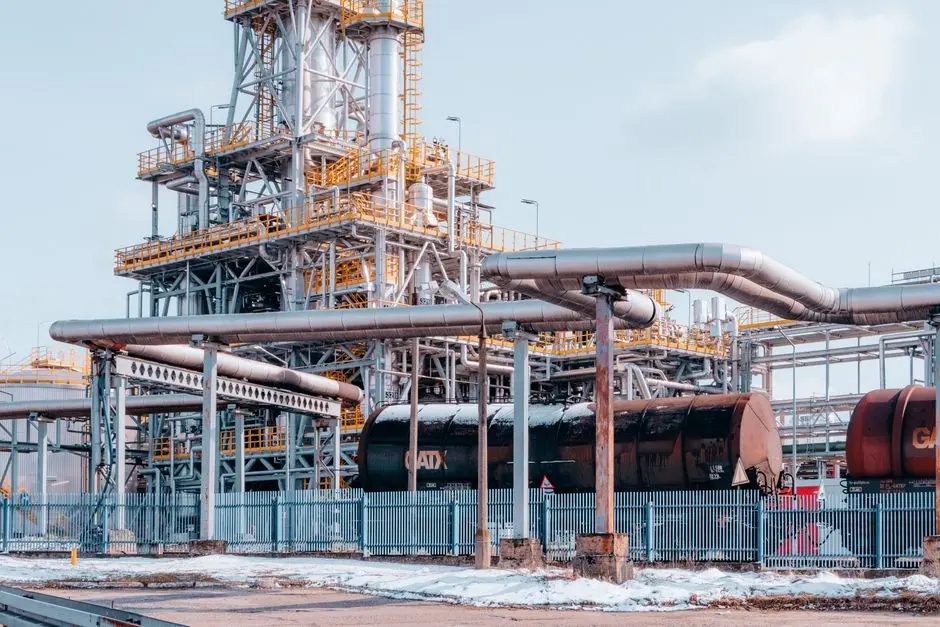
Quincy's brine handling is a lined evaporation pond with solids removed every 2–3 years — workable in arid Washington but rarely practical in Metro Vancouver where land is scarce and rainfall would dilute brine ponds; Vancouver projects instead route softening sludge to dewatering and RO concentrate to a small brine concentrator or licensed hauler. A plate and frame filter press handles the clarifier underflow, while a high-efficiency sedimentation tank upstream of the press drops the sludge volume before pressing. The RO concentrate side needs either an MVC unit (95–98% recovery, distillate < 10 mg/L TDS) or a smaller packaged brine concentrator sized to the Vancouver discharge window.
Closed-loop reuse is the right default for Vancouver because (a) the BC Hydro grid is low-carbon, so the reuse-train GWP penalty is negligible (Cartagena Vaca et al., 2026), and (b) avoiding discharge entirely side-steps Metro Vancouver's mass-loading calculations under Sewer Use Bylaw No. 299. Closed-loop reuse also raises effective COC and reduces freshwater intake proportionally — directly applicable to hyperscaler water-intensity targets in the 18%-achieved / 40%-by-2030 range that Microsoft published (per Microsoft local blog, 2024). For sites where the site discharge envelope is open and the operator is willing to accept a tighter permit, a partial-reuse configuration with a smaller MVC and a periodic brine haul can land the OPEX in the $2.50–$4.00/1,000 gal band, which is the same range as the worked example below.
Worked example: sizing the train for a 20 MW Vancouver edge data center
A 20 MW site with 4 cycles of concentration and Vancouver surface-water makeup at ~50 mg/L TDS generates blowdown in the 200–400 m³/day band at TDS 1,200–2,000 mg/L — well above Metro Vancouver's mass-loading envelope if sewered without treatment, and a strong candidate for closed-loop reuse. At an evaporative load typical of an AI-class edge deployment, the 25–30% blowdown fraction (Environmental Expert, Dec 2025) puts the makeup stream at roughly 800–1,600 m³/day, with the blowdown concentrated into the 200–400 m³/day range — close to the original Quincy site on a volumetric basis.
Specify: a multi-media filter at 10–20 m³/h, a PVDF hollow-fiber UF system at 0.03 µm and 10–30 m³/h, two-pass softening ahead of RO, an industrial RO system at 70–80% recovery sized to ~25 m³/h permeate, and MVC on the RO concentrate (95% recovery) sized to ~5–8 m³/h distillate return. A PLC-controlled chemical dosing skid ties antiscalant and pH adjustment to the RO feed.
Total installed CAPEX lands in the $1.5–$2.5M band; OPEX in the $2.50–$4.00/1,000 gal treated band, dominated by MVC energy and membrane replacement — comparable to the Quincy reference design when scaled to the same permeate output. Discharge envelope: zero sewered blowdown under steady-state operation, with periodic brine-sludge hauling on a 2–3 year cycle, mirroring Quincy's residuals management plan (per EPA case study, 2021).
Frequently Asked Questions
What wastewater and cooling blowdown treatment does a data center in Vancouver, Canada need in 2026?
A Vancouver data center needs a side-stream filtration + softening + ultrafiltration + reverse osmosis train, with an MVC brine concentrator when closed-loop reuse is the goal. The train must hold the Metro Vancouver Sewer Use Bylaw No. 299 envelope for TDS, chloride, sulfate, and heavy metals at the building sewer connection, sized for blowdown in the 1,200–6,000 mg/L TDS band at 4–6 cycles of concentration (Environmental Expert, Dec 2025).
Does Metro Vancouver Sewer Use Bylaw No. 299 cap TDS at the building connection?
Yes. Bylaw No. 299 enforces mass-loading limits for TDS, sulfate, and chloride at the building sewer connection, and many jurisdictions under the bylaw cap TDS discharge below 1,500 mg/L in practice (Environmental Expert, Dec 2025). Concentrated blowdown above ~2,000 mg/L TDS cannot be sewered without treatment, which is why RO plus optional MVC is the default 2026 design.
Why is the Quincy closed-loop reuse model the right reference for Vancouver instead of the Mount Pleasant avoidance model?
Quincy's closed-loop reuse (300–350 µS/cm blended permeate, 97% potable offset, no surface discharge) is the right reference when source-water or discharge limits bind — which they do in Metro Vancouver under Sewer Use Bylaw No. 299. Mount Pleasant's liquid-to-chip avoidance model (zero cooling blowdown, 350,000 gpd peak reserve) only fits temperate sites where air-side economization covers most of the year and where AI rack densities allow closed-loop liquid-to-chip cooling. For most Vancouver sites, the binding permit envelope pushes the design toward a smaller-scale Quincy train, not full Mount Pleasant-style avoidance.
What is the BWRO recovery ceiling on cooling tower blowdown?
Conventional brackish water reverse osmosis plateaus at 75–80% recovery on cooling tower blowdown, beyond which scaling from silica, calcium carbonate, and calcium sulfate drives chemical consumption and cleaning frequency up sharply (IDE, 2026; Environmental Expert, Dec 2025). Pushing recovery higher requires either a fluidized-bed salt-precipitation reactor (IDE MAXH₂O) or MVC on the concentrate.
Is the GWP penalty of reuse still high on BC Hydro's grid?
No. A 2026 comparative LCA shows that under a fully decarbonized grid the reuse GWP penalty drops to negligible levels, with chemical production as the dominant residual contributor (Cartagena Vaca et al., 2026). BC Hydro's grid is among the cleanest in North America, which is why closed-loop reuse is the right 2026 default for Vancouver data centers and the freshwater-displacement benefit is captured without an offsetting carbon cost.
Related Equipment
- industrial RO system with 70–85% recovery — specifications, capacity range, and technical data