What 'Wood Processing Wastewater' Actually Contains
A typical wood-product facility consumes more than 300 m³ of process water per day, and the effluent that leaves the mill carries more than 10,000 mg/L COD, 2,400–2,800 NTU turbidity, 2.52 g/L total solids and a pH of 5.5–6.5 (source: ScienceDirect S2-S3 study, 2020). Those four numbers are the design basis for every membrane, pump and coagulant dose discussed below — ignore them and the UF specification will underperform on day one.
The feed is not one stream. Mills run four sub-streams that blend in the equalisation basin but behave differently on a membrane:
| Sub-stream | Dominant load | Why it matters for UF |
|---|---|---|
| MDF (medium-density fibreboard) | High dissolved organics from resin, wax and fibre fines; moderate turbidity | Colloidal resin droplets foul the cake layer fast; demands tight coagulation before UF |
| Particleboard | High TSS from chip wash, wood dust and urea-formaldehyde carryover | Coarse solids load up backwash cycles; DAF or screening must precede UF |
| Laminate flooring / melamine-faced panels | Reactive tints, dye baths and melamine resin residues | Dye molecules are low-MW and pass through UF; colour removal needs NF or strong biological oxidation |
| Door-skin / veneer | Low-to-moderate COD, occasional biocide spikes from preservation | Generally the easiest sub-stream for UF; useful as a baseline for sizing |
Reactive tints and melamine-based colourants resist biological degradation because their aromatic molecular structures are too complex for conventional activated sludge to break down efficiently (source: S2-S3, 2020). That single fact is what justifies a membrane polish downstream of any biological step: biology clears dissolved BOD, the membrane handles the refractory colour.
This influent profile maps onto a standard pretreatment train — coarse screening, grit removal, equalisation, DAF clarification for wood-process wastewater, optional chemical coagulation, then the UF stage. The job of the front end is to drop the feed turbidity and TSS into the envelope the UF membrane can tolerate; the job of the UF itself is to deliver a low-SDI permeate to whatever polish follows.
Where Ultrafiltration Sits in a Wood-Plant Treatment Train
UF is a clarification and colloidal-load step, not a dissolved-solids or colour step. It sits after screening, equalisation and coagulation/DAF, and before any biological polish, nanofiltration or reverse osmosis. A 0.01–0.03 µm pore size — typical of a hollow-fibre PVDF ultrafiltration system rated for industrial wood duty — removes suspended solids, colloids, bacteria and most high-molecular-weight organics while letting monovalent ions, low-MW sugars and the small dye molecules pass through into the NF or RO stage.
The S2-S3 study placed UP150 and UP005 UF stages in series upstream of NF270 and NF90 NF membranes, with the NF90 operating at 20 bar delivering the final water quality. That sequence works because UF reduces the silt density index (SDI) of the feed water to a level NF/RO can tolerate; sending raw wood effluent straight to NF would foul the tight membrane in hours, not days.
Engineers sometimes ask whether to skip UF and go straight to NF. The answer is almost always no on a wood feed: NF90 has a 0.2–0.5 nm nominal pore size, and without upstream colloidal removal the fouling rate is uneconomic. UF is the buffer that makes downstream membrane stages viable.
How UF Removes Turbidity, TSS and Colour-Bound Organics
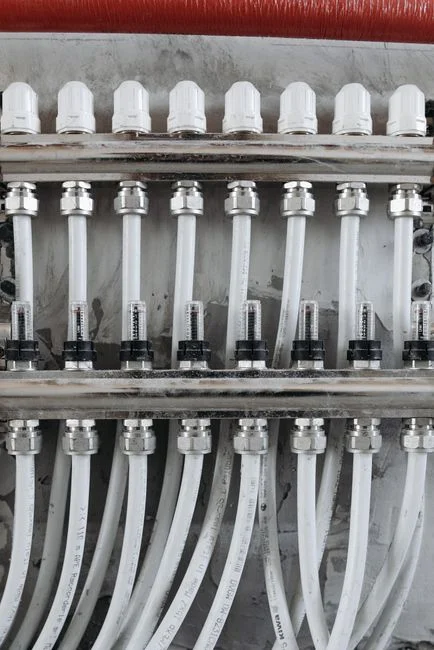
UF on a wood feed relies on three mechanisms working together. First is size exclusion: a 0.01–0.03 µm pore physically blocks suspended solids, fibre fines, bacteria and most colloidal resin droplets — the same mechanism that drops turbidity from 2,400–2,800 NTU to single digits in a well-run system. Second is surface cake formation: as the cross-flow concentrates rejected material on the membrane surface, that cake itself becomes a secondary adsorbent for high-molecular-weight colour bodies and bound COD fractions.
Third is hydraulic control. A timed backwash plus air-scour pulse lifts the cake every 20–60 minutes, and a clean-in-place (CIP) cycle with acid and alkaline detergents removes the adsorbed organics the backwash cannot. Without that periodic reset, the cake would compact, the transmembrane pressure would climb, and flux would collapse. The combined S2-S3 data showed that UF alone left most of the colour reduction to the subsequent NF90 stage because low-MW dye molecules (reactive tints, melamine residues) pass through a 0.01–0.03 µm pore; UF clears the bound and colloidal colour, NF clears the soluble fraction.
The practical takeaway is that a UF permeate will look visibly clear and will have low turbidity and TSS, but it will still carry colour if the upstream line is melamine or dye-bearing. That residual is not a UF failure — it is the design envelope.
Design Parameters an Engineer Must Specify for a Wood-Plant UF
Putting numbers on the membrane choice is what separates an RFQ that performs from one that has to be re-engineered in commissioning. The parameters below are the working envelope a process engineer should write into a 2026 wood-plant UF specification:
| Parameter | Specification | Engineering rationale |
|---|---|---|
| Pore size / MWCO | 0.01–0.03 µm (≈100–150 kDa MWCO) | Small enough to retain colloids and resin droplets, large enough to sustain flux |
| Membrane material & format | PVDF hollow-fibre, outside-in | PVDF tolerates the pH 2–12 CIP envelope; outside-in handles high-solids wood feed better than inside-in |
| Operating flux | 40–80 L/m²·h net, conservative band for wood duty | Lower end for MDF/laminate lines with resin fouling tendency; upper end for cleaner door-skin/veneer streams |
| Transmembrane pressure (TMP) | 0.5–1.5 bar | Operating above 1.5 bar risks irreversible cake compaction; TMP creep above baseline is the trigger for CIP |
| Single-pass recovery | 85–95% | Retentate returns to equalisation; pushing past 95% accelerates fouling on a wood feed |
| Backwash | Automatic, timed + dP-triggered, with air scour | Permeate-side backwash plus compressed-air pulse keeps the cake layer from compacting |
| Feed turbidity limit | ≤300 ppm (post-DAF/coagulation) | Rated feed envelope per the industrial UF spec; exceeding it shortens backwash cycles and membrane life |
| Module housing | PVC or FRP pressure vessels, stainless manifolds | Resists wood-stream chemistry; eases module replacement |
| Control | PLC with TMP, dP, flow and turbidity instrumentation | Permits trending for CIP prediction and RO/SDI feed-quality verification |
These numbers align with the design envelope of a hollow-fibre PVDF ultrafiltration system rated for industrial wood-process duty. Anything looser risks under-specifying; anything tighter (sub-0.01 µm) on a wood feed is almost certainly going to foul faster than the operator can clean it.
Pretreatment Chemistry That Protects the UF Membrane
Coagulant choice upstream of the UF is the single biggest lever an operator has on membrane flux and cleaning frequency. The S2-S3 study compared four coagulants on the same wood-process feed and recorded the following optimum results:
- Aluminium sulphate (alum) at 500 mg/L, pH 7: turbidity 99.5%, COD 89.8%, colour 51.1% removal.
- Polyaluminium chloride (PAC) and iron(III) chloride (FeCl₃): tested across 250–1,000 mg/L; both delivered comparable turbidity removal to alum, with PAC typically producing less sludge at the cost of higher chemical unit price.
- Processed Moringa Oleifera powder (PMOP) at 2,000 mg/L: turbidity 98.9%, COD 84.7%, colour 73.7% removal — a bio-coagulant with no aluminium residual.
All figures from the S2-S3 jar tests, 2020. The Moringa result is notable because it is a natural polymer — a cationic protein destabilises suspended colloids — and it avoids the long-term aluminium-residual concern raised in the same study, which cited the hypothesised Alzheimer link as a public-health reason to limit alum dosage. A automatic coagulant dosing skid sized to the jar-test optimum keeps the feed-water quality inside the UF envelope without operator intervention.
pH correction to 6.5–7.5 ahead of UF improves colloidal removal and protects the PVDF membrane from extreme excursions; most wood feeds arrive at 5.5–6.5 (S2-S3) and need only modest caustic trim. The coagulant decision is not just about discharge compliance — it is the chemistry that determines whether the UF runs at 70 L/m²·h or collapses at 30.
UF Alone vs UF + Nanofiltration: When Each Pays Back
This is the central buying decision for any wood-plant membrane project. The S2-S3 data make the trade-off quantifiable:
| Train configuration | Turbidity removal | COD removal | Colour removal | Indicative operating pressure |
|---|---|---|---|---|
| Alum coagulation alone (500 mg/L, pH 7) | 99.5% | 89.8% | 51.1% | Atmospheric |
| Coagulation + UF (UP150 / UP005) | >99% (turbidity to <1 NTU typical) | ~85–90% | Marginal (low-MW dyes pass) | 0.5–1.5 bar |
| Coagulation + UF + NF270 | >99% | ~95% | ~90% | 10–15 bar |
| Coagulation + UF + NF90 (S2-S3 optimum, 20 bar) | 99.9% | 99.5% | 99.4% | 20 bar |
| PMOP coagulation + NF90 at 20 bar | 99.6% | 93.0% | 99.5% | 20 bar |
The colour and dissolved-COD step comes from NF, not from UF. That is the single most important number in this article. A coagulation + UF train (no NF) typically delivers >99% turbidity removal and 85–90% COD reduction (S2-S3, 2020), which is enough for many mills to meet local discharge limits or feed a downstream biological stage — at a fraction of the capex and energy of a 20-bar NF/RO system.
Decision rule: choose UF-only when the target is suspended and colloidal control plus reuse for chip wetting, board washing or cooling-tower make-up. Add NF/RO — for example an industrial RO system downstream of UF — when the target is recycle to boiler feed, high-grade process water, or strict colour limits in the discharge permit. Plants running melamine-faced MDF or laminate lines with reactive tints almost always fall into the second category; door-skin and veneer plants often do not. The capex delta between a UF-only and a UF+NF train typically justifies itself inside three to five years only when the avoided freshwater purchase and discharge penalty cross a mill-specific threshold.
Operating Costs, Membrane Life and Sludge Handling
UF membrane life on a wood-process feed with proper coagulation, backwash and CIP typically lands in the 3–5 year range, driven mainly by irreversible fouling from resin and dye adsorption that no CIP cycle fully recovers. The CIP regime that achieves that life is a weekly alkaline wash (pH 11–12, ~40°C) followed by an acid wash (pH 2–3) to remove inorganic scale, with a sodium hypochlorite dose in the alkaline step for biological/organic loading.
Three OPEX buckets dominate. First, chemical consumption: coagulant, CIP acid and alkali, and any antiscalant if RO follows. Second, energy for feed pumps, backwash pumps and air-scour compressors — a UF loop on a wood feed typically draws 0.1–0.3 kWh per cubic metre of permeate. Third, membrane replacement: PVDF hollow-fibre modules are the largest single line item, and a spare membrane elements package should be specified with the original RFQ.
UF concentrate — backwash water and CIP residue — routes to the sludge train. A plate-and-frame filter press dewatering the coagulated sludge to 30–35% dry solids is the most common downstream choice for wood mills. A well-designed UF system also reduces downstream RO/NF cleaning frequency, which lowers whole-plant OPEX even when the NF stage is in the train.
RFQ Checklist: Specifying a UF System for a Wood Plant in 2026
A 2026 vendor RFQ for a wood-plant UF should demand, at minimum, the following items in writing:
| RFQ line item | Minimum acceptable spec |
|---|---|
| Membrane material & format | PVDF hollow-fibre, outside-in, 0.01–0.03 µm pore size |
| Feed turbidity rating | ≤300 ppm sustained on UF feed (post-DAF/coagulation) |
| Net operating flux | Guaranteed value in L/m²·h at a stated TMP and feed condition |
| Recovery | ≥90% single-pass, with retentate routing documented |
| Backwash system | Automatic, timed + differential-pressure triggered, with air scour |
| Controls | PLC with TMP, dP, flow, turbidity and conductivity instrumentation |
| CIP skid | Acid, alkaline and optional hypochlorite dosing, heated, fully automated |
| Documented performance | Reference list on wood-industry or comparable high-COD/high-TSS industrial feed — not just municipal data |
| Membrane life warranty | Stated years or operating hours at named feed conditions |
| Downstream compatibility | SDI₁₅ ≤ 3 on UF permeate if NF/RO reuse is in project scope |
| Spares package | One set of membrane modules, seal kits and critical instrumentation included in bid |
Tying the bid to a specific hollow-fibre PVDF ultrafiltration system with documented wood-feed references removes the most common commissioning risk: a vendor who has only run municipal water treating a 2,400 NTU wood stream. For a deeper dive on cross-industry UF design, the engineering logic for UF system design for coffee processing wastewater follows similar flux-and-recovery principles, and a 2026 industrial RO membrane system cost guide can frame the downstream NF/RO economics. Plants comparing clarification upstream of UF should also review the DAF vs clarifier decision for pulp and paper wastewater — the wood-products train borrows the same pretreatment logic.
Frequently Asked Questions
What pore size UF membrane is best for wood processing wastewater?
A 0.01–0.03 µm PVDF hollow-fibre UF is the industry-standard specification for wood-process duty, large enough to sustain 40–80 L/m²·h flux on a high-solids feed and small enough to retain resin colloids, fibre fines and most bound COD.
Can UF alone remove colour from melamine or dye-bearing wood effluent?
No. UF removes turbidity, TSS and high-molecular-weight organics, but low-MW reactive tints and melamine residues pass through a 0.01–0.03 µm pore. The S2-S3 study recorded only marginal colour reduction on UF alone; the 99.4% colour removal came from the downstream NF90 stage at 20 bar.
What influent COD and turbidity should I design a wood-plant UF for?
Size the equalisation and pretreatment for a feed of more than 10,000 mg/L COD, 2,400–2,800 NTU turbidity, 2.52 g/L total solids and pH 5.5–6.5 (S2-S3, 2020), and rate the UF feed post-DAF/coagulation at ≤300 ppm turbidity and pH 6.5–7.5 to protect the membrane.
Do I need NF or RO after UF for an MDF or laminate line?
For an MDF or laminate flooring line carrying melamine or reactive tints, yes — add NF (NF90-class) or RO after the UF to meet colour and dissolved-COD limits, expecting 99.4–99.5% colour and 99.5% COD removal at 20 bar (S2-S3, 2020). A door-skin or veneer line with low colour loading can often stop at UF.
What coagulant dose should I specify upstream of the UF?
Jar-test on the actual mill effluent first. As a starting point, alum at 500 mg/L and pH 7 delivered 99.5% turbidity, 89.8% COD and 51.1% colour removal in the S2-S3 study; processed Moringa Oleifera powder at 2,000 mg/L delivered 98.9% turbidity, 84.7% COD and 73.7% colour without the aluminium residual.
Related Equipment
- industrial RO system — specifications, capacity range, and technical data