
Quick Answer: Which Should a Lewiston Mill Choose in 2026?
For most Lewiston pulp & paper mills evaluating a 2026 upgrade, a dissolved air flotation (DAF) system outperforms a conventional gravity clarifier because paper-mill fibers, fillers, and sticky fines have near-water density, and DAF achieves clarification in 3-5 minutes versus multi-hour settling (per Krofta's published pulp & paper application data). A clarifier still wins for heavy grit, low-TSS warm whitewater, or capital-constrained retrofits where footprint is available and Maine DEP limits are modest. The final pick is often dictated less by hydraulics than by the discharge permit: Maine DEP and EPA effluent limits for TSS, BOD, and color on the Androscoggin basin compress the option set toward whichever unit demonstrably meets those numbers in January, not July. If fiber recovery has sell-back value, DAF wins again.
Why Lewiston Is a Special Case for Pulp & Paper Clarification
The Androscoggin River basin carries decades of regulatory weight: paper-mill discharges shaped the river's cleanup schedule, the state's water-quality classification, and the discharge-loading caps that any 2026 upgrade must respect. A Lewiston mill is not choosing equipment in a vacuum; it is choosing equipment against a permit envelope that already accounts for color, TSS, and temperature-sensitive receiving-water standards. Mills that discharge to the Androscoggin or its tributaries are under heightened scrutiny for any change that increases instantaneous load, which pushes the spec toward units with short hydraulic residence and predictable effluent quality.
Cold Maine winters compound the problem. Water viscosity rises as temperature falls, and Stokes' Law tells us settling velocity drops with viscosity — so a clarifier rated for a given surface loading in July underperforms in January on the same stream. DAF, which relies on bubble attachment rather than gravitational settling, is far less sensitive to that viscosity shift, and the 3-5 minute clarification window (Krofta, 2026) holds through the cold months. The local mill mix — tissue, recycled-fiber, and coated paper — is exactly the stream profile the EPA's 1973 Gehm report flagged as prone to opalescence, the milky haze that even chemical coagulation cannot fully clear and that settling alone will never resolve (EPA-R2-73-184, 1973).
How a DAF Actually Works on Paper Mill Effluent
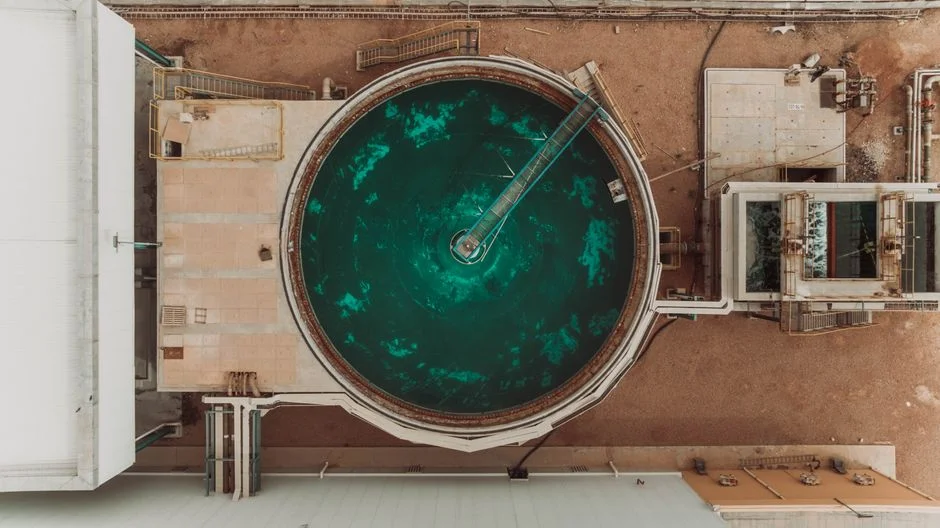
A DAF unit clarifies by floating contaminants rather than sinking them. Pressurized water is saturated with air in a side-stream saturator, then released into the main flotation tank at atmospheric pressure. The pressure drop nucleates millions of 10-100 micron micro-bubbles that attach to fibers, fillers, FOG, and stickies — particles with densities so close to water that gravity gives up on them (Ecologix, 2025). The bubble-particle agglomerate rises in roughly 3-5 minutes, forming a thick float layer that an automatic skimmer scrapes into a sludge trough; clarified water exits from below through underflow weirs.
For paper mills, the skimmer is the unit's revenue center: the float is typically 3-6% solids, dense enough to send directly to a plate-and-frame filter press for dewatering, and in many configurations the recovered fiber is sold back into the paper machine or to a ceiling-tile or molded-pulp market. The 3-5 minute retention also gives DAF a hydraulic advantage during a paper-machine upset — a broke pulper dump or a coating-color spill can hit the clarifier hard, and a DAF absorbs that slug without washing out the way a multi-hour settling basin can. For more on sizing and operation, the HydropureWater dissolved air flotation system covers 4-300 m³/h across 13 standard models.
How a Gravity Clarifier Works on the Same Stream
A gravity clarifier — and its higher-rate cousin, the lamella or inclined-plate clarifier — relies on the same physics a drinking-water plant uses: give the particle enough quiescent time, and gravity does the work. Wastewater enters a flocculation zone where polymer is added to bridge fine particles into heavier flocs, then flows into a settling zone where solids drop to the bottom as underflow sludge and clarified water spills over peripheral weirs. Lamella designs pack inclined plates into the settling volume to multiply the effective surface area; a well-designed lamella clarifier achieves 20-40 m/h surface loading, which is what makes it a viable alternative when footprint is constrained (HydropureWater Lamella Clarifier spec sheet, 2026).
The EPA's 1973 Gehm report concluded that "satisfactory methods are available for removing the bulk of the suspended solids from most pulp and paper mill effluents" (EPA-R2-73-184, 1973), which is why clarifiers remain a default in many mills. Gehm also documented the failure mode: "finely dispersed pigments and debris… in very low concentration impart opalescence to receiving waters. Present treatment methods are not adequate to handle this problem. Even where applied, chemical coagulation fails to cope with it" (EPA-R2-73-184, 1973). For coated, filled, or deinked streams, the polish step is almost always a DAF or a polishing filter — which is why a hybrid train of clarifier-plus-DAF is so common. The HydropureWater lamella clarifier is typically deployed as that primary TSS-reduction stage in a hybrid train.
DAF vs. Clarifier: 2026 Parameter Comparison
This is the table your procurement team will screenshot. All parameters reflect typical operating ranges for paper-mill primary clarification as of 2026; cite back to source for any number you intend to put on a drawing.
| Parameter | DAF | Gravity / Lamella Clarifier | Best for Lewiston 2026 |
|---|---|---|---|
| TSS removal range | 70-95% on fiber/filler streams (Ecologix, 2025) | 50-80% on settleable solids; struggles with fines | DAF for tissue/recycled/coated |
| FOG / fiber capture | Excellent — bubbles attach to neutrally buoyant particles | Poor on FOG; partial on long fiber only | DAF |
| Hydraulic retention time | 3-5 minutes (Krofta, 2026) | Typically 1-3 hours | DAF for surge response |
| Footprint | Compact — small tank, high rate | Large civil footprint; lamella reduces but still substantial | DAF for tight sites |
| Polymer demand | Moderate; matched to bubble attachment | Higher; floc must be heavy enough to settle | DAF wins on $/lb TSS removed |
| Cold-weather sensitivity | Low — bubble attachment largely viscosity-independent | High — settling velocity falls as viscosity rises | DAF for January |
| Fiber-recovery potential | Built-in — float goes to press or back to machine (Krofta, 2026) | Limited — underflow is watery and hard to re-fiber | DAF |
| Sludge density | 3-6% float solids — press-ready | 1-3% underflow — needs thickening | DAF |
| CapEx band (2026) | Moderate — packaged unit, small civil | Higher civil cost; lower equipment cost | Tie — site-dependent |
| OPEX band (2026) | Higher air + polymer; lower sludge hauling | Lower chemical; higher sludge volume and hauling | DAF on life-cycle OPEX |
| Siting / permit risk | Float storage can attract local pushback (S1, 2024) | Low profile; covered basins are community-friendly | Engage community early on DAF siting |
Decision Framework: When to Pick DAF, When to Pick a Clarifier
The choice collapses to a few rules a process engineer can apply on the back of an envelope:
- Pick DAF when the influent TSS is dominated by fibers, fillers, stickies, or coating broke; when recovered fiber has positive sell-back or in-machine reuse value; when footprint is constrained by a 2026 expansion inside an existing building pad; when January receiving-water temperature drops the clarifier below its rated surface loading; or when the permit envelope demands consistent TSS at high flow.
- Pick a clarifier (or lamella) when the stream is heavy grit, raw intake water, or warm and stable year-round; when capital is tight and civil works are cheaper than packaged equipment; or when a downstream DAF polish is already planned and the primary job is just bulk TSS reduction ahead of biological treatment.
- Pick a hybrid train — primary lamella clarifier for bulk settleables, DAF polish for opalescence-causing fines — when the mill runs a coated, filled, or deinked grade. The EPA 1973 Gehm report explicitly notes that "a similar haze in the effluent can remain after biological treatment" (EPA-R2-73-184, 1973), which is the engineering justification for retaining a DAF step even after secondary treatment. For polymer-control questions on either unit, the polymer overdosing troubleshooting field guide is a useful companion reference.
2026 Cost, Footprint, and Cold-Climate Notes for Lewiston
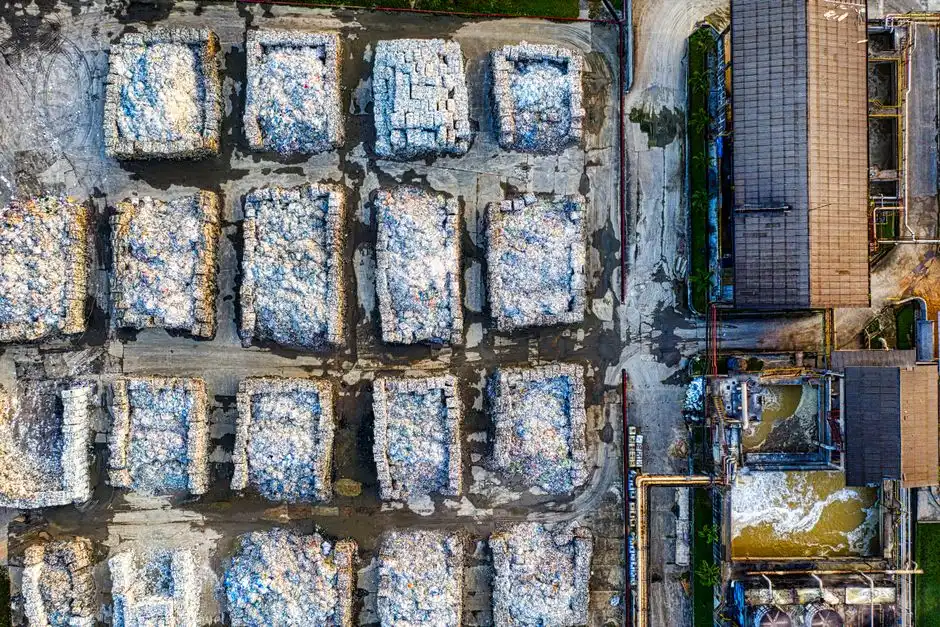
Footprint is usually the first constraint a Lewiston plant manager raises. The HydropureWater DAF covers 4-300 m³/h across 13 standard models, which envelopes a single tissue-machine or recycled-fiber line and arrives as a packaged unit with a much smaller pad than an equivalent clarifier (HydropureWater, 2026). A lamella clarifier running 20-40 m/h surface loading can match that flow in a smaller footprint than a conventional clarifier, but it still needs substantial civil works — influent stilling, floc tank, sludge hoppers — that the DAF does not. For dewatering the resulting float or underflow, a HydropureWater plate and frame filter press is the typical downstream step, and a HydropureWater automatic chemical dosing system keeps polymer feed consistent across both winter and summer viscosity swings.
Regarding operating cost, the trade is air and polymer for DAF versus sludge volume and hauling for clarifier. DAF float at 3-6% solids drives a smaller, drier cake out of the press; clarifier underflow at 1-3% needs a thickening step before pressing, which adds polymer and tankage. On cold climate, the rule of thumb is that a clarifier's effective surface loading falls by roughly 20-35% as water drops from 20 °C to 4 °C because of viscosity, while a DAF's 3-5 minute retention is set by bubble rise velocity, which is far less temperature-sensitive (Krofta, 2026). For a broader cost comparison against another flotation competitor, see the 2026 DAF vs API separator CapEx and OPEX breakdown.
Permitting and Community Risk: The DAF Storage Question
One risk a purely technical guide will miss: DAF float storage has triggered local moratoriums elsewhere, and any 2026 Lewiston siting should plan for it. In February 2024, the Caroline County, Maryland commissioners imposed a temporary moratorium on new DAF storage facilities until fall, citing resident complaints about odor, truck traffic, and visual impact during sludge removal (WBOC, 2024-02-27). That is a documented precedent for permit pushback on the storage side of a DAF installation, not on the clarification unit itself. The triggers are well known: uncovered float tanks, infrequent sludge haul-out, and proximity to residential receptors.
The 2026 best practice is straightforward: specify enclosed or covered DAF tanks, schedule regular float removal so residence time in the storage tank stays short, and engage the community and the local code officer early — before the P&ID is frozen, not after the public hearing. The clarification technology itself is rarely the permit problem; storage and hauling logistics are.
Frequently Asked Questions
DAF vs. clarifier for paper mill wastewater — which is
Frequently Asked Questions
DAF or clarifier for pulp and paper wastewater — which is better in 2026?
The choice between Dissolved Air Flotation (DAF) and gravity clarification in 2026 depends primarily on the density and particle size of the suspended solids. DAF systems are superior for removing low-density materials such as fibers, fillers, and stickies that have settling velocities near zero, typically achieving 85-95% Total Suspended Solids (TSS) removal. Gravity clarifiers remain more efficient for high-density, inorganic mineral loads, providing a more stable footprint for heavy, high-volume inorganic settling.
Can a gravity clarifier replace a DAF in a recycled-fiber tissue mill?
A gravity clarifier generally cannot replace a DAF in a recycled-fiber tissue mill because the process water contains high concentrations of lightweight, hydrophobic contaminants like ink particles and micro-stickies. These particles often remain buoyant or neutrally buoyant, preventing effective sedimentation in a conventional clarifier. Replacing a DAF with a clarifier in this specific application would likely lead to excessive carryover of fibers and contaminants, causing rapid fouling of downstream membrane bioreactors or effluent discharge violations.
What flow range does a HydropureWater DAF system cover for paper mills?
HydropureWater DAF systems are engineered for modular scalability in pulp and paper applications, covering flow ranges from 50 gallons per minute (GPM) for smaller side-stream treatment units up to 5,000 GPM for primary mill effluent treatment. These units are designed to handle variable hydraulic loading rates between 1.5 and 4.0 GPM per square foot of surface area, depending on the specific fiber consistency and chemical conditioning applied to the influent.
Does dissolved air flotation still work in cold Maine winters?
Dissolved air flotation remains highly effective in cold Maine winters, provided the system is housed in a climate-controlled enclosure or utilizes insulated piping to prevent the saturation of air from being compromised by rapid temperature fluctuations. While lower water temperatures increase viscosity and slightly reduce the rise velocity of air bubbles, modern DAF systems compensate for this by adjusting the recycle ratio—typically increasing it by 10-15%—to maintain consistent bubble density and buoyancy force at temperatures as low as 34°F (1°C).
How do you handle and dewater DAF float sludge from a paper mill?
DAF float sludge from paper mills typically has a low solids content of 2-5%, requiring thickening before final dewatering. The most effective approach involves using a gravity belt thickener or a rotary drum thickener to increase solids concentration to 8-12%, followed by a screw press or centrifuge to reach a final cake dryness of 25-35%. Proper chemical conditioning using high-molecular-weight cationic polymers is essential to break the air-fiber bond and ensure efficient water release during the mechanical dewatering phase.