What Makes Chemicals Wastewater Hard for Both MBR and CAS
A Sparta, Wisconsin specialty- or pharmaceutical-chemicals plant typically discharges an influent that would wreck a textbook design: COD 1,000–10,000 mg/L, ammonia-N 50–500 mg/L, chloride 2,000–8,000 mg/L, and intermittent spikes of solvent, pH excursion, or oil carryover when batch reactors dump (HydropureWater field data, 2026). The organics are frequently refractory — halogenated aromatics, phenols, glycol ethers, and solvents that conventional settling cannot touch and that pass through a clarifier unchanged. Both biological systems need long sludge retention time (SRT) and acclimated biomass to break these down, and both lose performance when the feed swings.
Two more stressors sit on top of the chemistry. First, Sparta winter wastewater temperatures drop to 5–8 °C from December through March, and biological rates roughly halve per 10 °C of cooling, so nitrification and COD polishing slow materially through the cold months. Second, the regulatory ceiling is not generic: Wisconsin NR 200 (industrial wastewater), NR 210 (sewage works), and NR 211 (pretreatment) govern the discharge, with 40 CFR 403 General Pretreatment Standards as the federal floor. Local POTW limits — ammonia, BOD, TSS, oil & grease, sometimes phenols or specific solvents — are usually tighter than the federal categorical standards, so surcharge and pass-through risk is real.
These three facts — refractory organics, winter temperature derating, and layered Wisconsin/federal compliance — frame every comparison that follows.
How Conventional Activated Sludge Handles a Chemicals Stream
A conventional activated sludge (CAS) system is an aeration tank followed by a secondary clarifier, with return activated sludge (RAS) and waste activated sludge (WAS) loops. Mixed liquor suspended solids (MLSS) typically sit at 2,000–4,000 mg/L, and SRT runs 5–15 days — short enough that slow-growing nitrifiers and specialist degraders of refractory organics wash out before they establish.
For a chemicals plant, CAS brings real strengths. Capital cost is the lowest in the toolkit. Energy demand is roughly 0.3–0.6 kWh/m³ for the biological step alone. Wisconsin operators have run CAS for decades, and the process tolerates wide swings in influent suspended solids, which is useful when batch reactors dump. Aeration tanks are also forgiving of accidental hydraulic surges.
The weaknesses show up exactly where a chemicals plant is weakest. Shock organic loads trigger bulking — filamentous bacteria outcompete floc-formers and the sludge stops settling. Rising sludge in warm secondary clarifiers or denitrification in the clarifier blanket can push TSS over 50 mg/L in a single afternoon. Nitrifiers, which grow at 0.3–0.5/day maximum specific growth rate, get washed out of a 5–10 day SRT system when ammonia climbs above 200 mg/L, and recovery takes days. The clarifier overflow carries every suspended solid, every free bacterium, and most colloidal COD regardless of upstream biology, so a tertiary filter plus UV is almost always needed to reach reuse or tight POTW limits. Typical CAS effluent sits at BOD 10–30 mg/L, TSS 10–30 mg/L, and NH3-N 5–15 mg/L — workable, but with little margin against local limits and no buffer for batch spikes.
How MBR Handles the Same Chemicals Stream
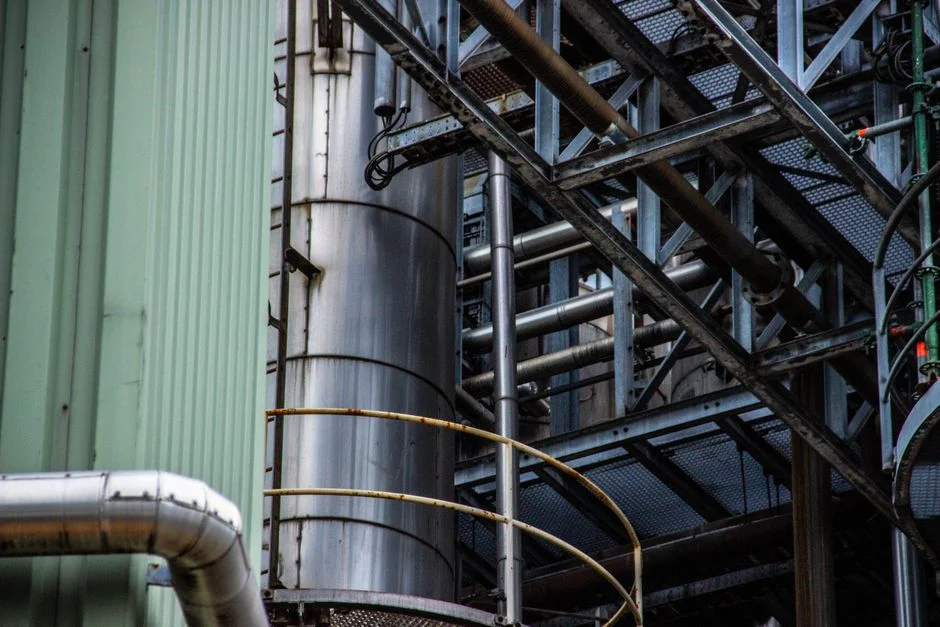
A membrane bioreactor (MBR) couples the same activated-sludge biology to an ultrafiltration membrane — typically a DF series flat sheet MBR module with 0.04–0.4 µm PVDF — that replaces the secondary clarifier. MLSS climbs to 8,000–15,000 mg/L, SRT extends to 20–60 days, and the physical membrane barrier stops TSS, most colloids, and a large fraction of bacteria regardless of how the floc is settling on any given shift. A packaged integrated MBR system collapses the bioreactor and membrane tank into a single skid, which matters on a constrained Sparta site.
The higher SRT and MLSS are not marketing copy — they directly change the chemistry. Nitrifiers, with their slow growth rates, stay in the tank at 20+ day SRT even when ammonia-N swings between 100 and 400 mg/L. Refractory aromatics get weeks of contact time with acclimated biomass instead of the 4–8 hours a clarifier-bound system can offer. The membrane physically rejects TSS and most bacteria, so effluent routinely lands at BOD <5 mg/L, TSS <1 mg/L, NH3-N <1–5 mg/L, and 4+ log pathogen removal — reuse-grade without tertiary polish (HydropureWater field data, 2026).
The sensitivity list is short but unforgiving. Oils and greases above 50 mg/L cause irreversible fouling. Aggressive solvents (ketones, aromatics, chlorinated solvents above solubility limits) can swell or dissolve PVDF over time. Sustained temperatures above 40 °C shorten membrane life. Any Sparta plant considering MBR on a chemicals stream with intermittent solvent or oil carryover needs a 30–90 day pilot, not a paper specification, before committing.
Head-to-Head Parameter Comparison
Engineers usually want this table in one place before they keep reading. Values are drawn from HydropureWater project data, peer-reviewed plant-wide comparisons, and field experience on chemicals streams.
| Parameter | CAS (with tertiary) | MBR (submerged PVDF) |
|---|---|---|
| MLSS range | 2,000–4,000 mg/L | 8,000–15,000 mg/L |
| SRT range | 5–15 days | 20–60 days |
| Typical effluent BOD | 10–30 mg/L (5–10 with tertiary) | <5 mg/L |
| Typical effluent TSS | 10–30 mg/L (5–10 with tertiary) | <1 mg/L |
| Typical effluent NH3-N | 5–15 mg/L | <1–5 mg/L |
| Footprint relative to CAS | 1.0× baseline | 0.5–0.7× (30–50% smaller) |
| Specific energy, biological step | 0.3–0.6 kWh/m³ | 0.3–0.8 kWh/m³ modern; 1.5–2.5 kWh/m³ older designs |
| CAPEX premium vs CAS | Baseline | 20–40% at install |
| Membrane replacement interval | N/A | 7–10+ years |
| Microplastics in effluent | ~1 MP/L | ~0.4 MP/L (Mannina et al., plant-wide model comparison) |
| Oil & grease tolerance | Degrades (clarifier upset, scum) | Fouled irreversibly >50 mg/L |
| Solvent tolerance | Toxic to biomass; recoverable | PVDF damage possible above compatibility limits |
| Cold-climate (5–8 °C) derating | Slower kinetics, partial compensation via larger tank | Slower kinetics + lower membrane flux; higher MLSS partly compensates |
| Operator skill required | Standard, widely understood | Standard + membrane hygiene discipline |
Operating Cost and 20-Year Total Cost of Ownership
For a 500 m³/day reference plant meeting BOD <10 mg/L, TN <15 mg/L, TP <2 mg/L, MBR installs at roughly 32% capital premium over CAS. Over 20 years, that gap narrows to about 13% once membrane replacement, energy, and avoided tertiary work are tallied (HydropureWater project data, 2026). If any reuse value is captured — process water, cooling tower makeup, wash water — MBR's economics tip in its favour. The numbers get stronger still when the fair comparison is MBR vs CAS plus tertiary filtration plus UV disinfection rather than MBR vs raw CAS.
For a chemicals plant, four OPEX lines matter most: energy, chemical dosing, membrane replacement, and sludge handling. MBR runs hotter on energy (membrane scouring air and permeate suction) but colder on sludge — low cell yield at long SRT means 20–40% less waste activated sludge to haul. Membrane replacement at 7–10+ year intervals is the unique MBR line item, and membrane prices have dropped roughly 60% since 2010.
| Cost line, 500 m³/d, 20-year horizon | CAS + tertiary polish | MBR |
|---|---|---|
| CAPEX (install year) | Baseline | +20–40% |
| Energy, lifetime | Lower biological, lower membrane | +5–15% lifetime; comparable once tertiary is added to CAS |
| Chemicals (CIP, coagulant, defoamer) | Standard | +periodic membrane CIP (NaOCl, citric) |
| Membrane replacement | None | 1–2 events, 7–10+ year interval |
| Sludge hauling | Higher (lower SRT, higher yield) | 20–40% lower (long SRT, low yield) |
| Tertiary filtration + UV | Required for reuse or tight limits | Usually not required |
| 20-year TCO premium | Baseline | ~13% (narrows from 32% at install) |
Retrofit economics deserve a line. Many chemicals plants install submerged membrane cassettes inside an existing aeration basin — or pair the basin with a small dedicated membrane tank — and roughly double capacity in the same footprint, deferring greenfield civil work. The two prerequisites are upstream fine screening (≤2 mm) and enough blower capacity for both biological aeration and membrane scouring.
Wisconsin and Sparta-Specific Compliance Considerations
Wisconsin NR 200 covers industrial wastewater discharges, NR 210 governs sewage works design and approval, and NR 211 sets pretreatment requirements; the federal floor underneath is 40 CFR 403 General Pretreatment Standards. Local POTW pretreatment limits in the Sparta area are typically tighter than the federal categorical standards for BOD, TSS, ammonia, pH, and oil & grease, and chemicals plants often see specific toxic scan for phenols, formaldehyde, and solvent indicators on their discharge permit.
This is where the technology choice starts to settle. MBR's consistent sub-1 mg/L TSS and <5 mg/L BOD dramatically reduce surcharge risk on a high-strength chemicals stream and put the plant comfortably inside tight local ammonia limits without dedicated nitrification polishing. CAS plus tertiary filtration and UV can hit the same numbers on paper, but every additional unit process is another piece of equipment, another operator variable, and another point of failure during a batch dump.
Sparta winter is the variable nobody in a generic MBR-vs-CAS article addresses. From December to March, mixed-liquor temperatures fall to 5–8 °C, nitrification rates roughly halve per 10 °C drop, and water viscosity rises — which lowers membrane permeability and forces MBR design flux to be derated. CAS slows the same way and has to compensate with a larger aeration volume or longer HRT. The MBR advantage under cold conditions is that 8,000–15,000 mg/L MLSS retains more active biomass per unit volume, so the kinetic penalty is partially offset; the design hit is real but smaller than for CAS in a fixed tank.
Decision Matrix: When to Pick MBR vs CAS for a Sparta Chemicals Plant
Three questions usually resolve the choice. First, is land constrained or reuse water worth money? Second, how tight are the local discharge limits and how often does influent spike? Third, is the plant building greenfield, retrofitting an existing basin, or staying with what it has?
Pick MBR when the site is footprint-constrained, reuse water has measurable value, limits are tight (BOD <10, NH3-N <2, TSS <5 mg/L), the influent carries refractory organics or sustained ammonia above 200 mg/L, or the operation needs predictable effluent across batch spikes. Pick CAS plus tertiary polish when capital budget is the binding constraint, influent is relatively low-strength and biodegradable, a large existing basin is already in service, and reuse is not on the table. Pick retrofit MBR — submerged cassettes dropped into the existing aeration tank or a small membrane cell — when the plant is expanding capacity 50–100% and cannot grow the tank farm.
One hard rule: any chemicals stream with oils and greases >50 mg/L, solvent carryover above PVDF compatibility limits, or sustained temperatures above 40 °C needs a 30–90 day pilot before full-scale MBR commitment. Pretreatment, not membrane selection, is where most industrial MBR failures are born.
Frequently Asked Questions
Can MBR handle solvents and oil in chemicals wastewater?
MBR tolerates most biodegradable organics, but oils and greases above 50 mg/L cause irreversible PVDF fouling, and aggressive solvents (ketones, aromatics, chlorinated compounds) above their solubility limits can damage the membrane polymer. A 30–90 day pilot on the actual plant effluent is the only reliable answer for a given stream.
How does MBR perform in cold Wisconsin winters?
Biological rates roughly halve per 10 °C of cooling, so a Sparta plant running 5–8 °C mixed liquor in winter sees materially slower nitrification and COD polishing in both MBR and CAS. MBR's higher MLSS (8,000–15,000 mg/L vs 2,000–4,000 mg/L) partially compensates, but membrane permeability also drops, so design flux must be derated and additional membrane area provided.
Is MBR worth the 20–40% CAPEX premium for a chemicals plant?
Yes when reuse value, footprint constraint, or compliance variability is material. For a 500 m³/day plant the install premium is about 32% and narrows to roughly 13% over 20 years once avoided tertiary work, lower sludge haul, and membrane replacement are accounted for; reuse credit flips the balance to MBR's favour.
Can we retrofit our existing CAS basin with MBR cassettes?
Yes, and it is one of the most cost-effective capacity upgrades available. Submerged cassettes in the existing aeration tank or a dedicated membrane cell can roughly double capacity in the same footprint; the prerequisites are upstream fine screening (≤2 mm) and sufficient blower capacity for both biological aeration and membrane scouring.
Which Wisconsin permits apply to a Sparta chemicals plant discharge?
Wisconsin NR 200 (industrial wastewater), NR 210 (sewage works), and NR 211 (pretreatment) sit on top of the 40 CFR 403 General Pretreatment Standards. Local POTW limits in the Sparta area are typically tighter than the federal categorical standards, especially for ammonia, BOD, TSS, oil & grease, and certain toxics from chemicals plants. The 2026 COD discharge limit guide for industry summarises the federal layer, and the Wisconsin layer should always be confirmed against the current permit text before any design freeze. For related sector comparisons, see the MBR vs CAS for mining wastewater in Springdale and MBR vs CAS for transportation equipment wastewater in Coburg guides.