Why Coburg Transportation Equipment Plants Are Rethinking the Activated Sludge Baseline
For a transportation equipment plant in Coburg, Oregon, a membrane bioreactor (MBR) delivers near-reuse effluent (<1 μm PVDF filtration, typically <50 mg/L COD and <5 mg/L TSS) in roughly 60% less footprint than conventional activated sludge (CAS), but at higher energy demand and CapEx. CAS remains the lower-OPEX workhorse when discharge — not reuse — is the goal and space is not constrained.
The wastewater stream at a mid-size Coburg fabrication shop rarely looks like a textbook municipal influent. Between 50 and 500 m³/day, you will see oil-in-water emulsions from machining and stamping, alkaline phosphate cleaners from wash bays, paint and sealer overspray, occasional hexavalent chromium from passivation, and intermittent slug loads tied to single-shift production. Free and emulsified oil frequently lands above 50 mg/L during a shift peak; COD swings between 800 and 3,000 mg/L; pH drifts above 9 from alkaline cleaners. A lagoon-and-CAS train designed in the 1990s often runs at the edge of its ability to handle that profile, and the equalization basin absorbs the load only to push it downstream as a floc-killing slug.
Oregon DEQ industrial wastewater permits have steadily tightened effluent limits over the last decade, and Linn County water-supply planning now treats reuse as a permitting preference rather than a bonus. For a Coburg plant engineer, that combination — variable oily influent, tighter discharge windows, and a real reuse opportunity for wash-bay or cooling-tower makeup — is the reason the CAS-plus-clarifier default is being questioned in 2026. The rest of this guide quantifies the MBR-vs-CAS trade-off in terms you can put in front of procurement and the regulator.
MBR vs CAS: How the Two Process Trains Actually Differ
Both MBR and CAS share the same upstream biology: an aeration basin where heterotrophic bacteria oxidize carbonaceous BOD, sometimes paired with a nitrification stage for ammonia removal. They diverge at the solid/liquid separation step that defines the technology. In a CAS system, mixed liquor flows to a settling tank where floc-forming bacteria settle under gravity and clarified water overflows to disinfection. The activated sludge process has been the dominant wastewater technology for more than 100 years (Jenkins and Wanner, 2014, as cited in Mannina et al., plant-wide modelling comparison, Bioresource Technology, 2020).
An MBR replaces that settling tank with a submerged PVDF membrane cassette, typically rated at <1 μm absolute pore size. The same biological community does the work; the membrane does the clarification. Per the integrated MBR membrane bioreactor system specification, the physical barrier produces near-reuse-quality effluent directly from the bioreactor and eliminates the clarifier, the sludge return loop, and most of the footprint those two structures consume.
Four MBR advantages over CAS are well established in the literature. Higher SRT allows degradation of recalcitrant compounds that wash through a CAS train. Lower cell yield produces less waste-activated sludge per kilogram of COD removed. The physical membrane barrier delivers very high effluent quality independent of biomass settleability. And the much smaller separation unit gives roughly 60% footprint reduction versus an equivalent clarifier (Ma et al. 2018, as cited in Mannina et al.). The MBR trade-offs are equally well documented: membranes foul, transmembrane pressure rises, and the mitigation strategies — chemical cleanings, physical backwashes, and continuous aeration scouring — increase energy demand and operating cost compared with CAS (Judd 2016; Xiao et al. 2019, as cited in Mannina et al.). For a transportation equipment plant, the right answer depends on whether the value of compactness and reuse outweighs the OPEX penalty.
Side-by-Side Engineering Comparison for a Coburg Transportation Equipment Plant
The table below consolidates the five engineering axes that drive equipment selection for a 100–200 m³/day oily, paint-laden influent typical of a Coburg fabrication shop. MBR figures are anchored to the DF series PVDF flat-sheet MBR modules spec and the Mannina et al. benchmark scenario; CAS figures reflect standard design ranges for a well-operated activated sludge plant with a secondary clarifier.
| Parameter | CAS (with clarifier) | MBR (submerged PVDF) | Source |
|---|---|---|---|
| Effluent COD (typical) | ~85–92% removal; 50–200 mg/L residual | >95% removal; typically <50 mg/L | Mannina et al. (2020); HydropureWater MBR spec |
| Effluent TSS | 90–95% removal; 10–30 mg/L | <5 mg/L (essentially zero turbidity) | HydropureWater MBR spec (<1 μm filtration) |
| Effluent turbidity | 5–15 NTU | <1 NTU | HydropureWater MBR spec |
| Biological-section footprint | Baseline | ~60% smaller than equivalent clarifier-based train | Ma et al. 2018 in Mannina et al.; HydropureWater product page |
| SRT range | 5–15 days typical | 20–60 days (higher MLSS tolerated) | Mannina et al. (2020) |
| Observed sludge yield (Yobs) | 0.3–0.5 kg TSS/kg COD | Lower cell yield — less WAS volume | Ma et al. 2018 in Mannina et al. |
| Energy demand | 0.2–0.4 kWh/m³ | 0.3–0.8 kWh/m³ (membrane aeration) | Judd 2016; Xiao et al. 2019 in Mannina et al. |
| Direct GHG emissions (model benchmark) | 0.85 kgCO₂eq/m³ | 0.91 kgCO₂eq/m³ | Mannina et al. (2020), benchmark scenario |
| Microplastic removal (effluent MP/L) | ~1 MP/L | ~0.4 MP/L | Lares et al. 2018 in Mannina et al. |
| Relative CapEx (same flow) | Baseline (lower) | +20–40% (membrane skids, cassettes, scour blowers) | Karim and Mark 2017 in Mannina et al.; HydropureWater field data, 2026 |
| Relative OPEx (same flow) | Baseline (lower) | +15–30% (cleaning chemicals, membrane replacement, aeration) | Mannina et al. (2020); HydropureWater field data, 2026 |
| Rinse-water / cooling-tower reuse potential | Rarely direct; usually needs tertiary polish | Direct, with UV or ClO₂ polish | HydropureWater MBR + UV product range |
Read the table bottom-up when the procurement conversation turns financial. The direct GHG delta is small in absolute terms (0.85 vs 0.91 kgCO₂eq/m³ per Mannina et al. benchmark), but MBR's reuse credit and lower sludge volume frequently flip the life-cycle balance once avoided water purchase and avoided hauling enter the equation. The microplastic row matters increasingly as Oregon DEQ tightens trace-contaminant scrutiny; 0.4 MP/L in MBR effluent versus 1 MP/L in CAS (Lares et al. 2018, cited in Mannina et al.) is a defensible number to keep in the file.
Matching the Technology to a Transportation Equipment Wastewater Profile
For either biological technology, a transportation equipment plant needs a robust headworks. The standard upstream train is a rotary mechanical bar screen (typically 2–6 mm aperture) for gross solids and rags, an equalization basin for the shift-driven slug loads, a dissolved air flotation system for free and emulsified oil, paint solids, and attached phosphate, and then the biological stage. The rotary mechanical bar screen protects downstream equipment from machining swarf and bindery that would otherwise blind a DAF or shred a membrane fiber.
DAF is not optional for this sub-sector. Free and emulsified oil above ~50 mg/L will rapidly foul PVDF membranes — a 5–10× compression in cleaning frequency is typical when oil slips past the DAF — and will deflocculate CAS biomass to the point of a complete loss of settling. The DAF needs to bring oil and grease reliably below 50 mg/L, ideally closer to 20 mg/L, before either biological stage sees the water.
That preconditioning lets the rest of the decision collapse to two questions. If the plant has a stated reuse target — wash-bay rinse, paint pre-rinse, cooling-tower makeup — MBR is the practical default because it produces reusable water directly from the bioreactor with only a UV or chlorine-dioxide polish. If the goal is sewer discharge under a standard Oregon DEQ permit and the site has land, CAS remains defensible. The full headworks-to-polish train for the MBR case is laid out in the MBR effluent quality vs cost engineering guide.
Oregon DEQ Compliance and the Coburg Permit Pathway
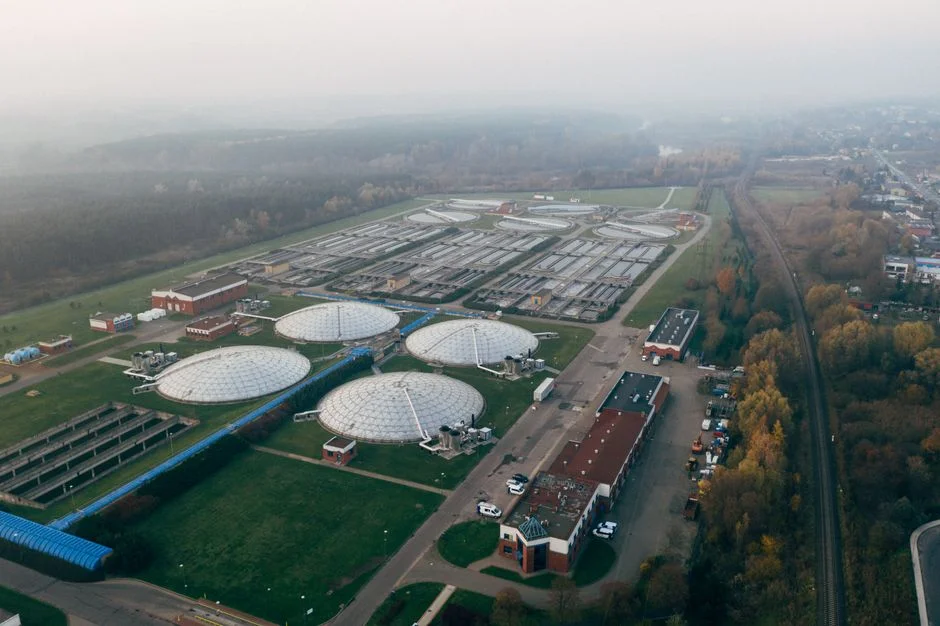
Oregon DEQ's industrial wastewater permits — the state-run NPDES-equivalent program — typically classify a transportation equipment manufacturer either under a categorical standard or, more often at mid-size flow, under a site-specific permit. BOD and TSS limits in the 30/30 mg/L ballpark are common for direct discharge, with oil and grease capped near 10–15 mg/L. MBR's tighter and more stable effluent (often <10 mg/L BOD, <5 mg/L TSS, near-zero oil) reduces the risk of permit excursions and typically simplifies the chronic and acute toxicity testing the permit imposes.
Operator certification is non-negotiable above the small-flow threshold. Oregon DEQ certifies wastewater treatment operators through the program described on the Oregon Environmental Services Advisory Council site (oesac.org, 2026), and either the CAS or MBR plant needs a certified operator on staff or a service contract with a certified provider. For very small flows — below roughly 20 m³/day — a packaged unit such as the WSZ underground integrated sewage treatment skid can sometimes sit under a less burdensome permitting path, which is worth raising early with DEQ if the project's average flow runs low.
CapEx, OPEx, and ROI for a Coburg-Scale Installation
For a 100 m³/day plant, CAS typically runs 20–40% lower absolute CapEx than an equivalent MBR because there is no membrane skid, no cassette inventory, and no scour-blower upgrade on the aeration basin. The membrane skids alone represent a meaningful share of the MBR premium, with PVDF flat-sheet modules priced per square meter of membrane area. The OPEx gap narrows over time but does not close: MBR's membrane replacement cadence (typically 1–2 replacement cycles per decade for PVDF flat sheet, per HydropureWater field data, 2026), cleaning chemicals, and higher aeration energy add 15–30% to annual operating cost, while sludge hauling drops because MBR's low cell yield cuts waste-activated-sludge volume (Ma et al. 2018, cited in Mannina et al.).
The long-horizon view is more favorable to MBR. Karim and Mark (2017) found that for operation beyond roughly 67 years MBR becomes the lowest life-cycle cost option because the initial CapEx premium is offset by superior effluent quality, reuse value, and reduced sludge handling (cited in Mannina et al.). A 20-year asset life is a more realistic planning window, and at that horizon the payback question is: can reuse savings and avoided hauling cover the OPEX premium?
A worked example for a 200 m³/day MBR with 60% rinse-water reuse at Coburg commercial water rates: at roughly $0.005–0.012 per liter for purchased water and sewer, 120 m³/day of avoided purchase plus 30–50% lower sludge disposal yields an annual savings band in the low six figures USD. Against an MBR OPEX premium of 15–30% versus CAS, simple payback lands in the 3–6 year range depending on influent COD, the actual reuse fraction, and pretreatment performance. The AAO process troubleshooting guide covers the operating issues that most often degrade that payback in the field.
Three-Question Decision Framework: CAS or MBR for Your Coburg Plant?
Run the three questions below in order. Whichever biological technology they select, integrate a dissolved air flotation system upstream and a UV sterilizer downstream on the reuse loop.
- Is water reuse a stated goal — wash bay, paint pre-rinse, cooling-tower makeup? If yes, default to MBR. If no, move to Q2.
- Is the biological-section footprint constrained by site layout (urban Coburg parcels under 2 acres, existing building footprint, setback limits)? If yes, MBR. If no, move to Q3.
- Is the 20-year life-cycle OPEX premium of MBR unrecoverable from water savings, sludge savings, and avoided permit risk? If yes, choose CAS with a parallel plate settler and a UV polish. If no, choose MBR.
For an apples-to-apples reference on a different sub-sector, the MBR vs CAS for plastics and rubber wastewater guide applies the same framework to a higher-strength influent and reaches a similar conclusion: MBR wins on reuse and footprint, CAS wins on CapEx simplicity.
Frequently Asked Questions
Does an MBR really need less space than CAS for a 100 m³/day transportation equipment plant?
Yes. The biological section of an MBR train is roughly 60% smaller than an equivalent CAS train at the same flow because the membrane cassette replaces the secondary clarifier and allows mixed-liquor suspended solids (MLSS) of 8,000–12,000 mg/L versus 2,000–4,000 mg/L in a conventional aeration basin (per the integrated MBR membrane bioreactor system spec, 2026). For a Coburg shop on a 1–2 acre parcel, that footprint delta is often the variable that determines whether the project fits the site.
How often will the MBR membranes need cleaning or replacement on a Coburg oily wastewater stream?
With an upstream DAF holding oil and grease below ~50 mg/L, chemical clean-in-place (CIP) on PVDF flat-sheet membranes typically runs every 1–3 months, and membrane replacement roughly every 7–10 years (HydropureWater field data, 2026). If DAF performance slips, expect the CIP interval to compress to weeks rather than months — the upstream pretreatment is what protects the membrane asset.
Is MBR effluent safe to reuse in the wash bay or for cooling tower makeup?
Yes, with a polish step. The <1 μm PVDF filtration delivers near-zero turbidity and TSS under 5 mg/L, and a downstream UV sterilizer or chlorine dioxide dose meets typical industrial reuse targets for wash-bay rinse, paint pre-rinse, and cooling-tower makeup. For cooling-tower reuse, watch the conductivity and silica — an RO polish may still be needed if cycles of concentration run high.
What influent parameters disqualify MBR for a transportation equipment plant?
Three conditions push the design back to CAS. Persistent oil and grease above ~100 mg/L after DAF will foul membranes faster than the cleaning regime can recover. Solvent streams that attack PVDF (ketones, aromatics above trace levels) are not compatible with the membrane material. And temperature swings beyond the membrane's rated range — for example, hot rinse water above 40–45°C sent directly to the membrane cassette — can damage the potting and housing. None of these are deal-breakers for a well-designed headworks, but they all have to be addressed in the P&ID.
How does Oregon DEQ permitting differ between CAS and MBR for the same discharge?
Effluent limits are set by the permit, not the technology. What changes is the operating margin. MBR's tighter and more stable effluent reduces the probability of an excursion and simplifies compliance monitoring, which is a real benefit when the permit imposes chronic or acute toxicity testing. Oregon DEQ operator certification is still required for either system above the small-flow threshold (per OESAC, 2026), so plan for a certified operator or a service contract regardless of which biological stage you select.