What Is the Industrial COD Discharge Limit and Why It Matters in 2026
Chemical oxygen demand (COD) measures the total oxygen required to oxidize both biodegradable and non-biodegradable organic matter in water, expressed in mg/L O2. The standard test is the dichromate closed-reflux method, designated CODCr, run at 150 °C for 2 hours with a titration or colorimetric finish per APHA 5220D and ISO 15705 (and the Chinese equivalent HJ 828-2017). It is the parameter regulators reach for first because it captures recalcitrant compounds — solvents, dyes, surfactants, humic substances — that BOD5 misses, and a single value can be reported within 3–4 hours of sampling.
Across the major regulatory regimes reviewed in 2026, the industrial COD discharge limit spans 30 mg/L to 500 mg/L. China GB 8978-1996 sets Grade 1A at ≤100 mg/L for the tightest surface-water discharges, while general heavy industry in several jurisdictions can discharge up to 500 mg/L to municipal sewers. Sector-specific tables routinely tighten the number further: textile effluent in India is capped at 100 mg/L, landfill leachate under EU Directive 1999/31/EC at 100 mg/L, refinery wastewater under US EPA 40 CFR 435 at 50–125 mg/L. Light industry typically faces 75–250 mg/L; heavy industry 150–500 mg/L; water-stressed and reuse-driven projects 30–100 mg/L.
Three forces tightened the 2025–2026 enforcement cycle. First, freshwater stress: the UN 2025 World Water Development Report put 2.4 billion people in water-stressed basins, pushing regulators to demand reuse-quality effluent. Second, PFAS and micropollutant scrutiny under the revised EU Industrial Emissions Directive (2024/1785, in force from 2026-07) tightened indirect-discharge consents for organic-chemicals and textile sites. Third, World Bank/IFC EHS Guidelines updated in late 2025 set a 50 mg/L threshold for projects discharging to reuse applications. At least 40 countries now enforce ≤100 mg/L for heavy industry, and 14 enforce ≤50 mg/L in sensitive catchments. Compliance managers who still design to 250 mg/L defaults are exposed to consent refusals during permit renewals through 2027. For context on the metallurgical end of the spectrum where ZLD pushes COD below 10 mg/L, see this 2026 hybrid IC wastewater treatment design with ZLD cost breakdown.
Country-by-Country COD Discharge Limits for Industrial Effluent (2026)
For multi-site operators, the legal number is set by jurisdiction first, sector second. The matrix below consolidates the operative 2026 limits for the five regimes most plants ask about. All values are mg/L COD and apply to direct discharge to surface water unless otherwise noted.
| Jurisdiction | Governing Instrument | Light Industry | Heavy Industry | Notes (2026 enforcement) |
|---|---|---|---|---|
| China | GB 8978-1996 (Grade 1A / 1B / 2 / 3) | ≤100 (1A) / ≤130 (1B) | ≤150 (Grade 2) / ≤500 (Grade 3) | Grade 1A mandatory in sensitive areas; new 2026 GB revisions under public consultation tighten pharma and electroplating by 30% |
| India | CPCB Schedule VI (2026 SPCB enforcement) | 250 (inland surface water) | 250 (inland) / 100 (textile, sector-specific) | State boards add sector norms: textile 100, refinery 125, pharma 250; ZLD mandated for new textile plants in Gujarat/Tamil Nadu |
| United States | EPA 40 CFR categorical standards | 75–250 (Part 467 metal finishing) | 50–400 (Part 414 organics, Part 419 petrochem) | Categorical limits set by SIC code; 40 CFR 435 refinery 50–125 mg/L is among the tightest in US law |
| European Union | Directive 91/271/EEC (UWWTD) + IED 2024/1785 | 200–1,000 to sewer (local) | 30–100 in sensitive areas | Indirect discharge to municipal sewer governed by local sewer ordinances; BAT-AELs override national defaults for IED sites |
| World Bank / IFC | EHS Guidelines for Industrial Wastewater (2025 update) | 250 to inland waters | 50 for direct reuse / 250 otherwise | Applies to World Bank/IFC-financed projects globally; lender requirement, not national law |
A few engineering observations from this matrix. First, the EU split between 91/271/EEC (which governs municipal treatment and accepts industrial discharge to sewer at 200–1,000 mg/L) and the IED BAT-AELs (which drive 30–100 mg/L at the plant outfall) is the most common source of confusion for transcontinental EHS managers — the local sewer authority's discharge consent is the binding number for indirect discharger. Second, China's GB 8978-1996 has not been replaced and remains the operative document in 2026, but provincial implementation rules in Jiangsu, Guangdong, and Zhejiang now add a 30% tightening for new electroplating and pharmaceutical permits effective 2026-04. Third, the US EPA categorical standards under 40 CFR 414 (organic chemicals, 150–300 mg/L), 40 CFR 467 (metal finishing, 75–250 mg/L), 40 CFR 436 (inorganic chemicals), and 40 CFR 435 (refinery, 50–125 mg/L) are self-implementing: a facility is in violation the moment its monitoring data exceeds the categorical number, regardless of any NPDES permit condition. Finally, the World Bank 50 mg/L reuse threshold is the de facto benchmark for any new industrial park in South/Southeast Asia financed by MDB lending, and it is functionally tighter than most national laws.
The WHO drinking-water guideline (10 mg/L COD as an aesthetic threshold for palatable water) is a downstream target for indirect potable reuse, not a discharge limit. Plants sending effluent to a drinking-water treatment plant should still meet their national industrial limit, then verify that the receiving utility can blend down to the WHO target.
Sector-Specific COD Limits: Textile, Pharmaceutical, Food, Refinery, Landfill Leachate
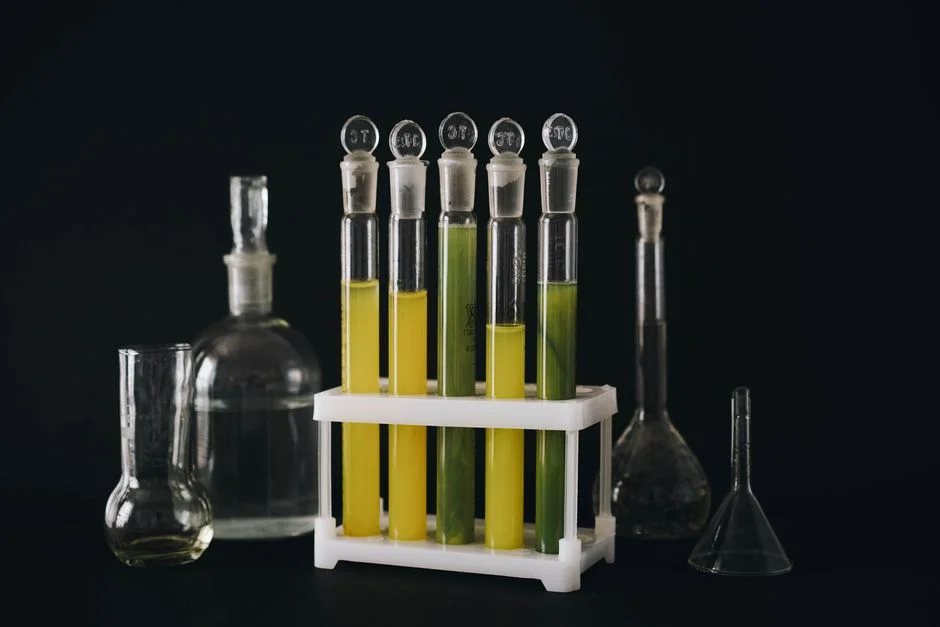
National frameworks are the legal ceiling, but enforcement uses sector tables. A textile plant in Surat and a refinery in Rotterdam face different daily-max values even though both countries publish a generic industrial limit. The table below maps typical influent concentrations to the binding 2026 discharge limit, drawn from the most-cited sectoral regulations.
| Sector | Typical Influent COD (mg/L) | Binding 2026 Limit (mg/L) | Governing Rule | Engineering Implication |
|---|---|---|---|---|
| Textile (dyeing & finishing) | 800–3,000 | 100 (India) / 250 (EU BAT-AEL, indirect) | CPCB textile norms; EU BAT BREF for textiles (2023 update) | Biological alone insufficient; Fenton or ozone polishing required for 100 mg/L |
| Pharmaceutical (API manufacturing) | 1,500–5,000 | 220 daily max (US) / 250 (India Schedule K) | US EPA 40 CFR 439; CPCB Schedule K | Residual API toxicity requires advanced oxidation before biological step |
| Food & beverage (dairy, brewery, sugar) | 1,000–8,000 | 100 (direct to surface water) / 250 (to sewer) | CPCB Schedule VI; EU UWWTD local consent | High FOG; DAF pre-treatment upstream of activated sludge is standard |
| Refinery & petrochemical | 300–1,200 | 50–125 (US) / 100 (China Grade 2) | US EPA 40 CFR 435; GB 8978-1996 | Phenols, sulfides, oil; requires API separator + biological + tertiary polishing |
| Electroplating / metal finishing | 200–1,500 | 75–250 (US) / 100 (China Grade 1A) | US EPA 40 CFR 413/467; GB 8978-1996 | Heavy metals co-occur; COD and metal removal must be sequenced correctly to avoid resin fouling |
| Landfill leachate | 5,000–50,000 | 100 (EU) / 100 (China GB 16889-2008) | EU Landfill Directive 1999/31/EC; GB 16889-2008 | Drives the Fenton + MBR + RO train; one of the highest-cost treatment workstreams per m³ |
Three patterns are worth flagging. Textile is unusual because its discharge limit (100 mg/L in India) is tighter than its influent variability warrants with biological treatment alone — plants that skip the Fenton or ozone polishing step routinely fail at 130–180 mg/L. Pharmaceutical effluent is not just a COD problem: residual APIs are toxic to nitrifiers, so a 2,200 mg/L influent that "looks" treatable on paper will shut down a CAS basin at 30% MLVSS if the API fraction exceeds 5% of the load. For a worked example on metal-finishing effluent with a similar heavy-metal-plus-COD matrix, the cable manufacturing wastewater treatment guide walks through a comparable design. Landfill leachate remains the hardest case: a 20,000 mg/L influent must reach 100 mg/L, a 99.5% removal that no single step delivers — the standard train is Fenton oxidation (60–70% removal) → MBR (95–98% cumulative) → RO (99.5% cumulative, effluent <30 mg/L), discussed in detail in this landfill leachate treatment process guide.
Treatment Process Selection by Target Effluent COD
Reading the limit off the country and sector tables is half the job; the other half is knowing which unit operation actually gets you there. The table below maps a target effluent COD to the realistic process train, with removal efficiencies drawn from municipal and industrial field data.
| Target Effluent COD (mg/L) | Recommended Train | Realistic Removal | Typical Influent Range (mg/L) | Notes |
|---|---|---|---|---|
| 250–500 | Primary settling + CAS | 60–85% | 500–2,500 | Sufficient only for 250 mg/L indirect-discharge consents; sensitive to shock load |
| 100–150 | A/O or A2/O biological nutrient removal | 80–92% | 800–3,000 | Standard for most China Grade 2 and India Schedule VI compliance |
| 50–100 | CAS + MBR (or Fenton + biological) | 95–99% | 1,000–5,000 | Required for textile (India 100 mg/L) and most reuse pre-treatment |
| 30–50 | MBR + RO polishing | >99.5% | 2,000–10,000 | Reuse-grade effluent; common in water-stressed Chinese provinces and Gulf states |
| <10 (ZLD) | MBR + RO + brine concentrator / crystallizer | ≥99.9% | 5,000+ | Required for landfill leachate and new Indian textile ZLD mandates |
The default industrial train starts with dissolved air flotation (DAF) pre-treatment at 4–300 m³/h to strip FOG, fibers, and free oil before they hit the aeration basin — a 30% FOG spike that survives into activated sludge will drop dissolved oxygen to <0.5 mg/L within an hour. For the biological stage, an MBR membrane bioreactor system is the workhorse for the 50–100 mg/L envelope: at MLSS 8,000–12,000 mg/L and SRT 20–30 days, MBR holds 95–99% COD removal with effluent turbidity <1 NTU, which protects the downstream RO. To hit <30 mg/L or zero-liquid-discharge (ZLD) targets, an industrial RO polishing system after the MBR delivers <10 mg/L COD at 75–95% recovery, with the RO reject routed to a brine concentrator or crystallizer for ZLD closure. Each step's removal compounds multiplicatively, not additively: a 60% Fenton followed by 95% MBR followed by 95% RO gives 99.7% overall (10,000 → 30 mg/L), not 60+95+95 = 250%.
COD Sampling, Testing, and Compliance Verification in 2026
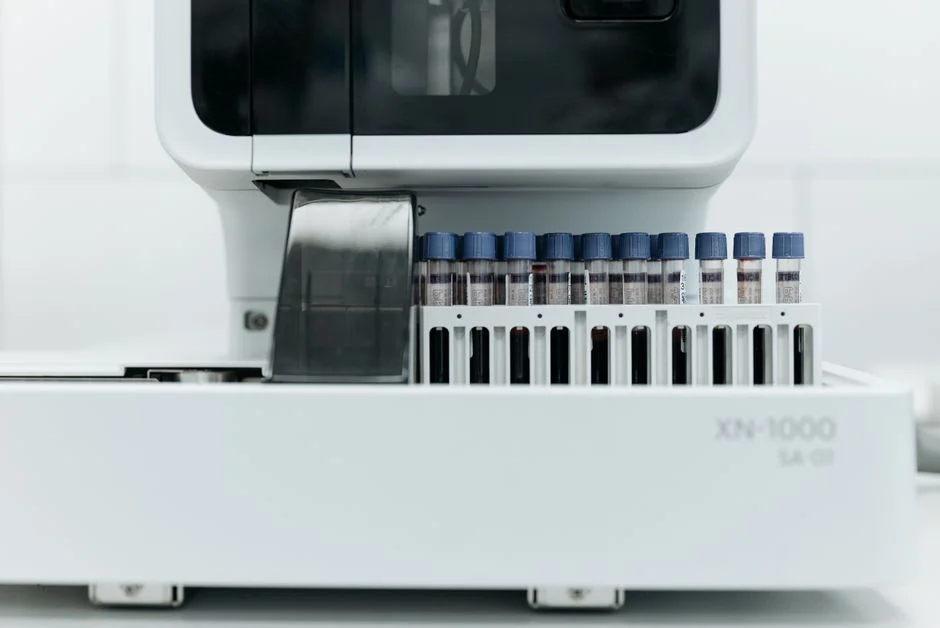
Even a well-designed plant can fail compliance on sampling error. The standard 2026 permit condition for continuous-discharge plants is a 24-hour flow-weighted composite sample, with a minimum of 2–4 grab-or-composite analyses per month and tighter frequency (weekly or online-continuous) for batch processors and SPCB watch-list sites. The test itself is closed-reflux dichromate at 150 °C for 2 hours, with titration (HACH 8000, open-tube or USEPA-approved) or colorimetric (HACH DRB200 reactor at 600 nm) finish per APHA 5220D, ISO 15705, or HJ 828-2017.
Three pitfalls dominate 2026 non-conformances. First, chloride interference: at influent Cl- > 2,000 mg/L (common in landfill leachate and brackish textile effluent), the dichromate reagent oxidizes chloride and inflates the COD reading by 50–200 mg/L. Standard suppression is HgSO4 at 0.4 g per digestion vial; chloride above 10,000 mg/L requires the 1:100 dilution method or the USEPA 410.4 ferrous ammonium sulfate back-titration variant. Second, sample preservation: COD must be analyzed within 24 hours of collection, with the sample held at ≤6 °C and H2SO4 acidified to pH <2. Third, online analyzer calibration drift: UV-Vis online COD analyzers (typical 0–2,000 mg/L range, 0.1 mg/L resolution) must be re-zeroed weekly and validated against a laboratory composite at least monthly, or the real-time trend will mask an actual excursion. An automated sampler paired with the analyzer closes the loop; for sizing and configuration, see this automatic sampler compliance guide.
Frequently Asked Questions
What is the standard industrial COD discharge limit in 2026? Industrial COD limits in 2026 range from 30 mg/L (China GB 8978-1996 Grade 1A, EU sensitive areas) to 500 mg/L (general heavy industry to municipal sewer), with light industry typically capped at 75–250 mg/L.
How can industrial effluent reach 50 mg/L COD? An MBR membrane bioreactor after conventional biological treatment delivers 95–99% COD removal and a stable 30–80 mg/L effluent; adding an RO polishing stage downstream pushes COD below 10 mg/L.
What is the difference between COD and BOD in discharge limits? COD measures total oxygen demand (biodegradable plus non-biodegradable organics) and returns a result in 2–3 hours; BOD5 measures only the biodegradable fraction over 5 days. Regulators use COD for fast enforcement and BOD5 for biodegradability assessment, with a typical COD:BOD5 ratio of 2:1 to 4:1 for municipal and 3:1 to 8:1 for industrial effluent.
What is the standard test method for industrial COD? The standard method is dichromate closed-reflux at 150 °C for 2 hours, with titration or colorimetric finish, codified as APHA 5220D, ISO 15705, and HJ 828-2017 in China, with chloride suppression using HgSO4 above 2,000 mg/L Cl-. For a full India CPCB effluent standards reference, see the dedicated 2026 compliance checklist.