Why Buenos Aires Factories Need a DAF-Based ETP in 2026
A Buenos Aires factory discharging to the Riachuelo/Matanza basin faces tighter limits than Argentina's national baseline: provincial ADA resolutions and ACUMAR Res. 1113/2013 impose effluent targets that most raw industrial streams cannot meet without a multi-stage treatment train, and 2026 DAF engineering specs and cost decision framework references confirm DAF as the standard primary clarifier for this region. The dissolved air flotation stage removes 92–97% of total suspended solids (TSS) and 85–99% of fats, oils, and grease (FOG) before the water reaches biological polishing, and it does so in a single compact unit sized 4–300 m³/h with 20–50 µm micro-bubbles generated at 3–5 bar saturation pressure (per ALANTECH technical overview, 2025).
The industrial demand in Greater Buenos Aires is concentrated in food processing, dairy, meat, tannery, metalworking, and petrochemical facilities clustered around the Riachuelo corridor. These operations produce emulsified oils, colloidal solids, and FOG loads that gravity-based API separators cannot break — emulsions pass through the API stage and poison downstream biological reactors by coating bacterial colonies with an oil film that blocks oxygen transfer. DAF is the protective barrier between physical separation and biological polishing, and a properly sized DAF system is the only clarifier that consistently hits basin-specific FOG targets under the 50 mg/L ceiling most Buenos Aires plants must meet.
DAF is rarely a standalone solution. It functions as the primary clarification stage of a multi-stage effluent treatment plant (ETP) that pairs the flotation unit with chemical dosing upstream and biological treatment — activated sludge or membrane bioreactor (MBR) — downstream. Treating DAF as the entire treatment train is the single most common engineering mistake procurement sees in 2026 Buenos Aires retrofit projects, and it is the fastest way to fail an ADA discharge audit.
How a DAF System Works Inside an Industrial ETP
DAF relies on a pressure swing: air is forced into solution at 3–5 bar in a side-stream of clarified effluent, then released to atmospheric pressure inside the flotation tank where the sudden drop generates 10–100 µm micro-bubbles that attach to oils, greases, and fine suspended solids (ALANTECH, 2025). The buoyant particle-bubble aggregates rise to the surface in 3–8 minutes depending on hydraulic loading, and a mechanical skimmer scrapes the floated sludge into a holding tank while clarified underflow exits via an overflow weir at the opposite end.
Four process parameters define a working DAF installation: saturation pressure (3–5 bar), recycle ratio (20–40% of clarified effluent pressurized and re-injected), hydraulic retention time in the flotation tank (15–30 minutes for industrial waste), and air-to-solids ratio (0.02–0.05 kg air per kg suspended solids for effective lift). The recycle ratio is the most commonly undersized variable — Buenos Aires plants that cut recycle below 20% to save pump energy typically see FOG removal collapse from 95% to under 70% during peak shift discharges.
In a refinery or petrochemical ETP, DAF sits between the API oil-water separator and the biological stage. The API unit removes free oil larger than 150 µm by gravity; DAF handles the tight oil-in-water emulsions and ultrafine solids that the API basin cannot catch. A chemical dosing skid (coagulant plus flocculant, sometimes pH correction) sits immediately upstream of the DAF to destabilize the emulsion before bubble attachment. Downstream, the DAF effluent feeds either a conventional activated sludge aeration basin or an MBR polishing stage for the residual COD and BOD load.
For procurement engineers evaluating vendor proposals, the practical vocabulary is straightforward: saturation tank, recycle pump, air compressor (or eduction from the recycle line), flotation cell, skimmer drive, and effluent weir. Any P&ID that omits the recycle loop or the chemical injection point should be rejected as incomplete (per Quora refinery ETP process description, 2025).
Sizing the DAF for a Buenos Aires Industrial Site
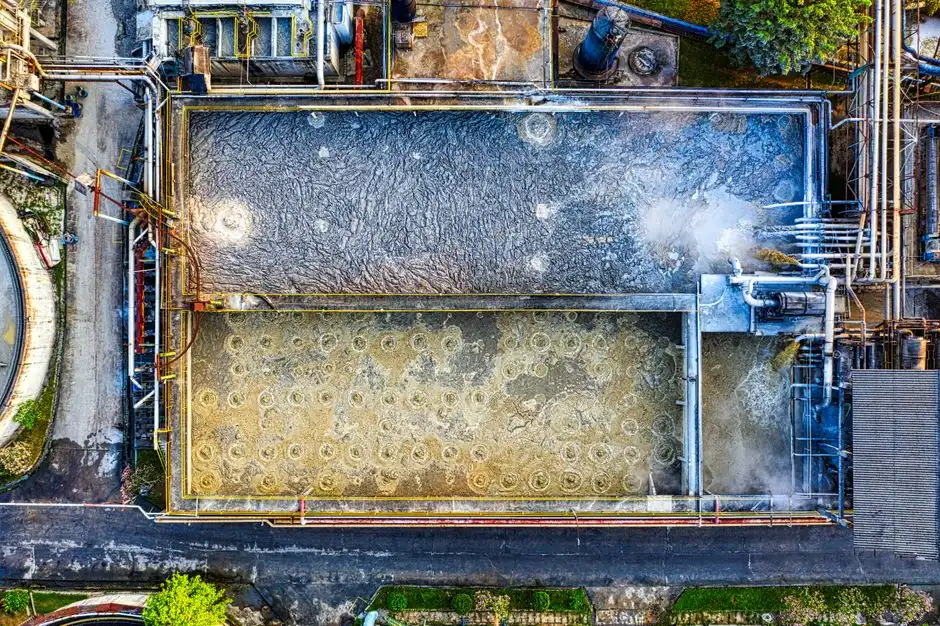
Size the DAF unit at 5–10% above peak wet-weather flow to absorb shock loads common in food and tannery operations where shift washing cycles can double influent flow inside 20 minutes. Under-sizing for average flow is the most common cause of DAF failure in Buenos Aires retrofits: the unit passes effluent during normal hours, then bypasses unclarified stream directly to the biological stage during the lunch-hour clean-down, killing the bacterial colony in the aeration tank.
The DAF line covers 4–300 m³/h across 13 standard models, and most Buenos Aires single-facility retrofits land in the 10–80 m³/h band. For comparison, a 50 m³/h DAF treats a flow equivalent to 1,200 m³/day at single-shift operation, or 600 m³/day at two-shift operation with a 20% peaking factor. Pilot data from similar food and metalworking matrices should drive the final model selection; vendors should provide a jar-test report on site-specific effluent before quote finalization.
The table below summarizes the design envelope a Buenos Aires engineer should target when pre-screening suppliers:
| Parameter | Design Target | Buenos Aires Typical Range |
|---|---|---|
| Saturation pressure | 3–5 bar | 4 bar (food), 5 bar (tannery/metalworking) |
| Recycle ratio | 20–40% | 25–30% |
| Micro-bubble size | 10–100 µm | 20–50 µm |
| Hydraulic capacity | 4–300 m³/h | 10–80 m³/h (single facility) |
| Influent TSS | 500–3,000 mg/L | 800–2,000 mg/L |
| Influent FOG | 200–1,500 mg/L | 400–1,200 mg/L |
| Air-to-solids ratio | 0.02–0.05 kg/kg | 0.03–0.04 kg/kg |
| HRT in flotation cell | 15–30 min | 20–25 min |
For the contaminant-loading check, design for influent TSS 500–3,000 mg/L and FOG 200–1,500 mg/L — typical of Buenos Aires food and metalworking plants per industry survey data. When influent exceeds 3,000 mg/L TSS, pre-thicken with a lamella or static screen ahead of the DAF to keep the air-to-solids ratio inside the design band; the DAF sizing engineering guide for 2026 walks through the full mass-balance calculation when influent data is available.
DAF vs API Separator vs Lamella Clarifier for Buenos Aires Industries
The clarifier choice in Buenos Aires is constrained by waste-stream chemistry, not by capital cost. API separators are the cheapest option per cubic meter but handle only free oil larger than 150 µm; they fail on the tight oil-in-water emulsions typical of Buenos Aires dairy, meat, and metalworking plants. Lamella clarifiers deliver strong TSS removal at a small footprint, but they do not lift FOG effectively — they settle, they do not float. DAF is the only single-unit option that consistently removes 85–99% of emulsified FOG and 92–97% of fine TSS simultaneously, which is why it is the de facto primary clarifier for the mixed industrial waste streams common in Greater Buenos Aires.
The table below maps clarifier type to the dominant Buenos Aires industries and shows why the basin-specific FOG limits under ACUMAR Res. 1113/2013 effectively force DAF or DAF-plus-lamella as the only compliant choice:
| Clarifier Type | FOG Removal | TSS Removal | Best-Fit Buenos Aires Industries | Compliant with Riachuelo FOG <50 mg/L? |
|---|---|---|---|---|
| API oil-water separator | 40–70% (free oil only) | 30–50% | Petrochemical pre-treatment, refinery crude desalting | No (requires downstream DAF) |
| Lamella clarifier | 10–30% | 70–90% | Metal finishing rinse water, low-FOG industrial streams | No (FOG too high) |
| DAF (standalone) | 85–99% | 92–97% | Food, dairy, meat, tannery, mixed industrial parks | Yes (with chemical dosing) |
| DAF + Lamella (series) | 90–99% | 95–99% | Tannery with high TSS + FOG, petrochemical with emulsions | Yes (lowest footprint risk) |
For petrochemical and refinery operations, the conventional train is API → DAF → biological, with the API handling the bulk free-oil load and the DAF catching what the API misses. For food and dairy, a single DAF is usually sufficient because influent FOG is in the 400–1,200 mg/L band that DAF handles without upstream API protection. For the strictest basin-specific limits where FOG must be below 30 mg/L at the discharge point, DAF plus a polishing lamella or a dissolved gas flotation polishing stage is the safe configuration (see DAF vs alternative clarifiers comparison for the full decision matrix).
2026 Cost Benchmarks and CAPEX Ranges for Argentina
The 2026 landed cost of a DAF-based ETP in Buenos Aires depends on hydraulic capacity, material of construction, automation level, and whether the unit is skid-mounted or containerized. The table below gives procurement a defensible CAPEX envelope before going to tender, based on landed-equipment pricing for 2026 including import duties, freight, and commissioning support typical of shipments from Asian manufacturing hubs to Buenos Aires port:
| Equipment Item | Capacity Range | 2026 CAPEX (USD, landed Buenos Aires) | Notes |
|---|---|---|---|
| Skid-mounted DAF unit (SS304) | 10–50 m³/h | 18,000–60,000 | Most food and dairy applications |
| Skid-mounted DAF unit (SS316) | 10–50 m³/h | 28,000–85,000 | Mandatory for tannery and metalworking (chloride exposure) |
| Chemical dosing skid (coagulant + flocculant + pH) | Matched to DAF | 8,000–25,000 | Required upstream of DAF for emulsion break |
| Sludge dewatering downstream (plate press or lamella thickener) | Matched to DAF | 12,000–40,000 | Target 18–25% dry solids for disposal |
| Containerized/kiosk DAF variant | 10–50 m³/h | +20–35% over skid | Eliminates civil works; retrofit-friendly |
| MBR biological polishing stage (50 m³/day reference) | 20–100 m³/day | 45,000–120,000 | For final COD and TSS compliance |
Containerized or kiosk DAF variants add 20–35% to CAPEX but eliminate civil works — a strong option for retrofit sites with space constraints typical of older Buenos Aires industrial corridors in Barracas, Avellaneda, and Lanús where factory floors were laid out before modern ETP footprints were considered. For greenfield sites with adequate plot area, a conventional skid-mounted DAF on a concrete pad is the lower-cost path. Plan 8–14 weeks for delivery from order plus 2–3 weeks for on-site commissioning, totaling a 10–17 week project timeline from purchase order to treated water on the discharge line.
Compliance Checklist: DAF + ETP Discharges in Argentina
Argentina's compliance framework layers three regulatory envelopes: Ley 24,051 sets the national hazardous-waste baseline, provincial ADA resolutions tighten those limits within Buenos Aires province, and ACUMAR Res. 1113/2013 imposes the strictest targets inside the Matanza-Riachuelo basin. A Buenos Aires factory discharging to the basin must satisfy ACUMAR's table, not the national floor. Typical basin-specific discharge targets after DAF plus biological polishing are TSS below 30 mg/L, FOG below 50 mg/L, and COD below 250 mg/L, but tighter site-specific permits may demand TSS under 20 mg/L and FOG under 30 mg/L — particularly for food and tannery operations within the ACUMAR jurisdiction.
DAF alone rarely meets these final discharge numbers. The DAF stage takes influent from typical industrial levels (TSS 500–3,000 mg/L, FOG 200–1,500 mg/L) down to TSS 30–80 mg/L and FOG 20–50 mg/L. To reach the basin limits consistently, DAF must be paired with biological polishing — MBR or conventional activated sludge — and, for some industries, tertiary filtration or a final polishing clarifier. Request a jar-test pilot on site-specific effluent before final sizing; reputable vendors provide this at no charge as part of the proposal package, and pilot data is the strongest defense during an ADA compliance audit.
For documentation, the engineering package should include: influent characterization (minimum five daily composite samples across one production week), jar-test report with coagulant and flocculant dose optimization, pilot-scale DAF removal data across at least one full diurnal cycle, and a mass balance showing expected discharge concentrations against the applicable ACUMAR or ADA table. The effluent discharge permit compliance guide contains the standard template for slaughterhouse and food-processing submissions that ADA reviewers expect.
Procurement and Supplier Selection for Buenos Aires
Verify the vendor has documented performance data at similar influent loadings — request 2–3 reference sites in Latin America with comparable waste matrices, ideally food, tannery, or metalworking operations rather than municipal installations. Confirm material of construction: SS316 is mandatory for tannery and metalworking effluents with chloride exposure above 200 mg/L, while SS304 is acceptable for most food processing where chloride is below 100 mg/L. Insist on PLC automation with a local Spanish-language HMI, and confirm that the vendor stocks spare parts in Argentina or can air-freight critical spares inside 72 hours.
For retrofit projects, prioritize containerized or skid-mounted designs that reduce on-site civil works. Skid-mounted units ship fully piped and wired, drop onto a concrete pad, and connect to influent and effluent manifolds in 2–3 days. Containerized units go further: they ship inside a standard ISO container with the DAF, dosing skid, and control panel pre-integrated, which is the fastest path for Buenos Aires facilities with limited plot area or where production cannot shut down for more than a long weekend. Plan for 8–14 week delivery from purchase order plus 2–3 week commissioning for containerized units shipped to Buenos Aires in 2026, and budget an additional 10–15% above equipment CAPEX for site installation, electrical, and plumbing tie-ins. For ongoing cost planning, the DAF OPEX breakdown 2026 covers annual maintenance, chemical consumption, and energy use per cubic meter treated.
Frequently Asked Questions
What is the difference between a DAF system and an ETP?
A DAF (dissolved air flotation) system is a single clarification unit inside an ETP (effluent treatment plant). An ETP is the full multi-stage treatment train — screening, primary clarification (often DAF), biological polishing (activated sludge or MBR), and tertiary filtration — needed to bring industrial wastewater to discharge quality. DAF alone handles 85–99% FOG and 92–97% TSS removal but rarely meets final COD and dissolved-solid limits without biological stages downstream.
How much does a DAF system cost for a Buenos Aires factory in 2026?
A skid-mounted 10–50 m³/h DAF unit landed in Buenos Aires runs USD 18,000–60,000 in SS304 and USD 28,000–85,000 in SS316, plus USD 8,000–25,000 for the chemical dosing skid and USD 12,000–40,000 for downstream sludge dewatering. Containerized variants add 20–35% to CAPEX. A complete DAF-based ETP with MBR polishing typically lands in the USD 90,000–250,000 band for a 50 m³/day industrial facility in 2026.
Can a DAF unit be retrofitted into an existing factory floor in Buenos Aires?
Yes — skid-mounted and containerized DAF units are designed specifically for retrofit into space-constrained facilities. Skid-mounted units drop onto a concrete pad and connect to existing influent and effluent manifolds in 2–3 days. Containerized DAF units ship fully assembled inside a standard ISO container, which is the fastest installation path for older Buenos Aires industrial corridors in Barracas, Avellaneda, and Lanús where plot area is limited.
Does a DAF system meet ACUMAR discharge limits for the Riachuelo basin?
DAF alone typically reaches TSS 30–80 mg/L and FOG 20–50 mg/L, but ACUMAR Res. 1113/2013 basin limits often require TSS below 30 mg/L and FOG below 30 mg/L. To meet those targets consistently, DAF must be paired with biological polishing (MBR or activated sludge) and, for stricter site-specific permits, tertiary filtration. A pilot jar-test on site-specific effluent is the standard method to confirm compliance before sizing.
What influent parameters should a Buenos Aires engineer measure before sizing a DAF?
Collect at least five daily composite samples across one full production week and measure flow rate (m³/h), pH, TSS, FOG, COD, BOD, and temperature. For tannery and metalworking sites, also measure chloride, chromium, and sulfide. These parameters drive the saturation pressure selection (3–5 bar), recycle ratio (20–40%), and air-to-solids ratio (0.02–0.05 kg/kg) that determine the final DAF model.
Related Equipment
- DAF system — specifications, capacity range, and technical data
- PLC-controlled chemical dosing skid — specifications, capacity range, and technical data
- sludge dewatering filter press — specifications, capacity range, and technical data
- MBR biological polishing stage — specifications, capacity range, and technical data