Why Fish Processing Sludge Is a Distinct Waste Problem
Off-site liquid sludge haulage in fish processing typically costs 3–8× what an equivalent dry-tonne dewatered cake costs to dispose of, and that gap is the dominant OPEX line for most fish plant effluent upgrades in 2026. The reason is the feed itself: fish processing wastewater carries very high concentrations of organic compounds, blood, oils and fats, plus nutrient loads from nitrogen and phosphorus (per ClearFox characterization data), and the resulting sludge is uniquely putrescible, odorous, and high in oil. Unlike dairy or brewery sludge, fish sludge will turn septic and generate hydrogen sulfide within hours if held warm, so any design that relies on long holding-then-haul is a design that punishes itself on odor control and surcharges.
Each product line generates a different solids and FOG profile. Baked or breaded lines add batter solids and oil; canned lines add brines and proteins; frozen lines are dominated by washwater and defrost blood; smoked lines add PAH-bearing condensate; fishmeal lines concentrate the whole stream into the most aggressive high-oil, high-protein effluent in the plant (per ClearFox). That variability means the sludge-handling train must be specified against a feed characterization, not a generic industrial-sludge assumption. A 2026 design that treats fish sludge the same as a food-and-bev average will under-size the press, over-dose the polymer, and lose money on every truck that leaves the gate.
Where the Sludge Actually Comes From in the Treatment Train
Every unit operation in a fish processing wastewater treatment plant produces a different solids stream, and the engineer must map them all before sizing dewatering. The first stage is coarse screening, which removes bones, scales, heads, fins, and the occasional whole fish — a relatively dry, renderable stream that goes to offal recovery or fishmeal rendering rather than the dewatering press (per ClearFox). This stream is large in volume but low in water content, so it is handled separately from the wet sludge train.
The dominant sludge generator in nearly every fish plant is the industrial DAF unit. DAF is used in the fish industry to clarify raw effluent with up to 99% efficiency, and the floated layer it skims off the surface carries the suspended solids, emulsified fats, free oil, and the blood fraction that defines the plant's sludge loading. The Nijhuis Saur Industries salmon-plant process video describes the DAF stage in the same terms: a physical-chemical DAF for TSS, oils and BOD5 removal, followed by a top skimmer that removes the sludge layer (Nijhuis Saur Industries, 2020). That float is the single largest solids stream a fish plant will ever dewater.
When the plant discharges to surface water or reuses treated water, a biological stage follows the DAF — either a fixed-bed biofilm reactor or an MBR (per ClearFox). Both produce a waste-activated sludge stream that combines with the DAF float before dewatering. Optional phosphorus precipitation adds a chemical sludge (typically a metal-hydroxide floc), and a final reverse-osmosis polish produces a brine concentrate that the operator may route back to the head of the plant, which then re-enters the DAF and the press. The dewatering unit must handle all of these combined streams, not just the DAF float alone.
Sludge Characteristics, Mass Balance and Target Numbers
The numbers below are the design envelope for a 2026 fish plant sizing exercise. They are not the only numbers in the literature, but they bracket what a competent vendor will quote against.
| Stream | Dry solids (%) | Volatile solids (% of DS) | Oil/grease | Notes |
|---|---|---|---|---|
| DAF float (as skimmed) | 3–8 | 60–80 | High; free and emulsified | Bulk of the sludge load on a sewer-discharge plant |
| Thickened sludge (post gravity belt or rotary drum) | 5–10 | 60–75 | Moderate; partly bound in floc | Buffers press hydraulic load |
| Dewatered cake (target) | 20–35 | 55–70 | Low free oil after good polymer conditioning | Transportable; landfill- or compost-ready |
| Waste-activated sludge (from MBR/FBBR wastage) | 1–3 | 70–85 | Low–moderate | Combined with DAF float before press |
Polymer conditioning for fish DAF float is almost always a cationic polyacrylamide, because the float is high in negatively charged colloidal organics and emulsified oil. Jar testing on the actual float is the only reliable way to set dose; a typical working window for fish DAF float is in the 3–10 kg of dry polymer per ton of dry solids range, with cationic charge density tuned to the feed. Under-dosing leaves free oil in the press liquor and wet cake; over-dosing is wasted polymer cost and re-stabilizes the colloids, which is a classic failure mode on plate-and-frame units. The trade-off is that higher-molecular-weight, higher-charge polymers release more water at lower dose but are more expensive and harder to dissolve, so dose and grade must be set together.
A worked mass balance for a mid-sized filleting line processing 50 tonnes of finished product per day: assume 4–8 m³ of process wastewater per tonne of fish, DAF influent TSS of 1,500–3,000 mg/L, and DAF capture in the 90–95% range. That gives a DAF float production of roughly 2.5–6 tonnes of dry solids per day, or about 30–80 m³ of wet float at 5% DS. That is the number the press must be sized against, before any biological sludge is added. The putrescible, high-oil character of the float also forces short hydraulic retention time in any thickening or holding tank — 24 hours or less — to keep the sludge aerobic and odor-controlled, which in turn pushes the engineer toward a buffer tank sized in hours, not days.
Choosing a Dewatering Technology: Screw Press, Plate-and-Frame, or Belt Press
For a fish plant the buy decision is usually between three units, and the right answer is driven by haul-cost economics, not by what the vendor has on the floor. Biocell confirms that a dedicated plate-and-frame filter press suitable for both primary and secondary fish processing effluent is a commercial standard, which is your baseline proof that a dewatering unit sized for this sludge profile exists off-the-shelf.
| Parameter | Screw press | Plate-and-frame filter press | Belt press |
|---|---|---|---|
| Typical cake DS% on oily fish DAF float | 18–25% | 25–35% | 15–22% |
| Footprint | Small | Large | Medium–large |
| Wash water use | Low; intermittent | Moderate; cloth wash each cycle | High; continuous belt wash |
| Automation / operator skill | Low skill; continuous | Higher skill; batch | Moderate skill; continuous |
| CAPEX band (relative) | Low–medium | Medium–high | Low–medium |
| OPEX band (relative) | Low | Medium (polymer, cloth) | Medium–high (wash water, polymer) |
A screw press is the right call for small and mid-sized plants with continuous duty, low operator headcount, and moderate haul cost. Cake dry solids on oily biological and DAF sludge typically land in the 18–25% band — lower than a filter press, but the unit is cheap to run, quiet, enclosed, and tolerant of feed variability. For a deeper dive on how a screw press actually works and how to size one, the screw press dewatering engineering guide covers the operating envelope in detail.
A plate-and-frame filter press is the answer when haul cost is the dominant number and the plant can accept batch operation. It achieves 25–35% cake DS on conditioned fish sludge — every extra point of cake DS cuts hauled water by roughly 4–6% on a 25%-DS baseline — and it produces the driest cake in the comparison. The trade-offs are footprint, cloth-wash water, polymer demand (often 10–20% higher than a screw press at equivalent feed), and the need for an operator to manage cycle end and cloth cleaning. Belt presses sit between the two on CAPEX but are the weakest option on greasy, oily DAF float: the free oil blinds the belt, polymer demand climbs, and the cake DS rarely clears 22% on a hot, oily feed — which is why most fish-plant belt presses end up in trouble within a year of commissioning.
Polymer Conditioning and Pre-Thickening Before the Press

Most wet-cake and press-binding problems on fish sludge trace back to conditioning, not to the press itself. The float is high in negatively charged colloidal protein and emulsified oil, so a cationic polyacrylamide is the default starting point, with jar testing used to set the actual dose and charge density for the plant's specific feed. A well-conditioned float releases clear press liquor and forms a coherent cake; a poorly conditioned float releases free oil, blinds the cloth on a filter press, and slips back through the screen on a screw press. The conditioning step is not optional, and a dedicated polymer dosing skid with make-down, maturation, and dosing control is standard equipment on every properly-run fish-plant dewatering line.
Pre-thickening between the DAF and the press is the second lever. A gravity belt thickener or rotary drum thickener takes the float from 3–8% DS up to 5–10% DS before the press, which reduces the hydraulic load on the press, cuts polymer demand per dry tonne, and gives the operator a buffer to ride out DAF surges. Biocell's framing — that sludge generated in the primary and secondary treatments of fish process wastewater can be treated on-site or transported for treatment (Biocell Water) — is the commercial justification for why conditioning and thickening on-site is now the default rather than the exception. A polymer-conditioned, well-thickened feed also reduces free oil release in the press and improves cake release on plate-and-frame units, which directly extends cloth life.
Matching the Sludge Train to Your Discharge Destination
Your discharge destination fixes the size of your sludge problem, and the engineer should size the press against the destination, not against the influent alone. ClearFox describes three paths: pre-treatment and discharge to sewer, treatment for direct environmental discharge, and reuse on site for cooling and cleaning. Each path changes the sludge mass balance.
Sewer discharge is the simplest train: screening plus DAF pre-treatment, with the press sized on the DAF float alone because there is no biological stage and no RO concentrate. The float is the bulk of the sludge load, and a screw press sized against 30–80 m³/day of float at 5% DS is typical for a mid-sized plant. Direct environmental discharge adds a biological stage — typically the MBR biological stage or a fixed-bed biofilm reactor (per ClearFox) — and the dewatering unit now has to handle combined DAF float plus waste-activated sludge, plus any chemical sludge from phosphorus precipitation and any reverse-osmosis polishing concentrate that the operator chooses to recycle to the head of the plant. The press duty goes up, and the cake is wetter and harder to condition because the activated sludge fraction is dominated by extracellular polymer that resists dewatering.
The reuse path — treated water fed back to cooling and cleaning (per ClearFox) — does not reduce sludge; it raises it. The tighter the treated-water quality target, the higher the biosolids yield per cubic meter treated, and the higher the polymer dose per dry tonne at the press. Biocell reports a 12–18 month ROI on integrated on-site treatment systems (Biocell Water), and that payback is driven primarily by replacing liquid sludge haul-off with on-site dewatering across all three paths. The highest absolute savings land on plants that move from liquid haul to a 25–35% DS cake plus a contracted cake hauler, because the per-tonne disposal cost drops by an order of magnitude.
Disposing of the Dewatered Cake: Landfill, Rendering, or Composting
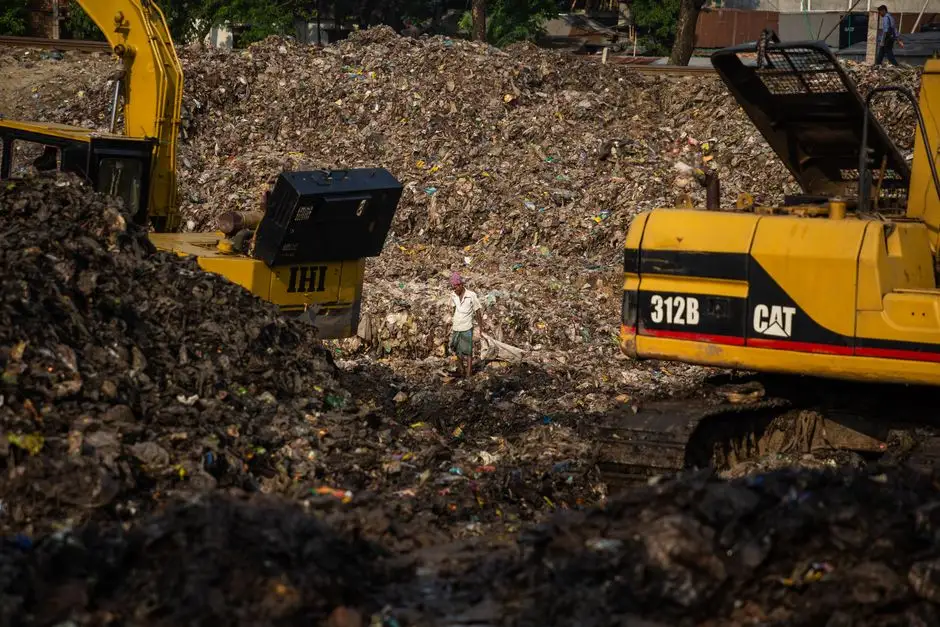
The end-of-pipe decision is part of the press spec, not a separate project. Landfill is the default for dewatered cake at 20–35% DS, because that range is below the paint-filter liquid test threshold and is stable enough to tip; the engineer should still check local leachate limits on fish-origin organic matter, because some jurisdictions restrict high-nitrogen, high-oil biosolids to lined cells. Rendering is a separate stream: the coarse screenings — heads, bones, fins, and frames — go straight to fishmeal rendering, and the dewatering press never sees this material. A press that is asked to handle rendered solids is a press that is being asked to do a different job, and the engineer should not co-mingle the streams.
Composting is viable where regulation and logistics allow, particularly for plants co-located with agriculture. The high nitrogen content of fish sludge — driven by blood and protein — is a benefit, not a problem, in a composting mix, and a 25–35% DS cake is a workable feedstock for an in-vessel composter. Before any of these end-uses is locked in, the engineer should run a stability check on the cake rather than rely on the DS% number alone: a respirometry test or a VFA/alkalinity ratio on the cake is the right way to prove the cake is stable enough to ship or compost, because DS% alone does not tell you whether the organics have stabilized or are still actively putrefying in the truck.
Frequently Asked Questions
What is the best dewatering technology for fish processing sludge?
A screw press is the right unit for small and medium plants with continuous duty, low operator headcount, and moderate haul cost; a plate-and-frame filter press is the right unit when haul cost dominates the OPEX and the plant can accept batch operation to reach 25–35% cake DS. Belt presses are the weakest option on oily fish DAF float because the free oil blinds the belt and the cake rarely clears 22% DS.
How much dry solids should a dewatered fish sludge cake reach?
Target 20–35% DS for transport, landfill, or composting. Below 20% the cake is uneconomic to haul — you are paying to move water. Above 35% is achievable on a plate-and-frame press with good polymer conditioning but the incremental haul savings rarely justify the extra polymer and cycle time beyond about 32–35%.
Does DAF remove most of the sludge load?
Yes. DAF is reported to clarify raw fish processing effluent with up to 99% efficiency (per Biocell), which is why the DAF float — not the biological stage — generates the bulk of the sludge stream on a sewer-discharge plant. The float carries the suspended solids, the blood fraction, and most of the emulsified oil, and it is the stream the press must be sized against first.
Is on-site sludge dewatering worth it for a small fish plant?
Yes, if the current path is liquid haul-off. Biocell reports a 12–18 month ROI on integrated on-site treatment systems (Biocell Water), and the saving is driven primarily by avoided liquid sludge haulage. The exact payback depends on haul distance, tipping fees, and the cake-DS% the chosen press can hold, but the order of magnitude holds for plants in the 10–100 m³/day float range.
Can treated fish processing water be reused?
Yes. ClearFox documents reuse of treated fish processing wastewater for cooling and cleaning within the facility, typically after multi-stage treatment including biological fixed-bed and reverse osmosis. Reuse lowers freshwater demand but does not lower sludge generation — in fact, the tighter the treated-water quality target, the higher the biosolids yield at the press, so the dewatering unit must be sized for the reuse case, not the discharge case.