What Is a Cavitation Air Flotation (CAF) System?
A cavitation air flotation (CAF) system is a compact, high-efficiency wastewater treatment unit that uses fluidic cavitation to generate a dense cloud of microbubbles (20–50 μm) for separating fats, oils, grease (FOG), and suspended solids. Unlike a traditional industrial DAF system for high-efficiency FOG removal, the CAF process eliminates the need for air saturation tanks, air compressors, and recycle pumps. This core design difference reduces the system's mechanical complexity, energy consumption by 30–50%, and physical footprint by up to 40%. The process operates with a hydraulic retention time (HRT) of 10–20 minutes, a typical surface loading rate of 5–15 m/h, and achieves consistent removal efficiencies for a wide range of industrial applications.
The heart of the CAF system is the cavitation pump, which is designed to create a pressure differential that forces dissolved air to come out of solution, forming millions of fine microbubbles. These bubbles attach to suspended particles and FOG, reducing their density and causing them to float to the surface, where they are removed by a skimming mechanism. This process is particularly effective for emulsified oils that are difficult to treat with gravity separation alone. For instance, in a dairy processing plant, a CAF system can reduce oil and grease content from over 500 mg/L to less than 50 mg/L, ensuring compliance with municipal sewer discharge limits.
How CAF System Type Affects Price
The engineering design and target application of a CAF system determine its price. Selecting the correct type is critical for both performance and budget.
- Bypass CAF: Priced from $166–$2,500, these are cost-effective retrofit units that divert a portion of flow for treatment, achieving 70–85% FOG removal without a full plant overhaul. They are ideal for facilities looking to augment existing treatment or handle periodic spikes in load without committing to a full-scale system.
- Detention Time CAF: Ranging from $3,000–$7,000, these systems feature a longer HRT (15–30 min) and are engineered to handle high-solids wastewater streams with TSS levels exceeding 500 mg/L. The extended dwell time allows for more complete flotation and settling, making them a robust choice for industries like pulp and paper or mining.
- Cyclone CAF: Costing $5,000–$9,000, this high-speed design uses centrifugal force for rapid separation, offering a compact footprint and superior grease removal rates exceeding 90%. Its intense hydraulic action is excellent for breaking stable emulsions in metalworking or automotive wash water.
- Submerged CAF: Priced between $6,000–$9,800, these chemical-assisted units are fully submerged and ideal for high-capacity applications (4–300 m³/h), such as food processing effluent. Their sealed design minimizes odor release, a significant benefit for plants located near residential areas.
- Coagulation CAF: The most advanced option at $7,000–$12,000, this system includes an integrated flocculation chamber that improves particle agglomeration, reducing chemical consumption by 20–30%. This is the preferred choice for complex waste streams from chemical manufacturing or landfill leachate, where influent quality can be highly variable.
| CAF System Type | Price Range | Best For | FOG Removal Efficiency |
|---|---|---|---|
| Bypass | $166 – $2,500 | Retrofits, low-flow applications | 70–85% |
| Detention Time | $3,000 – $7,000 | High-solids wastewater (TSS >500 mg/L) | 80–90% |
| Cyclone | $5,000 – $9,000 | Space-constrained plants, rapid processing | 90%+ |
| Submerged | $6,000 – $9,800 | Food processing, high-capacity flows | 85–92% |
| Coagulation | $7,000 – $12,000 | Complex waste streams, chemical reduction | 90–95% |
Material and Flow Rate: Key Cost Drivers
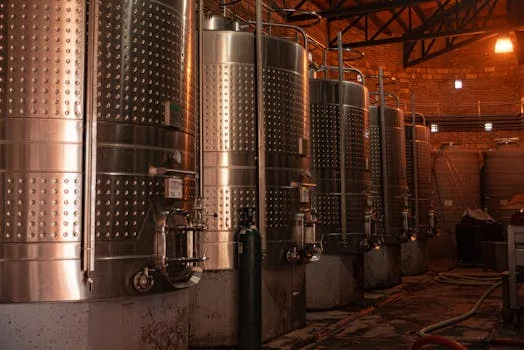
Beyond system type, the construction material and treated flow rate are the most significant factors influencing the final cavitation air flotation system cost price. Material selection is a direct trade-off between corrosion resistance and initial investment, while flow rate dictates the system's size and pumping capacity.
Stainless steel (SUS304 or 316) is the premium choice for corrosive environments, such as food and beverage, pharmaceutical, or marine discharges. This material adds a 40–50% premium, with systems costing $8,000–$15,000. The 316 grade is specifically recommended for wastewater with high chloride content, as its molybdenum content provides superior pitting resistance. Carbon steel units with an anti-corrosion coating (like epoxy or polyurethane) offer a robust, budget-friendly alternative for municipal or general industrial use, priced between $4,500–$9,000. However, these coatings require regular inspection for scratches or wear to prevent underlying corrosion, adding to long-term maintenance oversight.
Flow capacity directly scales with cost. Smaller units handling 4–20 m³/h are ideal for pilot studies or small operations, costing $166–$3,500. For example, a 10 m³/h unit is perfectly sized for a mid-sized car wash or a small packaging facility. Mid-range systems (50–150 m³/h) suit most industrial applications and cost $5,000–$9,000. This capacity range handles the effluent from a large meat processing plant or a municipal truck wash bay. Large-scale plants requiring 200–300 m³/h capacity represent the highest investment tier at $9,000–$14,000. A key operational benefit is power consumption; CAF systems use 1.5–5.5 kW per 100 m³/h, which is 30% lower than equivalent DAF systems due to the elimination of the recycle pump (HydropureWater field data, 2025). This efficiency is a major contributor to the low operational expenditure (OPEX).
| Flow Rate (m³/h) | Carbon Steel Price | Stainless Steel (SUS304) Price | Typical Power Consumption |
|---|---|---|---|
| 4 – 20 | $166 – $1,800 | $2,000 – $3,500 | 0.5 – 1.5 kW |
| 50 – 150 | $5,000 – $7,500 | $7,000 – $9,000 | 2.5 – 5.5 kW |
| 200 – 300 | $9,000 – $11,000 | $12,000 – $14,000 | 6.0 – 9.0 kW |
CAF vs DAF: Performance and Cost Comparison
For procurement managers evaluating technologies, a direct comparison between CAF and traditional Dissolved Air Flotation (DAF) is essential. The choice hinges on balancing upfront capital expenditure (CAPEX) with long-term operational expenditure (OPEX) and performance needs.
A standard industrial DAF system rated for 300 GPM (68 m³/h) carries a CAPEX of approximately $28,000. This price includes the necessary but energy-intensive ancillary equipment: an air compressor, saturation tank, and recycle pump. An equivalent CAF system, with a CAPEX of $9,000–$12,000, offers a 60% reduction in initial cost. Operationally, CAF's simpler design leads to 30% lower energy costs and reduced maintenance. The absence of an air compressor and sat tank eliminates the frequent maintenance those components require, such as cleaning air filters and nozzles to prevent fouling. While DAF may achieve a slightly higher TSS removal rate (90-95% vs. CAF's 85-92%), CAF systems often reduce coagulant demand by 20-25% due to superior microbubble dispersion and mixing, which provides more surface area for chemical reactions and particle attachment.
| Parameter | DAF System (68 m³/h) | CAF System (68 m³/h) |
|---|---|---|
| CAPEX | ~$28,000 | $9,000 – $12,000 |
| Key Equipment | DAF vessel, air compressor, sat tank, recycle pump | CAF vessel, cavitation pump |
| Energy Consumption | Higher (7-10 kW typical) | 30% Lower (5-7 kW typical) |
| Footprint | Larger | 40% smaller |
| TSS Removal | 90–95% | 85–92% |
| Chemical Usage | Standard dose | 20–25% reduction possible |
Total Cost of Ownership and ROI Analysis
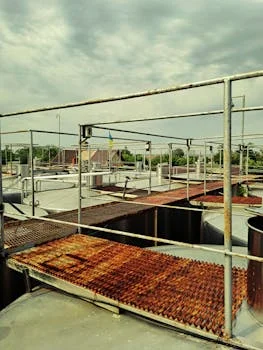
The true value of a CAF system is revealed in its total cost of ownership (TCO) and return on investment (ROI). When factoring in energy, chemicals, maintenance, and space, CAF delivers substantial long-term savings that justify the procurement decision.
Over a 5-year period, a CAF system typically saves $18,000–$25,000 compared to a similarly sized DAF unit. This saving is driven by its 30% lower energy draw, 50% fewer moving parts (reducing maintenance downtime by 30%), and reduced chemical consumption. Maintenance on a CAF is largely limited to the cavitation pump and skimmer motor, whereas a DAF requires ongoing attention to its air compressor, recycle pump, and saturation tank pressure controls. For industries with high FOG loads, like food processing, the payback period is often 18–24 months. The compact footprint also provides significant value, especially for retrofit projects where space is a premium capital cost. For larger projects requiring a complete treatment train, these savings compound when a CAF is integrated into modular wastewater systems with integrated DAF and MBR. When calculating ROI, plants should also factor in the avoided costs of sewer surcharges for non-compliance, which a reliable CAF system helps prevent.
Frequently Asked Questions
What is the average price of a cavitation air flotation system?
Industrial-grade CAF systems for plant-wide treatment typically range from $4,500 to $9,800. Smaller bypass or pilot units can start as low as $166. The final price is highly dependent on the material of construction, level of automation (e.g., PLC controls), and included accessories like chemical dosing pumps.
How much does a stainless steel CAF machine cost?
A stainless steel (SUS304/