Why Buenos Aires hotel projects stall in permitting
Hotels above 30 rooms in AMBA fall under one of three overlapping regulators, and misidentifying them at the pre-feasibility stage is the single most common reason hospitality projects stall in permitting. Inside the AYSA concession zone — Capital Federal plus parts of 14 partidos including Avellaneda, Lanús, Lomas de Zamora, Quilmes, San Martín, Tres de Febrero, Morón, Ituzaingó, Hurlingham, San Isidro, Vicente López, San Fernando, and Tigre — Agua y Saneamientos Argentinos (AYSA) issues a Certificado de Aptitud de Descarga with pretreatment standards applied under their Norma de Vertido. Outside that concession, Autoridad del Agua (ADA) Buenos Aires runs the provincial framework anchored in Resolución 336/2003. For properties in the Cuenca Matanza-Riachuelo, ACUMAR layers a third compliance track: per the ACUMAR enforcement update from 2025-Q4, the basin authority increased on-site inspections of hospitality properties, with fines linked to BOD₅ and fecal coliform exceedances. A packaged biological plant — sized and specced correctly — is the only way to clear all three gates at once without buying off-site sewer capacity that does not exist south of Riachuelo. The 2025–2026 amendments to Resolución 336/2003 also tightened reuse parameters for tourist properties, particularly fecal coliform and turbidity for landscape irrigation.
The Buenos Aires hotel influent envelope you must design to
Hotel wastewater is not residential sewage at industrial scale — it is a distinct, high-strength, high-variability stream dominated by kitchen and laundry peaks. A defensible 2026 design starts with a 150–250 L per guest-night flow band and 200–400 mg/L BOD₅ as the working envelope. All-inclusive resorts with full restaurant and on-premise laundry run BOD₅ roughly 30–50% above a boutique property on the same guest count; the kitchen and laundry lines dominate the load.
Buenos Aires kitchen discharge runs 40–55 °C and is grease-laden — FOG must be cut before any biological stage or the MBR membranes foul within weeks. A grease trap sized to ≥20 minutes of peak retention is the floor, not the ceiling. Argentine hotel occupancy swings from 60–95% in tourist season (December–February, July) against 40–60% off-peak, with weekend peaks inside a weekday trough; an aerated equalization tank at 8–12 h ADWF with DO >1.0 mg/L is the cheapest insurance against the Friday-night shock load. For the full influent bands and process envelope, see the Buenos Aires hotel wastewater 2026 system guide.
| Parameter | Boutique hotel (typical) | All-inclusive resort (typical) | Design band 2026 |
|---|---|---|---|
| Flow per guest-night | 150–200 L | 200–250 L | 150–250 L |
| BOD₅ influent | 200–300 mg/L | 300–500 mg/L | 200–400 mg/L |
| COD influent | 400–600 mg/L | 600–1,000 mg/L | 400–800 mg/L |
| TSS influent | 150–250 mg/L | 250–400 mg/L | 150–350 mg/L |
| FOG (post-grease trap) | <50 mg/L | <80 mg/L | <30 mg/L post-DAF |
| Temperature (kitchen) | 40–55 °C | 40–55 °C | 40–55 °C |
| Occupancy swing (peak/trough) | 80/45% | 95/40% | 60–95% / 40–60% |
Packaged MBR vs buried WSZ vs SBR: the 2026 trade-off
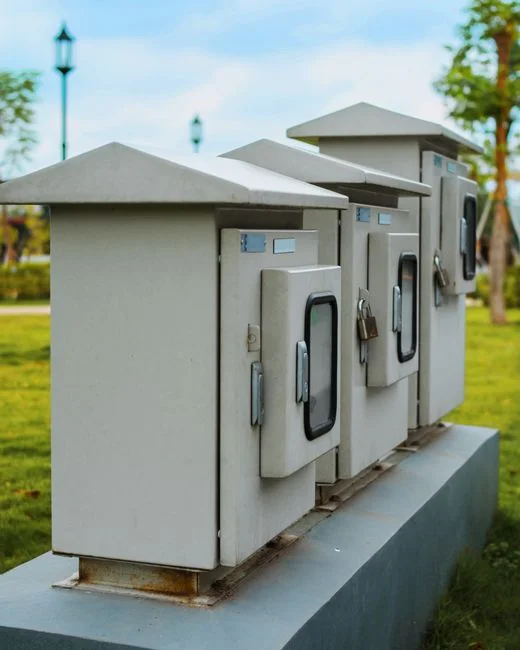
Three process trains dominate Buenos Aires hotel bids in 2026, and the selection is not a matter of which is "best" — it is a function of average daily flow, reuse target, and operator skill. An MBR uses submerged PVDF ultrafiltration at 0.1–0.4 μm nominal pore size sitting inside the aeration basin, delivering BOD₅ below 5 mg/L and TSS below 1 mg/L with 60% smaller footprint than conventional activated sludge. The penalty is membrane replacement — plan 8–10% of CAPEX every 7–10 years. For Buenos Aires hotels targeting toilet-flush reuse or operating where the city sewer is not available south of Riachuelo, a packaged MBR membrane bioreactor is the default 2026 choice; the standalone MBR membrane module skid is also worth specifying for retrofits.
A buried WSZ A/O package plant combines anoxic denitrification, aerobic contact oxidation, sedimentation, and chlorination in a single buried FRP/carbon-steel tank. Flow range is 1–80 m³/h, and at ≤80 m³/day average it is the lowest CAPEX option with the lowest operator requirement — the PLC runs itself, the chlorinator only needs salt. WSZ is the right answer for boutique hotels of 30–120 rooms where landscape irrigation is the only reuse target. SBR runs fill/aerate/settle/decant on a time-based cycle in a single tank; it absorbs a 90% peak to 40% trough swing, can pause mid-cycle in low season, but needs PLC tuning, blower redundancy, and a competent operator. Decision rule: irrigation reuse only and ≤80 m³/day → WSZ; toilet-flush reuse or larger flows → MBR; large peak/trough swing at mid-sized flow → SBR.
| Criterion | MBR (submerged PVDF UF) | WSZ buried A/O | SBR |
|---|---|---|---|
| Flow range | 10–2,000 m³/day | 1–80 m³/h | 20–500 m³/day |
| BOD₅ effluent | <5 mg/L | ≤20 mg/L | ≤15 mg/L |
| TSS effluent | <1 mg/L | ≤30 mg/L | ≤20 mg/L |
| Footprint vs CAS | −60% | −40% | −30% |
| Reuse envelope | Irrigation, toilet flush, cooling | Irrigation only | Irrigation only |
| Operator skill | Moderate (membrane CIP) | Low (PLC + chlorinator) | High (cycle tuning) |
| 10-year reserve | 8–10% CAPEX membrane replacement | Minimal (chlorinator salt) | Blower + valve spares |
The headworks stack that keeps an MBR alive for 10 years
No biological stage will survive poor pretreatment. The headworks stack is not optional equipment — it is the difference between a system that meets Resolución 336/2003 limits for ten years and one that fails its first ACUMAR inspection. Start with a rotary bar screen for hotel headworks at 3–10 mm aperture; coarser and rags, hair, and kitchen solids reach the aeration tank, finer and the operator cleans it every shift.
Downstream, a DAF for FOG and kitchen grease cuts FOG to under 30 mg/L before the biological stage — sized at 15–25 m³/h hydraulic capacity per 1,000 covers/day with a surface overflow rate of 15–25 m/h. Buenos Aires kitchens discharge at 40–55 °C, and the DAF works best at that temperature; cold FOG solidifies in the piping and starves the unit. The aerated equalization tank at 8–12 h ADWF with DO >1.0 mg/L follows — below that threshold the tank goes septic and H₂S corrodes the carbon-steel membranes skid. Finally, a PLC-controlled chemical dosing system handles pH trim and coagulant polish, and a chlorine dioxide generator for irrigation reuse sized 50 g/h to 20 kg/h (depending on hotel size) takes the disinfected effluent to ADA fecal coliform limits without the trihalomethane risk of bulk chlorine.
Worked sizing example: 120-room Buenos Aires hotel
The calculation below is what a competent engineer should be able to reproduce on a single page. ADWF = 120 rooms × 200 L × 70% occupancy = ~16.8 m³/hour, or roughly 1,680 m³/day. Apply a peak factor of 1.5–2.0× for weekend occupancy spikes, and the peak hydraulic capacity must comfortably exceed 3,000 m³/day. The equalization tank at 8–12 h ADWF works out to 560–840 m³ — sized to absorb the Friday-night surge before it hits the membranes.
Pick a packaged MBR membrane bioreactor rated 10–2,000 m³/day, with submerged PVDF 0.1–0.4 μm flat-sheet or hollow-fiber modules operating at MLSS 8,000–12,000 mg/L. The grease trap must be ≥20 min peak retention, the DAF sized to 15–25 m³/h per 1,000 covers/day ≈ 30–50 m³/h, and the ClO₂ generator in the 50 g/h–1 kg/h range for this flow. With this envelope, BOD₅ <5 mg/L and TSS <1 mg/L lands the property inside both Resolución 336/2003 reuse limits and ACUMAR's tighter 2025–2026 expectations for tourist properties.
2026 cost stack and the membrane replacement reserve
Three hidden cost lines routinely catch Buenos Aires hotel buyers off-guard. Civil works — excavation, the equalization tank, the grease trap, concrete pads, the control room — typically add 30–50% on top of equipment CAPEX in dense urban lots. Electrical — three-phase supply, MCC, VFDs for blowers — runs another 10–15%. Engineering and permitting — ADA/AYSA submission, ACUMAR notification, geotechnical study, and the electrical hazard classification — adds 8–12%. A USD 60,000 MBR bid for a 100-room hotel typically lands at USD 110,000–120,000 fully installed and permitted. MBR pricing is still trending upward 4–6% year-on-year, so a 2026 quote is the right one to act on.
Budget 8–10% of MBR CAPEX every 7–10 years as a dedicated membrane replacement reserve, 8–12% for blowers on a similar horizon, and 12–18 months for UV lamps if used. Schedule matters: a buried WSZ installs in 6–10 weeks against 6–9 months for a concrete activated-sludge plant, and that schedule saving is itself a 2026 budget line in a city where carrying cost is non-trivial. The contract O&M for packaged hotel STPs decision is downstream of CAPEX and frequently moves the lifecycle math by another 10–15%.
| Cost line | 30–100 room hotel (USD) | Markup on equipment CAPEX |
|---|---|---|
| Equipment only (MBR/WSZ) | 18,000–110,000 | Baseline |
| Civil works (tank, pads, excavation) | +30–50% | +30–50% |
| Electrical (MCC, VFDs, three-phase) | +10–15% | +10–15% |
| Engineering + permitting (ADA/AYSA/ACUMAR) | +8–12% | +8–12% |
| Total installed and permitted | 80,000–220,000 | +48–77% on equipment |
| Membrane replacement reserve (yr 7–10) | 8–10% CAPEX | Recurring |
| Blower replacement (yr 8–12) | 8–12% CAPEX | Recurring |
The four-step permit path in AMBA for 2026
Starting in the wrong office is the most common cause of permit delay. The four-step path below applies to a hotel in AMBA in 2026.
Step A — Pre-feasibility. Confirm whether the property sits inside the AYSA concession (Capital Federal and parts of Avellaneda, Lanús, Lomas de Zamora, Quilmes, San Martín, Tres de Febrero, Morón, Ituzaingó, Hurlingham, San Isidro, Vicente López, San Fernando, Tigre) or outside (most of Pilar, Escobar, Ezeiza, Cañuelas, the southern Riachuelo basin partidos). Inside → AYSA pretreatment permit under their Norma de Vertido. Outside → ADA Buenos Aires discharge permit under Resolución 336/2003.
Step B — Discharge limits. Per Resolución 336/2003 and ADA 2026 guidance: BOD₅ ≤50 mg/L, TSS ≤70 mg/L, COD ≤250 mg/L, fecal coliforms ≤1,000 NMP/100 mL; total phosphorus and TN are site-specific. Always verify against the current ADA text, as the 2025–2026 amendments tightened reuse parameters.
Step C — Final disinfection. A chlorine dioxide generator for irrigation reuse is the default because of long contact time and biofilm control. If UV is preferred, specify a dose of ≥40 mJ/cm² per WHO 2024 reuse guidelines.
Step D — Sludge management. Biological and DAF sludge concentrate in the equalization and aeration tanks and must be dewatered before off-site disposal. A plate-and-frame filter press for hotel sludge producing a Class A cake at 22–28% dry solids is the 2026 standard, with filtrate returned to the headworks; for flow-smoothing upstream, the lamella clarifier sizing guide is the right reference.
Vendor checklist: 12 questions to put on the bid form
A bid review should run on engineering terms, not marketing terms. Twelve questions to attach to every Buenos Aires hotel STP bid form in 2026:
- What is the membrane module's PVDF grade, nominal pore size (0.1–0.4 μm), and design MLSS range (target 8,000–12,000 mg/L)?
- What is the peak instantaneous flux and the recovery backwash cycle in seconds per minute?
- What is the equalization tank sizing in hours of ADWF, and is coarse-bubble aeration specified to keep DO >1.0 mg/L?
- What is the DAF hydraulic capacity in m³/h per 1,000 covers/day, and the surface overflow rate (target 15–25 m/h)?
- What is the membrane replacement cost per m² and the recommended replacement interval (7–10 years), priced as a 10-year lifecycle line?
- Can the vendor document AYSA Norma de Vertido compliance on a comparable Buenos Aires project?
- Can the vendor document ADA Resolución 336/2003 conformance with BOD₅ ≤50, TSS ≤70, fecal coliforms ≤1,000 NMP/100 mL?
- Has the vendor completed an ACUMAR notification for a hotel in the Matanza-Riachuelo basin, and what was the inspection outcome?
- What is the chlorine dioxide generator size in g/h matched to the design flow, with a residual of 2–5 mg/L at the contact tank outlet?
- What is the grease trap retention in minutes at peak flow, and is it sized as a floor (≥20 min) or a ceiling?
- What is the PLC platform, the number of analogue/digital I/O, and the remote telemetry option for off-site monitoring?
- What is the FOG post-DAF guarantee in mg/L, and what is the warranty response time within AMBA?
For the full process envelope that these questions should validate against, see the Buenos Aires hotel wastewater 2026 system guide.
Frequently Asked Questions
What is the most common wastewater system for hotels in Argentina?
The dominant 2026 solution is a packaged biological plant — either a buried WSZ A/O package for boutique hotels under 80 m³/day or an MBR for larger properties targeting reuse. Conventional concrete activated sludge is rare in new builds because of footprint cost and a 6–9 month construction timeline versus 6–10 weeks for a packaged skid (HydropureWater field data, 2026).
How much does a hotel wastewater treatment plant cost in Buenos Aires?
Equipment-only, a packaged plant for a 30–100 room hotel runs USD 18,000–110,000 in 2026. Fully installed with civil works, electrical, and ADA/AYSA permitting, total project cost typically lands at USD 80,000–220,000 depending on flow and reuse target.
Can hotel wastewater be reused for irrigation?
Yes. Argentine regulations under Resolución 336/2003 allow treated wastewater reuse for landscape irrigation when BOD₅ ≤50 mg/L, TSS ≤70 mg/L, and fecal coliforms ≤1,000 NMP/100 mL. UV disinfection at ≥40 mJ/cm² or chlorine dioxide at 2–5 mg/L residual is required to meet the coliform limit reliably.
Do small boutique hotels in Buenos Aires need a treatment plant?
Any hotel above 30 rooms in the AYSA concession zone must obtain a Certificado de Aptitud de Descarga and install pretreatment. Outside the AYSA zone, ADA Buenos Aires typically requires engineered treatment for discharges above 5 m³/day, which captures most 30-room properties. A buried WSZ package plant is the conventional answer for 30–60 room boutique hotels in Recoleta, Palermo, or San Telmo.
How long does a packaged wastewater plant last?
A packaged FRP or epoxy-coated carbon-steel plant has a 20–25 year structural life with proper maintenance. Membranes in an MBR system require replacement every 7–10 years, blowers every 8–12 years, and UV lamps every 12–18 months. The civil works — equalization tank, control room — typically outlast the electromechanical equipment by 15+ years (HydropureWater field data, 2026). Operator-side cost control is covered separately in the wastewater plant labor cost optimization playbook.