Why Mining and Metals Wastewater Breaks a Conventional Activated Sludge Clarifier
For mining and metals wastewater in Deepstep, Georgia, an MBR outperforms conventional activated sludge on effluent quality, footprint and metals toxicity tolerance, at the cost of higher energy use and membrane replacement. MBR typically cuts plant footprint by ~60% (HydropureWater integrated MBR system spec, 2026) and tolerates the high TDS, hardness and variable ammonia that cause CAS clarifier bulking, but a plant-wide modelling study found MBR direct GHG emissions at 0.91 kgCO2eq/m³ versus 0.85 kgCO2eq/m³ for CAS (Mannina et al., ScienceDirect, 2019). Choose MBR when discharge limits are tight, reuse is targeted, or the influent stresses a CAS clarifier; stay with CAS when OpEx dominates and influent is biologically mild.
Kaolin processing, aggregate wash circuits, and base-metals finishing around Washington County, Georgia all produce streams that look unkind to a CAS clarifier: total dissolved solids routinely 1,500–5,000 mg/L, hardness from 400–1,200 mg/L as CaCO3, pH swings of 5.5–9.0, and intermittent ammonia from blasting residuals or cyanide-destruction effluents. In a CAS train, those conditions break floc aggregation, the settling step that follows biological oxidation. High TDS and divalent cations (Ca²⁺, Mg²⁺) shift floc density, dispersed growth replaces the healthy Zoogloea-dominated floc, and the clarifier either loses blanket depth or washes solids over the weir. Metals toxicity — particularly from Cu, Ni, Zn, and Al — suppresses heterotrophs and the slower-growing nitrifiers, forcing operators to drop mixed liquor suspended solids to 2,000–3,000 mg/L and accept a larger clarifier footprint just to keep the biomass alive. When the floc fails, effluent TSS and COD rise together, and the plant's NPDES permit margin evaporates.
The technical question for a Deepstep engineer is therefore not "MBR or CAS in the abstract" but "when does moving the solid–liquid separation from a clarifier to a membrane pay for itself on this water matrix?" The rest of this guide works through that question in the order a capital committee will read a memo: mechanism, then the four engineering parameters that decide it, then a matrix, then fouling risk, then cost shape, then compliance.
How an MBR Actually Works Inside a Mining Treatment Train
An MBR is activated-sludge biology with a microfiltration or ultrafiltration membrane doing the work of the secondary clarifier (AUC Group, 2026). The biomass is identical to a CAS aeration basin; the difference is that mixed liquor is recirculated across a membrane with a pore size of 0.04–0.2 µm, which retains bacteria and most viruses almost completely (Grasmick et al., 2012). Because settling is no longer the bottleneck, the reactor can run at MLSS of 8,000–12,000 mg/L, SRT of 20–40 days, and HRT of 4–8 hours — operating windows that would simply wash out a clarifier.
Two configurations matter to a mining site. A submerged MBR sits the membrane cassette inside the aeration tank, draws permeate by vacuum (typically −20 to −50 kPa), and uses coarse-bubble aeration to scour the membrane surface. A side-stream MBR pumps mixed liquor through an external pressure vessel at 2–4 bar and recirculates the retentate. Submerged MBRs dominate industrial mining applications because the energy demand for membrane scouring is an order of magnitude lower than cross-flow pumping, and the mechanical simplicity suits remote sites. Side-stream remains useful for very high-solids streams or where a tight existing tank footprint is unavailable, but for a 50–500 m³/d flow the energy penalty is hard to justify.
For a Deepstep-scale mining train, the HydropureWater integrated MBR system uses 0.1 µm PVDF flat-sheet membranes in a DF-series cassette, with an integrated aeration box that provides continuous air-scour directly beneath the membrane stack. The DF-series PVDF flat-sheet MBR cassette ships in 80–225 m² module sizes, delivering 32–135 m³/d per cassette, which scales cleanly from a small kaolin reclaim loop to a 500 m³/d aggregate wash stream. PVDF is the right material choice for mineralised water: it tolerates the pH range (2–12) needed for chemical CIP, resists chlorine up to 2,000 mg/L during recovery cleaning, and handles the abrasive colloidal clays that would shorten the life of a polyethersulfone (PES) hollow fibre.
MBR vs CAS: The Four Engineering Parameters That Decide It

The honest head-to-head for a Deepstep mining site comes down to four axes: effluent quality, footprint, energy and OpEx, and biological robustness. Each one has a defensible number behind it; the table below pulls the supported values together.
| Parameter | CAS (typical mining retrofit) | Submerged MBR (typical mining retrofit) | Source |
|---|---|---|---|
| SRT (days) | 5–10 | 20–40 | S3 (Mannina et al., 2019) |
| HRT (hours) | 6–12 | 4–8 | S3, S2 (AUC Group) |
| MLSS (mg/L) | 2,000–4,000 | 8,000–12,000 | S3 |
| Effluent TSS (mg/L) | 10–30 | <2 (typically <1) | S3, S6 (HydropureWater, 2026) |
| Effluent COD (mg/L) | 40–80 | <30 | S3, S2 |
| Effluent NH3-N (mg/L) | 2–8 (nitrifier washout risk) | <1 with adequate SRT | S3 |
| Effluent microplastics (MP/L) | 1.0 | 0.4 | Lares et al., via S3 |
| Footprint vs CAS baseline | 1.0× | ~0.4× (60% smaller) | S6, S3 |
| Energy (kWh/m³) | 0.3–0.6 | 0.6–1.2 | S3 |
| Direct GHG (kgCO2eq/m³) | 0.85 | 0.91 | S3 |
| CapEx band (50–500 m³/d, 2026) | Lower (concrete-tank baseline) | ~1.5–2.5× CAS CapEx, packaged skids at the low end | Engineering judgement, no single source |
| PVDF membrane life | N/A | Typically 5–10 years; mining water often lands at 5–7 | S3, S6 (order of magnitude) |
On effluent quality, the membrane is a physical barrier that does not depend on floc health, so MBR effluent TSS stays below 2 mg/L even when the upstream biology is being hammered by a metal spike. The higher SRT also lets slower-growing nitrifiers establish, which is the difference between a stable 0.5 mg/L NH3-N reading and a recurring 6–10 mg/L excursion after every wash-water surge.
On footprint, the integrated MBR eliminates the secondary clarifier and most of the sludge-return pumping bay, and runs MLSS roughly 3× higher so the aeration basin shrinks. The order-of-magnitude figure is ~60% smaller than an equivalent CAS train (S6; S3 confirms "much smaller solid/liquid units"). For a constrained mine site, that is often the deciding factor before the engineering argument even starts.
On energy and OpEx, MBR runs hotter. Membrane scouring aeration, periodic chemical CIP, and the energy embedded in membrane replacement all add to the bill. The plant-wide study in S3 quantified the GHG penalty at 0.91 versus 0.85 kgCO2eq/m³ — about a 7% premium — but also documented that MBR sludge yield is materially lower, which means less polymer and less plate-frame filter press capacity downstream. The membrane replacement line item, often 15–30% of MBR OpEx depending on feedwater, is a real cost that CAS simply does not carry.
On biological robustness, the higher SRT in MBR is the headline advantage for mining water. Nitrifiers with doubling times of 1–2 days are easily outcompeted in a 5–10 day SRT CAS basin once copper or zinc concentration rises; in a 20–40 day SRT MBR they hold their niche. The same extended SRT gives the biomass time to partially degrade complexants (EDTA, citrate, thiosulfate) that pass through CAS untouched.
A Decision Matrix for Deepstep Mining and Metals Flows
Convert the parameter table above into a rule a junior engineer can apply, and the selection memo writes itself. The matrix below maps four influent regimes to a technology recommendation; it is conservative on purpose and meant to be screenshot-able.
| Influent regime at the Deepstep site | Recommended technology | Reasoning |
|---|---|---|
| High TDS (>2,000 mg/L) + high hardness (>500 mg/L as CaCO3) + variable ammonia (10–60 mg/L NH3-N) + metals present | MBR | CAS clarifier will bulking-fail; MBR decouples solids capture from floc health. |
| Moderate organic load, stable diurnal flow, large available footprint, no reuse target | CAS | Lower CapEx, simpler operations, no membrane OpEx line. |
| Tight effluent TP/TN limits, or downstream RO/UF reuse for process water or dust suppression | MBR | MBR effluent (<1 µm, low SDI) feeds RO/UF with minimal pretreatment. |
| OpEx-constrained operation, biologically mild stream (BOD<300 mg/L, no metals, no ammonia peaks) | CAS | No premium effluent quality is required, so MBR's OpEx premium is unrecovered. |
One rule of thumb: if your CAS clarifier already shows bulking or metals-toxicity events more than twice a year, the case for MBR is economic, not just environmental — every consent-order excursion has a paper trail and a real cost. The plant-wide study in S3 also pointed out (via Karim and Mark, 2017) that MBR's higher upfront CapEx is offset by effluent-driven savings at very long operating horizons (>67 years in the original paper). Read that through a 20-year mining-project lens: the crossover is not at 67 years in real life, because the mining-side drivers — reuse credit, avoided clarifier rebuild, avoided consent order — close the gap much sooner on mineralised water than on municipal sewage.
For flows below ~50 m³/d, a packaged MBR skid is usually competitive with a custom CAS package plant. For flows above 500 m³/d, custom concrete-tank MBRs with multiple DF-series cassettes are the standard architecture, and the per-m³ CapEx band tightens accordingly. The 50–500 m³/d range that defines a typical Deepstep kaolin or aggregate operation sits in the middle of that envelope, where the decision is genuinely about feedwater character, not about scale economics.
Fouling, Membranes and Mining-Specific Operating Risks
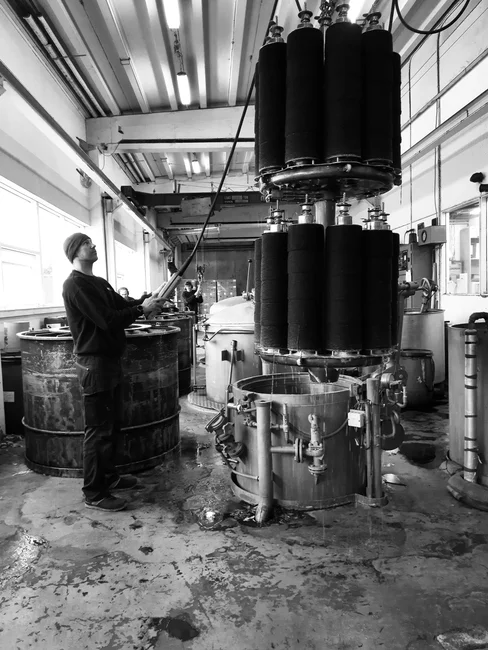
Membrane fouling is the single largest OpEx risk in any MBR (S3, Mannina et al., 2019). It manifests as declining permeate flux at constant transmembrane pressure (TMP), or as rising TMP at constant flux, and it is caused by deposition of material on or in the membrane. The honest section of any MBR vs CAS comparison names the foulants you will actually see on a Deepstep feed:
- Calcium and magnesium scaling from hard mine water, especially when pH drifts above 8 in an aeration basin.
- Iron and manganese oxides from aggregate wash circuits and from any pit dewatering blended into the feed.
- Oil and grease from equipment washdown and from base-metals finishing lines.
- Colloidal clays from kaolin operations — these are the most aggressive foulant because they form a low-permeability cake that is hard to remove with hydraulic scour alone.
The standard mitigation train is well established: a GX-series rotary bar screen at the headworks to remove rags and debris that would score the membrane, equalisation to dampen diurnal spikes, pH adjustment to keep the basin in the 6.5–8.0 window where biological activity and scaling both behave, and a DAF pre-treatment stage to strip oil, grease and a fraction of the colloidal clays before they ever reach the membrane cassette. The DAF stage is the difference between a membrane life at the short end of the PVDF range and one at the long end, and it is the single most cost-effective insurance policy in the train.
PVDF MBR membrane life is typically in the 5–10 year range (S3, S6 — order of magnitude, not a guarantee). Mining water with high hardness, periodic metal loading, and colloidal clays almost always lands at the 5–7 year end. Build that into the 20-year OpEx model from day one, not as a surprise in year six.
2026 CapEx and OpEx Reality Check for a Deepstep-Scale Plant
This section gives the cost shape — the order-of-magnitude bands a capital committee will recognise — rather than fabricated specific numbers that no single vendor will honour. The research does not support quoting a precise 2026 dollar figure per m³/d for mining flows, and any source that does is selling something.
For a 50–500 m³/d mining train in 2026, the CapEx envelope looks roughly like this: a CAS concrete-tank train (aeration basin, secondary clarifier, RAS pumping, slab and civils) sits at the low end of the band; a custom concrete-tank MBR (aeration basin, membrane cassettes, permeate pumps, scour blower upgrade, CIP skid) sits at roughly 1.5–2.5× the CAS CapEx, and a packaged MBR skid (factory-built, shipped, commissioned) typically sits between the two — closer to CAS at the small end of the flow range, closer to custom MBR at the large end. The MBR premium is real and visible; what the CapEx number alone does not show is the smaller building footprint, the smaller clarifier that does not need to be built, and the reuse revenue line that often closes the gap.
The OpEx line items where MBR is genuinely more expensive are: membrane scouring aeration (a dedicated blower running essentially continuously), periodic chemical CIP (citric acid for inorganic scale, sodium hypochlorite for organic fouling, dosed through an automatic chemical dosing system), and membrane element replacement every 5–10 years. The OpEx line items where MBR is genuinely cheaper are: less polymer for sludge dewatering because observed sludge yield is lower in the higher-SRT MBR, no polymer-conditioned secondary clarifier to operate, and easier reuse of permeate that displaces freshwater purchase. The payback framing that holds up in a capital committee is reuse credit, avoided clarifier rebuild, or avoided consent-order risk — not throughput alone. For a Deepstep kaolin or aggregate operation with an active freshwater-cost line, the reuse credit often does the heavy lifting.
US and Georgia Compliance Map for MBR and CAS Discharges
A US mining or metals plant in Washington County, Georgia answers to two federal frames and one state frame. The federal frames are 40 CFR Part 437 (Metal Finishing Point Source Category) and 40 CFR Part 440 (Ore Mining and Dressing Point Source Category), which set the technology-based effluent limits and monitoring requirements that apply to the relevant subcategories of the operation. Part 440 covers active and abandoned ore mining, while Part 437 covers the metal-finishing process lines that may sit alongside a kaolin or aggregate operation. The numeric limits themselves vary by subcategory and by regulation amendment date, so always pull the current tables from the EPA effluent guidelines website before quoting a number.
At the state level, the Georgia Environmental Protection Division implements the federal NPDES programme and layers an antidegradation policy on top of it. Antidegradation in practice means that any new or expanded discharge must demonstrate that the existing water quality will be protected, which puts a premium on consistent, low-TSS effluent — exactly what MBR delivers and exactly what a struggling CAS clarifier does not. The technology choice is therefore a compliance hedge: MBR's stable sub-2 mg/L TSS gives the permit writer less to argue about, and a 2025-08 amendment cycle in Georgia has been tightening narrative requirements for mining discharges, which raises the value of effluent stability further.
For any site targeting reuse — process water back into the plant, dust suppression on haul roads, or irrigation of a reclamation area — the MBR's sub-1 µm permeate feeds directly into an UF polishing system or RO with minimal pretreatment. CAS effluent usually needs coagulation, sedimentation, and media filtration before a polishing membrane will run reliably. One operating note worth raising in the memo: chemical CIP with sodium hypochlorite and citric acid brings OSHA-relevant handling, storage, and ventilation considerations into the plant's safety procedures. It is an operating point, not a design-killer, and the standard practice is well documented.
Frequently Asked Questions
When does MBR beat CAS for a mining or metals wastewater plant in Georgia?
MBR beats CAS when the influent has high TDS (>2,000 mg/L), high hardness, variable ammonia, or dissolved metals that regularly cause CAS clarifier bulking or nitrifier washout. MBR also wins when reuse is targeted, footprint is constrained, or the site must meet tight 40 CFR 437 or 40 CFR 440 effluent limits consistently under antidegradation review.
What is the typical MBR membrane life on mineralised mining water?
PVDF submerged MBR membrane life is typically 5–10 years on industrial feeds. On hard, metal-bearing mining water with colloidal clays and periodic metal loading, plants usually land at the 5–7 year end of that range, which is why membrane replacement is budgeted as a recurring OpEx line in any credible 20-year model.
How much smaller is an MBR than a CAS plant at 100 m³/d?
For the same influent and effluent target, an integrated MBR train typically occupies roughly 40% of the equivalent CAS footprint, with most of the saving coming from the eliminated secondary clarifier and the higher MLSS in the aeration basin. Concrete-tank MBRs at 100 m³/d commonly fit in a single bay that a CAS plant would split across two.
Does MBR always cost more to operate than CAS?
Yes on direct energy, and yes on membrane replacement and chemical CIP. No on sludge handling, because MBR's higher SRT lowers observed sludge yield, reducing polymer use and dewatering load downstream. The net OpEx delta is usually modest; the bigger gap is the CapEx premium, which the reuse credit, avoided clarifier rebuild, or avoided consent order has to close.
Which federal rules apply to a kaolin or base-metals operation in Washington County, Georgia?
40 CFR Part 437 covers metal finishing process lines, and 40 CFR Part 440 covers ore mining and dressing — both relevant for a kaolin, aggregate, or base-metals site. On top of that, the Georgia EPD implements the federal NPDES programme with an antidegradation policy that effectively rewards the consistent, low-TSS effluent an MBR is designed to produce.