What Changes for Food and Beverage Plants in Columbus Junction
Columbus Junction sits in Louisa County on the Iowa River and hosts large turkey, corn wet-milling, and beverage facilities operating under Iowa DNR NPDES permits. Site-specific BOD/TSS limits for surface discharge in this basin typically land at 30/30 mg/L monthly average, with tighter requirements when effluent feeds a reuse loop or discharges upstream of a sensitive reach (per Iowa Admin. Code 567 Ch. 61 antidegradation review). The Iowa Source Reduction Program, administered through Iowa DNR, pushes processors toward demonstrated Best Available Technology — a category MBR increasingly satisfies for high-strength food streams that would otherwise struggle under conventional activated sludge.
Food and beverage wastewater in this corridor typically runs 2,000–10,000 mg/L COD, 1,000–4,000 mg/L BOD, 200–800 mg/L TSS, FOG 200–1,500 mg/L, and 25–40 °C after equalization. Those ranges describe the envelope a Columbus Junction procurement lead should anchor to before reading any vendor curve, and they line up with the food-processing profile referenced in the broader U.S. industrial pretreatment compliance playbook. Conventional activated sludge in this stream routinely fails at the clarifier: high FOG floats sludge, CIP-driven pH swings of 2–12 trigger filamentous bulking, and the secondary clarifier becomes the single point of failure. MBR removes that failure mode by replacing gravity settling with a defined-pore membrane barrier, and that is the structural reason the comparison keeps coming back to MBR when food and beverage plants in Louisa County evaluate upgrades.
MBR vs CAS: How the Two Systems Actually Differ
Conventional activated sludge is a two-stage process consisting of an aeration tank where heterotrophic bacteria convert BOD into biomass and CO₂, followed by a secondary clarifier where gravity settling separates mixed liquor from clarified effluent. That clarifier is the bottleneck. SVI drift, filamentous bulking, and hydraulic overload all collapse the train, and recovery is measured in days.
MBR replaces the secondary clarifier with submerged 0.1–0.4 μm PVDF MF/UF membranes. MLSS is held at 8,000–12,000 mg/L versus 2,000–5,000 mg/L for CAS, and HRT is decoupled from SRT. MBR runs at F/M 0.05–0.15 d⁻¹ and tolerates the shock loads a food plant generates during batch CIP and seasonal production swings — the kind of disturbance that washes out a clarifier in a single shift. The AOXMBR pilot work documented by Sarrafzadeh and Grasmick confirmed that 0.04–0.2 μm cutoff retains bacteria and viruses practically completely, which matters for Columbus Junction plants under pathogen-indicator scrutiny. Effluent TSS drops under 5 mg/L, turbidity under 1 NTU, and SDI under 3 — the threshold that lets an RO unit run downstream without additional clarification. The MBR footprint is typically 40–60% smaller than an equivalent CAS train because high MLSS shrinks tankage, the secondary clarifier disappears, and most tertiary filtration is eliminated, as detailed in the Miami industrial wastewater engineering specs guide covering the same skid-built packages.
Operating Parameters Side by Side
The table below consolidates the operating envelope a Columbus Junction engineer needs for a design basis memo. Values are typical ranges for municipal and light-industrial service; high-strength food streams will push MBR toward the upper MLSS and SRT limits.
| Parameter | MBR (PVDF MF/UF) | Conventional Activated Sludge |
|---|---|---|
| MLSS (mg/L) | 8,000–12,000 | 2,000–5,000 |
| SRT (d) | 20–60 | 5–15 |
| HRT (h) | 4–8 | 6–12 |
| F/M (d⁻¹) | 0.05–0.15 | 0.2–0.5 |
| Effluent TSS (mg/L) | <5 | 10–30 |
| Effluent BOD (mg/L) | <5 | 10–25 |
| Effluent turbidity (NTU) | <1 | 2–10 |
| Footprint vs CAS | 40–60% smaller | Baseline |
| Energy (kWh/m³) | 0.6–1.2 | 0.3–0.6 |
| Sludge yield (vs CAS) | 20–40% lower | Baseline |
Energy consumption is a primary consideration, as 30–50% of MBR energy is membrane scouring air, separate from biological oxygen demand (HydropureWater field data, 2025-Q4). Sludge yield is lower for MBR — the Banu et al. 2009 A2O-MBR study ran at 77 LMH flux for 270 days and confirmed 20–40% lower WAS volume than CAS at matched SRT, easing downstream dewatering load. A full parameter walk-through is published in the parallel Fort Worth food and beverage MBR vs CAS guide.
Why Food and Beverage Wastewater Is Hard on Both Systems
The influent drives the technology choice, not the brand. FOG at 200–1,500 mg/L coats MBR membranes and floats CAS clarifiers, which is why DAF pretreatment is the standard answer before MBR and is also common ahead of CAS at FOG above 200 mg/L (HydropureWater field data, 2025-Q4). CIP chemicals — caustic, acid, sanitizer quats — push pH swings of 2–12 in a single shift, and equalization to 6.5–8.0 is the prerequisite regardless of which biology train sits downstream. High temperature (30–40 °C) and high sucrose or protein content raise MBR fouling rate; operating at the upper SRT band of 40–60 d trades mixed-liquor viscosity for cleaner membranes and longer CIP intervals. Bar screens and rotary drum screens ahead of equalization are non-negotiable for protecting downstream equipment — a DAF clarifier design criteria review confirms the screen duty and the DAF air-to-solids ratio that follow.
Cost and Footprint: 2026 Numbers for a 1,000 m³/d Food Plant
The 2026 turnkey bands for skid-integrated, EPC-scope plants (per HydropureWater 2026 commercial data) are: CAS $80–$220 per m³/d CAPEX, $0.10–$0.22 per m³ OPEX; MBR $180–$420 per m³/d CAPEX, $0.18–$0.42 per m³ OPEX. For a 1,000 m³/d Columbus Junction food plant those ranges translate to the table below.
| Cost line | CAS | MBR |
|---|---|---|
| CAPEX (1,000 m³/d) | $80,000–$220,000 | $180,000–$420,000 |
| Annual OPEX (350 d) | $35,000–$77,000 | $63,000–$147,000 |
| Footprint (m², approx.) | 400–600 | 160–360 |
| Membrane replacement cycle | — | 5–8 yr amortized |
| CIP chemicals (NaOCl 300–500 mg/L + citric/oxalic acid) | — | Every 1–4 weeks |
| WAS volume vs CAS | Baseline | 20–40% lower |
For a constrained Columbus Junction site the 200–400 m² of building footprint MBR saves is often the factor that swings a board memo, not the OPEX delta. The integrated MBR membrane bioreactor system pairs directly with RO for plants targeting reuse, and membrane replacement amortizes across 5–8 years — the 20–40% lower WAS volume partly offsets the OPEX premium on the sludge-handling side.
When MBR Pays Back in a Food Plant
Three conditions close the CAS→MBR CAPEX gap within 3–6 years for a food plant: (1) a reuse obligation for cooling tower make-up or boiler feed where the CAS baseline would otherwise need a separate tertiary filtration train, (2) a discharge consent under 10 mg/L TSS where the CAS baseline needs cloth-media disc filters to meet it, and (3) a land constraint where the 40–60% footprint saving changes site economics (per HydropureWater 2026 commercial data). MBR permeate also extends downstream RO CIP intervals by 30–50% versus CAS-fed RO, which adds a second-order payback in any reuse train. The staged-build case is the fourth argument procurement leads tend to underweight: modular MBR cassettes can be added in year three when flow grows, while CAS must be sized for design flow on day one. If none of those four conditions hold — ample land, no reuse, BOD/TSS limits at or above 30/30 mg/L — CAS remains the lower-cost compliant option in 2026, even before pricing tertiary filtration into the baseline. Reuse economics are walked through in the 2026 industrial RO pricing guide.
Decision Matrix for Columbus Junction Food and Beverage Plants
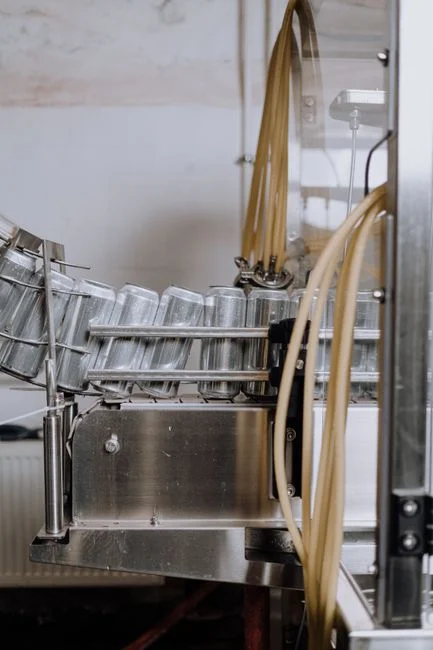
Apply the matrix below to a real project, not as an academic exercise. The default column reflects the decision a defensible design basis memo would carry, given the local envelope.
| Project condition | Default to MBR | Default to CAS |
|---|---|---|
| Influent strength | High-strength food, COD >2,000 mg/L | Municipal-style discharge, COD <1,000 mg/L |
| FOG | >500 mg/L, DAF already in place | <200 mg/L, no FOG pretreatment |
| Reuse | Cooling tower or boiler feed required | Surface discharge only |
| Land | <0.5 acre available for biology train | Ample greenfield, ≥2 acres |
| Discharge limit | <10 mg/L TSS or nutrient-tight | ≥30/30 mg/L BOD/TSS |
| Expansion plan | Modular cassettes added in year three | Design flow sized day one |
| Operator skill | New operator training acceptable | Established CAS operator base |
A Columbus Junction plant retrofitting an existing CAS basin can drop in submerged DF series PVDF flat sheet membrane modules and remove the clarifier — the lowest-disruption path to MBR, with the existing aeration basin repurposed as the MBR aeration zone (per HydropureWater 2026 commercial data). RAS piping, scum removal, and mixed-liquor distribution must be redesigned, but the tankage stays.
Frequently Asked Questions
Is MBR worth the higher CAPEX for a food plant in Columbus Junction?
MBR pays back within 3–6 years when any of three conditions hold: a reuse obligation for cooling tower or boiler feed, a discharge consent under 10 mg/L TSS, or a
Frequently Asked Questions
Is MBR worth the higher CAPEX for a food plant in Columbus Junction, Iowa?
For food and beverage facilities in Columbus Junction, the return on investment for Membrane Bioreactors (MBR) is typically driven by stringent discharge limits and the need for water reuse. While CAPEX for MBR is generally 20% to 40% higher than Conventional Activated Sludge (CAS) due to membrane modules and permeate pumping systems, MBR offers a significantly smaller footprint and superior effluent quality, often reaching BOD levels below 5 mg/L and TSS below 1 mg/L.
If the facility intends to pursue water reclamation for non-potable processes or must meet strict nutrient removal standards for discharge into local watersheds, the operational savings from reduced chemical usage and the avoidance of potential regulatory fines justify the higher initial expenditure. A life-cycle cost analysis is recommended to account for membrane replacement intervals, which typically occur every 7 to 10 years.
What MLSS and SRT should I design an MBR for with food and beverage wastewater?
MBR systems for food and beverage wastewater are typically designed for Mixed Liquor Suspended Solids (MLSS) concentrations ranging from 8,000 to 12,000 mg/L, significantly higher than the 2,500 to 4,000 mg/L standard in conventional systems. This high biomass concentration allows for a compact reactor volume and high volumetric loading rates.
The design Solids Retention Time (SRT) for these applications generally falls between 15 and 30 days. Higher SRTs are preferred to promote the growth of nitrifying bacteria, ensuring effective ammonia oxidation, and to maintain a stable, well-settling sludge blanket that prevents excessive membrane fouling and reduces the frequency of chemical clean-in-place (CIP) cycles.
Do I still need a DAF in front of an MBR for FOG?
Yes, a Dissolved Air Flotation (DAF) unit remains a critical pretreatment component for food and beverage plants, particularly those with high Fats, Oils, and Grease (FOG) loading. MBR membranes are highly susceptible to irreversible fouling from lipids and long-chain fatty acids, which can coat the membrane surface and reduce permeability to unsustainable levels.
The DAF should be designed to reduce influent FOG concentrations to below 50–100 mg/L before the wastewater enters the biological process. Failure to adequately remove FOG via DAF or grease traps will lead to increased membrane cleaning frequency, shortened membrane life, and significantly higher operational costs for chemical cleaning agents.
Can I retrofit my existing conventional activated sludge basin with MBR cassettes?
Retrofitting existing basins is a common and cost-effective strategy for increasing capacity without expanding the physical footprint of the plant. By converting an existing aeration tank into an MBR tank, the facility can often triple its hydraulic capacity because the membrane eliminates the need for a secondary clarifier and allows for much higher MLSS concentrations.
Success depends on the existing tank depth, which must accommodate the membrane cassette height, and the ability to provide sufficient aeration for both biological treatment and membrane scouring. A structural and hydraulic assessment is required to ensure the existing basin can withstand the higher solids concentrations and the specific air-flow requirements of the membrane scouring system.
How does an MBR handle the cold Iowa winter if any tanks are outdoors?
Cold weather in Iowa significantly impacts biological activity, as nitrification rates decrease exponentially below 10°C. To maintain performance, outdoor MBR tanks require insulated piping and, in many cases, supplemental heating or the use of covers to prevent heat loss from the aeration process, which is exothermic but vulnerable to ambient wind chill.
The higher SRT maintained in MBR systems provides a buffer, as the larger inventory of biomass is more resilient to temperature drops than the lower concentrations found in conventional systems. However, operators must monitor the viscosity of the mixed liquor, which increases in colder temperatures, potentially requiring increased air scouring or adjustments to the flux rate to maintain permeate production targets.