Why Cuba, NY Plastics & Rubber Factories Are Re-evaluating Primary Clarification in 2026
For plastics & rubber factories in Cuba, NY, a DAF system is the better primary choice in 2026 because the streams carry free oil, plasticizer droplets, and latex that float rather than settle, and the local POTW enforces 40 CFR 433 limits of about 38 mg/L TSS and 26 mg/L oil & grease. Use a clarifier only as a polishing step downstream of DAF on heavy inorganic filler loads.
A typical Cuba-area plastics or rubber plant sees a fairly consistent mix of contaminants: pellet-wash water carrying polymer fines, mold-release emulsions that are chemically similar to food FOG, latex carryover from dipping or coating lines, vulcanizer blowdown with process oils, and plasticizer droplets from calendaring or extrusion. Characterize these streams as high FOG (often 50–400 mg/L), moderate-to-high TSS (200–1,500 mg/L), and low-to-moderate BOD (150–600 mg/L) unless solvents or cleaning chemicals enter the drain. The free-floating fraction is what kills a clarifier and what a DAF is built to catch.
Discharge to the Cuba village POTW triggers 40 CFR Part 433 (Rubber Processing) local limits, with a daily maximum of roughly 38 mg/L TSS and 26 mg/L oil & grease being the binding parameters most plants trip first (verify the current values against the village sewer use ordinance — numbers tighten on permit renewal). A 2026 driver that did not exist three years ago: many small extruders and coaters added in-line wash tanks in 2024–2025 to chase cosmetic-defect rejects, and that retrofit pushed TSS and FOG loadings well above historical baselines, putting pretreatment limits within a single upset excursion.
The broader context matters too. Industrial wastewater reference data from Hach indicates roughly 70% of industrial plants operate as pretreatment only and tie into a municipal WWTP — that is the Cuba reality. When you are pretreatment, the question is not "what is the best clarifier in the world" but "what gets the floatables out cheaply enough that the village cannot fine you." That framing tilts the decision toward DAF as the primary step.
How a DAF System Actually Treats Plastics & Rubber Water
A dissolved air flotation unit works by saturating a side stream of clarified effluent with air at 4–6 bar, then releasing that pressure through needle valves into the main flotation tank. The released air forms a micro-bubble cloud, typically 30–80 µm in diameter, that attaches to oil droplets, latex particles, and pre-flocculated colloids. Buoyancy carries the loaded bubbles to the surface, where a rotating scraper skims the float; the clarified underflow exits the bottom and goes forward to the next step (often a lamella, often a biological stage).
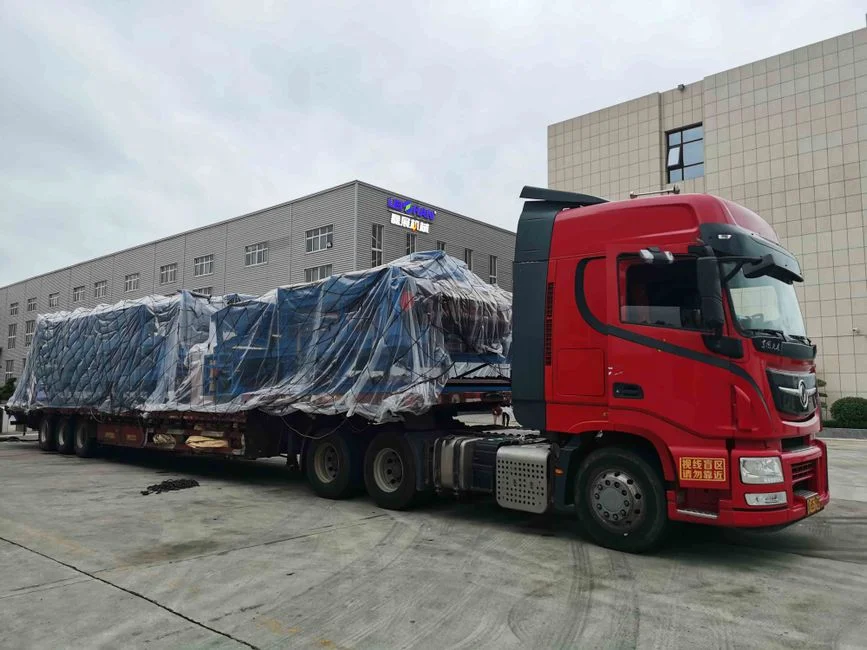
For a small-to-mid Cuba plant in the 4–300 m³/h range, the DAF system covers 13 standard models with automatic skimming, which is what you want when the line is running two shifts and there is no operator dedicated to the wastewater room. The unit ships as a packaged skid with the saturator, recycle pump, air compressor, and skimmer drive pre-piped, so installation is typically a matter of influent/effluent piping, a power drop, and a polymer feed line.
The key design knob is the air-to-solids ratio (ASR). For FOG-heavy plastics and rubber streams, run 0.02–0.06 lb air per lb of total solids entering the cell; for TSS-only streams without free oil, 0.01–0.03 is usually enough. Under-air the unit and float carryover drops; over-air it and you waste compressor power without buying real performance. A practical rule is to jar-test first, then commission at 1.5× the jar dose and trim down during the first month.
The tougher polymer-finish streams — those with high plasticizer load or sub-50 µm latex — need coagulant (typically PAC at 50–150 mg/L) followed by a flocculant (anionic or cationic PAM at 1–5 mg/L), and that train has to be paced to the hydraulic load. A PLC-controlled coagulant/polymer dosing unit tied to the flow signal on the DAF feed is the difference between stable operation and the 3 a.m. phone call. Operator skill is rarely the bottleneck on these lines; reagent control is.
How a Clarifier Handles the Same Stream
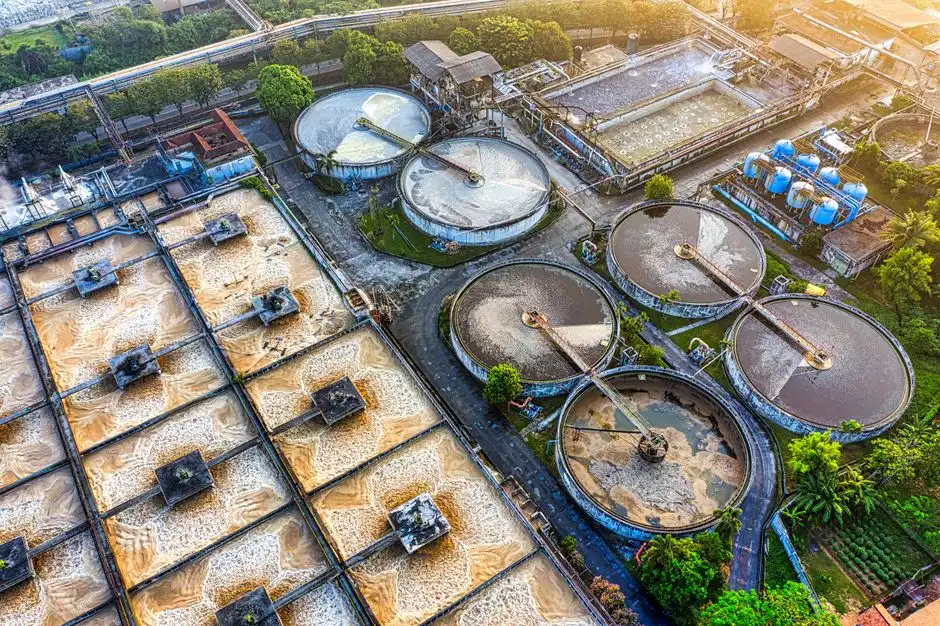
A gravity clarifier is the simplest possible liquid-solids separation step: flow enters a center well, drops to the floor of a circular or rectangular tank, suspended particles settle, and clarified water overflows peripheral launders. Surface loading for a conventional primary clarifier is 1–2 m/h (roughly 0.4–0.8 gpm/ft²); Hach's industrial wastewater reference puts typical performance at approximately 70% TSS removal and 45% BOD removal from screened wastewater. On a stream dominated by mineral filler — talc, calcium carbonate, carbon black from a rubber compounding line — those numbers are credible.
The catch is that free oil, unbound plasticizer, and floating latex do not settle. They pass straight through the clarifier and arrive at the POTW headworks, where they trip the 40 CFR 433 oil & grease limit on the very next composite sample. A clarifier also does not give you a thickened float — you get a dilute underflow that, on FOG streams, often re-emulsifies when the underflow pump shears it.
Where the lamella clarifier earns its keep is on the polishing step. Inclined plates at 55–60° shorten the effective settling distance and push surface loading to 20–40 m/h, cutting both footprint and chemical demand up to 30% versus an equivalent conventional clarifier. For a Cuba plant with constrained floor space downstream of a DAF, that footprint reduction is often the only way to fit the polishing step into the existing building. The high-efficiency lamella settler is the right clarifier choice when the upstream biology or DAF has already handled the FOG and the clarifier is only removing settleable fines.
Best fit, then, is when the stream is mostly mineral filler with low FOG, the factory already runs biological treatment downstream, and the goal is to drop TSS before the aeration basin — not to make a compliance argument to the village POTW on its own.
DAF vs Clarifier: Side-by-Side Parameters for Plastics & Rubber Streams
The trade-off reads best in a table. Use the influent column as your own jar-test target; the design and compliance columns are the levers that determine whether you pass your next POTW inspection.
| Parameter | Plastics/Rubber Influent (typical) | DAF Performance | Lamella Clarifier Performance | Design Implication | 40 CFR 433 Note |
|---|---|---|---|---|---|
| TSS | 200–1,500 mg/L | 85–95% removal | 50–65% removal (HydropureWater primary clarifier data, 2026) | DAF effluent typically 20–80 mg/L; lamella effluent typically 70–600 mg/L | 38 mg/L daily max — only DAF, or DAF + lamella, reliably hits it |
| FOG / O&G | 50–400 mg/L | ~95% removal (per Ecologix field data) | ~70% headline, but most free oil never reaches the bottom — passes through to POTW | Clarifier alone cannot protect 40 CFR 433 O&G limit | 26 mg/L daily max — DAF is the only single-stage answer |
| BOD | 150–600 mg/L | 30–50% removal (with coagulant) | 20–35% removal (HydropureWater primary clarifier data, 2026) | Neither unit is a BOD step; biological polishing required for soluble BOD | BOD limit set locally; check sewer use ordinance |
| Surface loading | — | 5–25 m/h (high-rate designs) | 20–40 m/h (lamella) | DAF wins on hydraulic throughput per m²; lamella wins among gravity settlers | Footprint drives building cost; Cuba winter site work is expensive |
| Footprint (per 10 m³/h) | — | 2–4 m² | 1–2 m² (lamella), 8–12 m² (conventional) | Lamella smallest, then DAF, then conventional clarifier | No direct compliance impact |
| Polymer consumption index | — | 2–8 mg/L (PAM) + 50–150 mg/L (PAC) on tough streams | 0–2 mg/L on filler streams; up to 30% higher than DAF per unit TSS removed | Clarifier is cheaper on reagent when stream is settleable; DAF is cheaper when it isn't | No direct compliance impact, but opex matters for the CFO |
For more on the underlying DAF and clarifier mechanisms, the 2026 suspended solids removal buyer's guide walks through the full unit-process menu, and the primary clarifier engineering specs article covers the conventional clarifier case in more depth.
When the Right Answer Is DAF + Lamella Clarifier in Series
Most plastics and rubber plants that think they are choosing between a DAF and a clarifier are actually choosing between one of those and a two-stage train. Field deployments in this segment cluster heavily in the hybrid layout: roughly 60–70% of FOG-loaded plants end up with DAF first, lamella second, because the two units do different jobs and each one is cheap once the other is in place.
The process logic is straightforward. DAF first strips the FOG, plasticizer, and floating latex — protecting the downstream biology from oil-shock and keeping daily composite O&G below 26 mg/L. Lamella second polishes settleable solids and recovers coagulated fines at 20–40 m/h surface loading, which keeps the building small. The two units are not redundant: the DAF float carries the oil-rich fraction, and the lamella underflow carries the mineral-filler fraction, so sludge handling can be split.
For sludge handling, route the DAF float to a plate-and-frame filter press for dewatering — the float is typically 3–5% dry solids, which presses cleanly to a 25–35% cake that can be landfilled as non-hazardous in most cases. The clarifier underflow is thinner (1–2% DS) but can co-thicken with the DAF float in the press feed well, reducing overall cake volume versus running a single clarifier alone. The hybrid train generally produces 20–40% less cake mass than a single clarifier on the same feed.
Before committing capex, pilot the front half of the train with a mobile DAF. Trailer-mounted units can be on-site and online within about a day (WesTech mobile DAF fleet, 2025), which lets the plant run a 2–4 week trial on its actual stream, collect real compliance data, and size the permanent DAF from measured ASR rather than vendor assumptions. For a small Cuba operation, that pilot is often the cheapest insurance policy available.
Capex, Opex, and Compliance Cost in 2026
Order-of-magnitude capex for a 10–30 m³/h plant in 2026: a packaged DAF skid runs $90,000–$180,000 installed depending on materials (FRP vs 304SS vs 316SS) and instrumentation; a lamella clarifier runs $40,000–$90,000 installed; a hybrid DAF-plus-lamella train runs $130,000–$260,000 installed. These are planning estimates for budget review, not vendor quotes — get firm bids before signing anything.
| Cost Line | DAF Only | Lamella Clarifier Only | Hybrid DAF + Lamella |
|---|---|---|---|
| Capex (10–30 m³/h, 2026 planning) | $90k–$180k | $40k–$90k | $130k–$260k |
| Energy (kWh/m³ treated) | 0.3–0.6 | 0.05–0.1 | 0.35–0.7 |
| Polymer (PAM, mg/L) | 2–8 plus 50–150 PAC on tough streams | 0–2 on filler streams | 2–8 plus 50–150 PAC |
| Operator attention | Daily skim/scum check, weekly calibration | Weekly sludge draw check | Same as DAF plus weekly lamella inspection |
| Single 40 CFR 433 O&G excursion risk | Low with proper ASR | High on FOG streams | Low |
| Pilot path before capex | Mobile DAF, ~1 day deployment | Less common; bench settle test | Mobile DAF pilots the front half |
Operating cost on the DAF side is dominated by polymer (PAM) and compressed air for the saturator; energy is roughly 0.3–0.6 kWh/m³ treated. The clarifier is closer to 0.05–0.1 kWh/m³, but that advantage evaporates the first time a free-oil slug passes through and trips an excursion. Quantify the compliance value of DAF as the avoided surcharge: a single 40 CFR 433 O&G excursion can trigger a POTW surcharge, a NYSDEC notice of violation, and a re-permitting conversation, with combined costs typically in the $10,000–$50,000 range before legal fees — that is the "insurance value" of putting DAF in front.
A practical first step is a flocculant dosing unit jar-testing program and a short mobile DAF rental. That pilot data both de-risks the capex decision and gives the engineer a defensible number to take to the CFO and the village POTW.
Frequently Asked Questions
Does a DAF still work in a Cuba, NY winter when wastewater drops to 5°C?
Yes, but plan for it. Flotation kinetics slow at low temperature and the air-to-solids ratio should be increased roughly 20–30% over summer setpoints to maintain float solids above 3%. Enclose the saturator and skim drive, and keep the recycle line from freezing; most Cuba plants run DAF year-round with an insulated skid enclosure and a small heat trace on the recycle line.
What 40 CFR Part 433 limits actually apply to a plastics extruder discharging to the Cuba POTW?
Rubber Processing category limits under 40 CFR 433 are the binding federal numbers — daily maximums of roughly 38 mg/L TSS, 26 mg/L oil & grease, and pH 6–9 are typical, but the Cuba village sewer use ordinance sets the local enforcement values. Always pull the current local limits before designing; federal categorical limits are a floor, not a ceiling.
Can the Cuba POTW actually receive plasticizer load without a violation?
Only if the plasticizer is removed in pretreatment. Free and emulsified plasticizer behave like animal FOG in the clarifier and pass through; the POTW's oil & grease limit does not distinguish between animal, vegetable, and mineral oils. A DAF with PAC/PAM conditioning is the standard pretreatment for plasticizer removal; the 40 CFR 433 O&G daily max of about 26 mg/L is the binding number.
Is a lamella clarifier alone ever enough for a rubber molding plant?
Only if the stream is mostly mineral filler (carbon black, talc, calcium carbonate) with negligible free oil, and only if the plant already runs biological treatment that can polish the dissolved BOD. For a FOG-loaded rubber stream with vulcanizer blowdown, lamella alone will not meet the 40 CFR 433 oil & grease daily max — DAF first, lamella second is the defensible answer.
Related Equipment
- DAF system — specifications, capacity range, and technical data
- lamella clarifier — specifications, capacity range, and technical data
- PLC-controlled coagulant/polymer dosing — specifications, capacity range, and technical data
- plate-and-frame filter press — specifications, capacity range, and technical data