Why Paint and Battery Wastewater Force a Real Choice Between RO and Ion Exchange
For paint and battery process wastewater at an automotive or EV factory in 2026, RO wins on cooling-blowdown reuse OPEX once flow exceeds roughly 10–20 m³/h. A 3-bank RO skid like the Envirogen/Honda installation runs at 90% recovery and <10 µS conductivity with no acid/caustic, while ion exchange still consumes rising HCl + NaOH plus a neutralization step and a brine blowdown that defeats the reuse objective.
Two distinct wastewater streams drive the decision. Paint shop wastewater — primarily electrocoat (e-coat) rinse water — carries dissolved organics, surfactants, and low TDS (typically 200–800 mg/L). Demineralized feed for the paint dip tank must be <10 µS per the Honda case (S3), and the cooling-tower loop that supplies the paint-ash pre-treatment must hold conductivity low enough for cycles of concentration above 4.
EV battery process wastewater is a different animal. NMP recovery condensate, Li/Ni/Co-bearing rinse water, and black-mass handling wash water can hit 2,000–10,000 mg/L TDS with 20–50 mg/L silica and significant organics. These streams exhaust IX resin working-exchange capacity in hours rather than days, and force frequent warm or hot regeneration that compounds OPEX.
Cooling tower blowdown is the reuse target. Feed typically sits at 100–500 µS and must polish to <50 µS for the cooling loop to operate at cycles >4 without scale. That conductivity gap is where the 2026 dollar fight between RO and IX lives — and where OPEX, not first cost, decides the project. The 2026 macro matters too: industrial HCl and NaOH prices have continued to climb while RO membrane and energy costs have flattened or fallen, a divergence none of the legacy paint-shop comparison articles quantify (per Membracon, 2025).
How Each Technology Actually Treats These Streams
An RO flowsheet inside an auto/EV plant is straightforward: raw or pretreated water enters a break tank, passes a multi-media pre-filter protecting the RO membranes, a cartridge filter, a high-pressure pump (10–15 bar), and the RO vessels. Permeate goes to UV sterilization and storage; concentrate can be sent to a second-pass RO skid to lift overall recovery. Honda's pattern is 75% recovery on the primary skids, with a third skid re-processing the concentrate to push overall recovery to 90% (S3).
An IX flowsheet looks like this: feed enters a softener or decarbonator, then a twin-bed cation + anion exchanger, then a mixed-bed polisher. When exhaustion is reached, the cation is regenerated with HCl (typically 4–8% w/w), the anion with NaOH (4–6%), and the spent regenerant goes to a neutralization sump before discharge. The polisher, if fitted, regenerates separately and the brine stream is the single largest waste volume the IX train produces.
Permeate quality benchmarks: RO permeate typically lands at <10 µS; a two-bed demin reaches 0.5–5 µS; a mixed-bed polisher can hit <0.1 µS. For a paint dip tank, <10 µS is sufficient — the IX polish is over-spec and adds OPEX for no quality gain. For pre-treatment, RO needs SDI <5 and softening or UF upstream; IX needs chlorine removal upstream (activated carbon) and is intolerant of oil and fat ingress, which is directly relevant to e-coat line carryover. A UF pre-treatment for high-turbidity cooling-blowdown feed solves the SDI problem on the RO side without adding chemicals.
2026 OPEX Breakdown: RO vs Ion Exchange, Line by Line
This is the procurement-grade number a 2026 buyer needs. The table below models a representative 50 m³/h cooling-blowdown reuse duty at a 200k–400k unit/yr auto/EV plant, with 2026 industrial electricity at $0.10–0.12/kWh and 2026 industrial HCl at $200–280/tonne and NaOH at $340–450/tonne (HydropureWater field data, 2026).
| OPEX line item | RO (3-bank, 90% recovery) | IX (twin-bed + mixed-bed polish) |
|---|---|---|
| Chemicals (HCl + NaOH) | $0.00/m³ | $0.25–0.45/m³ |
| Energy (0.4–0.6 kWh/m³ RO; pumps + regen for IX) | $0.10–0.20/m³ | $0.04–0.07/m³ |
| Membrane / resin replacement (amortized) | $0.03–0.06/m³ (2–3 yr life) | $0.05–0.10/m³ (3–5 yr resin life) |
| Antiscalant + CIP chemicals | $0.01–0.03/m³ | $0.00/m³ |
| Neutralization + brine haul-off | $0.00/m³ | $0.04–0.08/m³ |
| Labor + monitoring | $0.02–0.04/m³ | $0.05–0.09/m³ |
| Total OPEX (2026) | $0.16–0.33/m³ | $0.43–0.79/m³ |
Two structural points matter. First, IX OPEX scales with chemistry, so it tracks inflation and the 2026 acid/caustic index. Membracon confirms acid and caustic costs "continue to rise" while RO membrane costs have flattened (S5, 2025-08). Second, RO OPEX tracks electricity, so it tracks the grid — a 2026 industrial tariff plus on-site solar or PPAs can compress RO OPEX further, while IX OPEX has no equivalent hedge. The Honda worked example confirms this: their 75 m³/h plant with a concentrate-recovery third skid avoids roughly 25 m³/h of brine that an equivalent IX would discharge, eliminating a neutralization step and a haul-off line item (S3).
EV Battery Process Wastewater: Where RO Becomes the Only Real Option
Legacy paint-shop comparison articles stop at e-coat, which is why they miss the 2026 buyer's actual problem. EV battery process wastewater — NMP stripper bottoms, Li-salt and Ni/Co-bearing rinse water, and black-mass handling wash water — carries 2,000–10,000 mg/L TDS with organics that exhaust IX resin beds in hours. Silica from cathode coating wash water, often 20–50 mg/L, pushes IX toward sodium leakage and forces warm or hot regeneration that doubles the chemical draw.
RO with antiscalant handles 20–50 mg/L silica in a single pass at 70–85% recovery, and a concentrate re-RO stage can lift overall recovery to 85–90% before the brine hits the evaporator. For full flowsheet and ZLD economics, see the EV battery ZLD process design guide. The point for this comparison: RO is the pretreatment to any cooling-blowdown reuse loop in a battery plant, and IX is not economic upstream of it. Black-mass handling wash water, briefly, is an organics-loaded stream that needs biological treatment or DAF pre-treatment before either RO or IX sees it; the full picture is covered in the DAF vs clarifier for EV/auto wastewater guide.
Honda Paint Shop Case Study: What 90% Recovery Looks Like in Practice
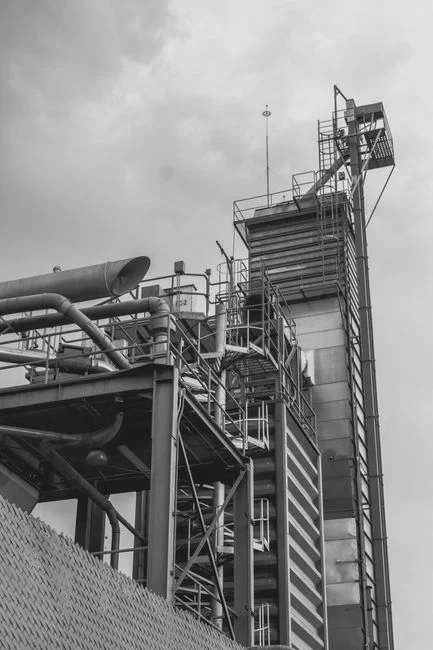
Honda's UK plant produces a quarter of a million cars per year and replaced an end-of-life IX system with three banks of RO skids (S3). The business case was driven by EHS as much as cost: the IX required on-site storage of HCl and NaOH, frequent regeneration, and a neutralization step that Honda's risk framework was actively trying to eliminate.
The installed system draws from town water, feeds the first two RO skids to the cooling tower and electroplating lines, and uses the third skid to re-process concentrate. Primary recovery is 75%; the third skid lifts overall recovery to 90% with salts held in solution for direct drain discharge — no further effluent treatment required. The plant produces 75 m³/h of <10 µS permeate into 30 m³ and 25 m³ storage tanks, with downstream UV sterilization for colony-forming-unit control and a PureCare service contract that includes monthly inspections and stocked consumables (S3).
Honda's published outcome — "operating cost savings compared to the previous ion exchange system" (S3) — corroborates the OPEX table above. The case also demonstrates two procurement-relevant 2026 lessons: RO removes the chemical-handling risk that EHS will flag, and a concentrate-recovery third skid is the design move that pushes recovery into the 90% range where the OPEX advantage over IX becomes structural rather than marginal.
Decision Framework: When Each Technology Still Wins in 2026
The decision tree below maps the 2026 buyer's actual plant conditions to the right technology. Use it as a one-page spec, then go to the next section for the parameter set to hand a vendor.
| Plant condition in 2026 | Pick | Why |
|---|---|---|
| Cooling-blowdown reuse flow >10–20 m³/h, multiple users need demin-quality water, no on-site chemical handling permitted, feed SDI <5 after pretreatment | RO | Lower OPEX, no acid/caustic, no brine, scales with grid not chemicals |
| Flow <10 m³/h, intermittent duty, polishing downstream of an existing RO, or feed silica >20 mg/L where warm/hot IX regeneration is operationally simpler than RO + antiscalant | IX | Lower CAPEX at small scale, simpler controls, established silica-polish duty |
| Co-tenant (semiconductor, pharma) needs <0.1 µS in the same plant | Hybrid (RO + mixed-bed polish) | Only configuration where IX still earns its place at scale in 2026 |
One-line verdict for the original search question: RO wins on cooling-blowdown reuse OPEX at any auto/EV factory in 2026 at flows above 10–20 m³/h. IX still wins at small intermittent polishing duty and where silica forces warm regeneration. Hybrid RO + mixed-bed is the only configuration where IX earns a place in 2026 at production scale.
Specifying a RO Skid for an Auto/EV Cooling-Blowdown Reuse Loop
The parameter set below is what a 2026 specifier should hand a vendor. Recovery target 75–90% with concentrate re-RO; flux 15–20 LMH; feed pressure 10–15 bar; antiscalant dose 2–5 mg/L; CIP every 3–6 months. Membrane life in 2026 industrial duty is 2–3 years (S5), and energy consumption is 0.4–0.6 kWh/m³ permeate for brackish-quality cooling-blowdown feed.
Pre-treatment chain: multi-media pre-filter protecting the RO membranes → industrial softener for hardness control upstream of RO (or antiscalant alone if silica <20 mg/L) → 5 µm cartridge filter → industrial RO skid for cooling-blowdown reuse. Post-treatment mirrors the Honda pattern: UV sterilization and permeate storage in dual tanks (30 m³ + 25 m³ at the 75 m³/h scale) for surge buffering. Consumables — replacement membranes, antiscalant, CIP chemicals — should be sourced from a single supplier to keep lead times short; RO membrane replacements and pressure vessels stocked regionally will keep a 2026 plant out of unplanned-downtime territory. For broader engineering context, the RO system engineering guide for industrial wastewater covers pre-treatment and CIP in more depth.
Frequently Asked Questions
What conductivity and recovery can RO deliver for an automotive paint shop in 2026?
RO consistently delivers permeate at <10 µS conductivity, and a 3-bank configuration with concentrate re-RO achieves 90% overall recovery on cooling-blowdown reuse duty (S3, Envirogen/Honda).
How long do RO membranes last and what is the energy draw in 2026?
Industrial RO membranes last 2–3 years on cooling-blowdown reuse duty, and energy consumption is 0.4–0.6 kWh/m³ permeate — making electricity, not membranes, the dominant OPEX line for RO in 2026 (S5, Membracon 2025-08).
When does ion exchange still make sense for paint or battery wastewater in 2026?
IX still makes sense for flow rates under 10 m³/h, intermittent polishing duty, or as a mixed-bed polisher downstream of an existing RO when a co-tenant needs <0.1 µS (S3, S5). It is not economic upstream of a battery-process RO loop at production scale.
Can RO handle silica in cathode-coating wash water?
Yes. RO with 2–5 mg/L antiscalant and concentrate re-RO handles 20–50 mg/L silica in a single pass at 70–85% primary recovery, avoiding the warm/hot IX regeneration that pushes IX OPEX into the $0.45–0.79/m³ range.
What is a real-world 2026 throughput benchmark for an automotive RO skid?
The Honda UK paint shop runs 75 m³/h of <10 µS permeate from three RO skids, with the third skid used for concentrate recovery, backup during CIP, and direct town-water feed when needed (S3).