The Real Question Greenville Fabricated Metals Plants Are Asking in 2026
For a fabricated metals shop in the Greenville-Spartanburg-Anderson corridor, primary clarification is no longer a generic solids-removal question — it is a 40 CFR 433 compliance decision made under tightening SC SCDHEC enforcement. Stamping draws tramp lubricants and hydraulic oil; machining sheds cutting fluid emulsions and ferrous fines; welding adds scale; parts washing swings pH from acidic pickling rinse to alkaline cleaner. The composite stream routinely lands at 200-3,000 mg/L TSS, 100-2,000 mg/L oil and grease, and periodic metal spikes from zinc, copper, and nickel subcategories. SCDHEC's 2026 pretreatment oversight is pushing local limits closer to the federal categorical ceiling, so primary separation has to do real work — not just pass the eye test before discharge to the POTW. For flows of 4-300 m³/h, the practical choice is between a dissolved air flotation unit and a lamella clarifier, and the wrong pick on a stamping or machining line becomes a six-figure retrofit within two years.
What a DAF System Actually Does Inside a Metalworking Plant
A dissolved air flotation system pulls contaminants to the surface using bubbles, not gravity, which is exactly why it dominates oily streams. A recirculation pump takes clarified effluent, pressurizes it to approximately 6 bar, and saturates it with air in an inline saturation vessel; when that stream re-entents the flotation tank at atmospheric pressure, 30-50 micron micro-bubbles nucleate and flood the contact zone (per Sigma DAF technical specifications). Those bubbles attach to oil droplets, floc particles, and fine metal fragments, lifting them into a stable float blanket that a surface skimmer scrapes into a sludge trough. Most DAFs also include a sediment compartment and bottom scraper so heavy steel and aluminum fines drop out instead of recirculating.
Feed must be chemically conditioned first — a flocculation tube delivers 15-45 seconds of flash-mix for coagulant, pH adjustment, and polymer (per Clearwater Industries process description). Skip that conditioning and removal collapses from 90% to the 30-50% range. A properly run DAF routinely hits above 90% removal for TSS, FOG, BOD, and COD (per Sigma DAF and Clearwater Industries performance data) — a level a gravity device cannot match on free or emulsified oil.
For fabricated metals flows, the relevant DAF model families map to hydraulic load: FPAC for high-contaminant small-to-medium flow, FPBC for low-to-medium solids with plate-enhanced separation, FPHF for large flow at medium-to-high load, and a COMPACT skid at or below 66 GPM for small job shops. A DAF system covers the 4-300 m³/h band that most Greenville fabricators actually operate in.
What a Lamella Clarifier Does — and Where It Falls Short on Oily Streams
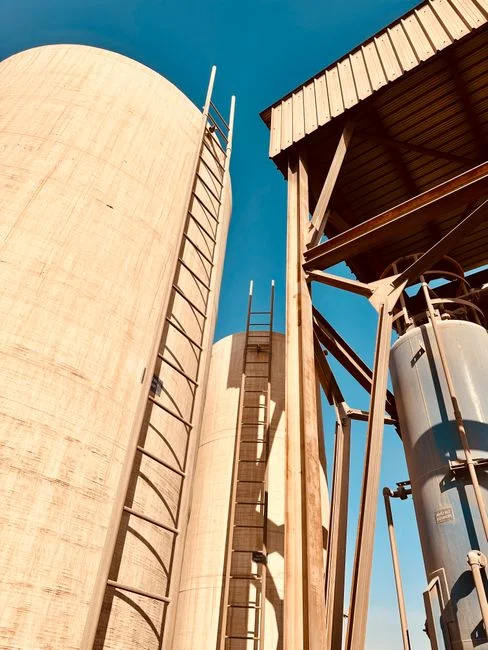
A lamella clarifier uses a stack of inclined plates at 55-60° to multiply the effective settling area inside a small footprint. Surface loading typically runs 20-40 m/h on the projected plate area, and modern designs recirculate sludge to cut flocculant consumption by up to 30% (per HydropureWater JY series operating data). The plates give a fabricator a small civil footprint, low polymer demand, and stable performance on settleable inorganic solids — exactly the profile of a machine-shop coolant dump after oils have been removed upstream.
That strength is also the weakness on a fabricated metals stream. The mechanism is gravity settling, so free oil does the opposite of what the plate wants — it rises, escapes past the effluent launder, and re-emulsifies downstream. Emulsified cutting fluid stays suspended because the droplet size is below what settling can capture; lamellas typically top out at 70-85% TSS removal and drop below 50% FOG removal once oil exceeds 50-100 mg/L in the feed. A lamella clarifier has no integral float skimmer, so shops usually bolt on a separate oil-skimming or DAF step anyway — at which point the footprint advantage is mostly gone. The honest fit is low-FOG, predominantly settleable streams, or a polish step downstream of a DAF. For a deeper look at how the downstream dewatering tail behaves, the plate vs belt filter press comparison is the next read.
DAF vs Lamella Clarifier: Head-to-Head for Fabricated Metals
The decision collapses to a 30-second matrix once the numbers are laid out side by side.
| Parameter | DAF | Lamella Clarifier (JY series) |
|---|---|---|
| Target pollutant | Oil, FOG, fine TSS, emulsions | Settleable inorganic TSS |
| Removal mechanism | 30-50 micron bubble flotation | Gravity settling on inclined plates (20-40 m/h) |
| TSS removal | Above 90% | 70-85% |
| FOG removal | Above 90% | Below 50% above 100 mg/L feed oil |
| Oil tolerance | 200-5,000 mg/L | Below ~50 mg/L effective |
| Footprint per m³/h | Larger tank, integral skimmer | Smallest footprint in class |
| Chemical demand | Coagulant + polymer (15-45 s flash-mix) | Lower polymer; up to 30% reduction via sludge recycle |
| Sludge character | Thick float, 3-6% DS at outlet | Settled inorganic, 1-3% DS |
| CapEx band (matched flow) | USD 80,000-1,200,000 | 40-60% of DAF CapEx |
| OpEx band | Moderate (polymer + saturation pump kWh) | Low (no saturation loop) |
| Flow swing tolerance | Tolerates 2-3x peak swings | Sensitive to upsets; resuspends at peak |
| Best fit | Oily/fine streams, fabricated metals, machining coolant | Settleable low-oil streams, post-DAF polish |
Verdict: DAF wins on oily and fine-particle fabricated metals streams; lamella wins on settleable, low-oil duty or as a downstream polish. For a more region-specific sizing lens, the Catlettsburg metals DAF-vs-clarifier guide covers the heavy-metals side of the same decision. A DAF system is the default for Greenville stamping, machining, and parts-washing shops where the influent carries oil.
Greenville-Specific Sizing and Compliance Checklist for 2026
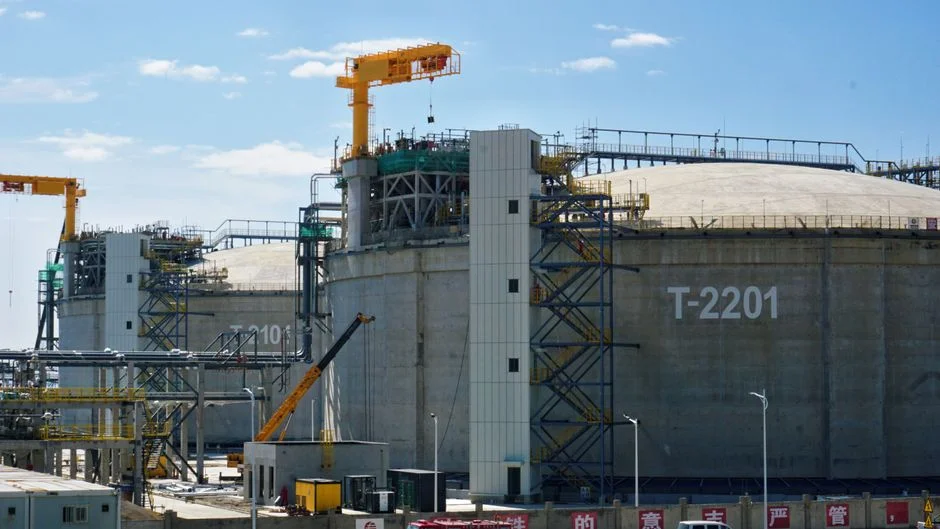
40 CFR 433 sets the daily maximums that govern any fabricator discharging to a POTW: oil and grease 5.6 mg/L, TSS 60 mg/L, plus metals caps (lead, zinc, copper, nickel) that vary by subcategory but typically sit in the 0.6-4.5 mg/L range. SC SCDHEC's industrial pretreatment program is the enforcing authority across the Greenville-Spartanburg-Anderson region, and 2026 has brought more frequent sampling at industrial users — particularly around oil and grease, where many shops were previously passing on monthly averages but failing on individual grabs. The compliance ceiling is the categorical standard; SCDHEC's local limits are not softer, just better policed.
Flow band matters for unit selection. Small job shops (5-25 m³/h) usually fit a single COMPACT or FPBC skid; mid-tier shops (25-80 m³/h) move to a standard DAF with a dedicated flocculation tube; large Tier-1 suppliers (80-300 m³/h) typically need an FPHF with parallel plate packs and a redundant saturation train. Many Greenville plants are running legacy clarifiers installed in the 2000s and are evaluating retrofit rather than greenfield — modular DAF skids drop into the existing civil footprint with chemical skid tie-ins and minimal electrical rework. For shops serving federal or defense-adjacent supply chains, USA-manufactured equipment is a sourcing signal: the Ecologix E-DAF is built in Alpharetta, GA (per Ecologix Systems, 2025), which fits Buy America and Berry Amendment adjacent work. A Lorton metals DAF-vs-clarifier guide applies the same regulatory frame to a different freight lane.
Cost and ROI: What Greenville Plants Should Budget in 2026
CapEx for a DAF installation in the Greenville market runs in three bands: small skid USD 80,000-180,000 (5-25 m³/h, single COMPACT unit), mid-size USD 180,000-450,000 (25-80 m³/h, DAF with chemical conditioning), and large installation USD 450,000-1,200,000 (80-300 m³/h, FPHF with redundant saturation and PLC). A comparable lamella clarifier typically lands at 40-60% of those numbers, which is the main reason it remains attractive on paper for a low-oil stream. OpEx drivers flip the calculus: a DAF float sludge dewaters to 18-25% dry solids on a plate-and-frame press, while clarifier underflow usually arrives at 8-12% — that 2x difference in cake solids is the single largest line item in sludge hauling costs over a 10-year life.
| Cost line | DAF | Lamella Clarifier (JY series) |
|---|---|---|
| Small CapEx (5-25 m³/h) | USD 80,000-180,000 | USD 32,000-108,000 |
| Mid CapEx (25-80 m³/h) | USD 180,000-450,000 | USD 72,000-270,000 |
| Large CapEx (80-300 m³/h) | USD 450,000-1,200,000 | USD 180,000-720,000 |
| Polymer OpEx | Moderate (15-45 s flash-mix dose) | Low (sludge recycle cuts dose 30%) |
| Energy OpEx | Saturation pump + skimmer drive | No saturation loop |
| Sludge cake DS after plate press | 18-25% | 8-12% |
| Hauled sludge tonnage (indexed) | 1.0x baseline | 1.6-2.2x baseline |
ROI closes on three lines: avoided POTW surcharges, recovered process water for rinse or cooling tower makeup, and lower sludge hauling tonnage. A plate and frame filter press is the dewatering tail that makes the float sludge cheaper to dispose than clarifier underflow. The coagulant and flocculant dosing skid should be priced as a separate line on any combined DAF-plus-lamella train, because that skid often decides whether the combined system actually meets its performance guarantee.
Three-Step Pilot Protocol Before You Sign the PO
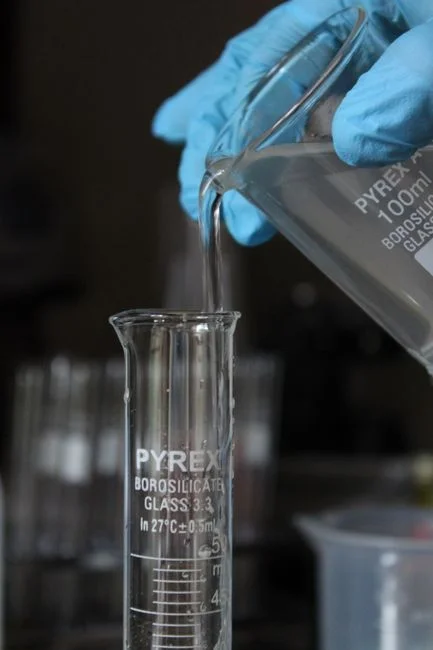
Step 1 — Characterize the stream. Run a 7-day composite sampling program for oil and grease, TSS, total metals (lead, zinc, copper, nickel), pH, and temperature. Cover at least three flow regimes: low overnight, average mid-shift, and peak at end-of-shift washdown. A single daytime grab will undersize the unit.
Step 2 — Lock the chemistry, then pilot. Run bench-scale jar tests to fix coagulant and flocculant dose and contact time. If average flow exceeds ~15 m³/h, rent or lease a trailer-mounted DAF and run it for 2-4 weeks on the real stream; pilot data is the only reliable predictor of full-scale float quality and polymer consumption.
Step 3 — Validate dewatering. Send float sludge to a plate-and-frame or belt press test and confirm the cake reaches 20%+ DS. This single test often flips the DAF-vs-clarifier decision, because the sludge hauling delta usually dwarfs the polymer line item. Application engineers can review pilot data and specify a DAF or JY lamella in matched flow bands once jar and pilot numbers are in hand. For dosing skid details, the flocculant dosing unit engineering guide lays out the spec math.
Frequently Asked Questions
When should a Greenville fabricated metals plant choose DAF over a lamella clarifier?
Choose DAF when influent oil and grease exceeds ~100 mg/L or TSS runs above ~200 mg/L with fine metal particles — DAF holds above 90% FOG and TSS removal where a lamella collapses below 50% on oil.
What are the 40 CFR 433 daily maximums that drive the DAF-vs-clarifier choice?
40 CFR 433 sets oil and grease at 5.6 mg/L, TSS at 60 mg/L, and metals (lead, zinc, copper, nickel) at subcategory-specific caps that range 0.6-4.5 mg/L — DAF is the safer default for meeting these on oily fabricated metals streams.
How much does a DAF system cost for a 25-80 m³/h fabricated metals plant in 2026?
A mid-size DAF installation in the Greenville market runs USD 180,000-450,000 in 2026, with a comparable lamella clarifier at roughly 40-60% of that figure but higher lifetime sludge hauling cost.
Can a lamella clarifier handle emulsified machining coolant?
No — emulsified coolant droplets stay suspended under gravity settling, so a lamella typically removes less than 50% of FOG above 100 mg/L feed oil; DAF micro-bubbles attach to the droplets and lift them.
What flow band does the DAF cover for a Greenville fabricator?
The DAF covers 4-300 m³/h, which maps to small job shops at 5-25 m³/h, mid-tier plants at 25-80 m³/h, and Tier-1 suppliers at 80-300 m³/h across the Greenville-Spartanburg-Anderson region.