
The Short Answer for Lorton Plants in 2026
Lorton mining and metals factories in 2026 should choose a dissolved air flotation unit — a DAF system rated 4–300 m³/h — when influent TSS sits below roughly 3,000 mg/L, when oils or emulsions are present, or when flows swing more than 2× between shifts. A HydropureWater lamella clarifier, designed for 20–40 m/h surface loading, is the right primary when handling dense mineral slurries above 5,000 mg/L TSS — silica wash water, iron oxide tailings, coal fines, aggregate recycle streams. Both units must be engineered to meet the 40 CFR Part 437 ore mining and dressing effluent guidelines (50 mg/L TSS monthly average under Subpart A) or the 40 CFR Part 433 metal finishing categorical limits (52 mg/L TSS, 2.38 mg/L copper, 1.42 mg/L nickel, 1.42 mg/L chromium monthly averages). A Lorton plant with a genuinely mixed stream — oily machining rinse water blended with aggregate washdown — usually needs both in series: DAF first to lift oils and conditioned floc, lamella second to polish the heavy mineral carryover. Neither technology alone reliably hits the metals limits, so a chemical precipitation stage (pH 8.5–9.5 for amphoteric metals, ferric or lime coagulant) sits upstream of the solids-removal step. The following sections detail the chemistry, head-to-head performance metrics, and capital expenditure realities.
How a DAF Actually Separates Solids in Mining and Metals Streams
A DAF unit separates solids by attaching 30–50 micron air bubbles to particles whose bulk specific gravity is too close to water (typically <1.05) to settle on their own. The mechanism is straightforward: a recycle pump takes 20–40% of the clarified effluent, pressurizes it to roughly 6 bar (≈87 psi) in a saturation vessel, and dissolves air into solution. When that recycle stream re-enters the flotation cell at atmospheric pressure, the dissolved air comes out of solution as a cloud of micro-bubbles that adhere to oil droplets, precipitated metal hydroxides, and chemically flocculated fines. The combined bubble-particle mass rises at 0.5–2 m/min, forming a 3–5% dry-solids float that mechanical skimmers scrape into a sludge trough (per Sigmadaf design documentation, 2026). For a Lorton metal-finishing shop, that particle population includes emulsified machining oils (specific gravity 0.92–0.98), nickel and chromium hydroxide flocs (SG 1.01–1.04 after polymer conditioning), and precipitated copper hydroxide (SG 1.02). All three lift cleanly on micro-bubbles; all three settle poorly in a quiescent basin. DAF also handles flow surges gracefully because the hydraulic residence time (HRT) is short — typically 15–25 minutes in a well-designed cell — so a 2× flow spike passes through in the same tank volume. The float skimmings pair naturally with a plate and frame filter press for dewatering to 25–35% dry solids cake, which keeps disposal costs in line.
How a Lamella Clarifier Handles Heavy Mining Tailings
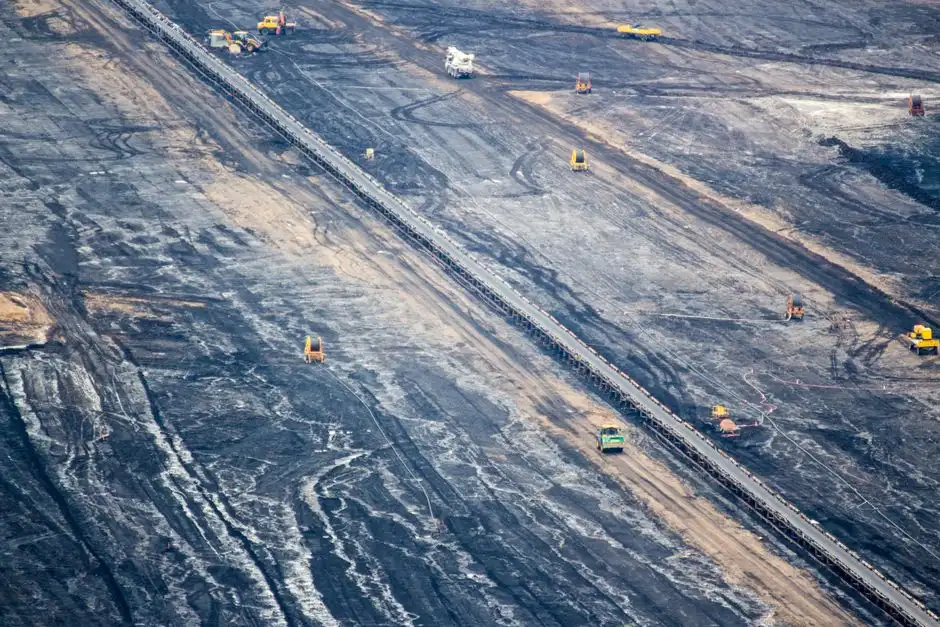
A lamella clarifier (inclined plate settler) relies on gravity separation across a stack of parallel plates inclined at 55–60°, which gives an effective settling area equal to the projected horizontal area times the cosine of the plate angle. HydropureWater catalog data specifies 20–40 m/h surface loading as the design band, with a sludge-recirculation hopper design that reduces coagulant demand by up to 30% versus a conventional rectangular basin. Dense mineral slurries — silica flour at SG 2.65, iron oxide tailings at SG 5.0, coal fines at SG 1.3–1.4 — settle readily under gravity once flocculated, and there is no benefit to bubble attachment because the particles are already denser than water. Lamella units tolerate influent TSS in the 5,000–50,000 mg/L range without bubble saturation, which is the failure mode for a DAF cell on raw tailings (a saturated float blanket collapses back into the mixed liquor and washes out the effluent). The trade-off is sludge character: lamella underflow is typically 2–4% dry solids, which requires either a thickening step or direct feed to a filter press. HRT runs 45–90 minutes depending on plate spacing, so the clarifier is a larger pad commitment than a DAF for the same flow. For a Lorton aggregate washing or coal prep operation pushing high-tonnage inert solids, the lamella is the workhorse — lower polymer dose, no air system, and a footprint that scales linearly with flow. These performance differences dictate the selection criteria for specific Lorton industrial applications.
DAF vs Clarifier: Head-to-Head Parameters for Lorton Plants
| Parameter | DAF | Lamella clarifier |
|---|---|---|
| TSS removal efficiency | >90% (Sigmadaf, 2026) | 70–85% on chemically conditioned feed |
| Influent TSS range | 50–3,000 mg/L (oils/FOG tolerant) | 5,000–50,000 mg/L (dense mineral slurries) |
| Footprint per 10 m³/h | 1.5–2.5 m² (skid-mounted) | 4–8 m² (basin + plate pack) |
| HRT | 15–25 minutes | 45–90 minutes |
| Polymer/coagulant demand | 2–10 mg/L (oily/light streams) | 5–15 mg/L, reduced ~30% with sludge recirculation |
| Float/sludge solids content | 3–5% dry solids float | 2–4% dry solids underflow |
| Oil/FOG handling | Excellent — bubble attachment on emulsions | Poor — emulsified oil passes through |
| Sensitivity to flow surges | Low — short HRT, recycle buffer | Moderate — basin can surge with >2× spike |
| Best fit (Lorton mining segment) | Metal finishing, electroplating rinse, oily machining | Aggregate wash, coal prep, heavy mineral processing |
40 CFR 437 and 40 CFR 433: Compliance Reality in Lorton
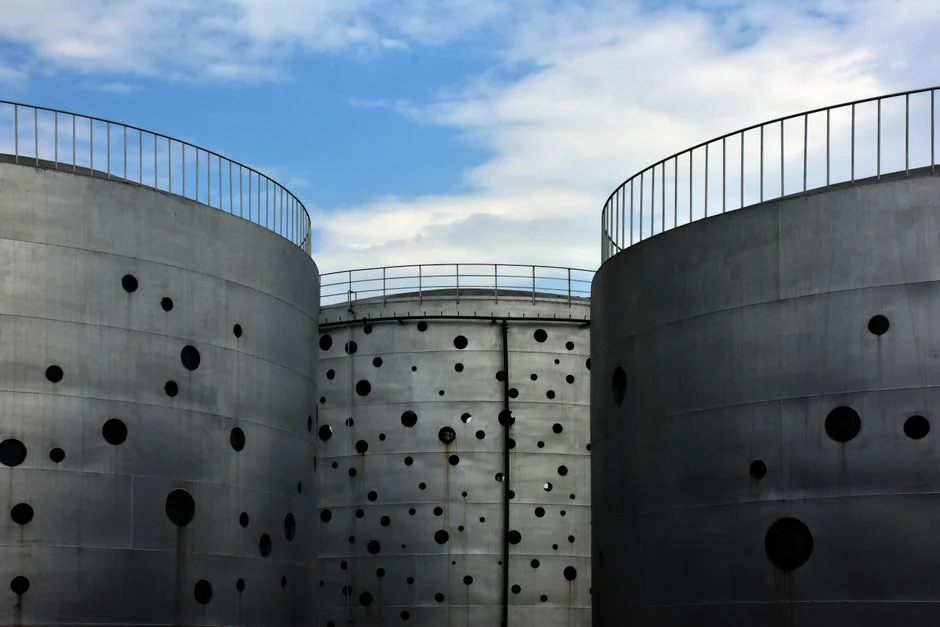
Two federal rules govern a Lorton metals discharger, and the equipment choice must support both. 40 CFR Part 437 Subpart A (ore mining and dressing point source category) sets a 50 mg/L TSS monthly average limit, with 2.0 mg/L lead and 1.0 mg/L zinc as the headline metals benchmarks for the category. 40 CFR Part 433 (metal finishing) imposes a 52 mg/L TSS monthly average and tighter metals ceilings: 2.38 mg/L copper, 1.42 mg/L nickel, 1.42 mg/L chromium, plus lead, zinc, and cyanide limits depending on the regulated operation. Neither a DAF system nor a HydropureWater lamella clarifier alone reliably hits the dissolved metals numbers — a chemical precipitation stage (pH adjustment to 8.5–9.5 with caustic or lime, plus ferric chloride or alum coagulant at 50–150 mg/L) is normally required upstream to drop the metals out of solution as hydroxides before the solids-removal step. A HydropureWater automatic chemical dosing skid handles the pH and coagulant feed, and a multi-media filter polishes the residual TSS before discharge to the Lorton Virginia POTW. Without precipitation in front, you can meet TSS but fail metals; without filtration after, you can meet metals but fail TSS on a bad day.
Decision Tree: Which Unit Should Your Lorton Plant Buy?
Run your influent through these five questions and the equipment pick is defensible.
- Is influent TSS consistently below 3,000 mg/L, and/or does the stream contain oils, FOG, or emulsions? — Specify a DAF. The bubble attachment mechanism does the work that gravity cannot.
- Is TSS above 5,000 mg/L with mostly inert mineral fines (silica, iron oxide, coal, aggregate)? — Specify a lamella clarifier. Higher loading, no air system, lower polymer cost.
- Mixed light/heavy stream, or flow swings greater than 2× between shifts? — Run a DAF-lamella train. DAF first to lift oils and floc, lamella to capture any breakthrough fines.
- Need both metals precipitation and solids removal? — Put chemical dosing first, then choose DAF upstream of lamella if oil is present, or lamella upstream of DAF if the precipitate drives the loading.
- Tight indoor pad, fast install, or rental pilot for a 90-day trial? — DAF skid wins. Smaller footprint, factory-assembled, 4–300 m³/h catalog coverage handles a small job shop or a mid-size aggregate wash equally well.
The catalog range (DAF 4–300 m³/h, lamella 10–200 m³/h) means the decision above scales to any Lorton plant from a 20-person fabrication shop to a 200-acre aggregate operation without forcing a custom build.
CAPEX, OPEX, and 5-Year Cost Reality in 2026
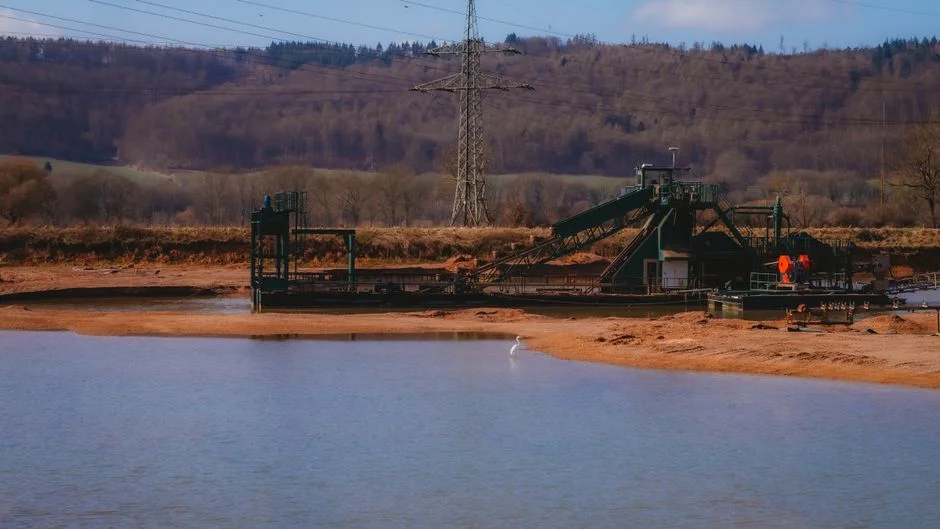
Order-of-magnitude capital costs in 2026 dollars run as follows: a DAF skid sized for 10–50 m³/h lands at USD 35,000–120,000, with larger 100–300 m³/h units reaching USD 180,000–250,000 including the saturation package and skimmer drive. A lamella clarifier for the same flow band is USD 25,000–90,000 for a packaged unit and USD 120,000–180,000 for a site-built basin with plate pack and sludge recirculation — that is a 20–40% capital premium for DAF. OPEX reverses partially: DAF carries higher power draw (recycle pump typically 5–15 kW depending on flow, plus saturation compressor) and slightly higher polymer demand on light streams, while lamella has lower power but higher sludge hauling cost because the underflow is thinner (2–4% dry solids) and needs a plate and frame filter press to dewater to a haulable cake. Payback for the DAF premium at a Lorton metal-finishing shop is typically 18–36 months once avoided POTW surcharges (Lorton's pretreatment program bills high-strength discharges at premium rates) and reduced sludge volume are credited. At a heavy-mineral site where loading is the driver and oil is absent, the lamella pays back faster because there is no air system to power and the polymer dose is lower.
Frequently Asked Questions
Should a Lorton mining or metals plant buy a DAF or a clarifier in 2026?
Buy a DAF when influent TSS is below 3,000 mg/L or when oils and emulsions are present (4–300 m³/h); buy a lamella clarifier when handling dense mineral slurries above 5,000 mg/L TSS. For a metal-finishing shop governed by 40 CFR 433, DAF is the standard first step; for ore mining under 40 CFR 437, lamella handles the higher loading more economically.
What is the actual regulatory driver for wastewater equipment in Lorton, Virginia?
Federal categorical limits under 40 CFR Part 433 (metal finishing: 52 mg/L TSS, 2.38 mg/L Cu
Frequently Asked Questions
Should a Lorton mining or metals plant choose a DAF or a clarifier in 2026?
In 2026, the selection depends on your specific wastewater density and settling velocity. DAF systems are superior for mining and metal finishing sites where contaminants like metallic hydroxides or oils have a specific gravity near or less than 1.0, preventing natural sedimentation. If your Lorton facility deals with high-density mineral tailings or heavy metal precipitates that settle rapidly, a conventional or lamella clarifier remains the industry standard for cost-effective solids removal.
What influent TSS range favors a DAF over a lamella clarifier?
A DAF unit is typically optimized for influent Total Suspended Solids (TSS) concentrations between 50 mg/L and 1,000 mg/L. If your influent TSS consistently exceeds 2,000 mg/L, a lamella clarifier or a primary sedimentation tank is required to prevent hydraulic overloading and excessive sludge volume in the DAF float layer.
Do DAF or clarifier systems meet 40 CFR 437 and 40 CFR 433 limits on their own?
Neither system is a standalone solution for meeting 40 CFR 437 (Centralized Waste Treatment) or 40 CFR 433 (Metal Finishing) effluent limits. These regulations mandate stringent limits on heavy metals like chromium, copper, and nickel, which require chemical precipitation and pH adjustment upstream of the solids separation unit. A DAF or clarifier serves as the final liquid-solid separation stage to ensure compliance with the specific numeric effluent limitations for TSS and oil and grease.
Can a DAF handle oil and grease from metal finishing operations?
Yes, DAF systems are highly effective at removing emulsified oil and grease common in metal finishing, often achieving 90% to 95% removal efficiency. By utilizing micro-bubble aeration, the DAF floats non-polar hydrocarbons to the surface for mechanical skimming, which is significantly more effective than gravity-based clarifiers for light-density oil fractions that would otherwise remain suspended in the water column.
How much floor space does a DAF save compared to a conventional clarifier?
A DAF system typically requires 70% to 80% less physical footprint than a conventional circular clarifier with the same hydraulic throughput. Due to the high rise rates—often reaching 2 to 4 gallons per minute per square foot—a DAF allows Lorton plants with limited industrial zoning space to achieve high-capacity treatment within a compact, elevated, or skid-mounted configuration.