DAF vs Clarifier for Romulus Petroleum Bulk Wastewater: The Short Answer
For petroleum bulk wastewater in Romulus in 2026, factories should choose DAF as the primary oil-removal step because bulk terminal streams are dominated by free and emulsified oil, where DAF routinely removes 90–95% of oil and grease versus roughly 60–70% for a plain clarifier. A lamella clarifier is then used downstream for the heavier settleable solids and sludge thickening, giving a compact DAF → lamella train that satisfies Michigan EGLE and Downriver POTW pretreatment limits without a large API gravity interceptor footprint.
Romulus is unusual among Michigan petroleum sites because of how it handles material. The city sits directly south of Detroit Metropolitan Airport (DTW), with I-94, US-24, and the Norfolk Southern Detroit Line cutting through the industrial corridor. That means every gallon of slop oil, off-spec diesel, or jet-fuel flush comes off a truck or a trans-load line, not a pipeline — and every gallon can show up at the separator as a slug. Add winter road-salt runoff, shared tank bottoms, and storm-water commingling in the containment areas, and the influent envelope shifts hourly.
The implication is direct: a gravity-only train cannot ride through a 30-minute transfer spike without exceeding the Downriver POTW's oil limits. Specify DAF first, lamella second, and put the polymer dosing on the front of the train, not at the back.
What Petroleum Bulk Wastewater in Romulus Actually Contains
A Romulus bulk terminal influent is not "oil + water." It is a stack of at least five contaminant classes that interact: free oil, emulsified oil, settleable solids, sulfides, and trace BTEX. During a truck-unloading upset or a tank-bottom transfer, free oil in the separator feed routinely hits 200–2,000+ mg/L. Routine operations sit in the 50–300 mg/L free-oil range, with 10–60 mg/L of emulsified oil below it. The emulsion fraction is the one that defeats a clarifier, because the droplets are typically under 20 µm and stabilized by surfactants from fuel additives, detergents in wash water, or shear from pump impellers.
TSS in a petroleum bulk stream rarely gets the attention it deserves, but it is the second design driver. Sources include tank-bottom rust, road grit from the truck bay, catalyst fines from reformer off-spec, and salt carry-over from winter operations. A Romulus terminal typically runs 100–500 mg/L TSS in the wet-weather composite, with spikes to 1,500 mg/L after a salt slurry event. Sulfides appear in any stream that touches a cracked stock or a crude resid — usually 1–20 mg/L — and they will strip into the vapor space of a DAF or clarifier if the pH drops below 6, which is why pH control belongs in the front of the train rather than at the discharge.
BTEX is present at low mg/L levels but drives the air-permitting conversation rather than the water-discharge conversation, because a covered DAF vessel keeps the volatile fraction contained. The real engineering question is free versus emulsified oil, because a clarifier handles the first pass of free oil but struggles with emulsions — and that single distinction is where DAF wins. The same logic explains why the 2025–2026 EGLE enforcement letters at Michigan bulk terminals have clustered around the DAF-or-clarifier decision, not the brand of either unit.
How a DAF System Treats Oily Wastewater
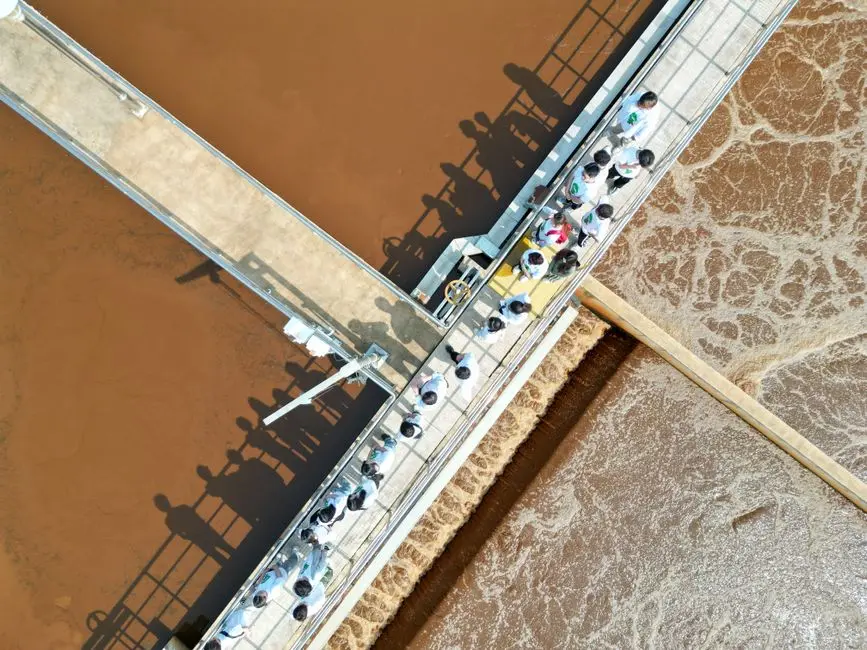
A dissolved air flotation system works by attaching microbubbles to oil droplets or floc particles and floating them to the surface, where a skimmer removes the float layer. The microbubbles are generated by saturating a side-stream of clarified effluent with air at 4–6 bar in a pressure vessel, then releasing that pressure through needle valves or specialty nozzles into the flotation tank. The resulting bubble cloud is typically 30–80 µm in diameter, which is the size range needed to bond with oil droplets and rise at a rate that competes with Stokes-law settling.
The mechanism only works well if the oil is conditioned first. As WesTech notes on its mobile DAF clarifier product page, "coagulants or flocculants are often recommended to improve float separation or sludge concentration" on oily streams (WesTech, 2026). The polymer step is not optional for petroleum. Without an emulsion-breaking coagulant — typically a cationic polymer or an emulsion-breaking surfactant blend at 5–25 mg/L, plus a flocculant at 0.5–3 mg/L — the DAF tank behaves like an overpriced clarifier, because the oil passes straight through without attaching to bubbles.
When the chemistry is correct, the float layer reaches 3–8% solids, the skimmings can be routed to a slop-oil recovery hopper, and the underflow carries the heavier TSS out the bottom for downstream handling. A packaged DAF system sized to a Romulus terminal's peak flow can hit the 90–95% oil and grease removal range that makes the rest of the train work (Ecologix, 2026). Hydraulic retention time in the flotation cell is short — 15 to 30 minutes — which is why a DAF footprint is so much smaller than a clarifier with equivalent throughput.
How a Clarifier Handles Petroleum Bulk Wastewater
A clarifier is a gravity settling vessel. The wastewater enters a center well, drops through a sludge blanket, and exits over peripheral weirs while solids settle under Stokes-law conditions. For heavy sediment, free oil that has had time to coalesce, and sludges that need thickening, it is the right tool. For a freshly emulsified petroleum stream, it is the wrong tool, because Stokes settling on a 10 µm oil droplet gives a rise rate on the order of centimeters per hour — far slower than the retention time the stream actually gets.
Lamella (inclined-plate) clarifiers changed the footprint math. By installing 50–60° inclined plates at 50–80 mm spacing, the effective settling area is multiplied by the projected plate area, so a lamella unit can operate at 20–40 m/h surface loading rate versus roughly 1–2 m/h for a conventional clarifier handling the same solids (HydropureWater engineering data, 2026). That is why modern terminals skip the old API gravity interceptor entirely and put a lamella clarifier downstream of a DAF for TSS polishing and sludge thickening.
The clarifier also has a real cost advantage when the oil is already free and the TSS is the primary target. It has no air compressor, no recycle pump, and no polymer demand on the oil-removal side. A Romulus site that only handles clean diesel storage with no slop-oil receipt can run a lamella-only train — but that is a narrow case in 2026, and the EGLE inspection trend in Wayne County has been to ask why a clarifier-only site does not have DAF chemistry in front of it.
DAF vs Clarifier: Side-by-Side Parameters for Petroleum Streams
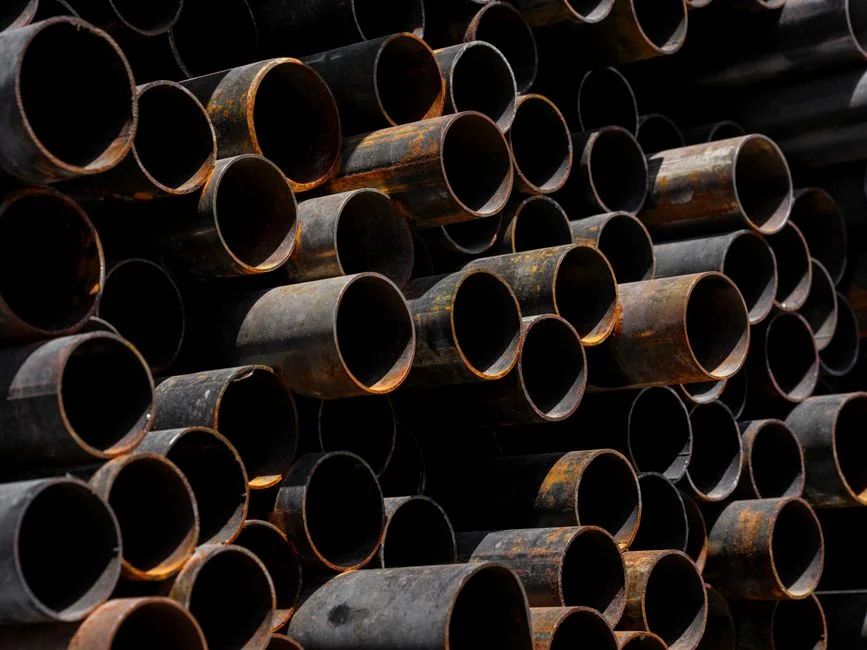
The table below is sized to a 50 m³/h design flow, which is the order of magnitude a Romulus bulk terminal with two truck unloading bays actually generates. Numbers are engineering ranges, not single-point guarantees.
| Parameter | DAF (with polymer chemistry) | Lamella Clarifier |
|---|---|---|
| Oil and grease removal | 90–95% (Ecologix, 2026) | 60–70% free oil; <30% emulsified |
| TSS removal | 70–85% | 80–90% on settleable solids |
| Footprint at 50 m³/h | 8–15 m² packaged skid | 18–35 m² including plate pack (HydropureWater, 2026) |
| Typical energy use | 3–6 kW (air compressor, recycle pump, skimmer) | 0.5–1.5 kW (sludge pump only) |
| Polymer / chemical demand | 5–25 mg/L coagulant + 0.5–3 mg/L flocculant | None on the oil side; polymer optional for TSS |
| Effluent oil target achievable | <15 mg/L with correct dosing | 30–80 mg/L on emulsified feed |
| Best use | Oil-dominant or spiky streams, slop-oil receipt, emulsified feed | Sludge thickening, TSS polishing, free-oil-only streams |
The numbers that drive the equipment decision are the oil-removal row and the effluent oil target row. Everything else is downstream of those two.
The 2026 Recommended Process Train for a Romulus Bulk Terminal
The train a Detroit-metro engineer should hand to a designer in 2026 is: truck unloading bay → covered grit chamber → equalization tank with mixing → DAF system with an automatic polymer dosing skid ahead of the flotation cell → lamella clarifier for TSS polishing and sludge thickening → multimedia or carbon polish for residual BTEX → flow-paced discharge to the Downriver collection system.
Why DAF first: the 90–95% oil-removal figure (Ecologix, 2026) means the downstream lamella is handling a stream already under 30 mg/L oil, which keeps its sludge blanket from fouling and lets the 20–40 m/h lamella surface loading rate (HydropureWater engineering data, 2026) carry the design flow in a small footprint. Why lamella second: it thickens the underflow to 2–4% solids, recovers any floatable carryover, and protects the carbon polish from TSS blinding.
Two deviations from the train are legitimate. A Romulus site with consistently low TSS (under 80 mg/L) and no slop-oil receipt can drop the lamella and run DAF → carbon polish only. A site that handles only free oil from clean product storage — no trans-load, no slop — can run a lamella-only train. What is not legitimate in 2026 is skipping DAF on a stream that includes slop oil or emulsified product. EGLE inspection data from 2024–2025 in Wayne County shows that pattern is the single most common pretreatment violation at petroleum handling facilities (per Michigan EGLE pretreatment program reporting, 2025-08).
Cost, Footprint, and Compliance Reality in 2026
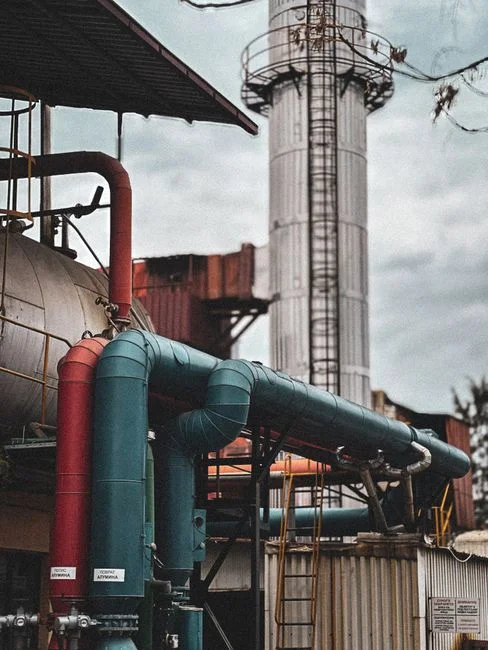
CAPEX for a packaged DAF unit and a civil-works lamella clarifier of equivalent hydraulic capacity are within roughly 20% of each other in 2026, but the comparison is misleading because a clarifier-only train on a Romulus site typically requires an API gravity interceptor upstream — and that is a poured-concrete vault that does not fit inside a built-out site next to DTW. Excavation near a flight path, dewatering around a high water table, and shoring against existing tank-farm containment all push interceptor costs up fast. A packaged DAF on a slab, with the lamella on a second slab beside it, avoids the excavation entirely.
OPEX is the real differentiator. DAF consumes compressed air and recycle pumping at 3–6 kW for a 50 m³/h unit, plus polymer at $0.10–$0.40 per cubic meter treated. Lamella OPEX is essentially the sludge pump at 0.5–1.5 kW and polymer for TSS only, which is why the hybrid train uses lamella downstream — the expensive chemistry is concentrated on the front of the train where the oil is, and the back of the train runs cheap.
Compliance-wise, the Downriver POTW and Michigan EGLE pretreatment expectations in 2026 are sub-15 mg/L oil and grease in the discharge on a 30-day rolling average, with no single composite above 25 mg/L. A correctly dosed DAF → lamella train hits that envelope at design flow and stays under it through a 2× hydraulic spike for at least 30 minutes. A clarifier-only train does not. That is the line a procurement engineer needs to be ready to defend in front of plant management and the pretreatment coordinator.
Decision Framework: When to Pick DAF, Clarifier, or Both
Pick DAF as the primary unit when the stream is oil-dominant, contains emulsified oil, or swings during truck transfers and slop-oil receipts. That covers most Romulus bulk terminals in 2026, including jet-fuel trans-loads, gasoline terminals with shared tankage, and any site receiving off-spec product for blending.
Pick a lamella clarifier as the polish and sludge thickener downstream of DAF, or as the primary unit only when the oil is consistently under roughly 50 mg/L and already free. The lamella-only case is real but narrow — clean diesel or kerosene storage with no slop-oil receipt and no emulsified feed.
Pick neither alone when slop oil is involved. That stream needs DAF with proper polymer chemistry plus a dedicated oil-recovery hopper to capture the skimmings before they re-emulsify in the sludge tank. For sites outside Michigan, the same framework applies; a peer article on the petroleum wastewater DAF vs clarifier guide for Phoenix walks through the heat-driven influent swing for a desert terminal. For non-petroleum oily streams, the DAF vs clarifier for auto wastewater piece covers the EV and assembly plant envelope.
Frequently Asked Questions
Is a DAF better than a clarifier for oil removal?
Yes, for petroleum bulk wastewater with any emulsified fraction. A DAF with correct polymer chemistry removes 90–95% of oil and grease, versus 60–70% for a plain clarifier on the same stream (Ecologix, 2026). The clarifier's gap is on droplets under 20 µm, which is exactly the emulsion fraction that dominates after pump shear or surfactant contact.
Can a lamella clarifier replace an API gravity separator?
For new Romulus sites in 2026, a lamella clarifier downstream of a DAF effectively replaces the API gravity interceptor because the DAF has already removed the free oil the API was designed to skim. A lamella-only train cannot replace an API separator if emulsified oil is present.
What oil level can a correctly designed DAF hit in the effluent?
With proper coagulant and flocculant dosing, a DAF → lamella train can consistently deliver under 15 mg/L oil and grease to the Downriver POTW on a 30-day rolling average, which matches the 2026 Michigan EGLE pretreatment expectation for petroleum handling facilities (per Michigan EGLE pretreatment program reporting, 2025-08).
Is polymer dosing really required on a DAF for oil?
For petroleum streams, yes. Without an emulsion-breaking coagulant and a flocculant, the DAF microbubbles do not attach reliably to oil droplets and performance drops into the same range as a clarifier. WesTech's product literature explicitly recommends coagulants or flocculants "to improve float separation or sludge concentration" on oily feeds (WesTech, 2026).