Pensacola Chemical Plants in 2026: What the Wastewater Stream Actually Looks Like
Pensacola's chemical-manufacturing base splits into three wastewater profiles that the technology choice has to respect. Organic-chemicals plants generating resins, plasticizers, and synthetic intermediates typically run warm process water (30–45 °C) carrying emulsified oils, solvents, and FOG. Specialty/batch chemical operations — pigments, adhesives, cleaning formulations — produce shock loads of TSS, COD, and surfactants tied to campaign schedules. Petrochemical support facilities (terminals, blending, additive packages) deliver steady FOG and hydrocarbon loads with intermittent slugs of light hydrocarbons. Each profile maps to a different section of 40 CFR 414, the federal Organic Chemicals, Plastics, and Synthetic Fibers effluent guideline, and to Florida Chapter 62-620, the state NPDES implementing rule for industrial discharges to surface and ground waters.
EPA Region 4 already maintains active industrial NPDES coverage in Escambia County — permit FL0002488 (Pensacola Naval Air Station, S5) is one of the abstracts confirming the federal-state enforcement pattern local chemical plants operate under. 2026 adds three decision drivers that did not exist in the prior capex cycle: EPA's evolving PFAS monitoring proposals will likely tighten reporting on organic-fluorine streams in the next permit renewal round; northwest Florida industrial water tariffs continue to climb, sharpening the OPEX calculus on aeration-driven pretreatment; and the energy-cost pressure on compressed-air systems has made saturator efficiency a first-order selection criterion, not a footnote. A plant engineer evaluating capital equipment this year cannot treat 2024 DAF brochures as current — the rules, the rates, and the removal benchmarks have all moved.
DAF vs Clarifier: How Each Technology Actually Works on Chemical Waste
A dissolved air flotation (DAF) system saturates a side-stream of clarified effluent with air at 4–6 bar, then releases it through needle valves into the main flotation chamber. The resulting micro-bubbles (typically 10–100 µm) attach to oil droplets, FOG, and fine suspended solids, lifting them to the surface as a float layer that is skimmed into a sludge hopper. DAF is the right mechanism for emulsified oils because the bubble-to-droplet attachment bypasses gravity entirely — and chemical-plant emulsions are exactly the streams where gravity separation fails.
A clarifier — particularly an inclined-plate (lamella) design — relies on gravity settling. Heavier settleable solids fall to the sludge bed, clarified liquor overflows launder weirs, and the unit is sized in m² of equivalent settling area. Lamella designs pack 20–40 m/h of surface loading rate into a footprint typically 60–80% smaller than a conventional clarifier at the same hydraulic throughput, and they consume up to 30% less polymer because the inclined plates provide more efficient floc contact.
The chemistry linkage is what determines performance. Emulsified oils in chemical waste carry a negative surface charge and must be destabilized with coagulant/flocculant conditioning — typically FeCl₃ at 50–150 mg/L, PAC (polyaluminum chloride) at 30–100 mg/L, or a cationic polymer at 1–10 mg/L. A DAF exploits this conditioned floc directly; the bubble attaches to the destabilized droplet and floats it. A clarifier needs the same conditioning but then has to wait for the floc to grow large enough to overcome Stokes' law settling velocity — a slower, footprint-heavier process. For complex chemical streams carrying both FOG and heavy metal hydroxides, hybrid trains (DAF first, lamella second) are standard practice (per the Ecologix 2026 selection guide).
Side-by-Side Performance: FOG, TSS, Metals, and Footprint
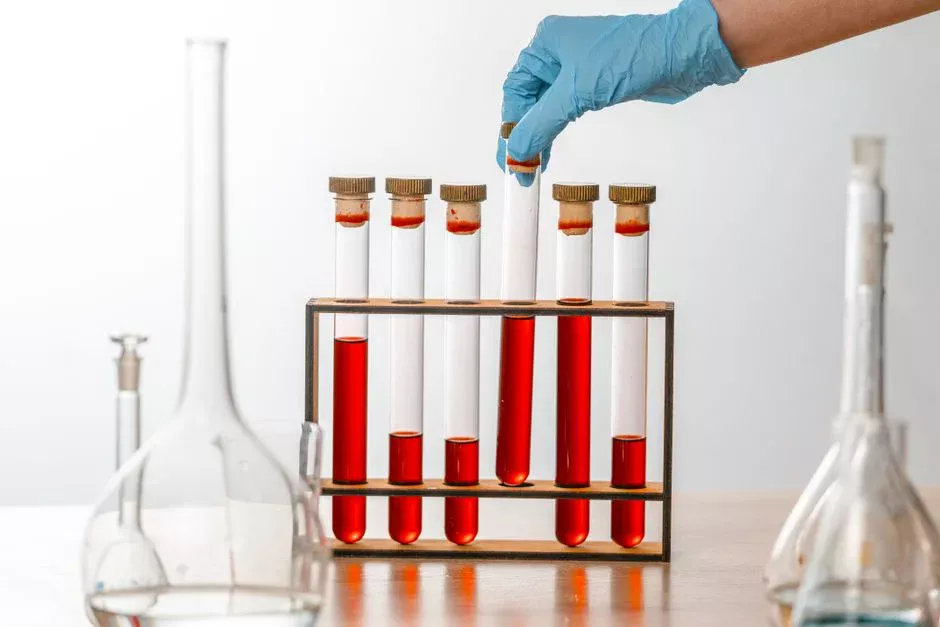
FOG and emulsified oil removal is where the technology split is sharpest. DAF on a conditioned chemical stream hits roughly 95% FOG removal; the same stream through a clarifier delivers approximately 70% (per Ecologix 2026 case data). For chemical plants generating process lubricants, plasticizer washwater, or organic-feedstock carryover, that 25-point gap is usually the difference between passing and failing an NPDES FOG limit.
Total suspended solids reverses the ranking. A lamella clarifier running 20–40 m/h surface loading with proper coagulant dosing reaches 85–95% removal on heavy or inorganic TSS — catalyst fines, metal hydroxides, and biological solids. DAF typically delivers 70–85% TSS removal unless the stream is coagulated, and even then DAF struggles on high-density particles that don't attach to bubbles. For metals (Ni, Cr, Cu, Zn precipitated as hydroxides after pH adjustment to 8.5–9.5), both technologies perform similarly — selection is driven by sludge-handling preference, not by removal efficiency. The DAF system is sized for 4–50 m³/h chemical-plant duty, and the high-efficiency lamella clarifier covers 10–100 m³/h with the footprint advantage noted above.
| Parameter | DAF system | Lamella clarifier | 2026 selection rule for chemical plants |
|---|---|---|---|
| FOG and emulsified oil | ~95% removal (per Ecologix 2026) | ~70% removal on same stream | DAF wins above 100 mg/L oil |
| Heavy/inorganic TSS | 70–85% | 85–95% | Lamella wins on catalyst fines, metal hydroxides |
| Precipitated metals (Ni, Cr, Cu, Zn) | Similar post-pH adjustment | Similar post-pH adjustment | Decide on sludge handling, not removal |
| Footprint at 25 m³/h | Compact skid, ~3–5 ft clearance | 60–80% smaller than conventional clarifier | Both fit retrofit brownfield space |
| Polymer consumption | Baseline | Up to 30% less than conventional clarifier | Lamella cuts OPEX on coagulant-heavy streams |
| Energy intensity | Air compressor + saturator pump | Minimal (gravity-driven) | Lamella wins when energy tariffs dominate |
| Sludge dry solids | 1.5–3% float | 2–4% underflow | Lamella underflow dewaters more efficiently |
Footprint matters because most Pensacola chemical plants are brownfield retrofits, not greenfield. A mobile DAF trailer (WesTech-class) measures 47'-6" to 51'-7" by 8'-6" in operation and needs 3–5 ft clearance on all sides (per WesTech 2026 mobile DAF spec sheet) — the lamella clarifier achieves comparable hydraulic throughput in a much smaller vertical envelope but requires permanent civil works.
Matching the Decision to Your Wastewater: A 2026 Selection Matrix
Translate the parameter table into a yes/no framework. Choose DAF only when at least one of these holds: FOG or emulsified oil exceeds 100 mg/L; free oil is present and visible; footprint is constrained to a skid-mounted unit; or the stream runs above 35 °C where gravity settling is sluggish. Choose a lamella clarifier only when TSS is dominated by settleable inorganic solids, oil content stays below 50 mg/L, and the operations team wants minimal energy and no compressed-air system to maintain. Choose a hybrid DAF-plus-lamella train when both FOG and heavy TSS exceed their thresholds, or when the plant must satisfy 40 CFR 414 subcategory limits and a local FOG cap simultaneously — which is the most common 2026 outcome for Pensacola chemical plants.
The pilot path is the most defensible 2026 risk-reduction move. A mobile/trailer-mounted DAF can typically be delivered and brought online within a single day depending on site readiness (per WesTech), runs on a level stable surface with no permanent foundation, and lets the plant validate chemistry and removal rates for under $50K before committing to permanent CAPEX. Pair the mobile DAF with a PLC-controlled chemical dosing skid to run jar-test-confirmed coagulant and flocculant rates, and the pilot becomes a defensible procurement-committee deliverable — not a vendor demo. Engineers evaluating similar streams in adjacent Florida markets will recognize the structure from the Bradenton EV/auto DAF vs clarifier guide and the EPA Region 4 industrial wastewater compliance guide.
| Decision trigger | Choose DAF | Choose lamella clarifier | Choose hybrid (DAF + lamella) |
|---|---|---|---|
| FOG / emulsified oil > 100 mg/L | Yes | No | Yes (DAF first) |
| Oil content < 50 mg/L | No | Yes | Optional |
| Heavy/inorganic TSS dominant | Marginal | Yes | Yes (lamella second) |
| Stream temperature > 35 °C | Yes | Poor fit | Yes |
| 40 CFR 414 + local FOG cap both binding | Partial | Partial | Yes — standard 2026 answer |
| Footprint-constrained brownfield | Yes | Yes (vertical) | Yes (stacked) |
| Lowest CAPEX priority | No | Yes | No |
2026 Cost Model: CAPEX, OPEX, and Energy for a Pensacola Chemical Plant
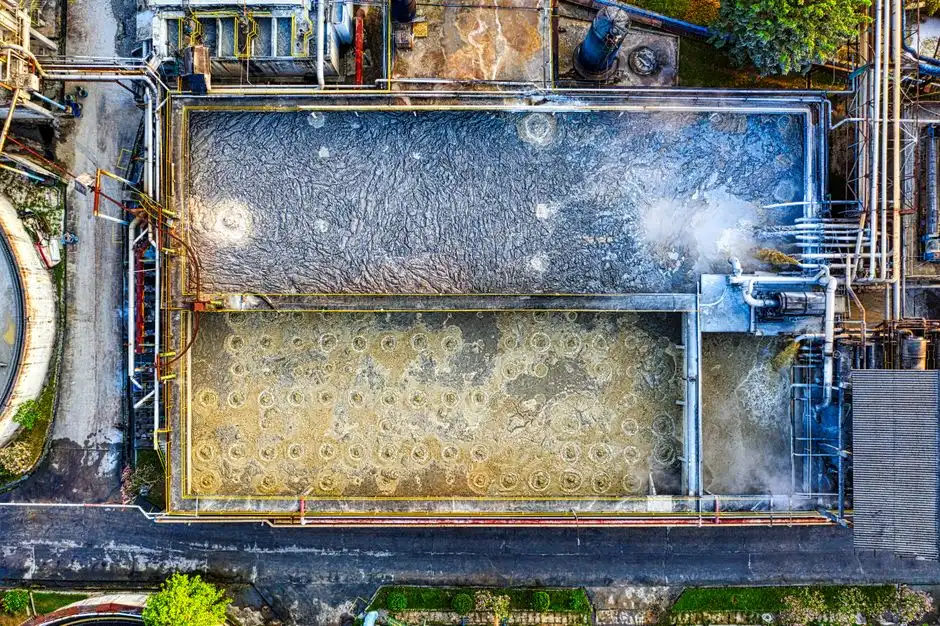
CAPEX in 2026 USD scales with hydraulic capacity and material of construction. A packaged DAF skid at 4–50 m³/h, carbon-steel construction with epoxy lining for chemical service, runs $80K–$350K installed. A 304/316 stainless DAF for aggressive chemistry pushes that to $120K–$500K. Lamella clarifiers at 10–100 m³/h, FRP or stainless construction with integral flash mix and flocculation, run $40K–$180K installed. A hybrid DAF-plus-lamella train — including interconnecting piping, chemical dosing, and a sludge-handling interface — lands in the $150K–$500K range.
OPEX divides cleanly. DAF carries the energy cost of the air compressor (typically 5–15 kW at 4–6 bar) plus the saturator recirculation pump, plus polymer at $1.50–$4.00 per kg dry. Clarifiers are energy-light but still need coagulant for chemical streams — and lamella designs cut polymer consumption by up to 30% versus a conventional clarifier. Sludge handling downstream of either technology should be sized for 1.5–3% dry solids from a DAF float and 2–4% from a clarifier underflow; the standard next step is a plate-and-frame filter press that pushes both streams to 25–35% dry cake for off-site disposal or incineration. A mobile DAF pilot at under $50K for a 30–90 day deployment is the cheapest insurance against a wrong CAPEX decision — and it is the single most defensible 2026 risk-reduction argument a procurement committee will accept.
| Cost line (2026 USD) | DAF skid (4–50 m³/h) | Lamella clarifier (10–100 m³/h) | Hybrid DAF + lamella train |
|---|---|---|---|
| Equipment CAPEX | $80K–$350K | $40K–$180K | $150K–$500K installed |
| Energy drivers | Air compressor + saturator pump (5–15 kW) | Minimal (gravity) | DAF energy + clarifier auxiliaries |
| Polymer OPEX | Baseline (1–10 mg/L cationic) | Up to 30% lower than conventional | Sum of both stages |
| Sludge dry solids to dewatering | 1.5–3% float | 2–4% underflow | Combined, sized for filter press |
| Mobile pilot cost (30–90 days) | < $50K | n/a | Validate chemistry first |
Implementation Roadmap and Compliance Hooks for 2026
Step 1 is wastewater characterization over at least two production campaigns — sample for FOG, TSS, COD, total metals, temperature, and pH at the equalization-tank outlet. Step 2 is jar-test coagulant and flocculant chemistry before sizing either unit; DAF performance on chemical streams is chemistry-bound, not hardware-bound, and the wrong polymer choice can halve removal efficiency. Step 3 is to confirm local discharge limits — Florida Chapter 62-620 plus any 40 CFR 414 subcategory-specific limits — before locking in design flow rate. Step 4: if the data is ambiguous or the CAPEX committee is uneasy, run a mobile DAF pilot for 30–90 days, paired with a PLC-controlled chemical dosing skid to validate jar-test results at full scale. This sequence is the lowest-risk path from wastewater profile to signed PO in 2026.
Frequently Asked Questions
When should a Pensacola chemical plant choose DAF over a clarifier in 2026?
Choose DAF when FOG or emulsified oil exceeds 100 mg/L — DAF removes roughly 95% of FOG versus approximately 70% for a clarifier on the same conditioned stream (per Ecologix 2026). Below 50 mg/L oil, a lamella clarifier is usually the better fit.
What regulations govern chemical-plant discharge in Pensacola?
40 CFR 414 sets the federal effluent guidelines for Organic Chemicals, Plastics, and Synthetic Fibers subcategories; Florida Chapter 62-620 implements NPDES permitting at the state level. Both apply to Pensacola discharges, and 2026 EPA PFAS monitoring proposals will likely add reporting on organic-fluorine streams in the next permit cycle.
What is the 2026 CAPEX range for DAF versus a clarifier at a chemical plant?
A packaged DAF skid at 4–50 m³/h runs $80K–$350K installed; a lamella clarifier at 10–100 m³/h runs $40K–$180K; a hybrid DAF-plus-lamella train lands at $150K–$500K. A mobile DAF pilot at under $50K for 30–90 days is the standard risk-reduction step before committing to permanent CAPEX.
Can a DAF and a clarifier be installed together?
Yes. Hybrid DAF-plus-lamella trains are standard for complex chemical streams that carry both FOG and heavy inorganic TSS (per Ecologix 2026), and the lamella stage typically runs at 20–40 m/h surface loading to settle what the DAF stage cannot float.
Do both DAF and lamella clarifiers require polymer conditioning?
Both benefit from coagulant and flocculant dosing on chemical streams. Lamella designs cut polymer consumption by up to 30% versus a conventional clarifier because the inclined plates provide more efficient floc contact, which lowers annual OPEX on coagulant-heavy waste.