Why 40 CFR Part 437 Sets the Rule for Lima Mining and Metals Plants
40 CFR Part 437 governs the effluent from metal mining subcategories, including iron ore, copper, lead, zinc, gold, silver, and bauxite, serving as the direct regulatory bar for limestone and iron-ore operations near Lima, Ohio. Adjacent fabricated-metals facilities that wash or rinse parts fall under 40 CFR Part 438. Both rules publish numerical daily-maximum limits: TSS 50 mg/L, settleable solids 0.2 mL/L, oil and grease 15 mg/L (ore mining), and total recoverable metals between 1 and 10 mg/L depending on subcategory and metal (per EPA 40 CFR 437, Subpart A-D). Ohio EPA enforces these through site-specific NPDES permits in the Lima area, and reviewers still reference the 1975 EPA Process Design Manual for Suspended Solids Removal (S4) as the foundational US design reference for clarifier and flotation sizing. If a candidate technology cannot hit those numbers in a single stage, the buyer is buying a polishing problem, not a solution.
| Regulation / Subcategory | Daily Max TSS (mg/L) | Settleable Solids (mL/L) | Total Metals Range (mg/L) | O&G (mg/L) |
|---|---|---|---|---|
| 40 CFR 437 — Iron Ore (Subpart C) | 50 | 0.2 | 1–10 (varies) | 15 |
| 40 CFR 437 — Copper, Lead, Zinc (Subpart D) | 50 | 0.2 | 1–10 (varies) | 15 |
| 40 CFR 438 — Metal Products (fabricated) | 30–45 | — | Subcategory-specific | Subcategory-specific |
What Lima Mining and Metals Wastewater Actually Looks Like in 2026
Lima-area streams exhibit specific characteristics that distinguish them from generic industrial wastewater. A limestone quarry wash-down typically runs 200–5,000 mg/L TSS with moderate hardness from high-calcium makeup water; the fines are colloidal and stay in suspension for hours, defeating plain settling. Steel pickling rinse water from service centers in the region sits at pH 1–3 with 50–500 mg/L dissolved iron and sulfate often above 1,500 mg/L — it must be neutralized to roughly pH 8.5–9.5 and the iron precipitated as ferric hydroxide before any separator sees it. Iron-foundry baghouse dust and shot-blast carryover contribute very fine, often metal-bearing solids that resist gravity clarification. A 2026 hybrid-treatment review (S5) notes that mining wastewater exhibits highly variable water quality, with total dissolved solids spanning <1 to >180 g/L and sulfate exceeding 17,000 mg/L in Australian operations — the same order-of-magnitude swings are seen in Northwest Ohio groundwater and quarry recirculation loops. Designing for the median condition in Lima guarantees permit excursions on the high end; the technology has to absorb spikes.
How a Dissolved Air Flotation Unit Works in a Metals Treatment Train
Selecting the right separation technology requires understanding how different mechanical systems interact with chemical conditioning. A dissolved air flotation (DAF) system saturates a side-stream of clarified effluent with air at 5–6 bar, then releases it into the main flow through needle valves. The resulting micro-bubbles (typically 30–80 µm) attach to coagulated floc and lift it to the surface in roughly 3 minutes (Spracell benchmark, S1). For metals removal the chemistry is the work; DAF is the capture step. The standard train is: pH adjust to 8.5–9.5 with caustic or lime, dose a coagulant (polyaluminium chloride or ferric chloride at 50–150 mg/L), add an anionic polymer flocculant at 1–5 mg/L, then send the conditioned stream to the DAF cell. Peer-reviewed trials on DAF with 100 mg/L PAC achieved 98% TSS removal; with no coagulant, removal drops to about 60% (S1). The float sludge concentrates to 2–3% dry solids, which materially reduces downstream filter-press dewatering cost. PLC-controlled coagulant and polymer dosing (see automatic chemical dosing systems) makes the train reproducible across batch swings that a clarifier cannot absorb.
How a Clarifier (and Lamella Plate Clarifier) Works on Mining Streams
Gravity-based separation relies on the settling velocity of particles within a controlled hydraulic environment. A conventional gravity clarifier gives solids 2–4 hours to settle at a surface loading of 0.5–1.0 GPM/ft², with effluent TSS typically landing at 50–80 mg/L without coagulant aid. A lamella clarifier stacks inclined plates inside the tank, multiplying effective settling area so the same throughput fits in roughly one-tenth the footprint. The integrated JY-series (see integrated water purification systems) is rated for surface loading of 20–40 m/h. The 1975 EPA Process Design Manual (S4) is explicit: clarifier design is well-characterized for the settleable fraction but underperforms on the colloidal fraction — the size range that carries metal hydroxides and fine limestone. Clarifier underflow is also wetter, typically 0.5–1.5% solids, so filter-press dewatering cycles are longer and polymer demand is higher per ton of cake. For coarse, dense grit and steady flow, a clarifier still earns its place on the P&ID.
DAF vs Clarifier on the Numbers That Matter to a Lima Plant
The table below provides data for a CAPEX memo. Numbers reflect Spracell and HydropureWater field data for 2026; CAPEX ranges are for skid-mounted, 10–50 m³/h units installed in Ohio.
| Parameter | DAF | Lamella Clarifier | Conventional Clarifier |
|---|---|---|---|
| Hydraulic retention | ~3 min | ~20–30 min | 2–4 hr |
| Surface loading | 4–5 GPM/ft² (S1) | 20–40 m/h | 0.5–1.0 GPM/ft² |
| Footprint (10 m³/h) | ~3–5 m² skid | ~4–6 m² | ~30–50 m² |
| Effluent TSS (with coagulant) | 20–30 mg/L (S1) | 30–50 mg/L | 50–80 mg/L |
| Colloidal / metal-hydroxide capture | High | Moderate | Low |
| Polymer dose | 1–5 mg/L anionic | 0.5–2 mg/L | 0–1 mg/L |
| Float/underflow solids | 2–3% | 1–2% | 0.5–1.5% |
| 2026 skid CAPEX (10–50 m³/h) | $45,000–$120,000 | $30,000–$80,000 | $60,000–$150,000 |
| 5-year OPEX (chem + energy) | Baseline + 15–25% | Baseline | Baseline |
The decisive line is effluent TSS against the 40 CFR 437 daily max of 50 mg/L. With a working coagulant train, a DAF delivers 20–30 mg/L in a single stage, leaving margin for upset. A lamella clarifier without a polishing step usually lands at 30–50 mg/L — inside the limit on a good day, exposed on a bad one. A conventional clarifier rarely meets Part 437 standalone. The 30–50% CAPEX gap between DAF and lamella is offset within 2–3 years by avoided tertiary polishing, smaller building footprint, and drier sludge to the filter press. For a deeper look at how the two trains compare across US regions, see this DAF vs clarifier for US mining and metals wastewater comparison and the Whitesburg variant at DAF or clarifier for mining wastewater in Whitesburg.
When a Lima Mining Plant Should Choose DAF in 2026
DAF is the preferred choice when the limiting constraint is metals, colloidal fines, or batch swings. Specifically: the influent carries iron, manganese, lead, or zinc above its 40 CFR Part 437 subcategory limit, and the planned treatment train is pH adjust → hydroxide precipitation → flocculation → flotation. DAF is effective when the influent TSS is dominated by limestone fines, shot-blast dust, or metal-hydroxide floc — the colloidal fraction that defeats plain settling. DAF is suitable when the site footprint is constrained; a 10 m³/h unit fits on a single 3–5 m² skid pad with 4–5 GPM/ft² clarification capacity (S1). DAF helps the plant absorb batch spikes from pickling tanks or wash-down cycles, as the system recovers in 3 minutes versus a clarifier's 2-hour retention. For a side-by-side look at fabricated-metals pretreatment where DAF dominates for the same reasons, see fabricated metals pretreatment compliance.
When a Lamella Clarifier Is the Better 2026 Choice for Lima
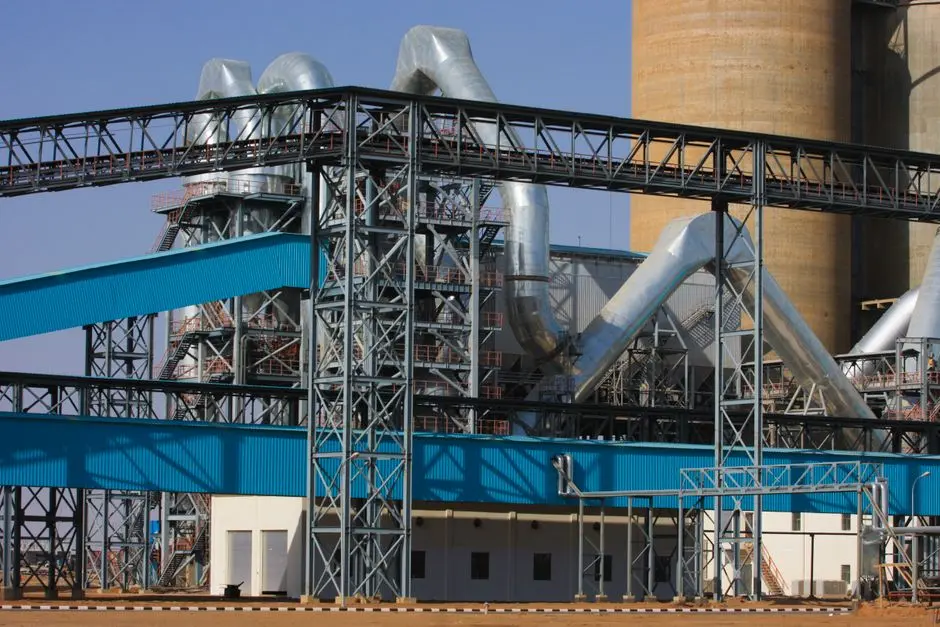
A lamella clarifier is the right call when the stream is simple and requires minimal chemical intervention. That means coarse settleable solids only — sand, scale, coarse quarry grit — and metals already within Part 437 subcategory limits so no hydroxide precipitation chemistry is required. It also means steady 24/7 flow with no batch spikes, where a clarifier's long retention becomes a buffer rather than a liability. Lamella is the lowest-capex path when footprint is not the constraint, especially for a quarry wash-down discharging to a municipal sewer under an Ohio EPA pretreatment permit. For plants that already operate a conventional clarifier, retrofitting inclined plates (20–40 m/h surface loading) is often cheaper than replacement; see the engineering guide on lamella clarifier retrofit and upgrade for the sizing math. Pair the clarifier with a filter-press dewatering skid and the lifecycle is competitive for clean streams.
A 2026 Decision Framework for Lima Mining and Metals Buyers
- Sample the influent for TSS, settleable solids, and target metals. Compare each against the 40 CFR Part 437 subcategory limits that apply to the site.
- If colloidal fines or metals are the limiting factor, specify DAF with PLC-controlled coagulant and polymer dosing, followed by sludge dewatering.
- If only coarse settleables are present and chemistry is unnecessary, specify a lamella clarifier — or retrofit plates into an existing tank.
- Confirm with Ohio EPA that the chosen train meets the site's NPDES permit, including any watershed-specific requirements (e.g., Maumee River nutrients TMDL for facilities discharging to the Auglaize or Maumee).
This four-step sequence provides the foundation for an operational decision. The CAPEX memo writes itself once the influent data and the subcategory limits are on the table.
Frequently Asked Questions
What are the 40 CFR Part 437 effluent limits for TSS and settleable solids?
Frequently Asked Questions
What are the 40 CFR 437 effluent limits for TSS and settleable solids in mining?
Under 40 CFR Part 437, the Centralized Waste Treatment (CWT) point source category establishes effluent limitations for metal-bearing waste streams. For Total Suspended Solids (TSS), the monthly average limit is typically 20 mg/L, with a daily maximum of 60 mg/L. Settleable solids are generally restricted to a daily maximum concentration of 0.5 mL/L to ensure compliance with federal discharge standards.
Can a DAF system remove heavy metals from mining wastewater, or only suspended solids?
Dissolved Air Flotation (DAF) systems can effectively remove heavy metals, but only after chemical precipitation. By dosing the influent with coagulants and flocculants, dissolved metals—such as copper, lead, or zinc—are converted into insoluble metallic hydroxides or sulfides, which are then attached to micro-bubbles and floated to the surface for removal alongside suspended solids.
How much smaller is a DAF unit than a clarifier for the same flow rate?
A DAF system typically requires a footprint 70% to 80% smaller than a conventional gravity clarifier. Because DAF units rely on active bubble-particle attachment rather than the slow settling velocity of particles (Stokes' Law), the hydraulic loading rates can reach 10–20 m³/m²·h, compared to 1–2 m³/m²·h for standard circular clarifiers.
What is the 2026 installed cost of a DAF for 10–50 m³/h mining wastewater?
For a mining wastewater facility in 2026, the total installed cost for a DAF system processing 10–50 m³/h ranges from $185,000 to $450,000. This estimate accounts for the stainless steel skid, air saturation system, chemical feed skids, and automated sludge removal equipment, but excludes civil site preparation and specialized local electrical hookups.
Are there Ohio EPA permit considerations for mining wastewater in Lima, Ohio?
Facilities in Lima, Ohio, must adhere to Ohio EPA Division of Surface Water requirements, specifically obtaining a National Pollutant Discharge Elimination System (NPDES) permit. This process involves evaluating the facility's discharge against Ohio Administrative Code (OAC) 3745-1 water quality standards, including specific toxic criteria for heavy metals and whole effluent toxicity (WET) testing requirements applicable to the Ottawa River watershed.