Why Hialeah Pharmaceutical Plants Are Rethinking Their Primary Clarifier in 2026
40 CFR Part 439, the EPA effluent guideline that governs pharmaceutical manufacturing point sources, tightened monthly-average expectations for TSS, BOD, COD, and FOG in the most recent subcategory revisions, and Hialeah generic-drug and contract-manufacturing plants discharge to the Miami-Dade WASD collection system, which then flows to the county ocean outfall under a separate FOG cap (typically 200 mg/L). On top of that, FDA 21 CFR Part 211 cGMP expectations now treat effluent quality as a release-quality attribute, especially where antibiotic and beta-lactam residues can persist into the receiving system. The combined regulatory pressure, plus batch-release variability that can swing FOG from 80 mg/L to 600 mg/L in a single shift, is forcing a re-evaluation of DAF-first vs clarifier-first trains. Footprint matters just as much: most Hialeah sites sit on 5,000–40,000 ft² urban parcels where ceiling height and floor area decide the technology before CAPEX does. DAF is structurally favored when streams carry light, buoyant contaminants — suspended APIs, fermentation residues, oils, solvents, FOG above ~150 mg/L — because 30–50 micron microbubbles lift floc that a gravity clarifier cannot catch. A lamella clarifier remains the more capital-efficient answer for low-FOG, low-API streams dominated by settleable TSS, which is the exception rather than the rule in Hialeah's generic-drug and contract-manufacturing base. The default for 2026 is a DAF system for pharmaceutical wastewater sized to 40 CFR Part 439 limits, with a polishing step behind it.
What Each Technology Actually Does to Pharmaceutical Effluent
Dissolved air flotation clarifies wastewater by saturating a side stream of clarified effluent with air at 4–6 bar, then releasing it through a pressure-reduction valve into the float tank; the dissolved air comes out of solution as 30–50 micron microbubbles that nucleate on floc particles and lift them to the surface, where a paddle skimmer removes the floated blanket (per the Wikipedia DAF entry, corroborated by SigmaDAF/Clearwater's published 2026 product literature). Residence time is the key differentiator inside the DAF itself: a circular DAF unit needs only about 3 minutes because of its spiral-scoop hydraulic pattern, while a rectangular DAF needs 20–30 minutes for the same separation (per Wikipedia DAF). An inclined-plate lamella clarifier works on gravity alone — parallel plates at 55–60° shorten the vertical settling distance so settleable solids reach a plate face in seconds rather than minutes, supporting surface loading rates of 20–40 m/h. The trade-off is that anything buoyant — emulsified oils, low-density API precipitates, fermentation debris — tends to ride the surface current out of the unit instead of settling. Both technologies depend on coagulation/flocculation chemistry upstream, but with opposite objectives: DAF needs floc light and porous enough to attach to bubbles, while a clarifier needs dense, well-formed flocs that overcome hydraulic drag on the plate face. The pharma implication is structural: fermentation residues, solvent droplets, and many active particles have specific gravities below 1.05, giving DAF a mechanical edge; bulk inert TSS — silica, cell-wall debris, excipient fines — settles well and favors an inclined-plate lamella clarifier for pharmaceutical effluent. Construction material matters for cGMP and CIP compatibility: 316SS is the default for beta-lactam lines, with PP and FRP options where the chemistry is less aggressive.
| Parameter | DAF (circular) | DAF (rectangular) | Lamella / Inclined-Plate Clarifier |
|---|---|---|---|
| Separation mechanism | Microbubble flotation (30–50 µm) | Microbubble flotation (30–50 µm) | Gravity settling on 55–60° plates |
| Hydraulic residence time | ~3 min | 20–30 min | 15–25 min (typical HRT) |
| Hydraulic loading / surface rate | 5–25 m³/m²·h | 5–15 m³/m²·h | 20–40 m/h |
| Air-to-solids ratio (A/S) | 0.005–0.06 kg air/kg solids | 0.005–0.06 kg air/kg solids | N/A |
| Best-fit floc character | Light, porous, buoyant | Light, porous, buoyant | Dense, well-formed |
| Material options (cGMP) | 304SS / 316SS / PP | 304SS / 316SS / PP | 304SS / 316SS / PP / FRP |
| Footprint (relative, equal flow) | ~25–35% of equivalent circular clarifier | ~30–40% of equivalent rectangular clarifier | Largest, but tallest profile is lower |
Pharma Effluent Parameters: 40 CFR Part 439 and What Each Technology Actually Removes
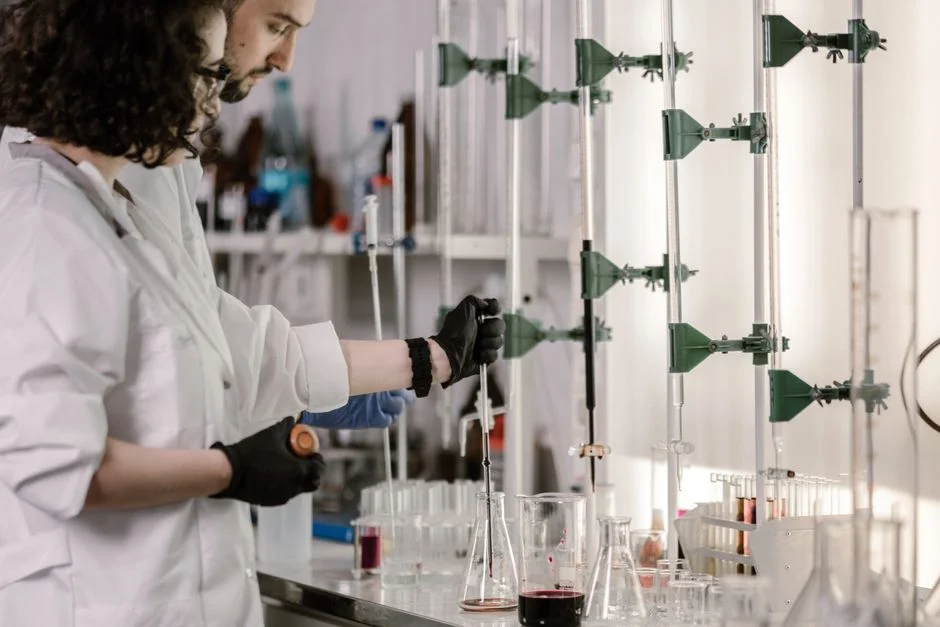
40 CFR Part 439 sets both daily-maximum and monthly-average limits for the pharmaceutical manufacturing point source category, and subcategory breakdowns apply to fermentation, synthesis, formulation, and API finishing operations that all exist in the Hialeah industrial base. DAF systems paired with proper coagulant/flocculant conditioning routinely deliver 85–95% TSS, 70–90% FOG, and 60–85% COD removal across vendor case data and peer-reviewed studies; antibiotics, hormones, and other surface-active APIs tend to sorb onto floc and report with the float, which is why DAF is the default for beta-lactam and tetracycline lines. A lamella clarifier delivers a narrower band — 50–80% TSS, generally under 40% FOG, and 30–50% COD — because emulsified oils and low-density API flocs escape the plate pack; it is very effective on bulk settleable solids, but it leaves the load on Miami-Dade WASD above the FOG cap on most batch-release days. Neither technology alone reliably hits 40 CFR Part 439 monthly-average limits on a variable batch stream, which is why the 2026 default train is DAF → equalization → lamella or biological polishing, then discharge. For 40 CFR Part 439 subcategories with biological oxygen demand limits under ~30 mg/L monthly average, an MBR polishing step after DAF or clarifier is the most common finishing move at Hialeah contract-manufacturing sites. Coagulant and flocculant control is decisive for hitting Part 439; ferric chloride at 50–150 mg/L plus anionic polyacrylamide at 1–5 mg/L is a representative starting dose for pharma DAF streams, and PLC-controlled coagulant and flocculant dosing for pharma DAF is what holds the train inside its compliance band during batch surges.
| Parameter (typical pharma influent → 40 CFR Part 439 target) | DAF removal (with conditioning) | Lamella clarifier removal (with conditioning) | Notes for Hialeah plants |
|---|---|---|---|
| TSS (200–1,500 mg/L → ~30–60 mg/L MA) | 85–95% | 50–80% | Lamella alone usually insufficient on batch days |
| FOG (150–800 mg/L → Miami-Dade 200 mg/L cap) | 70–90% | <40% | DAF is the structural answer above ~150 mg/L |
| COD (1,000–8,000 mg/L → ~150–500 mg/L MA) | 60–85% | 30–50% | Biological polishing required either way |
| BOD (300–3,000 mg/L → ~25–50 mg/L MA) | 40–70% | 20–40% | MBR/SBR needed to meet monthly-average BOD |
| Antibiotic / beta-lactam residue | Strong (sorption to floc) | Weak (escape with effluent) | Cross-contamination control drives 316SS spec |
| Solvent carryover (MeOH, EtOH, acetone traces) | Moderate (volatiles strip, others sorb) | Weak | Pre-strip or carbon polish for residuals |
| Bulk inert TSS (silica, excipient fines) | Good but wasteful of air | Excellent | Lamella cost-effective for inert-only streams |
DAF vs Lamella Clarifier for Hialeah Pharma: Side-by-Side Comparison
For a 2026 CAPEX justification memo, the matrix below maps every operational axis a Hialeah plant manager has to defend to a CFO, an FDA inspector, and a Miami-Dade WASD permitting reviewer. Indicative installed CAPEX bands in 2026 are $25,000–$60,000 per m³/h for DAF (304SS/316SS, with turnkey scope) and $8,000–$20,000 per m³/h for a lamella clarifier of comparable flow; the spread tracks material, automation, and whether equalization, chemical dosing, and controls are inside the same scope. The Hialeah-specific dimension is footprint: a rectangular DAF occupies roughly 25–35% of the floor area of an equivalent circular clarifier because it lays out as a long, low-profile tank, but a circular DAF cuts residence time to ~3 minutes (per Wikipedia DAF), which is the right answer when batch surges push hydraulic loading for an hour at a time. 316SS construction is a hard requirement on beta-lactam lines for cross-contamination control under 21 CFR Part 211, and that single material spec can move CAPEX by 30–50%. Batch-release compatibility favors DAF: a buoyant foam event from a fermentation wash-out rides the float to skimmer removal rather than overloading a clarifier's plate pack with emulsified oil. Permitting fit is the tiebreaker — Miami-Dade WASD's 200 mg/L FOG cap is structural, not negotiable, and only DAF routinely hits it on a variable stream.
| Comparison axis | DAF (316SS option) | Lamella / Inclined-Plate Clarifier |
|---|---|---|
| Primary separation mechanism | 30–50 µm microbubble flotation | Gravity settling on 55–60° plates |
| Target contaminants | FOG, APIs, antibiotics, light floc, emulsions | Settleable inert TSS, cell debris, excipient fines |
| TSS removal (with conditioning) | 85–95% | 50–80% |
| FOG removal | 70–90% | <40% |
| API / antibiotic removal | Strong (sorption to buoyant floc) | Weak (low-density escape) |
| Footprint (m² per m³/h, indicative) | 0.15–0.30 (rectangular); 0.20–0.35 (circular) | 0.50–0.90 (inclined-plate pack footprint) |
| CAPEX (2026, USD per m³/h, installed) | $25,000–$60,000 | $8,000–$20,000 |
| OPEX — power (kWh/m³) | 0.08–0.20 (recycle pump, saturator, skimmer) | 0.02–0.06 (sludge pump, sludge thickener) |
| OPEX — chemicals (coagulant + flocculant) | Higher: ferric chloride + polyacrylamide routine | Lower: often polymer-only |
| Residence time | 3 min (circular) / 20–30 min (rectangular) | 15–25 min typical |
| Sensitivity to flow surges | High tolerance (hydraulic buffer built in) | Low tolerance (plate pack overload) |
| Batch-release compatibility | Strong — handles buoyant foam events | Weak — foam carries over effluent |
| 316SS / cGMP build | Standard option (304SS base, 316SS upgrade) | Standard option |
| Hialeah permitting fit (Miami-Dade WASD 200 mg/L FOG) | Direct hit on FOG cap | Rarely meets FOG cap alone |
The 2026 Decision Rule: DAF-First, Clarifier-First, or Hybrid Train
Pick DAF-first when influent FOG runs above ~150 mg/L, when API or antibiotic residue is non-trivial (beta-lactams, tetracyclines, hormones, statins), or when batch surges cause visible foam events at the head of the works; the choice between circular and rectangular reduces to residence time and footprint — circular for short-residence, high-shock streams, rectangular for sludge-thickening duty behind a biological reactor. Pick clarifier-first only when the stream is dominated by settleable inert TSS, FOG is reliably under ~100 mg/L, API load is negligible, and CAPEX is the binding constraint — that profile is uncommon in Hialeah's generic-drug and contract-manufacturing base but does exist in excipient-only or packaging lines. The 2026 default for mid-to-large Hialeah plants discharging to Miami-Dade WASD is a hybrid train: DAF → equalization → lamella or biological polishing, sized to 40 CFR Part 439 monthly averages with explicit headroom for batch variability; the lamella in this configuration is doing TSS polishing on the DAF effluent, not primary clarification, and that role reversal is where the economics work. For context on adjacent industries, the same DAF-first logic shows up in the DAF vs clarifier decision logic for chemical plant effluents, and broader pharmaceutical wastewater process design for 2026 compliance guidance. The hybrid train also keeps a single point of control: chemistry, flow, and float are managed at the DAF, and the downstream units just polish.
| Influent profile | Recommended primary | Recommended polishing | Rationale |
|---|---|---|---|
| FOG > 150 mg/L, visible APIs or antibiotics | DAF (circular, 316SS) | Lamella + MBR | FOG cap + Part 439 monthly average |
| FOG 80–150 mg/L, low API, settleable TSS dominant | Lamella clarifier | DAF polish if FOG spikes | CAPEX-led, smaller plant |
| FOG < 100 mg/L, no API, inert TSS only | Lamella clarifier | Sand filter / carbon | Excipient or packaging line |
| Mixed batch-release, contract-manufacturing | DAF-first train | Equalization + biological | Default 2026 Hialeah configuration |
Hialeah Sizing, Permitting, and 2026 Compliance Checklist
Size the DAF for hydraulic loading of 5–25 m³/m²·h and an air-to-solids ratio of 0.005–0.06 kg air/kg solids, both well-published pharma ranges; size the lamella for 20–40 m/h surface loading with 50–80 mm plate spacing for FOG- and TSS-polishing duty. Spec 316SS or PP construction where cGMP and CIP chemical compatibility are in play, and require 316SS outright on beta-lactam lines for cross-contamination control under 21 CFR Part 211. The Hialeah compliance package is three documents: a 40 CFR Part 439 self-monitoring plan with both daily-max and monthly-average reporting, a Miami-Dade WASD FOG discharge record showing compliance with the 200 mg/L cap, and a documented API/antibiotic fate-in-train memo that records sorption, biodegradation, and stripping behavior across the DAF and downstream units. Plant managers who want a single line of equipment that scales from pilot to 300 m³/h should look at the DAF system for pharmaceutical wastewater range; for fiber- and FOG-heavy contexts the same family of sizing logic is documented in the step-by-step DAF sizing methodology for high-FOG streams, and for fiber-laden streams in the DAF vs clarifier for fiber-laden, high-TSS industrial streams guide.
Frequently Asked Questions
Is DAF or a lamella clarifier better for pharmaceutical wastewater in Hialeah?
For most Hialeah generic-drug and contract-manufacturing plants, a DAF system for pharmaceutical wastewater is the better primary clarifier because the stream typically carries FOG, suspended APIs, and antibiotic residues that a gravity clarifier cannot remove. A lamella clarifier is the right answer only when the stream is dominated by settleable inert TSS with FOG reliably under ~100 mg/L and no meaningful API load.
What is the typical CAPEX difference between a DAF and a lamella clarifier in 2026?
Installed CAPEX in 2026 runs $25,000–$60,000 per m³/h for a DAF (304SS/316SS, turnkey) versus $8,000–$20,000 per m³/h for a lamella clarifier of comparable flow; the spread tracks material selection, automation, and whether equalization and chemical dosing are inside the same scope. Material alone can move DAF CAPEX by 30–50% — 316SS for cGMP and CIP is the main driver.
How does a DAF help a Hialeah pharma plant meet 40 CFR Part 439 and Miami-Dade WASD limits?
DAF with proper coagulant and flocculant conditioning delivers 70–90% FOG removal, 85–95% TSS removal, and 60–85% COD removal, which is what it takes to keep a variable batch stream inside 40 CFR Part 439 monthly averages and below the Miami-Dade WASD 200 mg/L FOG cap. For monthly-average BOD under ~30 mg/L, DAF effluent still needs biological polishing — typically an MBR — to close the gap, which is why the 2026 default is a DAF-first train followed by an MBR polishing step after DAF or clarifier.
Why is 316SS construction important for pharma DAF systems?
316SS resists the aggressive CIP chemistry (caustic, acid, peroxide) and the oxidizing sanitizers used between batches, and it is the FDA- and cGMP-accepted material for beta-lactam lines where cross-contamination control is a release-quality concern under 21 CFR Part 211. Standard 304SS works for non-beta-lactam and non-CIP-heavy streams, but a Hialeah contract-manufacturing plant running multiple product families on shared equipment is well-advised to spec 316SS on the DAF contact surfaces.