
Why Pharmaceutical Effluent in Qatar Is a Different Engineering Problem
Pharmaceutical concentrations in Gulf hospital and production effluent run 4-150 times higher than typical urban wastewater, with oncology and pathology streams pushing ecotoxicity 2-3 times above general hospital levels (PMC hospital wastewater review, 2024-2025). A separate global review counted 631 pharmaceutical compounds detected in wastewater treatment plant (WWTP) effluents across 71 countries, naming carbamazepine, sulfamethoxazole, diclofenac, and tetracycline as the most persistent residues — none of which are removed to acceptable levels by conventional activated sludge alone. In Qatar the problem compounds further because seawater is widely used for cooling-tower and process make-up, lifting influent TDS into the 3,000-8,000 mg/L range and forcing the designer to think in terms of high-salinity biology rather than textbook municipal kinetics. The antibiotic-resistance-gene (ARG) risk is now a tender-evaluation item: a 2024-2025 review found ARG reduction of only 77% when fungal pretreatment with Trametes versicolor or ozone polishing was added on top of biological treatment (Lucas et al., 2016, via PMC), and Qatar's Ministry of Public Health is beginning to ask for ARG mass-balance data in EIAR submissions. Summer ambient temperatures of 45-50°C push mixed-liquor kinetics into a thermotolerant operating window where submerged MBR modules outperform open activated-sludge tanks that lose oxygen transfer and foam above 40°C. In short, copying a European pharma WWTP P&ID into Doha fails on three counts at once: salinity, heat, and reuse-driven effluent quality.
Qatar EPA and Kahramaa Discharge & Reuse Rules That Drive the Design
Qatar EPA's industrial discharge envelope sets COD at ≤150 mg/L, BOD₅ at ≤25 mg/L, TSS at ≤30 mg/L, oil and grease at ≤10 mg/L, and pH in the 6-9 range for any facility discharging to a municipal collector or sea outfall. Plants that route any portion of their treated effluent to landscape irrigation or cooling-tower make-up must also clear Kahramaa's reuse guidelines, which typically require TDS ≤500 mg/L, turbidity ≤2 NTU, and a 1,000 mL sample negative for fecal coliform — pushing tertiary RO or nanofiltration polishing into the standard process train rather than leaving it as an option. The national policy direction is set by Qatar National Vision 2030 and the Ministry of Municipality's Treated Sewage Effluent (TSE) framework, which together push industrial facilities toward 60-85% water recycling — consistent with the global USD 18.2 billion wastewater-reuse market projection by 2033 (Dataintelo, 2025-2033). Numeric limits for individual APIs are not yet codified in Qatar, but tenders issued in 2025-2026 increasingly cite EU watchlists and the Saudi SFDA pharmaceutical-residue schedule, so ARG and compound-specific risk needs to be documented in the EIAR even when no local number is on the books. Climate also feeds the design: Kahramaa's reuse allocation for cooling towers caps cycle-of-concentration at 4-5 in summer to control silica scaling, which raises the bar on RO recovery and brine management.
| Parameter | Qatar EPA discharge limit | Kahramaa reuse target (cooling/landscape) | Design implication |
|---|---|---|---|
| COD | ≤150 mg/L | ≤50 mg/L (boiler make-up) | Set biological stage for ≤150 mg/L, polish for reuse |
| BOD₅ | ≤25 mg/L | ≤10 mg/L | MBR + sand filter required |
| TSS | ≤30 mg/L | ≤5 mg/L (RO feed) | MBR effluent, then MMF |
| TDS | Not numerically fixed | ≤500 mg/L (cooling) | RO polishing at 95% recovery |
| Oil & grease | ≤10 mg/L | ≤1 mg/L (RO feed) | DAF plus skimmer upstream of biology |
| pH | 6-9 | 6.5-8.5 | Trim in equalization |
| APIs / ARGs | Not numerically fixed; EU/SFDA watchlists referenced | Site-specific; EIAR required | Ozone or UV/H₂O₂ polishing |
The Six-Stage Process Train for a Qatar Pharmaceutical Plant
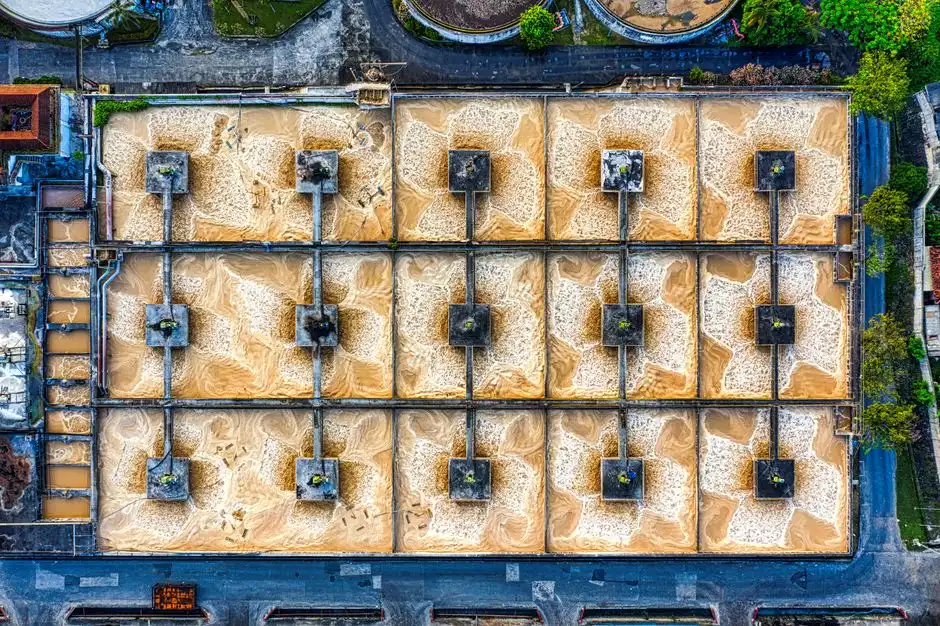
The train below assumes a Qatar facility producing active ingredients or finished dosage forms, with a design flow of 50-1,000 m³/day and a target of 70-85% plant-wide water recovery. It combines source segregation, equalization, anaerobic and aerobic biology, advanced oxidation, and reuse polishing into a single flow that survives 45°C ambient operation.
- Stage 1 — Source segregation and headworks. Separate API-rich mother-liquor streams, solvent streams, and cooling-tower blowdown before the common header so that each is treated on its own toxicity profile. A GX-series rotary bar screen at 2-6 mm aperture protects downstream pumps from rags, labels, and CIP solids.
- Stage 2 — Equalization and pH conditioning. A 24-hour covered equalization tank with a PLC-controlled automatic chemical dosing skid for acid/alkali trim flattens the diurnal COD swing (often 4,000-25,000 mg/L peaks) that would otherwise shock the biomass downstream. Covering the tank also controls VOC and odor release in 45°C heat.
- Stage 3 — Primary pretreatment. A dissolved air flotation unit rated 4-300 m³/h strips oil, grease, and suspended APIs, followed by a high-efficiency lamella clarifier operating at 20-40 m/h surface loading to drop bulk TSS ahead of the bioreactors. This stage is critical in Qatar because cooling-tower drift and process leakages frequently push oil/grease above 200 mg/L.
- Stage 4 — Anaerobic stage. A UASB or EGSB reactor handles the high-strength COD load with 80-95% COD removal and biogas recovery for the site boiler, matching the Chinese-pharma practice documented in the ScienceDirect review of 229 plants. UASB reactors in Gulf service typically run at 35-37°C with an upflow velocity of 0.7-1.2 m/h and HRT of 24-48 hours.
- Stage 5 — Aerobic MBR. A submerged integrated MBR membrane bioreactor using DF-series PVDF flat-sheet MBR modules at MLSS 8,000-12,000 mg/L delivers 95-98% TSS removal and 90-95% BOD reduction, comfortably below the 30 mg/L TSS ceiling while producing a clarified effluent suitable for RO feed. PVDF flat-sheet geometry tolerates Qatar's high TDS better than hollow-fiber, and individual cassettes can be swapped in 30-60 minutes.
- Stage 6 — Advanced oxidation and disinfection. Ozone at 1-3 mg O₃/mg DOC or UV/H₂O₂ for refractory APIs and ARG reduction, followed by a chlorine dioxide generator for residual disinfection. The PMC review shows ozonation routinely achieves >90% API removal in hospital effluent, and combining it with MBR effluent brings total API mass down to limits cited in EU watchlists.
| Stage | Unit operation | Key design parameter | Qatar-specific note |
|---|---|---|---|
| 1 | Rotary bar screen (GX) | 2-6 mm aperture | Stainless 316L for chloride resistance |
| 2 | Equalization + dosing | 24 h HRT, covered | VOC capture in 45°C ambient |
| 3 | DAF + lamella (HST) | DAF 4-300 m³/h; lamella 20-40 m/h | Handles oil/grease up to 200 mg/L |
| 4 | UASB / EGSB | 35-37°C, 24-48 h HRT | Biogas to boiler offsets 10-15% OPEX |
| 5 | Submerged MBR (DF) | MLSS 8,000-12,000 mg/L; flux 12-18 LMH | PVDF flat sheet tolerates TDS 3,000-8,000 mg/L |
| 6 | Ozone / UV-H₂O₂ + ClO₂ | 1-3 mg O₃/mg DOC | >90% API removal, ARG mass-balance data |
Process Parameter Table: Typical Influent vs. Effluent Targets
The table below is a working design basis a Doha engineer can paste into a P&ID. Influent ranges are drawn from the Chinese-pharma review covering 229 plants, with the BOD/COD reduction floor anchored to the Rashid et al. (2022) study where Bacillus paramycoides and Alcaligenes faecalis achieved >90% BOD₅/COD reduction in pharmaceutical industry wastewater (PIWW) (per PMC review).
| Parameter | Typical influent range | Design effluent target | Reduction (%) |
|---|---|---|---|
| COD | 4,000-25,000 mg/L | ≤150 mg/L (Qatar EPA) | ≥99 |
| BOD₅ | 1,500-8,000 mg/L | ≤25 mg/L | ≥99 |
| TSS | 500-3,000 mg/L | ≤30 mg/L | ≥98 |
| NH₃-N | 50-400 mg/L | ≤10 mg/L | ≥95 |
| Total nitrogen | 80-600 mg/L | ≤40 mg/L | ≥90 |
| Oil & grease | 50-500 mg/L | ≤10 mg/L | ≥95 |
| TDS | 3,000-8,000 mg/L | ≤500 mg/L (RO polishing for reuse) | ≥85 |
2026 CAPEX and OPEX Benchmarks for a Qatar Pharma WWTP
Budget numbers for a Qatar pharmaceutical WWTP scale roughly with daily flow, and the macro backdrop is firm: the global pharmaceutical end-user segment of the effluent treatment plant market grew at 7.4% CAGR over 2025-2033 (Dataintelo, 2025-2033), and Middle East water-stress is pulling EPC pricing upward in real terms. The bands below are 2026 Gulf figures indexed against Asian EPC rates, with Qatar-specific adders layered in (source: HydropureWater field data, 2026).
| Plant size | CAPEX band (USD) | Scope | Reuse-enabled payback |
|---|---|---|---|
| 50 m³/day | 0.45-0.85 million | Skid-mounted MBR + DAF + ClO₂ | 4-5 years |
| 200 m³/day | 1.2-2.4 million | UASB + MBR + ozone + RO polishing | 3-5 years |
| 1,000 m³/day | 5-9 million | Full six-stage train with cogeneration and ZLD brine | 3-4 years |
OPEX for a 200 m³/day plant in Qatar typically breaks down as electricity at 40-55% (dominated by MBR aeration and RO high-pressure pumps), chemical dosing at 15-25% (coagulant, NaOH/HCl, ClO₂ precursor), membrane replacement at 8-12% (PVDF modules at 5-7 year life), and labor at 10-15%. That lands total OPEX in the USD 0.45-0.75 per m³ treated range when the plant reuses effluent as cooling-tower make-up at 70-85% recovery, with a 3-5 year payback on the reuse savings alone (HydropureWater field data, 2026; cf. Dataintelo 2025-2033). Three Qatar-specific cost adders are worth flagging in any EPC meeting: HSEAS-zone ATEX instrumentation on solvent-handling areas, redundant membrane-hall cooling to hold ambient at ≤30°C for the cassettes, and Arabic-language operator training that adds 8-12% to the EPC price. For a broader 2026 design reference, the 2026 COD-removal engineering methods guide and the MBR engineering guide with cost and ROI data show comparable cost structures for high-salinity industrial service.
Reuse, Recycling, and Qatar's Path to 70-85% Water Recovery
The standard reuse chain in a Qatar pharma plant runs MBR effluent → multi-media filter (MMF) → industrial RO polishing at 95% recovery → cooling-tower or boiler make-up. This matches the Dataintelo observation that water-stressed facilities in the Middle East target 60-85% wastewater recycling, and a well-tuned MBR+RO line in Doha routinely hits 70-85% plant-wide recovery when cooling-tower demand is the main sink. The limiting factor is the RO concentrate: a single-stage RO at 95% recovery produces a brine at 30,000-60,000 mg/L TDS that cannot be discharged to a Qatar EPA sewer without blending or further treatment, so the design must include a side-stream management plan — either a brine softening stage plus evaporation pond, a mechanical vapor recompression crystallizer, or a ZLD block. For plants with solvent recovery, the biopharmaceutical wastewater sludge treatment guide covers how to keep the biological sludge out of the reuse chain and feed it to the boiler alongside biogas.
Choosing a Qatar-Ready Wastewater Partner: 7-Point Checklist

Use this checklist to turn the blueprint above into a defensible vendor shortlist. Each item maps to a failure mode that has shown up on Doha and Mesaieed projects over the last 24 months (HydropureWater field data, 2026).
- Documented pharma references in the GCC. Municipal references are not enough; ask for at least two running pharmaceutical plants in the Gulf with influent COD above 10,000 mg/L.
- Proven MBR operating data at >35°C ambient. Open-tank activated-sludge performance collapses above 40°C; confirm the vendor has thermotolerant MBR data, not just temperate-climate case studies.
- Field-replaceable PVDF modules. The cassettes should be swappable in 30-60 minutes per module by a two-person crew without lifting the tank cover.
- Bilingual (Arabic/English) HMI and P&ID package. All graphics, alarms, and operating procedures must be available in both languages and stamped by a Grade-A Qatar-registered engineer.
- Pre-engineered containers for fast Doha delivery. Skid-mounted MBR and dosing skids shorten site work to inside the EPC's 4-6 month installation window.
- Factory-tested dosing skid and ClO₂ generator. The vendor should deliver the dosing skid and chlorine dioxide generator pre-wired and FAT-passed, not as loose components.
- Qatar HSEAS / ATEX compliance. Confirm the bid carries HSEAS-zone-rated instrumentation on every solvent-handling area and a documented ATEX register for the dosing room.
Frequently Asked Questions
What is the typical COD and BOD₅ in pharmaceutical wastewater in Qatar?
Influent COD in a Qatar API or formulation plant typically runs 4,000-25,000 mg/L and BOD₅ 1,500-8,000 mg/L, depending on whether mother-liquor streams are segregated and cooled before the equalization tank. Hospital effluent feeding a Doha municipal WWTP shows pharmaceutical concentrations 4-150 times higher than urban wastewater (PMC review, 2024-2025).
Which Qatar regulatory limits apply to pharmaceutical effluent discharge?
Qatar EPA sets COD ≤150 mg/L, BOD₅ ≤25 mg/L, TSS ≤30 mg/L, oil and grease ≤10 mg/L, and pH 6-9 for industrial discharges. Kahramaa's reuse guidelines for cooling-tower or landscape use typically require TDS ≤500 mg/L and turbidity ≤2 NTU, which forces an RO polishing step. Individual API limits are not numerically fixed in Qatar, but EU and Saudi SFDA watchlists are now referenced in 2025-2026 tenders.
How much does a 200 m³/day pharmaceutical WWTP cost in Qatar in 2026?
A 200 m³/day plant built around UASB + MBR + ozone + RO polishing typically lands in the USD 1.2-2.4 million CAPEX band, with OPEX of USD 0.45-0.75 per m³ treated. Reuse-enabled water savings deliver a 3-5 year payback when the plant feeds a cooling-tower at 70-85% recovery (HydropureWater field data, 2026).
Can pharmaceutical wastewater be reused for cooling or boiler make-up?
Yes, after MBR followed by multi-media filtration and RO polishing. The MBR+RO train routinely achieves 70-85% plant-wide recovery and produces water that meets Kahramaa reuse guidelines for TDS and turbidity, though the RO brine must be managed through a softening-plus-evaporation or ZLD block to stay inside Qatar EPA's discharge envelope.
What is the best technology for removing antibiotic residues from hospital wastewater in the Gulf?
Ozonation at 1-3 mg O₃/mg DOC or UV/H₂O₂ polishing downstream of an MBR delivers the most reliable API and ARG reduction in Gulf service, with the PMC review showing >90% API removal and ARG reduction of up to 77% when combined with biological pretreatment. Fungal pretreatment with Trametes versicolor is a credible emerging option but is still pre-commercial at full scale.