Why Biopharmaceutical Sludge Demands a Separate Treatment Strategy in 2026
Biopharmaceutical wastewater sludge treatment has shifted from an afterthought to a frontline compliance problem in 2026. A January 2026 study in Toxics (MDPI) reports that "sewage sludge is increasingly recognized as a major reservoir for pharmaceuticals and emerging contaminants that are only partially removed by conventional wastewater treatment," and that "risk assessment is, therefore, pertinent before any stabilization and realistic land application scenarios are chosen" (Almashaqbeh et al., 2026-01-08). For a biopharma plant discharging antibiotic, vaccine, or active pharmaceutical ingredient (API) effluent, the implication is direct: a compliant liquid effluent does not eliminate sludge-side liability for land application, incinerator residue, or material-reuse pathways.
Biopharma biosolids differ from municipal biosolids in three measurable ways. First, they carry recalcitrant APIs and antibiotic residues that bind to activated-sludge floc rather than mineralize. Second, fermentation mycelia from antibiotic production contribute fibrous, low-density solids that distort settling and filtration indices. Third, the BOD₅/COD ratio of biopharma feed typically sits in the 0.3–0.45 band versus 0.5–0.7 for domestic sewage, which shifts the design point of biological steps upstream and the character of the waste sludge downstream. The 2024 Chemosphere paper on iron-based sludge-derived functional materials (C/P@Fe) — achieving 100% removal of Pb and Cr in simulated wastewater — confirms the broader regulatory drift toward viewing biosolids as a resource-recovery feedstock rather than a disposal liability (CAS Key Laboratory of Green Process and Engineering, 2024). Engineers briefing management and regulators in 2026 should plan the sludge train with that circular-economy lens from day one.
How Biopharma Wastewater Sludge Is Generated: The Upstream Process Train
Sludge in a biopharma facility originates from three segregated streams: fermentation broth washwater (high suspended solids, residual nutrients), clean-in-place (CIP) rinsewater (high COD, surfactants, pH excursions), and black/active-pharmaceutical streams that are normally isolated upstream. These streams converge after equalization and pass through biological treatment, which is the dominant sludge-generating step. The 2026 Toxics study confirms that "the vast majority of WWTPs employ biological treatment processes — specifically the activated sludge method — where the sludge is dispersed in tanks or attached to a solid substrate through which wastewater flows" (Almashaqbeh et al., 2026-01-08). For US-based plants, the historical federal design baseline remains the NTIS document PB259508 on oxygen activated sludge systems, useful when a defensible reference is needed for state-level reviews.
Engineers choosing between conventional activated sludge (CAS) and a membrane bioreactor (MBR) should weigh two sludge properties. CAS operates at mixed liquor suspended solids (MLSS) of roughly 2,500–4,000 mg/L, while MBR is typically run at 8,000–12,000 mg/L — sometimes higher. The higher MLSS of an MBR reduces excess sludge yield per kilogram of COD removed, but the resulting sludge is finer, has higher extracellular polymeric substances (EPS), and dewateres less readily. For plants that already operate an MBR, the MBR troubleshooting guide covers the membrane-fouling feedback loop between biological conditions and downstream cake solids.
Characterizing Biopharma Sludge: Parameters That Drive Equipment Selection
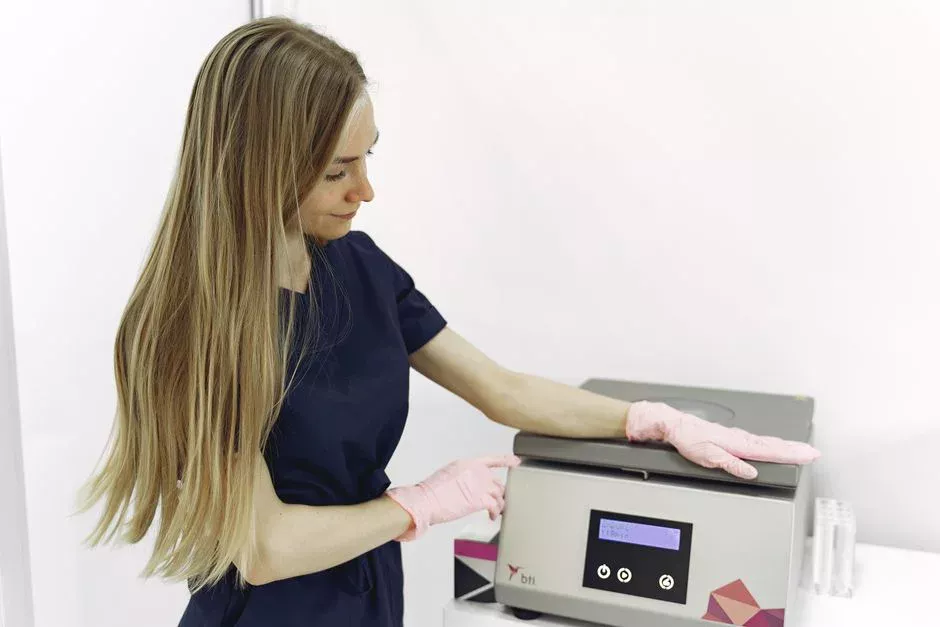
Equipment selection downstream of the bioreactor is driven by four measurable parameters: MLSS, sludge volume index (SVI), capillary suction time (CST), and dry solids (DS) content. For biopharma biosolids after biological treatment, engineering-typical ranges are MLSS 4,000–10,000 mg/L for CAS effluent and 8,000–15,000 mg/L for MBR effluent, tied to the "increased biomass" condition described in the 2026 Toxics study. SVI between 80 and 150 mL/g indicates well-settling floc; values above 200 mL/g signal bulking and warrant jar tests before specifying a thickener.
CST is the most direct predictor of dewaterability. A CST below 10 seconds indicates sludge that releases water readily under mechanical shear; values above 20 seconds signal a sludge that will need elevated polymer dose, thermal conditioning, or both. For biopharma streams carrying mycelial biomass and EPS from antibiotic fermentation, CST often runs higher than municipal analogues because the filamentous matrix resists filtration — this is the practical reason the same press delivers 25% DS on a municipal plant and only 20% on a fermentation plant unless conditioning is upgraded. The summary table below ties each parameter to its equipment-selection consequence.
| Parameter | Typical CAS range | Typical MBR range | Engineering implication |
|---|---|---|---|
| MLSS (mg/L) | 4,000–10,000 | 8,000–15,000 | Drives thickener sizing and recycle loads |
| SVI (mL/g) | 80–150 | 100–180 | Above 200 → bulking, revisit F/M and DO |
| CST (s) | 8–18 | 12–25 | Above 20 → raise polymer dose or add thermal stage |
| DS after thickening (%) | 3–5 (GBDT) / 4–7 (DAF) | 3–5 (GBDT) / 4–7 (DAF) | Sets feed concentration to dewatering press |
| DS after pressing (%) | 22–28 | 20–26 | Determines end-of-life route and hauling cost |
Sludge Thickening, Stabilization, and Conditioning
Thickening is the first mechanical step. Gravity belt thickeners (GBDT) deliver 3–5% DS at low energy cost and suit coarse, well-flocculated sludge. Dissolved air flotation (DAF) thickeners deliver 4–7% DS and are favored when the sludge contains fine, low-density biological floc typical of MBR surplus or when the upstream bioreactor runs at high MLSS — the same conditions that make a dissolved air flotation thickener the more robust choice for many biopharma trains.
Stabilization options split along aerobic and anaerobic lines. Aerobic digestion tolerates antibiotic residues better because methanogens in anaerobic digesters are inhibited by a wide range of API classes, including macrolides, sulfonamides, and fluoroquinolones at environmentally relevant concentrations. Plants that already have an anaerobic digester for combined waste should plan for residue monitoring of the digester feed and may need a parallel aerobic polishing tank for the biopharma fraction.
Conditioning is dominated by polymer — specifically cationic polyacrylamide at an engineering-typical dose of 3–6 kg per tonne of dry solids. Inorganic coagulants (ferric chloride, lime) are used in niche applications but introduce metal contamination that complicates downstream end-of-life options, particularly resource recovery. In a regulated pharma environment, an automatic polymer dosing skid is the standard delivery mechanism because over-dosing re-dissolves solids and under-dosing wets the cake — both failures are visible immediately in press cycle time and filtrate quality.
Mechanical Dewatering: Filter Press, Centrifuge, and Belt Press Compared
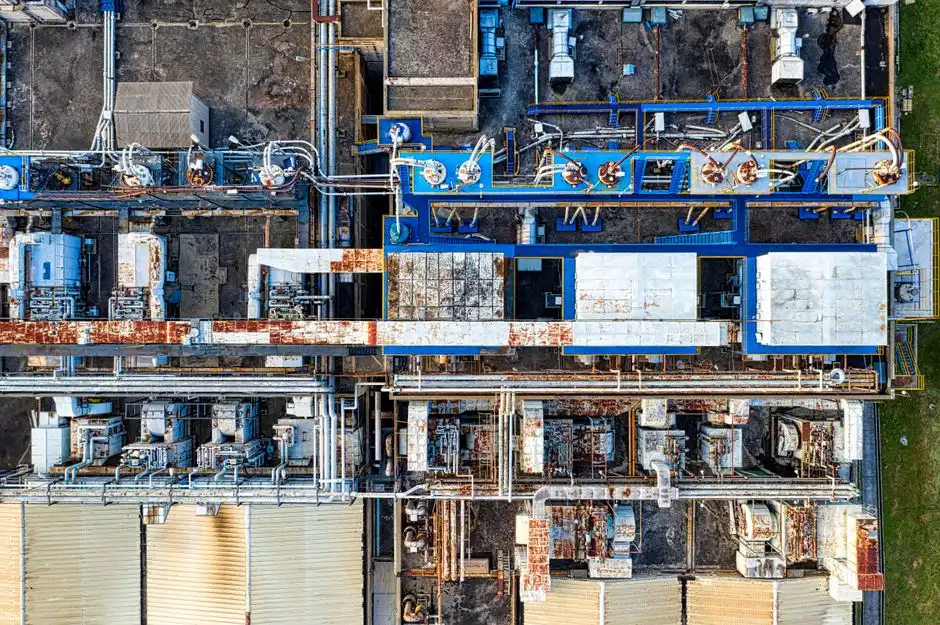
Three dewatering technologies dominate biopharma decisions: the plate-and-frame filter press, the decanter centrifuge, and the gravity or belt press. Each has a defined operating envelope, and the choice is governed as much by residue-containment and batch-traceability requirements as by capital cost. The widely-quoted engineering range for achievable dry solids is 22–28% DS for a plate-and-frame filter press, 18–23% DS for a decanter centrifuge, and 16–20% DS for a belt press.
Filter presses tolerate variable feed, handle mycelial biomass that would blind a centrifuge screen, and produce a firm cake that is easy to containerize and trace by batch — a meaningful advantage in a regulated environment. Decanter centrifuges offer continuous operation and a smaller footprint, but are sensitive to fine particles and high CST, and produce a wetter cake. Belt presses are the lowest CAPEX option and the wettest cake; they are rarely the first choice for biopharma where downstream incineration economics depend on cake dryness. The comparison matrix below summarizes the trade-offs.
| Criterion | Plate-and-frame filter press | Decanter centrifuge | Belt press |
|---|---|---|---|
| Achievable DS (%) | 22–28 | 18–23 | 16–20 |
| Polymer demand | Moderate (3–6 kg/t DS) | Moderate-high | High |
| Energy use (kWh/t DS) | 5–10 (batch) | 30–60 (continuous) | 10–20 |
| CAPEX band (per m³/day feed) | Mid-to-high | Mid | Low |
| Footprint | Larger, batch | Compact, continuous | Compact, continuous |
| Mycelial biomass tolerance | High | Low-to-moderate | Moderate |
| Batch traceability | Strong (per batch cake) | Weak (continuous) | Weak (continuous) |
| Best fit (m³/day) | 10–2,000 | 50–5,000 | 20–1,000 |
For 10–500 m³/day biopharma plants where cake dryness, batch traceability, and residue containment dominate the decision, a plate-and-frame filter press is the default recommendation. Looking forward, the 2024 Chemosphere work on C/P@Fe materials signals that filter-cake leachates may eventually be re-mined for iron-carbon-phosphorus functional materials rather than landfilled — a development that strengthens the case for resource-recovery-ready cake handling today.
End-of-Life Pathways for Dewatered Biopharma Cake in 2026
Three end-of-life routes are operationally relevant in 2026: land application, incineration, and resource recovery. Land application is constrained by the residue data. The 2026 Toxics paper states directly that "risk assessment is, therefore, pertinent before any stabilization and realistic land application scenarios are chosen" (Almashaqbeh et al., 2026-01-08), and biopharma cake — with elevated API and antibiotic residues — generally fails that risk screen for agricultural use. Plants should treat land application as the exception, not the baseline.
Incineration remains the most common route for biopharma biosolids in 2026. Mono-incineration under controlled emission limits (aligned with EU IED and US EPA thresholds for hazardous-waste incinerators) is preferred over co-incineration in cement kilns or municipal solid waste plants because it offers tighter control over API and antibiotic destruction efficiency and on dioxin/furan formation. Cake destined for fluidized-bed incineration should target ≥28% DS to stay within auto-ignition moisture bounds and to minimize auxiliary fuel. The heavy-metal wastewater treatment guide discusses the leachate side of this equation in more detail for plants with mixed metal and pharmaceutical waste streams.
Resource recovery is the forward-looking 2026+ pathway. The 2024 Chemosphere study on C/P@Fe materials — sourced from sludge and achieving 100% heavy-metal passivation in simulated wastewater — demonstrates a credible route from biosolid to functional environmental material (CAS Key Laboratory, 2024). It is not yet a commercial norm, but plants commissioning new trains in 2026 should design for separable cake handling and metal-content tracking so they can pivot to recovery when the regulatory and market frameworks mature. End-of-life choice dictates upstream decisions: a plant sending cake to landfill can accept 22% DS, while one sending to fluidized-bed incineration should target 28% DS from the press.
Worked Example: Sludge Train for a 500 m³/day Fermentation Plant
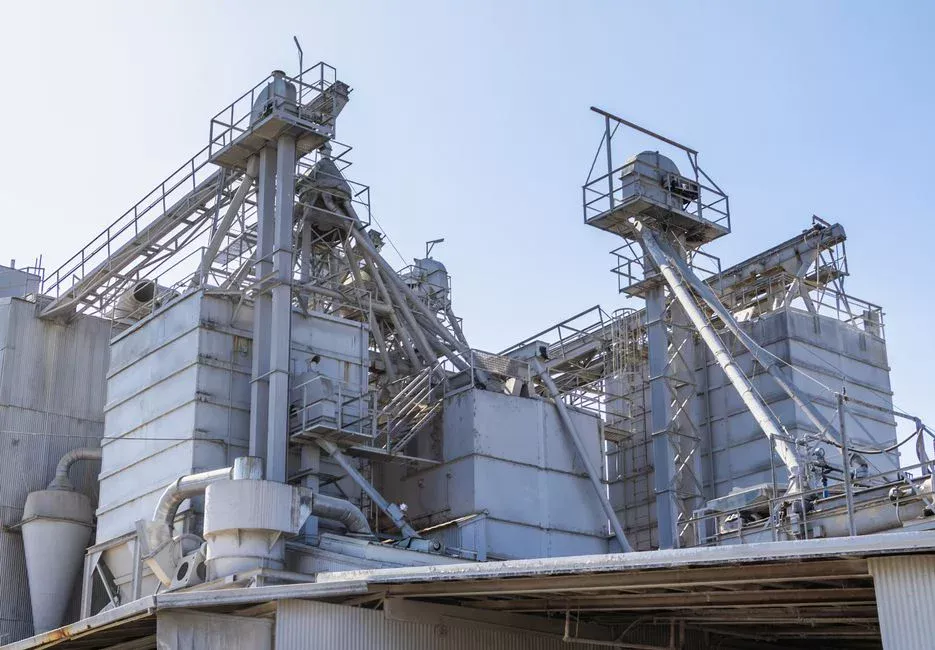
Consider a 500 m³/day antibiotic fermentation facility with engineering-typical influent of BOD₅ ~1,500 mg/L, COD ~3,000 mg/L, and SS ~800 mg/L. A defensible 2026 train runs: equalization → anoxic/aerobic biological step → MBR with 0.1 µm PVDF flat-sheet modules → DAF sludge thickener → polymer conditioning on an automatic dosing skid → plate-and-frame filter press. The biological step uses an integrated MBR system with 0.1 µm PVDF MBR modules in the DF series, which handle the surfactant load from CIP rinsewater without chronic fouling when operated within the design flux envelope.
Estimated outputs at this scale: dry solids production on the order of 1.2–1.8 tonnes per day, cake at 25% DS from the filter press, polymer dose around 4 kg per tonne of dry solids, and a planning-range CAPEX band of roughly $80,000–$150,000 for the filter-press line at 500 m³/day (excluding civil works and the upstream bioreactor). OPEX is dominated by polymer consumption, press cloth replacement, and cake transport to a licensed hazardous-waste incinerator. The compliance position is straightforward: cake is routed to a licensed incinerator, and the residue assessment follows the risk-based protocol set out in the 2026 Toxics study. For a comparable real-world benchmark, the Lonza CDMO wastewater case study shows how a multi-product CDMO applies this residue-aware logic across a portfolio of small-molecule and biologic modalities.
Frequently Asked Questions
What makes biopharmaceutical wastewater sludge different from municipal sludge?
Biopharma biosolids carry recalcitrant APIs, antibiotic residues, and fibrous mycelial biomass from fermentation, with BOD₅/COD ratios typically in the 0.3–0.45 band versus 0.5–0.7 for municipal sewage (Almashaqbeh et al., Toxics, 2026-01-08). The residue profile means sludge-side compliance is a separate workstream from liquid-effluent compliance, and risk assessment is required before any land-application scenario can be approved.
What dry solids content should a biopharma filter press target in 2026?
For a plate-and-frame filter press, the engineering-typical band is 22–28% DS, with 25% DS as a defensible design point for most fermentation-derived biosolids. Plants sending cake to fluidized-bed incineration should target ≥28% DS to stay below auto-ignition moisture bounds; landfill routes can accept the lower end of the band. A plate-and-frame filter press sized with adequate plate area and feed pressure typically reaches the upper end of the range.
Why is DAF thickening preferred over gravity belt thickening for MBR surplus sludge?
MBR surplus carries fine, low-density biological floc that gravity belts struggle to capture. A dissolved air flotation thickener delivers 4–7% DS versus 3–5% DS for a GBDT on the same feed, and it does so with shorter residence time — important when the upstream MBR is producing sludge continuously at high MLSS.
Can dewatered biopharma cake be land-applied in 2026?
Generally no. The 2026 Toxics study (Almashaqbeh et al., 2026-01-08) states that "risk assessment is, therefore, pertinent before any stabilization and realistic land application scenarios are chosen," and biopharma cake with API and antibiotic residues typically fails that screen. Mono-incineration under controlled emission limits remains the most common 2026 end route, with resource recovery into iron-carbon-phosphorus functional materials (per the 2024 Chemosphere C/P@Fe work) emerging as a forward-looking option.