Why CDMO Wastewater Is a Different Engineering Problem
Lonza treats wastewater at its CDMO plants using segregated multi-stream trains: a high-temperature wet-oxidation or stripping stage for API mother liquors, followed by biological treatment (typically MBR), reverse-osmosis polishing, and thermal evaporation to recover reusable water and concentrate residual solvents. Disclosed water-reuse rates at major European sites exceed 70%, with discharge meeting EU BAT-AEL limits for the waste-treatment sector and EPA categorical pretreatment standards for pharmaceutical manufacturing.
CDMO effluent is not a scaled-up version of municipal sewage. API mother liquors routinely arrive at the treatment plant with COD in the 10,000–80,000 mg/L range, residual solvents (acetonitrile, methanol, DCM, toluene) at 0.1–5% by volume, pH swings between 2 and 12, and trace actives that inhibit biomass at concentrations above 50–100 mg/L. By contrast, domestic wastewater typically presents below 1,000 mg/L COD with a biodegradable BOD/COD ratio near 0.5 (per Routledge Handbook of Water and Wastewater Systems, 2014) — the CDMO load is 10–80× stronger and far less biodegradable.
That gap rules out a single-train, municipal-style design. Lonza's plant architecture, like that of other large European CDMOs, segregates flow into five streams at the source: black (API mother liquor and CIP concentrates), grey (rinse waters and equipment washes), sanitary, cooling-tower blowdown, and storm water. Each stream hits a different unit-operation sequence before any combined polishing. Discharged effluent at Swiss sites operates under cantonal permits stricter than the EU Industrial Emissions Directive 2010/75/EU baseline, with the Local Cantonal Limit Value typically 5–10% below the BAT-AEL ceiling for total COD and TOC.
The Segregated Stream Model Lonza Uses
Stream segregation is the defining design choice. Mixing a 50,000 mg/L COD mother liquor with 300 mg/L rinse water does not "dilute" the problem — it spreads a toxic, solvent-bearing slug across the entire biological stage and kills the biomass. Lonza's approach keeps the trouble at its source and routes each stream to the unit operation best suited to its chemistry.
The five streams and their typical influent envelopes are summarized below. Ranges reflect pharma BREF reference conditions and Lonza site disclosures reported in CDP and SASB filings (2024–2025); exact values shift with product mix.
| Stream | Source | COD range (mg/L) | pH | Key contaminants | First unit operation |
|---|---|---|---|---|---|
| Black (API) | Mother liquor, CIP concentrate | 10,000–80,000 | 2–12 | Residual solvents, trace APIs | Solvent recovery (distillation / steam stripping) |
| Grey (CIP rinses) | Equipment wash, floor wash | 500–5,000 | 5–9 | Surfactants, FOG, emulsified oil | DAF for FOG/emulsified oil removal |
| Sanitary | Office, lab welfare | 250–600 | 6–8 | Conventional organics, N, P | Direct to biological stage |
| Cooling-tower blowdown | Closed-loop HVAC | <200 | 7–8.5 | High TDS, biocides, silica | Softening or RO side-stream |
| Storm water | Site runoff | <100 | 6–8 | Suspended solids, occasional spill | Monitored; discharged unless contaminated |
The black stream is the engineering problem; the others are conventional once segregated. The rest of this article focuses on what happens to the black and grey streams after they leave the source.
Step-by-Step Process Train for the Black (API) Stream
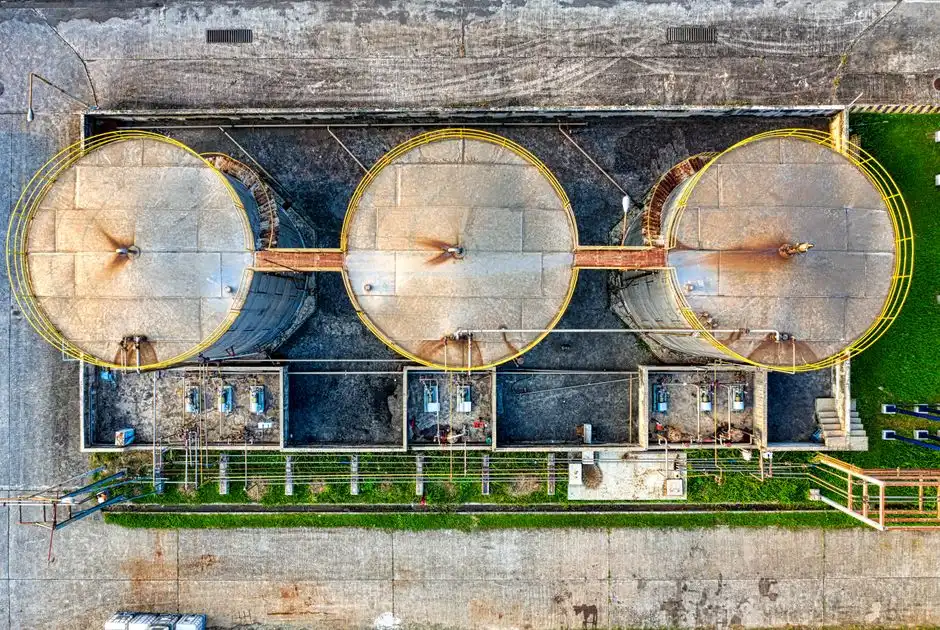
The black stream train at a European CDMO typically runs six stages. Numbers below are operating envelopes from Lonza site disclosures and the EU Best Available Techniques reference document (BREF) for waste treatment; treat them as design ranges, not guarantees.
- Solvent recovery. Water-miscible solvents (MeCN, MeOH, IPA) go to a distillation column; water-immiscible traces (DCM, toluene) go to a steam stripper. Reported solvent recovery at large CDMOs runs 85–95% by mass, and the recovered solvent returns to the process.
- Equalization and pH correction. 24–48 hour buffer tanks smooth COD and pH shock. Target pH is 6–8 before biological treatment; temperature is held below 38 °C to protect biomass.
- Primary solids removal. A lamella clarifier for primary solids removal handles settleable solids; FOG and emulsified oil are knocked down with a DAF unit for FOG removal in the grey stream, often with coagulant and flocculant dosing from a PLC-controlled chemical dosing for pH and nutrients skid. TSS exits this stage in the low hundreds of mg/L rather than thousands.
- Biological treatment. Either conventional activated sludge (CAS) with nutrient dosing (N, P) or — at newer Lonza sites — an MBR membrane bioreactor for pharma effluent. MBR is now the default where footprint is constrained and toxicity spikes are expected.
- Polishing and reuse loop. MBR effluent goes to RO (recovery 65–80%); RO reject, typically 20–35% of MBR flow, goes to a mechanical vapor recompression (MVR) evaporator. Condensate returns to the process; concentrate is sent off-site for hazardous-waste incineration.
- Off-gas treatment. VOC vents from the equalization tank and stripper overhead pass through a biological trickling filter or activated carbon before discharge. This is mandatory under EU IED 2010/75/EU and Swiss OPair.
The integrated train is best understood as a coupled system, not a sequence of independent boxes. The biological stage is engineered to absorb the residual organics after solvent recovery has stripped 85–95% of the load; the RO is engineered to take the MBR's low-TSS permeate, not a raw clarifier overflow.
| Stage | Unit operation | Design parameter | Typical range |
|---|---|---|---|
| 1 | Distillation / steam stripping | Solvent recovery | 85–95% |
| 2 | Equalization tank | HRT | 24–48 h |
| 3 | Lamella / DAF | Effluent TSS | Low hundreds of mg/L |
| 4 | MBR | MLSS | 8,000–12,000 mg/L |
| 5 | RO + MVR evaporator | RO recovery | 65–80% |
| 6 | Biofilter / carbon | VOC removal | >95% |
Biological Stage: Why MBR Is the Default at Modern CDMO Sites
Conventional activated sludge can treat CDMO effluent, but it does so on a footprint most European CDMOs no longer have. MBR compresses that footprint by running mixed-liquor suspended solids at 8,000–12,000 mg/L — roughly 2–3× the concentration of a well-run CAS plant — and replaces the secondary clarifier with an ultrafiltration membrane barrier. The result is a single vessel that combines aeration, biodegradation, and solid–liquid separation.
For pharma effluent, three MBR properties matter more than the others:
- Toxic-shock tolerance. The membrane decouples SRT from HRT. Operators can hold biomass in the tank for 30+ days while throughput varies, which gives the culture time to recover from a process upset. CAS loses biomass with the effluent on a bad day; MBR does not.
- Effluent quality. MBR permeate typically runs below 5 mg/L TSS and below 1 NTU turbidity — values that match the EU BREF waste-treatment benchmark for discharge to sensitive receiving waters. That quality is what makes the downstream RO economical.
- Clean-in-place chemistry. PVDF submerged flat-sheet modules are preferred over hollow-fibre for pharma effluents because they tolerate periodic NaOCl (500–2,000 mg/L free chlorine) and citric-acid wash cycles without losing integrity. Hollow-fibre, by contrast, is more vulnerable to breakage and fouling under aggressive CIP.
The trade-off is energy. Specific aeration demand for an MBR treating pharma effluent is typically quoted in the 0.3–0.5 kWh per cubic meter of permeate band — about 2× CAS — and operators budget membrane replacement at roughly 10–15% of capex per year, depending on the feed. For land-locked European CDMOs running a multi-product mix, that trade is usually worth taking. A reference for the MBR design for solvent-bearing pharmaceutical wastewater is published in the 2027 engineering specs note linked here.
Polishing, Reuse, and the Path to Zero Liquid Discharge
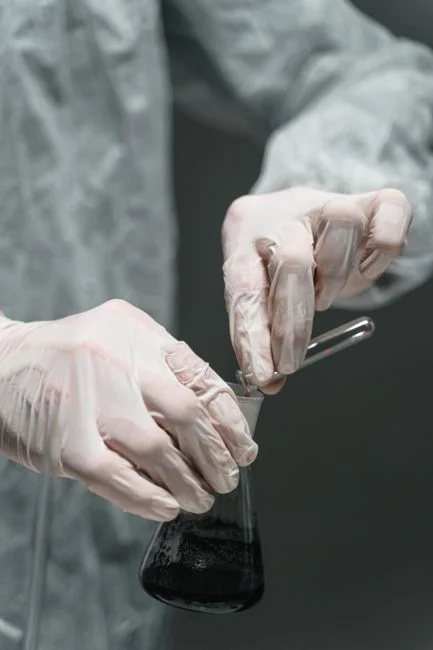
Treatment and reuse are not the same problem. The black-stream train brings COD down to a few hundred mg/L and removes most of the solvent load; reuse requires another step. Reverse osmosis takes the MBR permeate and divides it into two streams: a low-TDS permeate suitable for cooling-tower make-up, boiler feed, or CIP rinse water, and a concentrate that carries the salts and any residual organics the MBR could not touch.
RO recovery at Lonza-scale sites is reported in the 65–80% range; the reject, typically 20–35% of MBR flow, goes to a mechanical vapor recompression (MVR) evaporator. The MVR distillate is returned to the process; the evaporator concentrate, often 5–10% of the original reject volume, is shipped off-site to a hazardous-waste incinerator. A real CDMO pushing toward zero liquid discharge adds a crystallizer after the evaporator to recover salts, but that is engineered-to-order and not part of any standard catalog.
Site-level reuse benchmarks are publicly reported in the 60–80% range for major European CDMOs, with the spread driven by site vintage, product mix, and whether cooling-tower make-up is the largest reuse sink. Compliance touchpoints are not negotiable: the EU Industrial Emissions Directive 2010/75/EU sets the framework, the EU BAT-AEL for waste treatment sets the discharge ceiling, Swiss OPair sets cantonal limits, and EPA 40 CFR 439 sets the U.S. categorical pretreatment standards for pharmaceutical manufacturing. The RO polish for water reuse and the integrated medical / pharma wastewater train are the equipment that connect MBR permeate to those reuse targets.
Equipment Selection: Mapping Lonza's Train to a Replicable Skid Design
A mid-size CDMO (10–2,000 m³/day) replicating the Lonza architecture can quote the same train as a series of pre-engineered skids. The mapping below is procurement-grade, not conceptual; each row identifies a unit operation, the equipment class, and the sizing range that a CDMO engineer can put in front of a vendor.
| Train position | Unit operation | Equipment class | Sizing range |
|---|---|---|---|
| Grey stream, pre-biological | FOG / emulsified oil removal | DAF unit for FOG removal in the grey stream | 4–300 m³/h |
| Black + grey, primary | Solids settling, sludge thickening | Lamella clarifier for primary solids removal | Site-specific |
| Black + grey, biological | Aerobic biological treatment | MBR membrane bioreactor for pharma effluent (integrated skid) | 10–2,000 m³/day |
| Throughout | pH correction, nutrient dosing, CIP chemicals | PLC-controlled chemical dosing for pH and nutrients | Pre-wired, multi-pump |
| MBR effluent → reuse | Polishing and reuse | RO polish for water reuse (RO series) | Recovery up to 95% |
| RO reject (optional) | Thermal concentration | MVR / falling-film evaporator | Engineered-to-order, ZLD beyond standard catalog |
For CAPEX framing, see the hybrid DAF-RO-MBR CAPEX reference for high-spec industrial effluent; for sizing methodology on the oily-condensate edge case, see the MBR sizing methodology for industrial oily streams. A CDMO engineer quoting this train should expect the biological stage and the RO to dominate capex, with the evaporator and crystallizer driving the jump from "high reuse" to "ZLD."
Frequently Asked Questions
Does Lonza discharge wastewater to a municipal POTW or treat it on-site?
At its major European CDMO sites, Lonza treats wastewater on-site through the segregated train described above. Smaller sites and some older facilities may pre-treat to meet local limits and discharge to a municipal POTW, but the high-COD, solvent-bearing black stream at a Lonza-scale CDMO cannot legally be routed to a domestic treatment plant without on-site pre-treatment.
What reuse rate does Lonza achieve?
Site-dependent and tied to product mix. Publicly reported reuse percentages at large European CDMOs sit in the 60–80% band (per Lonza CDP and SASB filings, 2024–2025); the spread is driven by whether cooling-tower make-up and boiler feed are the dominant reuse sinks, and by the age of the MBR + RO train.
Why is MBR preferred over SBR for API effluent?
Three reasons. MBR tolerates toxic spikes better because SRT is decoupled from HRT; MBR runs at 8,000–12,000 mg/L MLSS, roughly 2–3× an SBR, so the same load fits in a smaller footprint; and MBR permeate quality (TSS below 5 mg/L, turbidity below 1 NTU) makes the downstream RO economical, whereas SBR effluent typically needs an additional clarifier or sand filter to reach the same feed quality.
Can the same train treat both API and biologics effluent?
Yes, with equalization and stream segregation. Biologics streams are typically weaker in COD (often below 5,000 mg/L) but higher in total nitrogen, so the nutrient dosing skid has to be sized for the higher N load. The biological stage itself is the same MBR architecture; only the front-end equalization and nutrient ratios change.
What compliance standards apply?
Three frames cover a CDMO operating in both Europe and the U.S.: EU Industrial Emissions Directive 2010/75/EU, which drives the BAT-AEL ceilings for the waste-treatment sector; Swiss OPair, which sets cantonal limits typically 5–10% below the EU BAT-AEL; and EPA 40 CFR 439, the U.S. categorical pretreatment standards for pharmaceutical manufacturing. A site discharging to surface water also has to meet the receiving-water quality standards in the local jurisdiction.