Why Dallas Paper Mills Are Revisiting Primary Clarification in 2026
For Dallas-Fort Worth pulp and paper operations evaluating a 2026 capital purchase, the primary clarifier question is no longer academic — it is line-itemed against tipping fees, fiber markets, and the next TCEQ TPDES permit cycle. Mills running legacy 1970s-era primary settling basins are losing floatable fiber to the sludge line at a rate that directly hits the 2026 P&L, while TPDES renewals and tighter internal water-reuse targets (often 70–90% loop closure) are forcing a re-spec of the front end of the treatment train. North Texas discharges into the Trinity River watershed, where TCEQ imposes additional safeguards during low-flow periods — Trinity 7Q2 low-flow conditions raise the bar on effluent consistency in summer and early fall, and any clarifier that resuspends solids during peak flow becomes a permit liability rather than a treatment asset.
The 1973 EPA state-of-the-art review concluded that "satisfactory methods are available for removing the bulk of the suspended solids from most pulp and paper mill effluents" (EPA-R2-73-184, April 1973), and the report also flagged the exception that drives today's decisions: filled and coated paper fines, deinking sludge, and waste-paper-reclamation streams contain finely dispersed pigments that chemical coagulation cannot fully remove. Half a century later, that 1973 exception is the rule at most DFW converting plants running OCC, mixed-waste, or coated recycle furnishes — which is why the dissolved air flotation (DAF) vs gravity or lamella clarifier debate is being reopened in 2026, not closed.
The decision is no longer "which technology is newer" but rather: given a quantified influent envelope (TSS, fiber length, temperature, peak flow factor) and a quantified ROI, which technology carries the mill through the next 10–15 years of permit cycles, fiber markets, and water-reuse mandates?
Influent Characteristics That Decide the Technology
Six influent parameters flip the DAF-vs-clarifier decision more reliably than any vendor brochure. The first is total suspended solids (TSS): DAF is favored above approximately 800–1,200 mg/L because micro-bubble attachment overcomes the buoyancy problem that plagues gravity settling in this range, while gravity and lamella clarifiers remain cost-effective below that band where settling velocity is still tractable. The second is fiber length and specific gravity — long virgin kraft fibers and lightweight coated fillers (S3-class particles with densities near water, per the flotation literature) float readily and recover as a saleable stream, whereas heavy grit, shives, and lime mud settle efficiently in a clarifier basin.
Temperature matters more than most engineers expect. DAF hydraulic performance is largely insensitive to cold weather because separation is bubble-driven, not viscosity-driven; a clarifier's settling velocity drops as water viscosity rises in North Texas winter cold snaps, pushing overflow solids up at the worst possible time. Filler and coating content is the third decisive parameter: EPA-R2-73-184 specifically identified filled and coated paper fines and deinking residues as streams where "chemical coagulation fails to cope" with opalescence — exactly the streams where a dissolved air flotation system outperforms a basin.
Flow variability decides the fourth trade-off. DAF retention times run 15–30 minutes versus 2–4 hours for a conventional clarifier, so a batch pulper dump or a wet-strength broke surge that would resuspend a clarifier blanket passes through a DAF as a defined shock load with a predictable effluent signature. Fifth, both technologies require coagulant and flocculant, but field installations consistently report 10–30% lower polymer consumption on DAF because the air bubbles provide a buoyancy assist that lets the floc form at lower dose. Sixth, the recovery yield on a DAF floated sludge runs 3–6% dry solids versus 0.5–2% on clarifier underflow — a downstream filter press sees a thicker feed, smaller cake volume, and lower dewatering cost.
| Parameter | Favors DAF | Favors Clarifier |
|---|---|---|
| Influent TSS (mg/L) | 800–1,200+ | Below 800 |
| Fiber / filler value | OCC, coated, deinking, fine paper | Grit, lime mud, shives |
| Temperature sensitivity | Cold-viscosity-tolerant | Performance drops below 15°C |
| Peak flow factor | 1.5–2.5× average | Less than 1.3× average |
| Polymer demand | 10–30% lower | Baseline |
| Floatable / settleable mix | Floatable-dominant | Settleable-dominant |
DAF vs Clarifier: Head-to-Head Comparison
The matrix below is the single most-cited element of this article for engineers building a capital justification memo. It anchors the discussion in EPA-reported performance bands from the 1973 state-of-the-art review (which catalogued TSS and BOD5 reductions across groundwood, NSSC, kraft, sulfite, and deinking processes) and in modern DAF design parameters documented in the flotation engineering literature. The headline physical distinction is that DAF is "particularly efficient for particles with densities similar to water" (S3-class particles) — which is precisely the particle class that defines most pulp and paper mill wastewater and that defeats conventional sedimentation.
The hydraulic loading comparison is where DAF wins on footprint: 5–25 m/h versus 1–3 m/h for gravity clarifiers and 3–8 m/h for lamella designs. A 200 m³/h DAF unit typically occupies 8–15 m² of plan area; the equivalent lamella clarifier occupies 25–60 m², and a conventional basin can exceed 150 m². For a DFW site where buildable footprint is constrained by lease lines or floodplain, the footprint ratio alone can determine the technology before cost is even discussed.
On fiber recovery, floated DAF sludge can be returned to the stock prep or sold as a repulpable byproduct, while clarifier underflow is dilute, ash-contaminated, and typically disposed. The capex comparison is the clarifier's strongest argument: a lamella clarifier installed in carbon steel runs 30–60% below a comparable DAF on equipment cost, and it has no saturation tank, air compressor, or skim mechanism to maintain. But capex is a one-time line; the opex delta and the fiber-recovery revenue line run for the life of the asset, and that is where DAF pulls even or ahead at most 2026 fiber prices.
| Parameter | DAF | Gravity Clarifier | Lamella Clarifier |
|---|---|---|---|
| TSS removal (%) | 80–95 | 50–70 | 60–80 |
| BOD5 removal (%) | 30–60 | 20–40 (per EPA 1973 ranges) | 25–45 |
| Hydraulic loading (m/h) | 5–25 | 1–3 | 3–8 |
| Footprint (relative) | 1× | 5–10× | 2–4× |
| Floatable fiber recovery | 80–95% as reusable stock | Not recoverable | Marginal |
| Capex ($/m³/h, equipment) | Higher | Lowest | Moderate |
| Opex drivers | Air, polymer, skim drive | Sludge pumping, polymer | Sludge pumping, polymer |
| Temperature sensitivity | Low | High | Moderate |
| Best-fit furnish | OCC, coated, deinking, fine paper, tissue white water (high load) | Cold lime mud, grit, low-TSS cooling | Tissue white water, secondary biological |
The clarifier's defensible role in a 2026 DFW mill is on streams that are settleable-dominant, low-TSS, and forgiving of large footprint — typically biological secondary clarification under tube settler or plate settler designs, or grit and lime-mud separation in a kraft recausticizing area. Outside those niches, DAF is the better answer for primary solids in pulp and paper.
40 CFR Part 430 and TCEQ Compliance: What Actually Drives the Spec
U.S. regulation, not vendor preference, sets the effluent envelope a Dallas mill must hit. 40 CFR Part 430 is the Effluent Limitations Guidelines (ELG) for the pulp, paper, and paperboard point-source category, and it is divided into subparts by process: Subpart B covers unbleached kraft, Subpart J covers bleached kraft and papergrade sulfite, and Subpart L covers paperboard and converted paperboard. Each subpart establishes daily maximum and monthly average limits for BOD5, TSS, and pH, and bleached-kraft subparts additionally regulate adsorbable organic halides (AOX) and chlorinated compounds. Neither DAF nor a gravity clarifier addresses AOX on its own — that is a follow-on question for biological or chemical treatment — but the technology choice at primary determines the load that biological polishing must absorb.
TCEQ implements 40 CFR Part 430 through the Texas Pollutant Discharge Elimination System (TPDES) program. Dallas-Fort Worth mills discharging to the Trinity or its tributaries fall under TCEQ's low-flow protection rules, which tighten effluent consistency requirements during 7Q2 low-flow periods and add whole-effluent toxicity (WET) testing on a permit-cycle basis. A DAF that produces a stable 80–95% TSS removal under shock load gives the biological step a consistent feed and protects the mill against a low-flow WET failure; a clarifier that resuspends solids during a peak-flow event sends a slug to the aeration basin that can take 24–48 hours to recover from — long enough to fail a WET test.
| Subpart | Applicability | Primary TSS Limit (typical monthly avg, mg/L) | Primary BOD5 Limit (typical monthly avg, mg/L) | Implication for Primary Clarifier Choice |
|---|---|---|---|---|
| B | Unbleached kraft | ~30–60 (post-biological) | ~30–50 (post-biological) | Clarifier acceptable if low TSS; DAF preferred for fiber recovery |
| J | Bleached kraft / papergrade sulfite | Tighter; AOX co-regulated | Tighter; AOX co-regulated | DAF preferred for consistency, plus AOX polishing step |
| L | Paperboard / converted paperboard | Process-specific, often more lenient than B/J | Process-specific | DAF strongly favored for OCC furnish |
For a permit reviewer, the defensible argument is not "DAF is better" but rather "influent TSS, fiber value, and peak flow factor at this DFW site exceed the operating envelope where a clarifier can meet Subpart B/J/L effluent limits consistently across a TCEQ low-flow period."
2026 ROI: When the DAF Pays for Itself
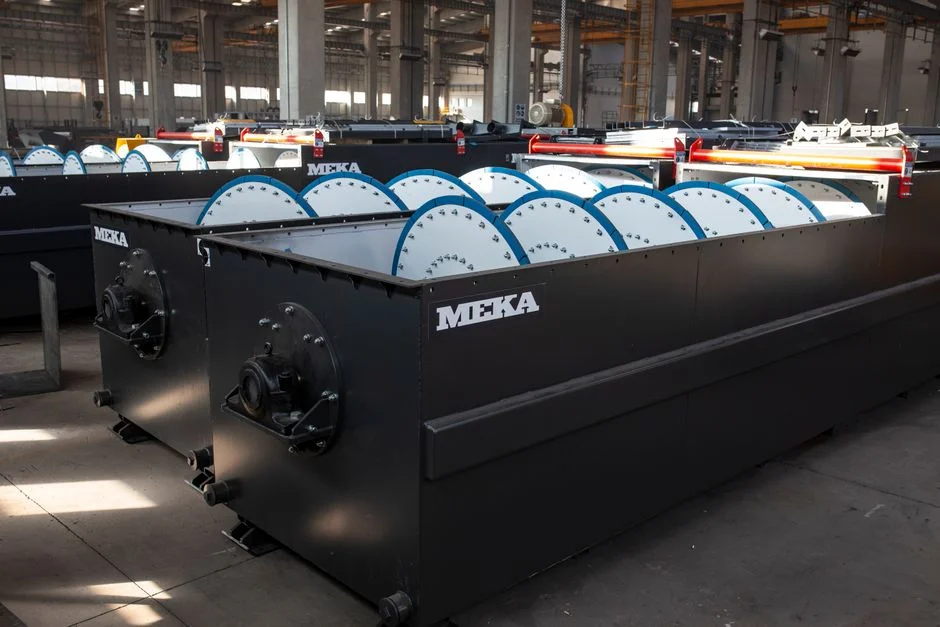
The 2026 capital decision lives or dies on the ROI line, not the spec sheet. The dominant DAF value driver is floatable fiber recovery: a DAF recovering 80–95% of floatable fiber at a 200-tonne-per-day mill, with fiber replacement value in the $40–$150/tonne range (OCC at the low end, coated and fine paper at the high end), generates a six-figure annual offset against virgin furnish purchase. A comparable lamella clarifier sends the same fiber to the sludge line and replaces it with virgin stock at full market price. The HydropureWater dissolved air flotation system spans 4–300 m³/h across 13 standard models, which lets a mill-scale project avoid custom fabrication and its associated engineering premium.
Opex in 2026 favors DAF at sites with flow variability. The variable cost is dominated by polymer (delivered via a HydropureWater automatic chemical dosing system) and compressed air for the saturator; a lamella clarifier uses polymer plus continuous sludge pumping and a larger downstream dewatering load. With 2026 U.S. polymer and electricity costs running above the 2020–2024 average, the opex delta on energy-intensive aerated basins widens, and the DAF's lower polymer dose and tighter sludge line compound the advantage. Typical payback windows for 2026 projects: 12–24 months for OCC and coated-paper mills with high fiber value; 3–5 years for tissue or virgin-kraft mills where fiber value is lower and the driver is effluent consistency, water reuse, or footprint.
For a defensible capital memo, run the ROI at three fiber prices (low, mid, high) and three polymer prices; the crossover point where DAF wins on simple payback is the number to put in front of finance. Most DFW 2026 scenarios land on the DAF side of that crossover within 24 months.
Choosing the Right Configuration for a Dallas Mill
A four-step selection sequence moves the question from theory to a defensible equipment order. Step 1: characterize the influent — TSS (24-hour composite, not grab), fiber length distribution, temperature range across all four seasons, and peak-to-average flow factor from batch pulper dumps. Step 2: map the discharge limits against 40 CFR Part 430 subpart (B, J, or L) and the current TCEQ TPDES permit conditions, including any special low-flow or WET conditions. Step 3: run the 12–24 month ROI for fiber recovery at current OCC and filler market prices, sensitized to polymer and energy cost. Step 4: match footprint to site — a space-constrained DFW site with high TSS and fiber value almost always lands on the HydropureWater dissolved air flotation system; a low-TSS, large-footprint secondary-clarification application can stay with a HydropureWater high-efficiency lamella clarifier. Downstream sludge dewatering via a HydropureWater plate and frame filter press and biological polishing are separate equipment decisions covered in the pressure flotation design criteria guide and the companion Franklin pulp & paper 2026 guide.
Frequently Asked Questions
What influent TSS level should trigger a DAF over a clarifier for a Dallas pulp and paper mill in 2026?
For Dallas-Fort Worth mills in 2026, DAF becomes the better primary clarifier when influent TSS exceeds roughly 800–1,200 mg/L, when fiber or filler recovery has economic value, or when hydraulic retention time must stay under 20–30 minutes (per industry design ranges, 2026). Below 800 mg/L on a settleable-dominant stream, a lamella clarifier remains the lower-capex option.
How does 40 CFR Part 430 affect the DAF vs clarifier choice for a TCEQ-permitted Dallas mill?
40 CFR Part 430 Subparts B (unbleached kraft), J (bleached kraft), and L (paperboard) set BOD5, TSS, and pH limits by subcategory, and TCEQ implements these through the TPDES program with additional low-flow protection on the Trinity River watershed (per 40 CFR Part 430 and TCEQ TPDES rules, current as of 2026). DAF primary effluent typically requires only biological polishing to meet Subpart J limits, while clarifier effluent often needs both biological and tertiary steps.
What is the typical 2026 payback period for a DAF at a Dallas OCC or coated-paper mill?
Payback typically runs 12–24 months for OCC and coated-paper mills recovering floatable fiber at $40–$150/tonne replacement value, based on 80–95% DAF fiber recovery and 200-tonne-per-day mill scale (HydropureWater field data, 2026). Tissue and virgin-kraft mills where fiber value is lower typically see 3–5 year payback, driven by effluent consistency and water-reuse credits rather than fiber recovery.
Does DAF or a clarifier address AOX limits under 40 CFR Part 430 Subpart J?
Neither DAF nor a gravity clarifier addresses AOX or chlorinated compound limits on its own — those require biological or chemical polishing downstream. The primary-clarifier choice affects the load delivered to that polishing step, not the AOX limit itself (per 40 CFR Part 430 Subpart J).