What Are Tube and Plate Settlers in Wastewater Treatment?
Tube settlers and plate settlers are both types of lamella clarifier technologies designed to dramatically increase the effective settling area within a sedimentation basin. This is achieved by reducing the settling distance particles must travel through the use of inclined surfaces. Both systems can increase the effective surface area by 5–10 times compared to a conventional horizontal clarifier, allowing for a significantly smaller footprint or increased capacity within an existing tank.
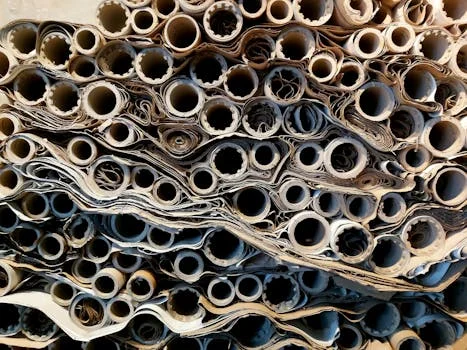
Tube settlers are modular units constructed from bundles of hexagonal tubes, typically made from PVC or polypropylene (PP). These tubes are inclined at an angle of 55–60° and have a characteristic hydraulic diameter of 35–50 mm. They are installed in parallel banks within a clarifier to provide a large surface area for solids to settle onto. The modular design allows for flexible configurations to fit a wide variety of tank shapes and sizes.
Plate settlers consist of flat or corrugated plates, manufactured from rigid materials like PP, PVC, or stainless steel. These plates are spaced 50–100 mm apart and are also installed at an inclination of 45–60°. The term 'lamella' refers to the layered, plate-like structure common to both technologies, though 'plate settler' specifically denotes the use of flat-panel geometry. The corrugated design on some plates enhances structural rigidity and can help promote more uniform flow distribution.
How Tube Settlers Work: Design and Performance
Tube settlers function by creating numerous narrow, parallel flow channels that promote laminar flow. This hydraulic environment minimizes turbulence, allowing suspended particles as small as 20 μm to settle onto the tube walls. Once settled, the solids slide down the inclined surface into a collection hopper below. This mechanism enables surface loading rates of 20–40 m/h, far exceeding the 1–2 m/h rates of conventional clarifiers.
A standard PVC tube settler module is typically 1–2 meters in height and 1–3 meters in width. The required depth is flow-dependent; for example, a system designed for a flow rate of 100 m³/h may require a module depth of approximately 1.2 meters. The primary advantage of PVC is its low initial capital cost. However, it offers limited resistance to prolonged UV exposure and high chlorine concentrations, resulting in a typical service life of 8–12 years in industrial settings. The lightweight nature of PVC modules also simplifies handling and installation.
A critical operational consideration for tube settlers is their susceptibility to clogging from fibrous materials, hair, or fats, oils, and grease (FOG). They are best applied in streams that have undergone effective pretreatment, such as screening or dissolved air flotation (DAF), to prevent fouling and maintain performance. Regular inspections, ideally on a quarterly basis, are recommended to check for any accumulated debris that could hinder flow.
How Plate Settlers Work: Structure and Advantages
Plate settlers operate on the same fundamental principle of inclined settling but utilize wide, flat panels instead of small-diameter tubes. The larger flow paths between plates are less prone to blockage from debris. The rigid construction of PP or stainless steel plates resists deformation under hydraulic or solids loading, ensuring consistent spacing and performance over a long operational life.
This structural integrity is the source of the technology's key advantage: exceptional durability. Stainless steel plate settlers can last 15–20 years in aggressive environments like chemical plant or tannery effluent, where pH extremes or corrosive compounds are present. Polypropylene plates offer excellent chemical resistance across a wide pH range (2–12) at a lower cost than stainless steel. The spacing between plates is a critical design parameter, balancing the need for a large settling area with the requirement to minimize the risk of fouling.
Maintenance is also simplified. The flat surfaces of plate settlers are more accessible and easier to clean, either manually or with integrated automated brushing systems that can cycle every 2–4 hours in high-fouling applications. While the initial capital expenditure (CAPEX) for plate settlers is higher, the long-term operational expenditure (OPEX) is often lower due to reduced downtime, less frequent cleaning, and extended service life. This makes them a strong candidate for facilities prioritizing long-term operational stability over upfront cost.
Direct Comparison: Tube vs Plate Settler Performance
The performance differences between tube and plate settlers are critical in determining their suitability for specific applications.The following table provides a quantifiable, side-by-side comparison of key performance and design parameters to inform your equipment selection process. This data is based on typical industry performance standards and manufacturer specifications.
| Parameter | Tube Settlers | Plate Settlers |
|---|---|---|
| Typical Materials | PVC, PP | PP, Stainless Steel |
| Surface Loading Rate | 20–40 m/h | 20–40 m/h |
| Footprint Reduction vs. Conventional | 40–60% | 40–60% |
| Chemical Resistance (pH range) | Degradation above pH 10 or below pH 2 | PP: pH 2–12; SS: Highly resistant |
| Expected Lifespan | 8–12 years | 15–20 years (SS), 12–15 years (PP) |
| Maintenance Frequency | Manual cleaning every 3–6 months | Manual cleaning every 6–12 months |
| Clogging Susceptibility | High (requires fine screening) | Low to Moderate |
| Installation Time (Relative) | Faster (30% less time due to modularity) | Slower (requires more precise alignment) |
While both technologies achieve similar theoretical surface loading rates, plate settlers generally maintain this efficiency longer under real-world conditions with variable flow and higher solids loading. Their robustness translates to more consistent performance and lower lifecycle costs in demanding applications, particularly where flow rates can fluctuate significantly.
When to Choose Tube Settlers vs Plate Settlers
The choice between tube and plate settlers depends on the specific application and requirements of the wastewater treatment process. A thorough analysis of influent water quality is essential in making this decision.
Choose Tube Settlers for:
- Municipal wastewater plants with consistent, low-to-moderate TSS loads (<500 mg/L).
- Budget-conscious upgrades where lowest initial CAPEX is the primary driver.
- Temporary or emergency capacity expansion projects due to their quick deployment.
- Applications with reliable pretreatment and low potential for fouling (e.g., lack of fibers or FOG).
Choose Plate Settlers for:
- Industrial wastewater with high TSS (>500 mg/L), FOG, or fibrous content (e.g., food processing, pulp & paper, textiles).
- Chemically aggressive effluents (e.g., from chemical plants, metal finishing, tanneries).
- Facilities planning for a long asset lifecycle (15+ years) where lower TCO outweighs higher CAPEX.
- Installations where automated cleaning is desired or manual access for maintenance is limited.
| Decision Factor | Favors Tube Settlers | Favors Plate Settlers |
|---|---|---|
| TSS Concentration | < 500 mg/L | > 500 mg/L |
| Wastewater Type | Municipal, low-fouling | Industrial, high-fouling (FOG, fibers) |
| Chemical Exposure | Near-neutral pH, low chlorine | Extreme pH, corrosive chemicals |
| Project Budget | CAPEX-sensitive | TCO-sensitive (10+ year horizon) |
| Project Timeline | Fast installation required | Standard installation timeline |
Real-World Example: A dairy processing plant with an influent TSS of 800 mg/L and a flow of 200 m³/h was experiencing frequent clogging and high maintenance costs with PVC tube settlers. By upgrading to stainless steel plate settlers, they achieved 95% solids capture and reduced annual maintenance costs by 20%, justifying the higher initial investment with a projected payback period of under 4 years.
Integration with High-Efficiency Sedimentation Systems
Tube and plate settlers are core components within a complete industrial clarifier system, but their performance is maximized when integrated into a optimized treatment train. Modern high-efficiency lamella clarifier designs combine several key processes into a single, compact unit.
These systems often include a flocculation chamber where coagulants and flocculants are mixed with the wastewater to form larger, more settleable particles. This is followed by the lamella settling section—using either plate or tube technology—where the clarified water and settled sludge are separated. Advanced designs incorporate sludge recirculation mechanisms that return a portion of the settled solids to the flocculation chamber, enhancing floc formation and reducing chemical consumption by 25–30% compared to conventional systems. This integrated approach ensures that the settlers receive optimally conditioned water, maximizing their removal efficiency.
A significant advantage for plant engineers is the ability to retrofit these lamella modules into existing clarifier tanks. This approach can double or even triple the hydraulic capacity and treatment efficiency of an aging sedimentation basin without the cost and downtime associated with constructing a new tank, making it a highly effective wastewater clarifier upgrade strategy. This is a crucial consideration when evaluating how sedimentation fits into primary and secondary wastewater treatment stages within a plant's overall process flow.
Frequently Asked Questions
What is the main difference between tube and plate settlers?
The core differences are geometry and material. Tube settlers use bundles of small-diameter (35-50 mm) hexagonal tubes, typically made from PVC. Plate settlers use flat or corrugated sheets of more rigid materials like polypropylene or stainless steel, spaced 50-100 mm apart. The geometry of plate settlers generally offers greater structural strength and resistance to deformation.
Which has a longer lifespan?
Plate settlers have a significantly longer lifespan. Stainless steel plates can last 15–20 years in aggressive environments, while PVC tube settlers typically last 8–12 years before requiring replacement, depending on wastewater chemistry. Polypropylene tube settlers offer a middle ground in terms of longevity.
Can tube settlers be used in industrial wastewater?
Yes, but only with effective pretreatment (e.g., fine screening, DAF) to remove materials that cause clogging, such as fibers, hair, or fats, oils, and grease (FOG). Without pretreatment, plate settlers are the more reliable choice for industrial streams with challenging solids.
Do both increase settling efficiency?
Yes. Both technologies reduce the settling distance a particle must travel, which dramatically increases the effective settling area. This allows for surface loading rates of 20–40 m/h, compared to just 1–2 m/h in conventional horizontal clarifiers, enabling much more compact plant designs.
Are plate settlers more expensive?
Yes, the initial capital