Why fabricated metals wastewater in Fraser is a DAF problem, not a clarifier problem
For fabricated metals wastewater in Fraser, Michigan, factories should choose a DAF as the primary oil/FOG and TSS step in 2026, not a conventional clarifier. 40 CFR 433 caps oil & grease at 51 mg/L daily max and TSS at 60 mg/L, and DAF systems routinely reach 85-98% TSS removal (per DAF Corp) and lift free and emulsified oils that gravity clarifiers miss. Add a lamella clarifier downstream only if final polishing or water-reuse is required.
The effluent profile from stamping, machining, parts washing, and metal-finishing lines is what locks the answer in place. A typical Fraser-area shop generates free oils, emulsified oils from coolants and lubricants, metal fines (Fe, Al, Cu, Zn), phosphates from alkaline cleaning baths, and total suspended solids routinely running 200-3,000 mg/L. That envelope lines up with the EPA Metal Products & Machinery profile codified at 40 CFR 433. The challenge is the emulsified fraction: coolant oils with droplet sizes in the 5-20 micron range do not coalesce under gravity, so a conventional clarifier — even a generously sized one — leaves the oil load almost untouched. Bubble-attached flotation is the only reliable removal mechanism for that stream, which is why every packaged DAF from HydropureWater dissolved air flotation (DAF) system lines through DAF Corp to Clearstream is engineered around microbubble contact rather than overflow rate.
Fraser sits inside the Macomb County industrial corridor (stamping, machining, coating, and Tier 1 auto-supplier shops along the 15 Mile and Garfield corridors) and discharges to a POTW that administers an Industrial Pretreatment Program (IPP) anchored in 40 CFR 433. The local limits cannot be looser than the federal categorical standards, so the binding numbers for any 2026 spec are 51 mg/L O&G daily max, 60 mg/L TSS daily max, and the relevant total metals ceilings for the plant's subcategory.
DAF vs clarifier: side-by-side for oily metalworking effluent
The cleanest way to defend a specification in front of a procurement committee or a POTW is a single head-to-head matrix. The table below pulls DAF Corp removal data, Clearstream/SigmaDAF hydraulic figures, and lamella clarifier design ranges into one view. A packaged DAF at 5-150 m³/h falls in the USD 80,000-450,000 turnkey range depending on materials of construction (304SS standard, 316SS or polypropylene for corrosive coolant streams); a comparable HydropureWater high-efficiency lamella clarifier runs USD 40,000-220,000 because there is no air-saturation or recycle system (HydropureWater product data, 2026). A conventional gravity clarifier is cheaper still but the footprint and the response time penalize it on slug loads.
| Parameter | Packaged DAF (HydropureWater / FC Maximizer class) | Lamella clarifier (inclined plate) | Conventional gravity clarifier |
|---|---|---|---|
| Removal mechanism | 30-50 micron microbubble attachment + skimming (DAF Corp micro-bubble generator) | Settling on inclined plates at 20-40 m/h surface loading | Gravity settling; relies on Stokes-law rise/sink |
| Oil & grease removal | 85-95% on free and emulsified oils | 50-70% on free oil, poor on emulsified | 30-50% on free oil, ineffective on emulsified |
| TSS removal | 92-98% (FC Maximizer circular, 2000 ppm feed to <50 ppm); 85-90% (RC UniMax rectangular) | 70-90% as polishing step after DAF | 40-70% on oily metalworking effluent |
| Surface / hydraulic loading | Driven by bubble contact; recycle ratio 20-30% | 20-40 m/h (10-20x conventional clarifier) | 1-2 m/h typical overflow rate |
| Footprint at 50 m³/h | ~10-15 m² for skid unit | ~6-10 m² for inclined pack | ~50-80 m² for circular concrete tank |
| CAPEX (packaged, 5-150 m³/h) | USD 80,000-450,000 | USD 40,000-220,000 | USD 30,000-150,000 (excluding civil works) |
| Sludge consistency | 2-4% thickened float (DAF Corp) | 1-3% underflow | 0.5-2% dilute underflow |
| Response to slug load | Fast (3-5 min flotation zone) | Moderate | Slow; hours of residence time |
The numbers favor DAF on every row that maps to 40 CFR 433 compliance. The DAF only loses on first-cost when sized against a bare concrete clarifier, and it wins that comparison back the moment you account for civil works, the polymer savings on a downstream HydropureWater high-efficiency lamella clarifier, and the avoided non-compliance risk on emulsified oils.
40 CFR 433 limits that decide the equipment choice in 2026
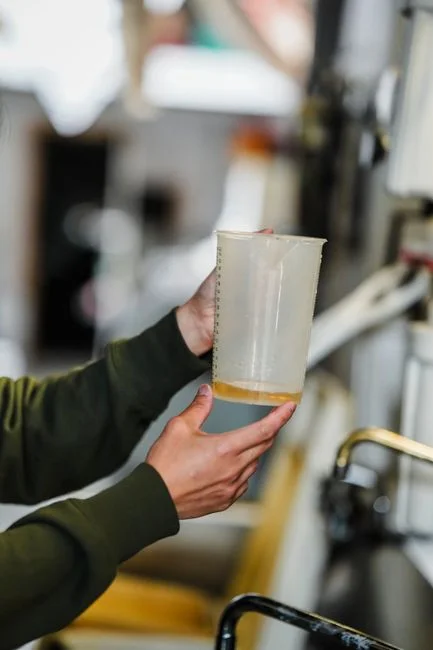
40 CFR Part 433 (Metal Products & Machinery) sets the categorical pretreatment standards that any Fraser fabricator discharging to a POTW has to meet. The current revision should be confirmed against the eCFR before final specification, but the daily-maximum values that drive equipment selection in 2026 are stable: Oil & Grease 51 mg/L, TSS 60 mg/L, and total metals ceilings (lead, copper, nickel, zinc, chromium, etc.) that vary by subcategory. The table below summarizes the binding limits; local POTW limits may set additional monitoring on zinc, copper, and PFAS as part of the Great Lakes watershed initiative.
| Parameter (40 CFR 433) | Daily maximum | Monthly avg / relevant limit | Equipment implication |
|---|---|---|---|
| Oil & Grease | 51 mg/L | ~26 mg/L monthly avg guidance | Emulsified oil removal is mandatory → DAF |
| Total Suspended Solids | 60 mg/L | ~31 mg/L monthly avg guidance | DAF alone routinely achieves this; clarifier alone often does not on coolant streams |
| Lead (Pb) | Subcategory-specific (typically 0.6-1.2 mg/L daily max) | Confirm against current eCFR | Coagulation + DAF sludge capture; polishing may be required |
| Copper (Cu) | Subcategory-specific | Confirm against current eCFR | Hydroxide precipitation + DAF float |
| Nickel (Ni), Zinc (Zn), Chromium (Cr) | Subcategory-specific | Confirm against current eCFR | pH adjustment + DAF; lamella polishing for tightest local limits |
Oil & grease is the binding constraint. Once a DAF hits 51 mg/L O&G, the TSS ceiling on the same float is almost automatically satisfied. A clarifier alone cannot reliably meet the O&G limit on a coolant-bearing stream, so the technology choice is effectively forced before you even look at metals. The Macomb County POTW IPP administers discharge permits and performs compliance sampling; local limits cannot be looser than the federal categorical numbers, and the Great Lakes watershed initiative is tightening PFAS and zinc monitoring through 2026.
Sizing a DAF for a Fraser stamping or machining line
The dissolved air flotation (DAF) system covers 4-300 m³/h across 13 standard models, which maps cleanly onto the flow envelope most Fraser stamping and parts-washing lines actually see. A realistic sizing case: a two-shift stamping and parts-washing operation generates roughly 80 m³/h of combined wastewater at 2,000 mg/L TSS and 800 mg/L oil & grease, with an 8-hour equalization basin ahead of the flotation unit. A single mid-range DAF unit, paired with a GX rotary mechanical bar screen for gross solids protection and a PLC-controlled coagulant and flocculant dosing skid for chemical conditioning, handles that flow with margin.
The design targets are different from a clarifier. Hydraulic loading is set by bubble-to-solid contact efficiency and the 3-5 minute flotation zone, not by overflow rate, so a DAF footprint is typically 5-10x smaller than an equivalent clarifier. Chemical conditioning is essential: a coagulant (alum, PAC, or ferric chloride at 50-200 mg/L) drops the colloidal charge, and an anionic polymer flocculant (1-5 mg/L) builds the floc size the microbubbles can attach to. Skim cycle, recycle ratio (20-30%), and surface loading are then tuned during commissioning using jar tests on the actual plant water — DAF Corp's micro-bubble generator and Clearstream's air-saturation vessel both run 30-50 micron bubbles (per manufacturer data, 2026) for that reason.
When a lamella clarifier earns a spot downstream of the DAF
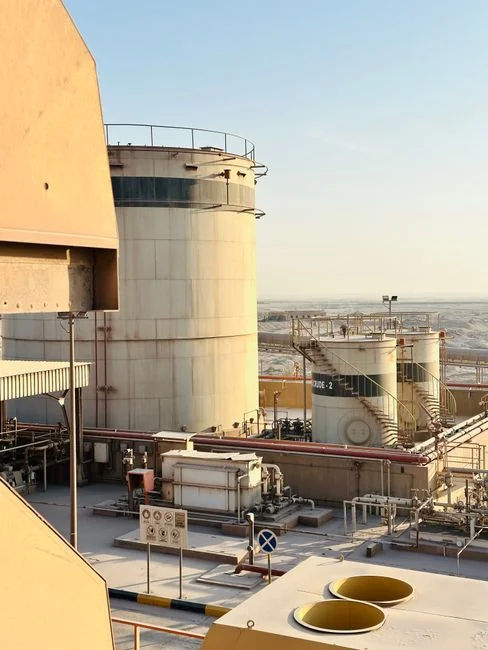
A HydropureWater high-efficiency lamella clarifier earns its place as a polishing step after the DAF when the plant is pushing for sub-20 mg/L TSS for rinse-water reuse, surface-water discharge, or a local limit tighter than the 60 mg/L federal TSS ceiling. Inclined plates at 55-60° drop the effective settling distance to a few centimeters, which pushes the surface loading to 20-40 m/h — 10-20x higher than a conventional clarifier — and the footprint stays small even at higher flow rates.
The polymer savings are real: because the DAF has already pulled 85-98% of the TSS and most of the floc, the lamella only has to settle the residual, which can cut flocculant demand by up to 30% (HydropureWater field data, 2026). If the Fraser plant is discharging to sewer only and has no reuse target, the lamella is usually unnecessary — a properly sized and chemically conditioned DAF already meets 40 CFR 433. The lamella step is the upgrade path for plants that want to close a rinse loop or satisfy a zinc-tight local limit.
Decision framework: which one should a Fraser factory buy in 2026?
Default choice: a packaged DAF as the primary unit, sized to peak hourly flow, with a GX rotary mechanical bar screen upstream and a PLC-controlled coagulant and flocculant dosing skid inline. That configuration is what reliably clears 51 mg/L O&G and 60 mg/L TSS on a coolant-bearing stream.
- Add a lamella clarifier downstream if any of the following apply: a water-reuse target (rinse loop or cooling tower makeup), surface-water discharge instead of sewer, or a local limit tighter than 60 mg/L TSS.
- Stick with a conventional gravity clarifier only if the stream is free-oil-only with no emulsified oils — uncommon in fabricated metals in 2026, and almost never true once coolant or drawing compound is in the mix.
- CAPEX ordering: lamella < packaged DAF < DAF + lamella, but compliance risk and reuse economics usually tip the spec toward DAF or DAF + lamella within one permit cycle.
For a deeper view of long-term operating cost and KPI tracking on a DAF, the DAF plant operation and maintenance guide for 2026 walks through the day-to-day numbers. For process physics on the comparator technology, the secondary clarifier working principle reference lays out the Stokes-law boundaries a clarifier cannot cross. Peer specs for nearby shops are also useful — see the Madison Heights guide on DAF vs clarifier for fabricated metals wastewater in Madison Heights for a comparable flow envelope a few miles south of Fraser.
Frequently Asked Questions
Can a conventional clarifier alone meet 40 CFR 433 in Fraser?
No, not on a typical fabricated-metals stream with emulsified coolant oils. Gravity settling removes free oil only; emulsified droplets in the 5-20 micron range do not coalesce under Stokes-law conditions, so a clarifier typically leaves 30-50% of the oil load in the overflow. The 51 mg/L O&G daily max at 40 CFR 433 is the binding constraint, and only bubble-attached flotation (DAF) reliably hits it.
DAF or clarifier for a small stamping shop under 20 m³/h?
Packaged DAF. At sub-20 m³/h flows, a skid-mounted DAF (SigmaDAF Compact-class or DAF-5 to DAF-20) is cheaper to install than a concrete clarifier once you include civil works, and it hits the 40 CFR 433 limits without a polishing step. A conventional clarifier at that scale usually means a 4-6 m diameter tank, which is a poor use of floor space for the removal it actually delivers on coolant wastewater.
How does DAF footprint compare to a clarifier?
A DAF is typically 5-10x smaller than an equivalent conventional clarifier. A 50 m³/h packaged DAF occupies roughly 10-15 m² of floor area, versus 50-80 m² for a circular clarifier designed to the same flow. That ratio is what makes DAF the only realistic answer for retrofit installations inside an existing Fraser plant bay.
What handles the DAF float downstream — filter press or dewatering?
A plate and frame filter press is the standard downstream dewatering step for a DAF float. DAF sludge comes off the skimmer at 2-4% solids (DAF Corp), and a small filter press can drive that to 25-35% cake for disposal. Lagoon or belt-press dewatering is feasible but usually costs more in polymer and labor at the flow rates a single fabricated-metals line generates.
Is 40 CFR 433 changing in 2026?
The federal categorical limits in 40 CFR 433 remain in force in 2026. What is tightening is Great Lakes watershed monitoring on PFAS, zinc, and copper, which is being pushed down through local POTW permits. Confirm the exact subcategory numbers against the current eCFR before any final specification, and budget for tighter metals monitoring on the discharge permit renewal.