The Three-Layer Rule Stack That Drives Every Elkhart Transport Plant Permit
Transportation equipment plants near Elkhart, Indiana meet 2026 sewer pretreatment limits by stacking three rule layers: the general and specific prohibitions at 40 CFR 403.5(a) and (b), the federal categorical standards at 40 CFR Part 433 (Metal Finishing) and 40 CFR Part 467 subpart C (Transportation Equipment Cleaning), and the Elkhart WWTP's site-specific local limits issued under an IDEM-delegated Industrial Pretreatment Program (per EPA, 2026). The most-stringent-applicable-number rule controls, and the receiving POTW is the City of Elkhart WWTP on County Road 6, not a regional authority. The IU permit is issued by the Elkhart Board of Public Works, with IDEM oversight exercised through the local POTW's approved program rather than a separate state-issued permit.
Layer 1 sits at the federal floor. The general prohibition at 40 CFR 403.5(a) bans any discharge that causes pass-through (40 CFR 403.3(p)) or interference (40 CFR 403.3(k)) at the POTW, and the eight specific prohibitions at 40 CFR 403.5(b) set numeric caps on pH, temperature, flashpoint, and toxic vapors (epa.gov, 2026). Four of those prohibitions drive most Elkhart transport pretreatment trains: closed-cup flashpoint below 60°C (140°F) is prohibited under (b)(1), which effectively bans sewering acetone, MEK, and paint thinner; pH must remain above 5.0 at the tap per (b)(2); headworks temperature cannot exceed 40°C (104°F) per (b)(5); and no toxic vapors may be discharged per (b)(7).
Layer 2 is the binding federal categorical standard. 40 CFR Part 433 governs metal finishing and applies to the chrome, nickel, zinc, and cadmium plating lines common in Elkhart RV parts and bus/coach trim work. 40 CFR Part 467 subpart C governs Transportation Equipment Cleaning and applies to the wash bays, paint prep, and assembly rinse streams that run off coach and RV lines. On any single pollutant, the tightest of Part 433, Part 467, and the Elkhart local limit drives the design — quoting only one layer in a permit application is incomplete (per EPA, 2026).
Layer 3 is the Elkhart WWTP's site-specific local limits, which are typically tighter than the federal floor because the plant's hydraulic capacity, its biological treatment envelope, and the St. Joseph River / Lake Michigan watershed ammonia and temperature constraints all feed into daily-maximum and monthly-average numbers. Confirm current delegation status with the Elkhart Board of Public Works before design freeze.
The Four Wastewater Archetypes Coming Off an Elkhart RV or Coach Line
Any Elkhart-area RV assembly, fabricated-metal, or coach plant will recognize at least three of the four stream archetypes below, and most plants run all four in parallel. Mapping your operation to the right archetype is the step that prevents oversizing — or, worse, undersizing — the pretreatment train.
Archetype 1: Rinsewater from plating, anodizing, and conversion coating. This is the most metal-rich stream on the site. It carries hexavalent chromium, nickel, zinc, cadmium, free cyanide where cyanided baths are still in use, phosphate, fluoride, and low pH (typically 1.5–4.0 at the bath overflow). Federal categorical limits for these metals sit in 40 CFR Part 433, and Elkhart local limits are commonly tighter. This stream routes to chromium reduction followed by hydroxide precipitation and is the single biggest driver of the chemical-dose budget.
Archetype 2: Conversion-coating and E-coat rinsewater. The metal profile overlaps with Archetype 1, but the stream adds emulsified oils from stamping and forming lubricants and higher TDS from the bath drag-out. pH swings are wider because E-coat tanks operate near 6.5–7.5 while iron-phosphate conversion coats run at 4.0–5.5. Routing is the same: chromium reduction (where hex chrome is present) → hydroxide precipitation → DAF for residual oil.
Archetype 3: Paint overspray washwater and booth scrubber blowdown. This stream carries titanium dioxide pigment, organic solvents (xylene, toluene, MEK in many cases), surfactants, and variable pH. Any solvent component with a closed-cup flashpoint below 60°C (140°F) is banned from the sewer under 40 CFR 403.5(b)(1) and must be segregated to RCRA disposal or solvent recovery — this is the rule that forces a dedicated drum for paint-line solvent waste (epa.gov, 2026). The aqueous scrubber blowdown is treated by DAF, with the floated pigment-and-solids skimmings routed to a filter press.
Archetype 4: Cleaning and degreasing washwater (40 CFR Part 467 subpart C). This is the high-FOG stream: oils, FOG, and halogenated or non-halogenated solvent residuals from the parts washers. DAF is the standard first step. Sump and floor wash from stamping and welding cells is a frequent cross-connection problem — it looks like Archetype 4 but can carry heavy-metal fines from tooling fluids, so it should be routed through chemical precipitation rather than straight to DAF. Lab waste and spent process baths at end of life route as hauled waste under a separate permit; do not blend them with the IU stream.
The 2026 Equipment Train: From Rotary Screen to ClO2 Disinfection
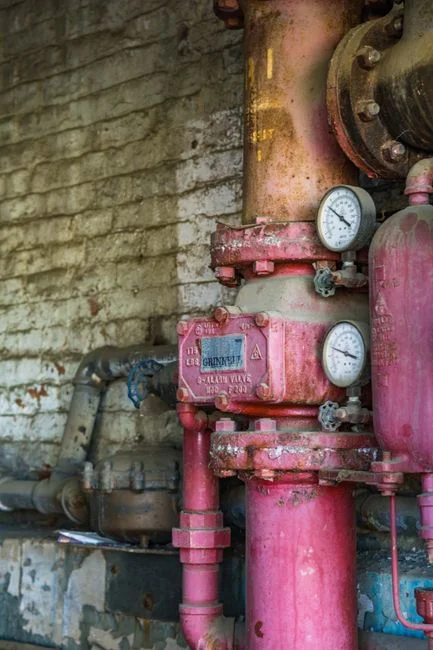
The unit-operation envelope below is the conservative 2026 design basis for an Elkhart transport plant and clears both the 40 CFR Part 433 / Part 467 categorical limits and the Elkhart WWTP's local limits. Not every plant needs every stage, but the full train is what you should quote when the IU Survey asks for design capacity.
Stage 1 — Headworks screening. A rotary mechanical bar screen at the headworks protects downstream pumps and MBR membranes from rags, plastics, and fibrous debris — a routine problem at vehicle plants where shop rags, PPE fibers, and label backing routinely end up in floor drains.
Stage 2 — Equalization. An EQ tank sized for 8–24 hours of diurnal hold dampens pH, flow, and temperature swings before the chemical and biological stages, and locks the 40 CFR 403.5(b)(2) pH and (b)(5) 40°C temperature caps at the tap. Covered EQ with vapor capture is required where any Archetype 3 stream is present, to satisfy 40 CFR 403.5(b)(7).
Stage 3 — Chromium reduction and hydroxide precipitation. A PLC-controlled automatic chemical dosing system tied to pH and ORP probes handles the two-step metal precipitation: sulfuric acid drops the pH to ~2.0–3.0 while a reducing agent (typically sodium metabisulfite) drops ORP below ~250 mV to convert Cr(VI) to Cr(III), then NaOH lifts pH to 8.5–9.0 to drop Cr(III), nickel, zinc, and cadmium as hydroxide floc. For a comparison of DAF vs lamella selection in metal-bearing streams, see this DAF vs clarifier for fabricated metals wastewater reference.
Stage 4 — Lamella clarification. A lamella clarifier settles the metal-hydroxide floc at a surface loading of 20–40 m/h, typically 30% lower chemical consumption than a conventional clarifier and a much smaller footprint (HydropureWater field data, 2026). The underflow sludge routes directly to the filter press.
Stage 5 — DAF oil removal. A dissolved air flotation (DAF) system floats residual FOG, oils, and pigment-and-solids from paint-booth blowdown. The DAF line handles 4–300 m³/h across 13 standard models with typical 92–97% TSS and FOG removal (HydropureWater field data, 2026). For vehicle and EV plant selection logic, see this DAF vs clarifier for EV/auto wastewater reference.
Stage 6 — MBR biological stage. A submerged PVDF MBR with 0.1–0.4 μm membranes eliminates the secondary clarifier and delivers sub-micron filtrate at roughly 60% smaller footprint than conventional activated sludge (HydropureWater field data, 2026). The MBR is the workhorse for residual BOD/COD and is the last barrier before disinfection for most Elkhart transport plants.
Stage 7 — Optional RO polish. An industrial RO polish at up to 95% recovery strips residual metals and TOC when Elkhart's local limit is tight or when a reuse loop (rinsewater make-up, cooling-tower make-up) is targeted.
Stage 8 — Disinfection. An on-site chlorine dioxide generator handles final microbial kill. ClO2 is generated on demand and does not form the regulated THM byproducts that gaseous Cl2 does, which is why Elkhart local limits on total residual chlorine and disinfection byproducts are more reliably met with ClO2 — see the chlorine vs chlorine dioxide comparison.
Stage 9 — Sludge dewatering. A plate-and-frame filter press dewaters both the MBR waste-activated sludge and the metal-hydroxide cake from the lamella underflow, producing a disposable cake that keeps metal- and solvent-derived contaminants out of the Elkhart WWTP biosolids stream under 40 CFR 403.5(a) sludge quality provisions.
| Stage | Unit Operation | Primary Target Pollutants | Key Regulatory Hook |
|---|---|---|---|
| 1 | Rotary mechanical bar screen | Rags, plastics, fibrous debris | Equipment protection; 403.8(f) slug plan |
| 2 | Equalization tank (8–24 h) | Flow, pH, temperature swings | 40 CFR 403.5(b)(2), (b)(5) |
| 3 | Cr(VI) reduction + hydroxide precipitation | Cr(VI), Cr(III), Ni, Zn, Cd | 40 CFR Part 433 categorical limits |
| 4 | Lamella clarifier | Metal-hydroxide floc | 40 CFR Part 433 |
| 5 | DAF | FOG, oils, paint overspray solids | 40 CFR Part 467 subpart C; local FOG |
| 6 | Submerged PVDF MBR (0.1–0.4 μm) | BOD, COD, TSS, residual metals | Local BOD/COD; site-specific metals |
| 7 | Industrial RO (≤95% recovery) | Residual metals, TOC, TDS | Tight local limit or reuse target |
| 8 | ClO2 disinfection | Fecal coliform, total residual chlorine | Local microbial limit; THM byproducts |
| 9 | Plate-and-frame filter press | Dewatered cake, biosolids protection | 40 CFR 403.5(a) sludge quality |
Parameter Table: What Each Stage Must Hit for an Elkhart Transport Plant
The numbers below are the operating envelope a vendor should be able to hit out of the box for an Elkhart transport plant. They are starting points — confirm against the local IU permit and a site-specific influent characterization before locking the design basis.
| Stage | Key Parameter | Target / Range |
|---|---|---|
| Cr(VI) reduction | ORP setpoint | < 250 mV (HydropureWater field data, 2026) |
| Cr(VI) reduction | Reaction pH | 2.0–3.0 |
| Hydroxide precipitation | Raised pH for metal drop | 8.5–9.0 |
| Lamella clarifier | Surface loading | 20–40 m/h (HydropureWater field data, 2026) |
| DAF | Air-to-solids ratio | 0.005–0.015 (typical FOG skimming) |
| DAF | Hydraulic residence time | 3–5 minutes |
| MBR | MLSS | 8,000–12,000 mg/L |
| MBR | F/M ratio | 0.05–0.15 lb BOD/lb MLVSS-day |
| MBR | HRT | 6–12 hours |
| RO | Recovery | up to 95% (HydropureWater field data, 2026) |
| RO | Feed pressure | 150–300 psi (flux-dependent) |
| ClO2 | Discharge residual | 0.2–2.0 mg/L |
| ClO2 | Contact time | 15–30 minutes (CT-credit dependent) |
The 180-Day IU Survey Clock and 403.12(p)&(j) Hazardous-Waste Trigger
The clock for any new transport-plant discharge in the Elkhart area starts 180 days before construction or first discharge. The POTW uses that window to size headworks capacity, set sampling requirements, and write the local numeric limits that end up in the permit; quoting a shorter lead time in a project schedule is the single most common reason first discharges miss their sampling point.
Step 1 — File the Industrial User Survey with the Elkhart WWTP pretreatment department at least 180 days before construction or new discharge (epa.gov, 2026). Step 2 — Complete the Industrial Wastewater Discharge Permit Application and submit after IU Survey acceptance, on the Elkhart Board of Public Works schedule. Step 3 — Pay the annual permit fee plus the one-time application surcharge; confirm the current Elkhart fee class with the pretreatment department before budgeting. Step 4 — Install the sampling point, discharge monitoring, and slug-discharge notification tree before the first discharge, on the permit schedule.
The 40 CFR 403.12(p) and (j) hazardous-waste notification runs in parallel. The IU must notify the POTW within 180 days of discharging ≥ 15 kg per calendar month of non-acute hazardous waste, or any amount of acute hazardous waste (epa.gov, 2026). For an Elkhart transport plant, common triggers include spent plating baths, solvent wipe rags, certain catalyst rinses, and bottom sludge from paint-booth scrubbers. The 40 CFR 403.8(f) slug-load control plan is the operational bridge: adequate equalization capacity, flow and pH monitoring, written batch-release procedures, and a defined notification tree. The permit's definition of a slug — any non-routine, episodic discharge with a reasonable potential to cause pass-through or interference — is the one to copy verbatim into plant SOPs, because the notification clock starts the moment a release qualifies (epa.gov, 2026).
Frequently Asked Questions
Which federal categorical standard applies to an Elkhart RV assembly plant?
It depends on which operation is generating the discharge. Plating, anodizing, and conversion-coating lines fall under 40 CFR Part 433 (Metal Finishing), which sets numeric limits on hexavalent chromium, total chromium, nickel, zinc, cadmium, lead, copper, and cyanide. Vehicle wash bays, paint prep, and parts cleaning fall under 40 CFR Part 467 subpart C (Transportation Equipment Cleaning), which sets limits on oils, FOG, TSS, and solvent residuals. Most Elkhart RV plants run both operations and need both categorical standards in the permit file (per EPA, 2026).
Can an Elkhart transport plant sewer acetone or paint thinner?
No. Any stream with a closed-cup flashpoint below 60°C (140°F) is prohibited from the sanitary sewer under 40 CFR 403.5(b)(1) and must be segregated to RCRA disposal or solvent recovery (epa.gov, 2026). Acetone, MEK, xylene, and most paint-line solvents fall below that threshold and must be drummed.
What is the Elkhart WWTP's specific local limit for hexavalent chromium?
The Elkhart local limit on hexavalent chromium is site-specific and tighter than the federal categorical limit in 40 CFR Part 433 in most cases, because the receiving stream and biosolids program drive the local-limit calculation. Confirm the current daily-maximum and monthly-average numbers with the Elkhart WWTP pretreatment department before final design.
How long does the IU permit process take from first survey to first discharge?
Plan on 180 days minimum from IU Survey submission to first discharge, and that window does not compress. The Elkhart WWTP uses the 180-day period to size headworks capacity, set the local numeric limits, and write the permit. Add design, equipment fabrication, and installation on top of that, and a realistic project timeline from kickoff to first legal discharge is typically 12–18 months for a greenfield pretreatment system (per EPA, 2026).
Does the 40 CFR 403.12(p)&(j) notification apply to small plating shops?
Yes. The 15 kg/month non-acute and any-quantity acute thresholds are facility-size independent — they apply to every IU discharging to a delegated POTW, including small captive plating shops inside an Elkhart RV or coach plant. The notification window is 180 days from the first qualifying discharge, and the log must be reconciled monthly (epa.gov, 2026).
Related Equipment
- industrial RO polish — specifications, capacity range, and technical data