
Why Pendleton Dye Houses Run on Local Limits, Not Federal Categories
Textile and dyeing plants near Pendleton, Oregon meet POTW pretreatment limits by operating under the City of Pendleton WWTP's local sewer-use ordinance, because 40 CFR Part 410 has no categorical pretreatment standards (per EPA-821-R-96-014, July 1996). The 1982 rulemaking reserved both PSES and PSNS for the textile mills point source category, leaving every POTW to set local limits sufficient to protect its own NPDES permit and its biosolids quality. The 1996 EPA study confirmed that local limits, paired with targeted monitoring, adequately control textile-user discharges and that no new categorical standards were needed (EPA-821-R-96-014, p. 1).
The general prohibitions of 40 CFR §403.5 still apply to every industrial user in Pendleton — hydraulic loading, corrosivity, obstructive materials, and fire/explosion hazards — and the City of Pendleton WWTP layers parameter-specific local limits on top of those. The most-monitored parameters nationally are pH (85% of textile users) and BOD (80%), with TSS (57%), COD (35%), and O&G (19%) further down the list (EPA-821-R-96-014, Table VI-3). BOD limits are typically set from the residual plant capacity after domestic load is satisfied, which is why they show up in nearly every IU permit.
Pendleton discharges to the Umatilla River, a 303(d)-listed waterbody with documented temperature, pH, and dissolved-oxygen impairments; POTWs whose effluent reaches impaired watersheds routinely tighten local limits beyond any national floor, because their own NPDES permit conditions are the binding constraint. The 1996 EPA study explicitly noted that "POTWs may apply local limits as necessary" to maintain permit compliance, which is the lever Pendleton's pretreatment coordinator uses to require sulfide, color, and total-Cr numbers tighter than what a 40 CFR Part 408 subcategory ceiling would imply. The City of Pendleton WWTP is the controlling authority for IU permits and enforcement, operating under Oregon DEQ's Industrial Pretreatment Program delegation that mirrors the federal framework in 40 CFR Part 403.
The federal-vs-local confusion matters because a Pendleton engineer will hear colleagues cite 40 CFR 408 daily-max numbers from maquiladora or finishing guides. Those numbers (BOD 84–432 lb per 1,000 lb product, by subcategory) are direct-discharge categorical BAT limits, not POTW pretreatment standards, and they do not bind a Pendleton dye house discharging to a sewer. The binding number in Pendleton is the local limit on the IU permit, and that limit can be — and on the Umatilla typically is — tighter than the 40 CFR 408 floor.
What a Pendleton Textile Stream Actually Looks Like
Influent characterization is the step most Pendleton spec'ers under-invest in, and it is the step that determines whether the train works. The Columbia Plateau mixes at least three distinct stream signatures: wool scouring with high temperature and BOD from suint and lanolin, indigo denim with sulfide and high sulfate from the reduction bath, and reactive knit dyeing with 1,000–10,000 mg/L sodium sulfate and a 10–40% reactive-dye mass loss into the effluent (per Hansa 1999, Durban University of Technology thesis; Springer 2018 critical review). A plant that designs for the average will fail on the worst hour.
Auxiliary pollutants dominate the mass balance even when color is the visible problem. Sizing starches such as polyvinyl alcohol and carboxymethyl cellulose drive BOD and COD; sulfur-dye sulfides are toxic and odorous above 1 mg/L; hexavalent chromium from mordants and after-soaping hits categorical ceilings fast (per Springer 2018 critical review, citing Laing 1991 and field measurements). Azo dyes represent roughly 50% of the global dye market, with anthraquinone, reactive, disperse, and vat dyes making up the balance (per UMass Amherst 2026, Kuszewski et al., Journal of Hazardous Materials). Bath swings are wide: pH 3–12 and temperature 30–60 °C across normal operations. Typical dye concentration in a dye-house discharge runs 10–50 mg/L, so color removal is a process target with a defensible number, not a flavor decision.
Matching the design case to the actual stream is the difference between a passing IU permit and a chronic surcharge. A Pendleton wool-scouring line needs aggressive oil and grease removal before biology; a reactive-knit shop needs equalization volume to absorb a 1,000–10,000 mg/L salt slug; an indigo denim line needs sulfide pre-oxidation or it will knock out the biological stage within hours. A reactive-dye shop that fails to characterize salt load will discover it the first time the MBR flux crashes.
| Stream | Typical pH | Sodium sulfate (mg/L) | Sulfide (mg/L) | Color (Pt-Co) | BOD (mg/L) | TSS (mg/L) |
|---|---|---|---|---|---|---|
| Wool scouring | 6–9 | <500 | <1 | 200–800 | 1,500–4,000 | 2,000–6,000 |
| Indigo denim rinse | 9–12 | 500–2,000 | 5–50 | 1,000–5,000 | 800–2,000 | 500–1,500 |
| Reactive knit dye | 7–11 | 1,000–10,000 | <1 | 500–3,000 | 400–1,200 | 200–800 |
These ranges are typical for the three Pendleton-area stream types, drawn from the Springer 2018 critical review and HydropureWater 2026 field data; site-specific numbers must come from a 7-day composite sampling campaign on the actual discharge before the P&ID is frozen.
The 2026 Four-Stage Train Pendleton Plants Are Spec'ing
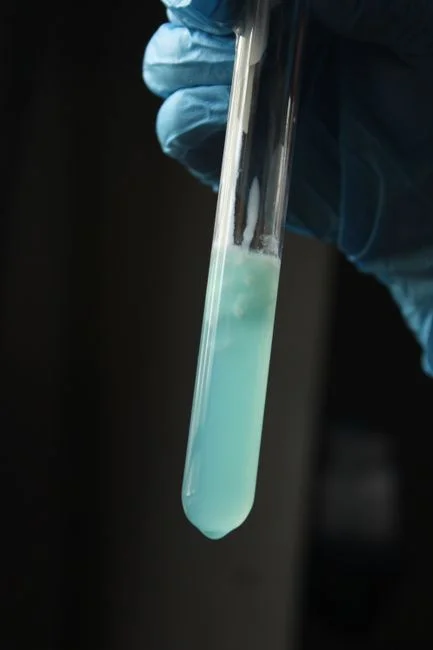
The 2026 working train for a Pendleton-area dye house is a four-stage sequence: rotary screening → dissolved air flotation → equalization plus biological treatment → advanced oxidation or membrane polishing. The trick is matching each stage's removal efficiency to a specific downstream number, not just throwing equipment at the problem.
Stage 1 — Screening. A GX-series rotary bar screen with 2–6 mm openings removes lint, rags, packaging, and loose fiber before they blind the DAF or wrap biological-reactor mixers. Headworks screening is the cheapest load reduction in the train; skipping it costs real money downstream in fouled membranes and unbalanced mixers.
Stage 2 — Dissolved air flotation. A DAF system targets suspended solids, oils, and entrained color bodies, operating at 4–300 m³/h with 20–30 minutes of hydraulic residence time and 60–80% TSS removal with coagulant aid. A PLC-controlled chemical dosing skid upstream of the DAF is what holds those numbers when the influent swings from a wool-scour batch to a reactive-dye rinse. DAF first because it cuts load cheaply; over-engineering Fenton or ozone upstream of a working DAF wastes reagent and generates iron or brominated sludge.
Stage 3 — Equalization plus biology. A buffer tank at 4–8 hours of HRT neutralizes pH and temperature swings, then biology takes over. High-COD dye effluent goes to a UASB or anaerobic MBR (AnMBR) for bulk COD reduction, then aerobic activated sludge or a submerged MBR cassette for the residual, with 24–48 hours of aerobic HRT. MBRs hold the tightest TSS numbers and tolerate the salt swings that knock out conventional activated sludge, which is why they are the safe choice for reactive-dye operations.
Stage 4 — Polishing. AOP (Fenton, ozone, or H₂O₂/UV) or UF/RO knocks residual color, sulfide, and metals below the daily-max numbers. Fenton is preferred for reactive-dye effluent that passes through biology; UF/RO is preferred when the plant wants to reuse polish water back into the dye house. DAF float and biological waste sludge route to a plate-and-frame filter press for dewatering to >20% dry solids; sending DAF float directly to the sanitary sewer is a common Pendleton-area permit violation and a frequent trigger of POTW surcharges.
Effluent design targets a Pendleton plant should specify on the P&ID: BOD <30 mg/L, TSS <30 mg/L, COD <150 mg/L, sulfide <1 mg/L, total Cr <1 mg/L, color <50 Pt-Co (per 40 CFR 408 daily-max numbers and typical tight POTW local limits, as cited in the 2026 maquiladora pretreatment guide; cross-referenced with the general EPA-state pretreatment framework).
Matching the Train to Plant Size: Pendleton Cost Bands
Plant size and dye mix drive the train more than any other variable. A small commission finisher that runs ≤100 m³/d of reactive-dye knit fabric can meet most Pendleton-area POTW limits with equalization, a DAF, and a packaged MBBR or MBR — no electrochemical polish required. CapEx in this band is dominated by the MBR cassette and the DAF skid; reagent and sludge-disposal cost are the operating constraint.
Mid-size denim and finishing plants running 100–1,000 m³/d face high sulfate, high sulfide, and the indigo reduction chemistry, so the train is UASB + DAF + Fenton or ozone AOP + a plate-and-frame filter press for DAF underflow. This is the band where the indigo and sulfur-denim sulfide constraint drives most of the design. An automatic chemical dosing system tied to influent flow is what holds the Fenton dose and the pre-oxidation peroxide dose in their working windows.
Large dye houses above 1,000 m³/d discharging to a tight POTW need full MBR + UF/RO, and they should consider reuse for cooling-tower makeup to offset CAPEX. A chlorine dioxide generator handles residual disinfection before sewer discharge, and a multi-media filter protects the RO membranes from fouling. The cost logic is simple: DAF first because it cuts load cheaply. AOP is expensive in reagent (Fenton iron, ozone power) and in sludge (Fenton iron cake, ozonation off-gas). Over-engineering AOP upstream of a working biology stage wastes reagent and creates more solids to dewater.
Reactive-dye shops can recover some CapEx via pollution prevention: switching to low-liquor-ratio dyeing and reactive-dye bath reuse reduces both salt load and dye loss before the wastewater ever reaches the treatment train (per Hansa 1999 finding that 10–40% of reactive-dye mass leaves in the effluent). P2 is rarely credited in vendor quotes, but the right way to defend a CapEx memo to a Pendleton plant owner is to show the avoided-cost of a smaller MBR cassette and a shorter AOP duty cycle.
| Plant profile | Flow (m³/d) | Recommended train | CapEx drivers | OpEx drivers |
|---|---|---|---|---|
| Reactive-knit / commission finisher | ≤100 | Equalization + DAF + packaged MBBR or MBR | MBR cassette, DAF skid | Coagulant, sludge hauling |
| Indigo denim / mid finishing | 100–1,000 | UASB + DAF + Fenton or ozone AOP + filter press | AOP reactor, filter press | Fenton iron, peroxide, ozone power |
| Large dye house (tight POTW) | >1,000 | MBR + UF/RO + multi-media filter + chlorine dioxide | RO skids, MMF, ClO₂ generator | Membrane replacement, RO reject disposal |
These are Pendleton-area cost bands, not line-item quotes; the actual CapEx depends on influent variability, effluent target tightness, and whether the plant chooses water reuse. For a related cross-border comparison of the same four-stage logic, see the 2026 maquiladora pretreatment guide.
The 2026 Compliance Risk Pendleton Spec'ers Are Just Learning About
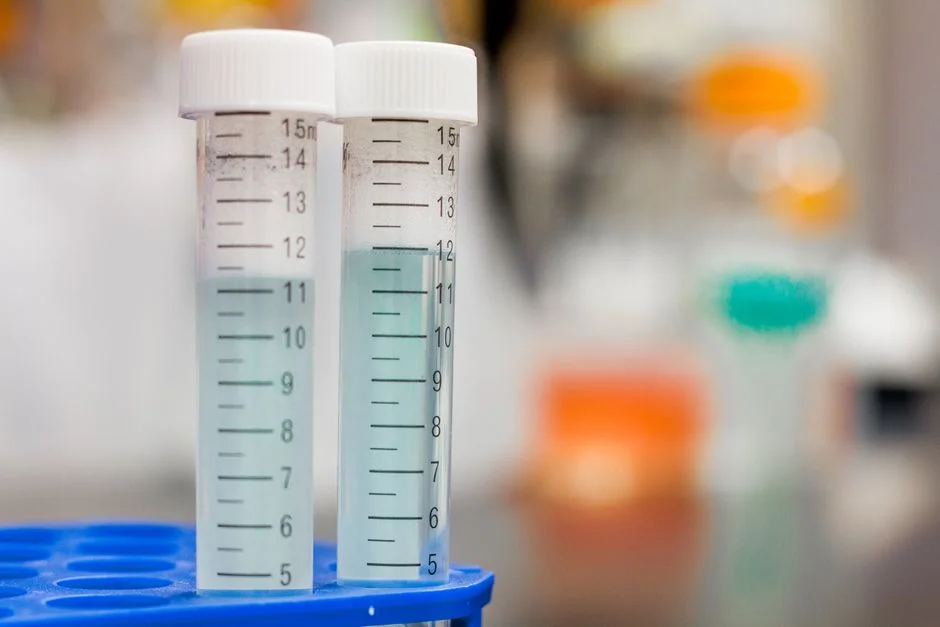
The June 2026 UMass Amherst study (Kuszewski et al., Journal of Hazardous Materials, DOI 10.1016/j.jhazmat.2026.142075) found that NaCl-supported electrochemical oxidation of Azo dyes generates chloride-based trihalomethane byproducts at hundreds of parts per billion, and that brominated textile dyes pushed bromoform to 526 ppb — more than 10× the 80 ppb EPA total trihalomethane (TTHM) benchmark that EPA sets in drinking water (per phys.org write-up, 2026-06). EPA does not yet set a textile-wastewater TTHM limit, but any Pendleton-area plant draining to a POTW whose biosolids or outfall feeds a drinking-water intake cannot ship salt-laden polish effluent without downstream GAC adsorption or RO polishing. A industrial RO polish or an ultrafiltration polish ahead of the receiving sewer is the engineering control most spec'ers are now adding.
The paper laid out three published mitigation paths: switch the supporting electrolyte from NaCl to sodium sulfate (drop-in, no new electrodes), switch to bismuth or titanium catalysts (cuts byproducts but caps throughput and adds catalyst-replacement cost), or continue with NaCl but add GAC polish and worker ventilation. Sodium sulfate is the drop-in option most Pendleton engineers will try first; bismuth/titanium catalysts are the second choice; GAC polishing is the belt-and-suspenders third option when an existing NaCl cell must stay in service.
Occupational exposure is the parallel risk. Workers in ventilation-poor dye houses are the first exposed to chloroform and bromoform vapors, which the UMass paper flags as the original motivation of the study (per Kuszewski et al., 2026-06). The researcher's framing is direct: the textile industry "seems a bit like the wild west" on byproduct monitoring, and the role of the paper is to inform spec'ers that electrochemical treatment is efficient but not free of downstream hazard. For a Pendleton plant installing a new electrochemical polish in 2026, the prudent P&ID includes local exhaust ventilation, an NaCl-to-Na₂SO₄ electrolyte swap study, and a downstream GAC or RO polish step. A QC-lab sink pretreatment spec guide walks through the same logic on a smaller flow basis.
Frequently Asked Questions
Does 40 CFR Part 410 set categorical pretreatment standards for a Pendleton dye house discharging to the City of Pendleton WWTP?
No. The 1982 rulemaking reserved both PSES and PSNS for the textile mills point source category, and the 1996 EPA study (EPA-821-R-96-014) confirmed that local POTW limits adequately control textile-user discharges. The City of Pendleton WWTP's sewer-use ordinance, operating under Oregon DEQ's Industrial Pretreatment Program delegation, is the binding constraint.
What is the new 2026 compliance risk for a Pendleton plant spec'ing electrochemical polish?
The June 2026 UMass Amherst study (Kuszewski et al., DOI 10.1016/j.jhazmat.2026.142075) found that NaCl-supported electro-oxidation of Azo dyes produces TTHM byproducts in the hundreds of ppb, and that brominated dyes push bromoform to 526 ppb — more than 10× the 80 ppb EPA TTHM drinking-water benchmark. Mitigation: switch the supporting electrolyte to sodium sulfate, use a bismuth or titanium catalyst, or add GAC or RO polish with worker ventilation.
What removal numbers should a Pendleton DAF be designed to hit?
A DAF operating at 20–30 minutes of HRT with coagulant aid should remove 60–80% of TSS, plus the bulk of the entrained oils and color bodies. Equalization upstream should be sized at 4–8 hours of HRT to absorb pH (3–12), temperature (30–60 °C), and salt swings (1,000–10,000 mg/L Na₂SO₄ on reactive-dye peaks).
What is the standard 2026 four-stage train for a Pendleton-area dye house?
Rotary screening → DAF → equalization plus anaerobic/aerobic biology (UASB + MBR or activated sludge) → AOP (Fenton, ozone, or H₂O₂/UV) or UF/RO polish. Design targets on the P&ID: BOD <30 mg/L, TSS <30 mg/L, COD <150 mg/L, sulfide <1 mg/L, total Cr <1 mg/L, color <50 Pt-Co. DAF float and biological sludge route to a plate-and-frame filter press for dewatering to >20% dry solids.
How much reactive dye is lost in the effluent, and can pollution prevention reduce the treatment train size?
Reactive-dye loss is 10–40% of dye mass into the effluent (per Hansa 1999, Durban University of Technology thesis). Switching to low-liquor-ratio dyeing and reactive-dye bath reuse cuts both the salt load and the dye load before the wastewater reaches the train, and is the most defensible way to right-size the MBR and AOP stages for a Pendleton reactive-knit shop.