Illinois Industrial Wastewater Treatment: Specs Buyers Check First
Illinois industrial wastewater treatment for POTW dischargers must meet categorical standards and any tighter local sewer limits. Metal finishing under 40 CFR Part 433 still lists copper at 3.38 mg/L daily maximum and 2.07 mg/L monthly average. Factory pretreatment CAPEX commonly spans about $200,000 for a small DAF skid to more than $5,000,000 for large hybrid trains.
Factories that discharge to a POTW also follow 40 CFR Part 403 plus Illinois Administrative Code Title 35, Subtitle C. Local sewer authorities such as MWRDGC may set limits tighter than federal categorical tables. Designers size pretreatment so metals, BOD5, TSS, and FOG stay inside the stricter written limit in the industrial user permit.
Illinois EPA Pretreatment Rules and Local Limits
The Illinois EPA applies EPA’s Pretreatment Program under 40 CFR Part 403 with state rules in Illinois Administrative Code Title 35, Subtitle C. Facilities must meet effluent standards before discharge to a Publicly Owned Treatment Works (POTW). A plant manager in Peoria or a compliance officer in Rockford who receives a Notice of Violation often finds the existing train undersized for current local limits. Violations commonly come from categorical exceedances or from missing stricter limits set by authorities such as the Metropolitan Water Reclamation District of Greater Chicago (MWRDGC).
Earlier summaries often cited civil penalties of $25,000 per day per violation under 40 CFR 403.8. According to 40 CFR 403.8(f)(1)(vi)(A) on eCFR (current through 2026), POTWs must have authority to seek or assess civil or criminal penalties of at least $1,000 a day for each violation by industrial users. Local ordinances and Clean Water Act enforcement can set higher amounts, so the permit and sewer use ordinance control the real exposure. Persistent exceedances can still lead to permit revocation and production stops.
Metal finishing plants must track heavy metals carefully. Earlier plant notes often treated copper ≤ 2.07 mg/L and nickel ≤ 2.38 mg/L as daily caps. According to 40 CFR 433.13 BPT tables on eCFR, those figures are monthly averages; the daily maxima are copper 3.38 mg/L and nickel 3.98 mg/L. Food processors face BOD5 and TSS pressure, often near BOD5 ≤ 250 mg/L and TSS ≤ 100 mg/L where Title 35 or the local permit applies. Engineers should review nickel wastewater treatment specs for Illinois metal finishing plants when nickel dominates the load. Illinois also expects certified operators for many pretreatment systems after documented education, experience, and examination.
| Regulated Parameter | Illinois General Limit (Title 35) | Categorical Limit (Metal Finishing) | MWRDGC (Chicago) Typical Limit |
|---|---|---|---|
| pH Range | 6.0 – 9.0 | 6.0 – 9.0 | 5.0 – 10.0 |
| TSS (mg/L) | ≤ 100 | ≤ 31 (Monthly Avg) | ≤ 300 (Surcharge applies) |
| BOD5 (mg/L) | ≤ 250 (Industry specific) | N/A | ≤ 250 (Surcharge applies) |
| Copper (Cu) (mg/L) | ≤ 0.5 – 1.0 | ≤ 2.07 (Daily Max) | ≤ 0.5 |
| Nickel (Ni) (mg/L) | ≤ 1.0 | ≤ 2.38 (Daily Max) | ≤ 0.5 |
| FOG (Fats/Oils/Grease) | ≤ 100 mg/L | ≤ 52 mg/L | ≤ 100 mg/L |
Where copper drives the permit, pair the categorical numbers above with process design notes on chemical precipitation for copper removal before locking coagulant dose and clarifier or DAF sizing.
How to Select the Right Wastewater Treatment System for Your Illinois Plant
Influent characteristics dictate system selection for Illinois factories. Dissolved Air Flotation (DAF) typically achieves 92–97% TSS removal under normal coagulant control. Membrane Bioreactors (MBR) can reach effluent BOD5 below 10 mg/L when the biology is stable. Engineers then weigh footprint, energy use, and the written effluent target. A high-volume food plant in central Illinois with spare land may choose an Anaerobic/Oxic (A/O) train for nitrogen control. A pharmaceutical or electronics site in a dense Chicago industrial park often needs the smaller MBR footprint instead.
Space constraints drive many procurement decisions. A standard DAF system for Illinois factories needs about 20–30 m² per 100 m³/h of design flow. MBR trains that run high MLSS with membrane filtration often use 50–70% less footprint than conventional secondary clarification. Energy costs in Illinois, currently averaging between $0.08 and $0.12/kWh, also change the ranking. DAF systems often use 0.2–0.5 kWh/m³, while MBR systems commonly use 0.5–1.2 kWh/m³ because of scour air and aeration.
| System Type | Best For... | Footprint (per 100 m³/h) | Energy Use (kWh/m³) | Key Advantage |
|---|---|---|---|---|
| DAF | High TSS, FOG, Heavy Metals | 20 – 30 m² | 0.2 – 0.4 | Low CAPEX, high TSS removal |
| MBR (Integrated) | BOD5, COD, Water Reuse | 10 – 15 m² | 0.6 – 1.1 | Superior effluent, small footprint |
| A/O Process | Nitrogen/Phosphorus Removal | 40 – 60 m² | 0.3 – 0.7 | Stable biological nutrient removal |
| MBR + RO Hybrid | Zero-Liquid Discharge (ZLD) | 25 – 40 m² | 1.5 – 2.5 | Total compliance, water recycling |
For complex electronics streams, zero-discharge MBR-RO systems for Illinois electronics plants can close the liquid loop when reuse or ZLD is in the permit strategy. Smaller campuses that need a compact biological package may also evaluate an Underground Package Sewage Treatment Plant (WSZ Series) for sanitary or low-strength industrial side streams.
Which Treatment Technologies Meet Clean Water Act Rules?
Clean Water Act pretreatment compliance for US manufacturers rests on matching the unit process to the regulated pollutant, not on buying the most complex train. DAF and precipitation handle TSS, FOG, and many metals before the sewer. Biological A/O or MBR systems address soluble BOD5 and nutrients when local limits require them. RO or evaporation enters only when reuse or zero liquid discharge is the written goal.
US manufacturers that discharge to a POTW still live under 40 CFR Part 403 program rules plus any categorical part that applies to their operations. Metal finishers stay inside Part 433 numbers and any tighter local copper or nickel limit. Food plants watch BOD5, TSS, and FOG surcharges. Direct dischargers add NPDES limits, which usually demand stronger biological polishing than indirect discharge.
DAF vs MBR vs A/O: Head-to-Head Comparison for Illinois Plants
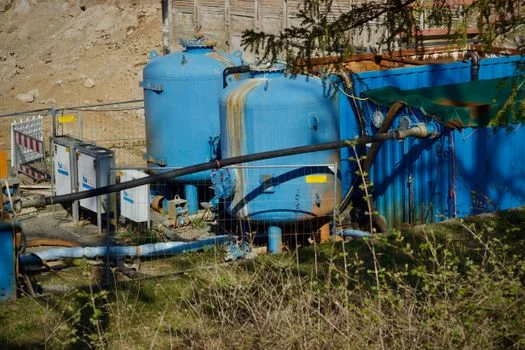
DAF, MBR, and A/O comparisons for Illinois plants show MBR footprints near 10–15 m² per 100 m³/h. DAF remains the usual pretreatment choice for non-emulsified oils and suspended solids. When the target is direct-discharge BOD5 or total nitrogen, biological treatment is mandatory. MBR technology replaces the secondary clarifier of a traditional A/O system with a membrane module, such as the MBR systems for Illinois zero-discharge compliance. That change supports a higher Mixed Liquor Suspended Solids (MLSS) concentration in the same tank volume.
| Feature | DAF (Physical-Chemical) | MBR (Biological-Membrane) | A/O (Biological-Nutrient) |
|---|---|---|---|
| TSS Removal Rate | 92% – 97% | > 99% | 85% – 95% |
| BOD5 Effluent | Partial (Insoluble only) | < 5 mg/L | < 20 mg/L |
| TN Removal | Low | Moderate to High | High (< 10 mg/L) |
| CAPEX | $200K – $500K | $1M – $3M | $500K – $1.5M |
| Maintenance Needs | Weekly (Skimmer/Chemicals) | Quarterly (CIP cleaning) | Daily (Sludge wasting/Return) |
Why Can Membrane Systems Miss Design Flow?
Membrane systems miss design flow when fouling, pretreatment gaps, or wrong flux assumptions cut permeability from day one. A nanofiltration or MBR train that never reaches nameplate capacity is a structural risk, not a temporary upset. Restoring nominal pressure or cleaning schedules may still leave the unit below design if pore blocking, scaling, or poor solids removal is built into the feed. Investigate root causes before upsizing downstream tanks or RO stages.
CAPEX and OPEX Breakdown for Industrial Wastewater Systems in Illinois
CAPEX for industrial wastewater systems in Illinois ranges from $200,000 for small-scale DAF units to over $5,000,000 for large hybrid plants. Procurement teams must also budget Illinois soft costs, including engineering reports for IEPA Construction Permits. Installation in the Chicagoland area often runs 15–20% higher than downstate Illinois for the same equipment list.
Operational expenditures are driven by energy, chemicals, and sludge disposal. In Illinois, coagulants and flocculants for DAF systems typically cost $0.10 to $0.30 per cubic meter of treated water. For MBR systems, membrane replacement every 5 to 7 years is a major OPEX line. For regional cost context, compare these figures with CAPEX/OPEX benchmarks for industrial wastewater systems.
| Cost Category | Small System (10-50 m³/h) | Large System (100+ m³/h) | Illinois Specific Factor |
|---|---|---|---|
| CAPEX (Equipment) | $150,000 – $400,000 | $800,000 – $4,000,000+ | IEPA permitting: $20K+ |
| Energy (Monthly) | $1,200 – $3,000 | $8,000 – $25,000 | Avg $0.10/kWh rate |
| Chemicals (m³) | $0.15 – $0.25 | $0.10 – $0.20 | Bulk delivery discounts |
| Sludge Disposal | $60/ton | $120/ton (Hazardous) | Landfill tipping fees |
Case Study: How a Chicago Metal Finishing Plant Achieved Compliance with a Hybrid DAF-MBR System
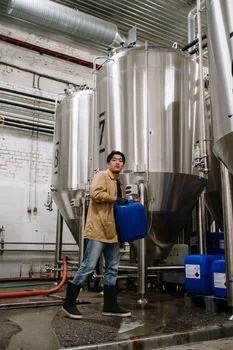
A Chicago-based metal finishing plant eliminated $25,000 in monthly EPA non-compliance fines by installing a hybrid DAF-MBR system. The facility struggled with heavy metal exceedances and high TSS. Local sewer inspectors from MWRDGC had issued multiple warnings. The plant needed a train that could handle rapid swings in metal concentration without losing the local copper and nickel limits.
The solution used a HydropureWater DAF-100 for primary metal precipitation and solids removal, followed by a HydropureWater DF-150 MBR module for final polishing. The DAF stage used PLC-controlled chemical dosing for Illinois pretreatment systems to stabilize pH and coagulant feed. Final effluent showed Cu ≤ 0.5 mg/L and Ni ≤ 0.8 mg/L. With total CAPEX of $1.2M and OPEX of $0.35/m³, the plant reported payback in under three years.
Who This Is For and Selection Checklist
This guide is for Illinois plant engineers, EPC firms, and procurement managers who must keep an industrial user permit inside categorical and local limits. Look elsewhere if you only need municipal drinking-water treatment or agricultural runoff control. Before you issue an RFQ, complete the checklist below and share influent data with your vendor.
- Confirm whether discharge is to a POTW or direct under NPDES.
- List categorical parts that apply (for example Part 433 for metal finishing).
- Copy local limits and surcharge triggers from the sewer authority.
- Measure peak and average flow, plus TSS, FOG, BOD5, and metals.
- Set footprint and power ceilings for the available plot.
- Budget IEPA permitting, installation premium, and sludge disposal.
- Decide if reuse or ZLD is required before adding RO.
If you need help matching DAF, MBR, A/O, or package biology to an Illinois permit, send your influent sheet and local limit table for a sizing review.
Frequently Asked Questions
What pretreatment rules apply to Illinois factories?
Illinois factories that discharge to a POTW must meet 40 CFR Part 403 pretreatment rules, any categorical standards that apply to their process, and Illinois Title 35 plus local sewer limits. The stricter value controls design. MWRDGC and other POTWs can set copper, nickel, BOD5, TSS, and FOG limits tighter than federal tables, so the industrial user permit is the binding document.
When should an Illinois plant choose DAF over MBR?
Choose DAF when TSS, FOG, or precipitated metals dominate and soluble BOD5 is not the binding limit. DAF commonly removes 92–97% TSS at about 0.2–0.4 kWh/m³ and 20–30 m² per 100 m³/h. Choose MBR when you need BOD5 below about 5–10 mg/L, water reuse quality, or a much smaller biological footprint than conventional A/O with clarifiers.
How much does industrial wastewater treatment cost in Illinois?
Equipment CAPEX in Illinois often ranges from about $150,000–$400,000 for small 10–50 m³/h systems to $800,000–$4,000,000+ above 100 m³/h. Add IEPA permitting, often $20,000 or more, and a 15–20% installation premium in Chicagoland. OPEX is driven by energy near $0.08–$0.12/kWh, chemicals at roughly $0.10–$0.30/m³ for DAF, and sludge tipping fees.
Are Part 433 copper and nickel limits daily or monthly?
Under 40 CFR 433.13 BPT tables, copper daily maximum is 3.38 mg/L and monthly average is 2.07 mg/L. Nickel daily maximum is 3.98 mg/L and monthly average is 2.38 mg/L. Local limits in Chicago-area permits may be tighter than either value, so size for the permit limit, not only the categorical monthly average.
What if a new membrane plant never reaches design flow?
Treat chronic low flow as a design investigation, not only an operations issue. Check pretreatment solids removal, scaling chemistry, membrane flux assumptions, and cleaning response against the original design basis. Do not enlarge downstream tanks or RO until the root cause of the shortfall is known, or you may lock in excess CAPEX without restoring capacity.