
Why Harlingen Petroleum Plants Are Rethinking DAF vs Clarifier in 2026
Three converging pressures are forcing a 2026 specification reset for petroleum bulk-terminal wastewater in Harlingen, Texas. First, 40 CFR Part 435 oil and gas extraction effluent limits and the local TCEQ Region 15 permit cycle are tightening documentation requirements for produced water, refinery, and bulk-terminal discharges. Second, summer feed temperatures of 28–32 °C in the Rio Grande Valley narrow the oil–water density differential to roughly 0.85–0.92 g/cm³, which directly reduces Stokes-law separation velocity in a gravity basin (per Ecologix and ClearStream process notes on temperature sensitivity). Third, hurricane-season surge from June through November routinely forces plants past design flow, and mobile/trailer-mounted DAF units — such as the WesTech frac-tank trailer — can be brought online within a single day to absorb peak loading (WesTech, 2025 product data).
The 2013 EPA Emerging Technologies framework (EPA 832-R-12-011) classifies high-rate DAF variants such as Actiflo and DensaDeg as Innovative or Adaptive-Use technologies, giving spec-writers a federal citation when an older project still references 1990s clarifier-only language. The result for 2026: a Harlingen engineer is no longer choosing between two equivalent options, but between a primary DAF train for free and emulsified oil and a polishing lamella clarifier for residual solids.
For a parallel regional analysis, see the Nashville petroleum DAF vs clarifier guide.
How DAF and Clarifiers Actually Treat Petroleum Wastewater
DAF and gravity clarifiers both remove oil and suspended solids from petroleum wastewater, but they exploit different physical mechanisms. A dissolved air flotation system pressurizes a recycle stream of clarified effluent (typically 20–40% of forward flow) in an air saturation vessel, then releases that stream through a pressure-relief valve at the bottom of the flotation tank. The pressure drop nucleates micro-bubbles 10–100 µm in diameter that attach to oil droplets, floc particles, and suspended solids, lifting them to the surface as a float layer that a rotary skimmer removes (Ecologix, ClearStream, WesTech process descriptions).
A gravity clarifier — including a lamella or inclined-plate settler — relies on the density differential between oil, water, and solids. Free oil rises to a surface scum layer; settleable solids drop to a sludge blanket. Inclined plates shorten the effective settling path so a lamella clarifier can run hydraulic loading rates of 20–40 m/h, compared with roughly 1–2 m/h for a conventional basin. That advantage evaporates when oil is emulsified by surfactants, shear from transfer pumps, or heat, because emulsified droplets are typically smaller than 20 µm and follow the water rather than rising.
Both technologies benefit from upstream coagulation and flocculation. WesTech and ClearStream both note that jar-testing is required to optimize coagulant and flocculant dose, pH, and mixing energy; under-dosing leaves oil in the effluent, while over-dosing wastes polymer and inflates 2026 OpEx. The dissolved air flotation system integrates air dissolving, release, and skimming into a single packaged unit, and the HydropureWater lamella clarifier combines sludge recirculation, flocculation, and inclined-plate separation for polishing duty.
DAF vs Clarifier for Petroleum Wastewater: Head-to-Head Parameters
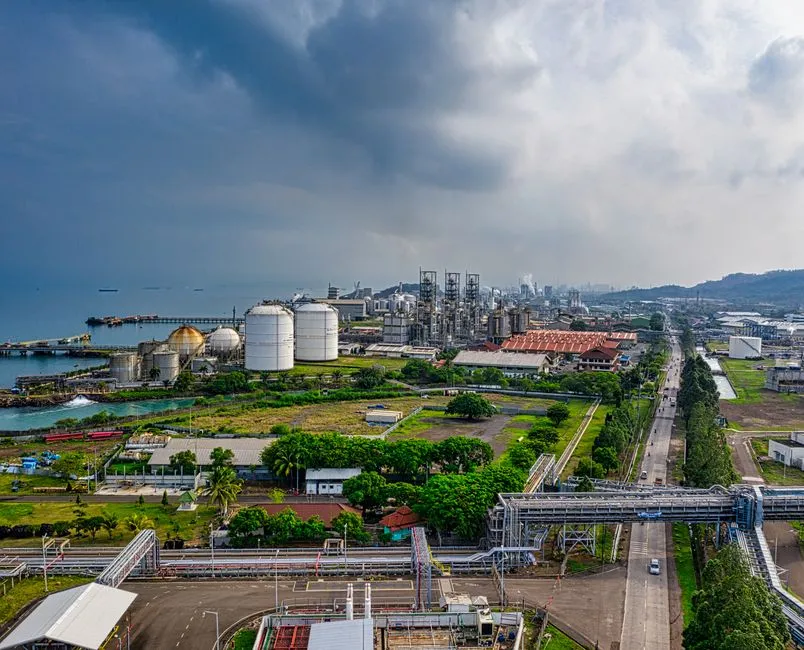
The side-by-side numbers below assume a Harlingen bulk-terminal feed of 50–500 mg/L oil and grease, 200–1,500 mg/L TSS, and 28–32 °C, with optimized jar-tested chemistry. DAF delivers 70–95% free and emulsified oil removal; lamella or gravity clarifiers deliver 40–70% on the same feed (per Ecologix and ClearStream process descriptions). The gap widens as feed temperature climbs, because clarifier separation efficiency drops while DAF performance is largely insensitive to feed temperature.
| Parameter | DAF | Lamella / Gravity Clarifier |
|---|---|---|
| Oil & grease removal | 70–95% (optimized chemistry) | 40–70% (free oil only) |
| Hydraulic loading rate | 5–25 m/h | 20–40 m/h (settleables only) |
| Hydraulic retention time | 15–45 minutes | 2–4 hours |
| Footprint per m³/h | 0.05–0.15 m² | 0.20–0.60 m² (inclined plate cuts ~50% vs conventional) |
| Float / underflow dry solids | 3–6% (float) | 1–3% (underflow) |
| Sensitivity to 28–32 °C feed | Low (micro-bubble attachment dominates) | High (oil–water Δρ shrinks) |
| Polymer consumption | 5–25 mg/L coagulant + 1–5 mg/L flocculant (jar-tested) | 0–5 mg/L flocculant only |
| Sludge dewatering path | Plate-and-frame filter press | Plate-and-frame filter press |
Clarifiers win on raw hydraulic throughput and mechanical simplicity, but only for settleable solids. DAF wins on every oil-related axis. For free oil above 100 µm, a properly sized API separator ahead of either unit still does useful work as a pre-treatment step, but the API separator is increasingly replaced or downsized in 2026 retrofits in favor of DAF (per ClearStream retrofit guidance). The DAF float is also thicker, which reduces volumetric load on downstream dewatering — relevant to the 2026 sludge disposal cost benchmarks used to size the avoided-disposal line item.
2026 Compliance Map: 40 CFR Part 435 and TCEQ Permit Constraints
The technology choice is regulatory as much as it is technical. 40 CFR Part 435 establishes effluent limitations for the oil and gas extraction point source category — produced water, refinery, and bulk-terminal discharges — with oil and grease monthly-average limits commonly below 15–29 mg/L depending on subcategory (40 CFR 435.13, 435.15, 435.42 references). Texas Surface Water Quality Standards and TCEQ permits issued in the Rio Grande Valley basin require Best Management Practices plus technology-based limits; DAF with polymer conditioning is the accepted Best Available Technology (BAT) for free and emulsified oil removal (EPA 832-R-12-011, March 2013).
Harlingen's POTW pretreatment program typically sets a local oil and grease ceiling of 100–200 mg/L for industrial users. DAF effluent almost always clears that ceiling on a single pass; clarifier effluent frequently does not, which forces a second-stage polish and additional polymer cost. The EPA Emerging Technologies framework is the authoritative U.S. government citation for DAF and its high-rate variants (Actiflo, DensaDeg) as Innovative or Adaptive-Use, giving a Harlingen engineer a defensible federal reference when the project must be justified to a corporate HSE director.
When a Clarifier Still Makes Sense in 2026
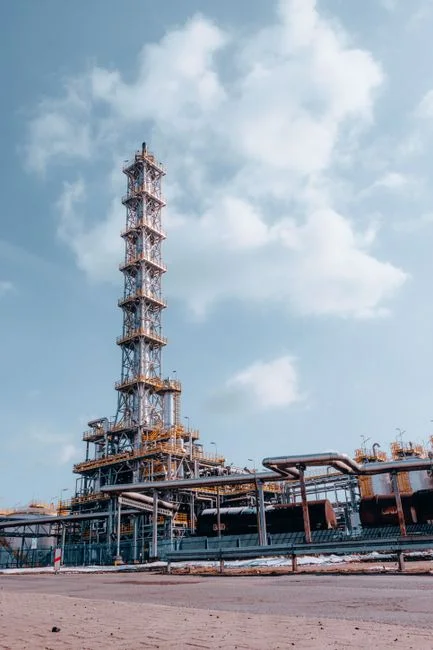
A clarifier is not a wrong answer in every case. Low-FOG, high-TSS feeds — tank-bottom water with mostly sand, iron sulfide, and rust — can be settled efficiently in a lamella clarifier, often eliminating flotation chemical cost. Sites with very tight chemical budgets, limited operator staffing, or zero tolerance for pressurized-air equipment may prefer the mechanical simplicity of a gravity basin, accepting 40–70% oil removal in exchange.
The most defensible 2026 use of a clarifier is as a polishing step downstream of DAF, where a small lamella unit catches float carry-over solids, protects downstream media filters or membrane bioreactors, and provides redundancy during DAF maintenance. ClearStream also notes that rectangular DAFs and lamella-style inclined plate settlers retrofit cleanly into legacy concrete basins, which is a common scenario at older Harlingen terminals where civil works budgets dominate the CapEx conversation. For inclined-plate design details, see the inclined plate settler engineering deep dive.
2026 CapEx and OpEx Sketch for a Harlingen Bulk Terminal
Translating the technical comparison into the language a Texas plant manager will sign off on: a packaged DAF skid (4–300 m³/h across 13 standard models) sits in a defined per-m³/h equipment band, while a lamella clarifier is typically 30–60% lower in equipment cost. Civil works flip the math: a DAF's smaller footprint cuts concrete and site-prep cost, and a clarifier often doubles the basin footprint for the same flow. On a 50 m³/h Harlingen terminal the DAF pad is roughly 60–80 m²; an equivalent lamella polishing unit is 15–25 m².
| Cost line item | DAF-primary train | Clarifier-primary train |
|---|---|---|
| Equipment CapEx (per m³/h, 2026 estimate) | Higher unit cost, smaller skid | 30–60% lower equipment cost |
| Civil / concrete works | Lower (compact footprint) | Higher (larger basin) |
| Coagulant + flocculant OpEx | 5–25 mg/L + 1–5 mg/L (jar-tested) | 0–5 mg/L flocculant only |
| 2026 polymer price exposure | High — bracket in sensitivity analysis | Low |
| Sludge disposal cost ($/ton, 2026) | Float at 3–6% DS → $40–$130/ton benchmark | Underflow at 1–3% DS → higher tonnage to haul |
| Sludge dewatering | Plate-and-frame filter press | Plate-and-frame filter press |
| Chemical dosing skid | PLC-controlled coagulant and flocculant dosing skid | Optional, single-pump skid |
2026 polymer-cost inflation is the line item that pushes the DAF column upward most aggressively. A 10–20% rise in cationic polyacrylamide price narrows the DAF-versus-clarifier OpEx gap but rarely closes it once the avoided clarifier civil works and the avoided second-pass polishing are factored in. The 2026 sludge disposal benchmarks of $40–$130/ton (per industry tracking) reward a thicker DAF float because every point of dry solids reduces hauled wet tons.
Recommended 2026 Treatment Train for a Harlingen Petroleum Bulk Plant
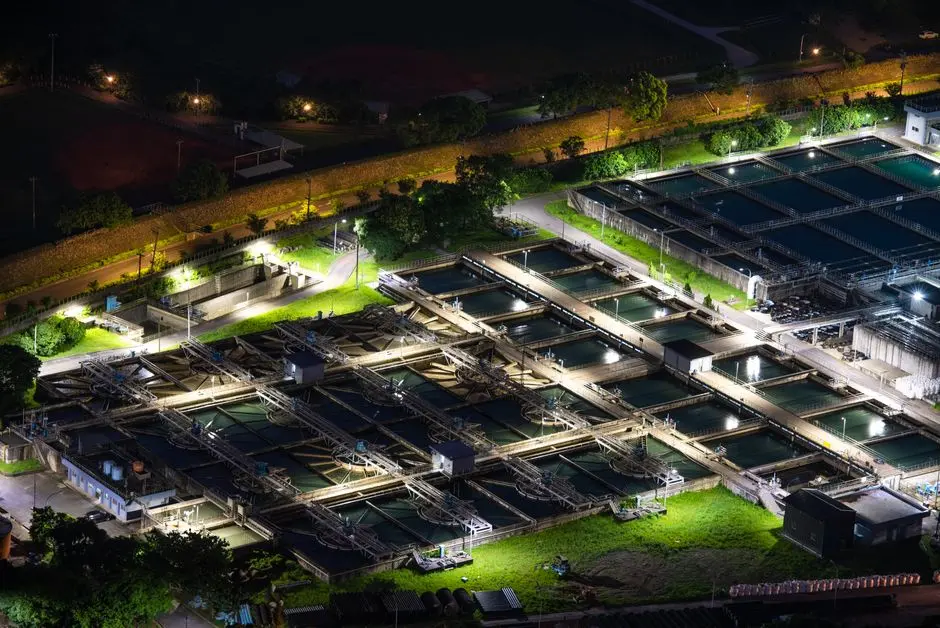
The configuration a 2026 process engineer can copy into a PFD: front-end screening with a GX series rotary mechanical bar screen to protect downstream equipment, followed by an equalization basin with an oil-skimming baffle. The primary oil and grease and TSS removal step is a dissolved air flotation system sized at 5–25 m/h hydraulic loading. A HydropureWater lamella clarifier follows as polishing, with a PLC-controlled coagulant and flocculant dosing skid trimming pH and residual nutrients before disinfection with a chlorine dioxide generator. Float and underflow both route to a plate-and-frame filter press for dewatering; clarified water is reused for truck wash or discharged to POTW headworks within the local 100–200 mg/L oil and grease ceiling.
Frequently Asked Questions
Is DAF or a clarifier better for petroleum bulk-terminal wastewater in Harlingen in 2026?
DAF is the correct primary step for the 28–32 °C, high-FOG Rio Grande Valley feed because it delivers 70–95% free and emulsified oil removal versus 40–70% for a clarifier, and it is largely insensitive to feed temperature (per Ecologix and ClearStream). Specify DAF as primary and use a lamella clarifier only for polishing.
Which federal and Texas rules govern a Harlingen bulk-terminal effluent?
40 CFR Part 435 sets oil and gas extraction effluent limits (oil and grease monthly averages typically below 15–29 mg/L by subcategory). TCEQ Region 15 enforces Texas Surface Water Quality Standards and local POTW pretreatment limits, commonly 100–200 mg/L oil and grease for industrial users. The DAF is engineered to meet both layers in a single pass with jar-tested chemistry.
How much polymer does a DAF system consume on a Harlingen petroleum feed?
Typical jar-tested dose is 5–25 mg/L coagulant plus 1–5 mg/L flocculant; exact dose depends on emulsified-oil fraction and TSS, and 2026 polymer price inflation should be bracketed in the OpEx sensitivity. Under-dosing leaves oil in the effluent, while over-dosing wastes polymer — jar-testing is non-optional (WesTech, ClearStream process guidance).
Can a lamella clarifier retrofit into an existing Harlingen terminal basin?
Yes. ClearStream documents rectangular DAF and inclined-plate lamella packages that ship fully shop-assembled and fit inside existing concrete tanks, which is the typical 2026 retrofit path at older Cameron County terminals where civil works dominate the CapEx conversation.