An inclined plate settler (IPS), or lamella clarifier, is a compact sedimentation unit that stacks parallel plates at 55–60° to multiply settling area. Manufacturer data still cite up to 85% footprint reduction versus conventional clarifiers (Metso IPS Series). Typical industrial packages target surface loading of 20–40 m/h and 90%+ TSS removal when solids are dense and well flocculated.
What is an inclined plate settler?
An IPS multiplies settling area with parallel plates so removal depends on projected surface, not tank volume. Plates at 55–60° and 50–100 mm spacing support 20–40 m/h loading and commonly remove 90%+ TSS when influent TSS stays below about 1,000 mg/L with controlled coagulation. Footprint is typically 70–85% smaller than a conventional gravity clarifier at equal capacity.
The lamella principle treats each plate as a shallow settling tray. Solids settle onto the plate, slide into a hopper, and clarified water rises to overflow launders. One compact pack can match the settling area of a conventional basin roughly ten times larger in plan area.
Particle capture follows Stokes' Law for terminal settling velocity. The relation is v = (g * (ρ_p - ρ_f) * d²) / (18 * μ), with g gravity, ρ_p and ρ_f densities, d diameter, and μ viscosity. Narrow plate gaps capture moderate settling velocities before the water exits.
Influent enters via a distribution channel from the side or bottom. Flow between plates stays laminar at low Reynolds number, limiting resuspension. Counter-current or cross-flow designs are why many IPS units run at 20–40 m/h, versus about 2–4 m/h for traditional gravity settlers. Manufacturer design summaries also cite projected-area overflow rates of 10–25 m/h for lamella units (Ecologix, 2025); keep the higher band when solids are heavy and well conditioned.
Engineering Specifications: Plate Design, Hydraulics, and Performance Benchmarks
Plate material must match chemistry and temperature. Polypropylene (PP) suits most chemical duties and cost limits. 304 or 316 stainless steel is used for abrasive mining slurries or temperatures up to 80°C. Fiberglass-reinforced plastic (FRP) is selected for highly corrosive streams. Warped plates break laminar flow and raise effluent TSS within hours.
Plate angle and spacing dominate performance. A 55–60° angle balances self-cleaning against projected area. Shallower angles foul; steeper angles waste settling surface. According to EPA 2023 benchmarks, a 50 mm plate spacing can achieve 92% TSS removal at a 30 m/h loading rate, provided the influent TSS remains below 1,000 mg/L. For higher solids, engineers often open spacing to 80–100 mm to limit bridging, then enlarge the tank to hold the same total area.
Sludge collects in a 60° conical hopper and typically thickens to 3–5% solids by weight. Many plants add sludge dewatering solutions for IPS systems, such as a plate and frame filter press, to reach 20–30% cake solids. If the sludge blanket rises into the plate pack, scouring pulls solids into the effluent. A High-Efficiency Sedimentation Tank (Lamella Clarifier) packages these plate, hopper, and launder details in one shop-built unit.
| Parameter | Typical Range | Impact on Performance | Industry Standard |
|---|---|---|---|
| Plate Angle | 55° – 60° | Determines self-cleaning ability vs. effective area | 60° for most industrial sludge |
| Plate Spacing | 50 – 100 mm | Prevents bridging; smaller spacing = higher area | 50 mm (clean) / 80 mm (high TSS) |
| Hydraulic Loading | 20 – 40 m/h | Directly affects effluent turbidity and TSS | 30 m/h (HydropureWater Specs) |
| TSS Removal Rate | 85% – 98% | Efficiency of the sedimentation process | 90%+ with proper coagulation |
| Footprint Reduction | 70% – 85% | Savings on civil engineering and land use | 80% vs. conventional clarifiers |
IPS vs. Conventional Clarifier vs. DAF: Cost-Benefit Comparison
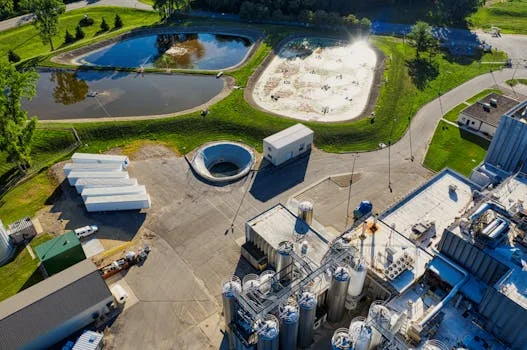
Choice among IPS, conventional clarification, and dissolved air flotation (DAF) turns on CAPEX, OPEX, and solids density. IPS equipment often costs more per treated flow than a basic tank ($150–$300/m³/h vs. $100–$200/m³/h), yet civil cost usually falls because land and concrete drop. A 100 m³/h IPS often needs about 50 m²; a conventional settler at the same flow can need about 400 m². Where land or indoor space is scarce, IPS usually wins on total installed cost.
Energy use favors gravity settlers. DAF commonly draws 0.2–0.4 kWh/m³ for saturators and recycle pumps. IPS typically needs only 0.05–0.1 kWh/m³ for sludge pumps or flash mixers. Metso manufacturer data also cite up to 70% lower energy use versus conventional thickeners and clarifiers on comparable mineral duties. Chemical dose is often lower than DAF; while DAF systems as an alternative to IPS may need higher polymer for buoyant flocs, IPS usually runs PAC or alum at 5–10 mg/L for dense particles.
Conventional clarifiers tolerate heavy solids but struggle with fine, slow settlers. DAF fits fats, oils, and grease (FOG) or light fibrous solids that float. For heavy inorganic solids in mining, metal plating, and sand washing, IPS commonly delivers 90–95% TSS removal with few moving parts. For air-based separation details, see DAF unit engineering specs and industrial applications.
| Metric | IPS (lamella) | Conventional Clarifier | DAF System | Best For |
|---|---|---|---|---|
| CAPEX | Moderate ($150-300/m³/h) | Low ($100-200/m³/h) | High ($200-400/m³/h) | IPS: Space-constrained sites |
| Energy Use | Very Low (0.05 kWh/m³) | Low (0.08 kWh/m³) | High (0.3 kWh/m³) | IPS: Sustainability focused |
| Footprint | 0.5 – 1.0 m²/m³/h | 3.0 – 5.0 m²/m³/h | 1.0 – 2.0 m²/m³/h | IPS: Minimalist layout |
| TSS Removal | 90% – 95% | 80% – 90% | 92% – 97% | DAF: Light/Oily solids |
| Maintenance | Low (Periodic cleaning) | Moderate (Mechanical scrapers) | High (Daily adjustments) | IPS: Low-manpower plants |
How do I select an industrial clarifier?
Start with footprint. If available area is under 1 m² per m³/h of design flow, IPS is usually the only practical settler. Traditional secondary clarifiers in wastewater treatment cannot match lamella volumetric efficiency. If land is cheap and solids are very heavy, a simple gravity thickener may still be cheaper.
Next, check influent chemistry. IPS performs best at influent TSS of 100–1,000 mg/L. If FOG exceeds 50 mg/L, oils coat plates and stop sludge sliding; choose DAF instead. Large rags or long fibers require a mechanical bar screen at 1–3 mm before the plate pack. High underflow solids may need sludge thickening technologies for IPS systems downstream of the hopper.
Then test total cost of ownership. Higher equipment price is often recovered in 18–24 months through lower civil work, energy, and chemical use. Municipal and large industrial projects can embed IPS inside a compact sewage treatment unit to cut concrete and land development versus open basins.
Decision Framework Summary:
- Footprint < 1 m²/m³/h? Choose IPS.
- FOG > 50 mg/L? Choose DAF.
- TSS > 1,000 mg/L? Use IPS with enhanced sludge discharge or DAF pre-treatment.
- Fibrous solids present? Must use 1-3 mm screening before IPS.
Selection checklist (plant engineers):
- Confirm peak and average flow in m³/h (US gpd) and design temperature.
- Measure TSS, FOG, fiber content, and settleability after coagulation trials.
- Set plate angle (55–60°), spacing (50–100 mm), and projected loading with a 20% peak-flow factor.
- Specify plate material for pH, abrasives, and maximum temperature.
- Size hopper withdrawal and dewatering so the blanket never enters the plate zone.
- Plan CIP or wash access for fouling-prone chemistries.
- Compare total installed cost of IPS versus conventional basin and DAF at equal effluent TSS.
Cost drivers that usually decide IPS versus a concrete basin are plate material, hopper automation, chemical pretreatment, and indoor versus outdoor siting. Quote packages with the same peak-flow and effluent TSS basis so CAPEX comparisons stay honest across vendors.
Troubleshooting Common IPS Problems: Causes, Fixes, and Prevention
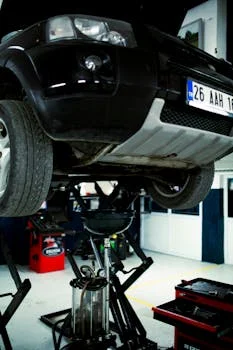
Rising effluent turbidity or sludge carryover usually points to plate fouling. Sticky flocs or biofilm shrink effective area and raise local velocity between plates. Raising PAC to 10–15 mg/L can form more brittle flocs. A clean-in-place wash with 5% citric acid removes mineral scale. Monthly pressure washing or brushing remains the simplest prevention.
Sludge bridging appears when hopper solids turn viscous or spacing is too tight. Flow then short-circuits through open channels. Check PLC-controlled chemical dosing for optimal IPS performance and consider anionic PAM at 0.5–1 mg/L for denser, less sticky sludge. Ultrasonic blanket sensors that trigger more frequent discharge cycles prevent most bridging events.
Short-circuiting also comes from blocked or unlevel effluent weirs. A 5 mm launder level error can push about 20% of flow into one zone and overload those plates. Annual weir checks and a level tank foundation at install are mandatory. Where polymer blends vary, a PAM dosing system with real-time monitoring limits overdosing that creates hydraulic imbalance.
Who this is for / Next step
This guide is for plant engineers, EPC designers, and procurement managers sizing primary or tertiary solids separation on dense inorganic wastewater. Look elsewhere if FOG dominates, or if you only need secondary biological clarification with light MLSS flocs. If you have flow, TSS, FOG, and temperature data, Request a free quote for a duty-matched lamella package.
Frequently Asked Questions
What is the typical lifespan of an IPS unit?
Stainless steel IPS units commonly last 20–25 years with routine cleaning and pH control. Polypropylene plate packs usually last 10–15 years before UV or chemical aging makes plates brittle. Keeping influent pH between 6.0 and 9.0 and washing plates on a monthly schedule can extend internal component life by up to 50% versus neglected units in the same service.
Can IPS systems handle high-temperature wastewater?
Yes, if plate material matches temperature. Standard polypropylene plates are limited to about 60°C. Textile dyeing or food streams near 80°C need 316 stainless steel plates. Above 80°C, install a heat exchanger to cool influent before the settler so seals, coatings, and tank structure stay within design limits and sludge still slides reliably.
How much does an IPS cost for a 100 m³/h plant?
Equipment for 100 m³/h typically runs $15,000–$30,000 depending on stainless versus PP plates and automation. With civil works, piping, and dosing, total CAPEX is usually $25,000–$45,000. That remains well below the $80,000+ often required for a conventional concrete clarifier of equal hydraulic capacity on the same site.
What pre-treatment is required before an IPS?
Fine screening at 1–3 mm is the minimum to keep rags and debris out of 50 mm plate gaps. High grease needs a grease trap or DAF stage upstream. Most coagulants work best between pH 6.5 and 8.5, so automated acid or caustic dosing is commonly paired with the settler before flow enters the plate pack.
How do I calculate the required plate area?
Use Plate Area (m²) = Flow Rate (m³/h) / Surface Loading Rate (m/h). At 100 m³/h and 30 m/h loading, you need 3.33 m² of projected horizontal settling area. Account for inclination with Actual Plate Area = Projected Area / cos(angle), then add a 20% safety factor for peak flow so the unit still meets effluent TSS during diurnal or batch spikes.