Compact Sewage Treatment Unit: Engineering Specs, Costs & Selection Guide 2025
A compact sewage treatment unit (CSTU) is a pre-engineered, modular wastewater treatment system designed for sites with limited space, delivering 50–200 m³/day capacity in a footprint as small as 2.5 m x 6 m (standard container dimensions). These units integrate primary sedimentation, biological treatment (e.g., MBBR or SBR), and tertiary filtration into a single skid or buried tank, achieving 92–97% TSS removal and 90–95% COD reduction per EPA 2024 benchmarks. Ideal for urban developments, hotels, and industrial parks, CSTUs reduce installation time by 60% compared to conventional plants while meeting discharge standards like China’s GB 18918-2002 or the EU Urban Waste Water Directive 91/271/EEC.
Why Compact Sewage Treatment Units Are the Future for Space-Constrained Sites
Urbanization and rising land values globally make conventional, large-footprint wastewater treatment plants economically unfeasible for many developments. A 150-room hotel in Shanghai, for instance, reduced its treatment footprint by 70% by switching from a conventional STP to a compact MBR unit (WSZ Series), saving an estimated $120,000 in civil works, according to HydropureWater 2024 data. This drastic reduction in required land area directly addresses the critical challenge of space constraints, particularly in densely populated urban areas where the average land cost for wastewater treatment in Tier 1 Chinese cities can reach $3,500/m² (CBRE 2024), making compact units a significantly more cost-effective alternative.
Beyond direct land savings, regulatory drivers are also accelerating the adoption of decentralized sewage treatment solutions. Initiatives like China’s ‘Sponge City’ program and the EU Urban Waste Water Directive 91/271/EEC increasingly mandate on-site or decentralized treatment in urban and peri-urban areas to manage stormwater, enhance water reuse, and protect local water bodies. Compact units are perfectly positioned to meet these evolving requirements. They also mitigate common pain points associated with traditional plants, such as persistent odor issues, excessive noise from large aeration tanks, and lengthy permitting delays. By offering pre-engineered solutions that are often enclosed or buried, compact systems significantly reduce these nuisances and streamline the approval process, contributing to faster project timelines and better community integration.
Compact Sewage Treatment Unit: Core Engineering Specifications
Compact sewage treatment units are engineered for high performance within minimal dimensions, making them suitable for diverse applications. These units typically leverage standard container sizes, with 20’ or 40’ ISO containers being common, facilitating transport and rapid deployment. A typical 100 m³/day compact wastewater treatment plant can fit within a footprint as small as 2.5 m x 6 m x 2.8 m (W x L x H), demonstrating superior space efficiency compared to conventional plants. Their modularity allows for scalable solutions, with individual units offering treatment capacities ranging from 50 to 200 m³/day.
The core process flow within a compact unit integrates several treatment stages. Wastewater typically undergoes primary sedimentation with a retention time of 1–2 hours to remove larger suspended solids. This is followed by biological treatment, commonly employing advanced processes like Anaerobic-Anoxic-Oxic (A/O), Moving Bed Biofilm Reactors (MBBR), or Sequencing Batch Reactors (SBR), which typically require 4–8 hours of hydraulic retention time (HRT). Tertiary filtration, using either membrane filtration (e.g., MBR) or sand filters, ensures high-quality effluent. These integrated designs achieve high removal efficiencies: 92–97% for Total Suspended Solids (TSS), 90–95% for Chemical Oxygen Demand (COD), 95–98% for Biological Oxygen Demand (BOD), and 85–95% for Ammonia Nitrogen (NH₄-N), consistent with EPA 2024 benchmarks. Energy consumption for these systems varies, with MBR systems typically operating at 0.3–0.6 kWh/m³ treated, while conventional activated sludge systems might range from 0.1–0.3 kWh/m³. Sludge production is generally manageable, averaging 0.2–0.4 kg dry sludge per cubic meter of treated water, with options for integrated dewatering solutions like plate-frame filter presses. Advanced automation via PLC control significantly reduces operator requirements, often to less than 1 hour per day for routine checks and maintenance.
| Parameter | Specification Range | Typical Value (100 m³/day system) |
|---|---|---|
| Capacity per Unit | 50–200 m³/day | 100 m³/day |
| Footprint (Containerized) | 2.5 m x 6 m to 2.5 m x 12 m | 2.5 m x 6 m x 2.8 m (W x L x H) |
| TSS Removal Efficiency | 92–97% | 95% |
| COD Removal Efficiency | 90–95% | 92% |
| BOD Removal Efficiency | 95–98% | 96% |
| NH₄-N Removal Efficiency | 85–95% | 90% |
| Energy Consumption | 0.3–0.6 kWh/m³ (MBR) | 0.45 kWh/m³ |
| Sludge Production | 0.2–0.4 kg dry sludge/m³ | 0.3 kg dry sludge/m³ |
| Operator Requirement | <1 hour/day (automated) | 0.5 hours/day |
How Compact Units Compare: Modular vs. Underground vs. Containerized Systems
Selecting the optimal compact sewage treatment unit hinges on a detailed evaluation of site constraints, budget, and operational priorities. Three primary configurations dominate the compact STP market: modular skid, underground, and containerized systems, each offering distinct advantages. Modular skid systems are highly flexible, best suited for temporary sites like construction camps or for phased expansions where future capacity increases are anticipated. Their CAPEX typically ranges from $800–$1,500 per m³/day of capacity. Underground systems, such as HydropureWater’s WSZ series underground integrated sewage treatment plant, are ideal for permanent installations where aesthetics and minimal surface footprint are critical, allowing for landscaping or additional development above the unit. While their CAPEX is slightly higher at $1,200–$2,000 per m³/day, they can save up to 50% on land costs compared to above-ground systems by eliminating the need for dedicated surface area. Containerized systems offer the fastest deployment, typically installed and operational within 3–5 days, but their capacity is generally limited to 200 m³/day per single unit. Their CAPEX falls between $1,000–$1,800 per m³/day.
Trade-offs exist across these compact modular sewage treatment plant types. Underground systems require significant initial excavation and civil works but benefit from natural insulation, which can reduce energy consumption for heating or cooling in extreme climates, and offer superior noise and odor control due to their subterranean placement. Containerized systems, while mobile and rapidly deployable, may incur higher energy costs if active HVAC is required to maintain optimal operating temperatures within the confined space. Modular skid systems provide excellent accessibility for maintenance and upgrades but require a dedicated, visible footprint. The choice between these configurations ultimately balances immediate capital outlay against long-term operational costs, land utilization, and specific environmental integration requirements.
| Feature | Modular Skid System | Underground (WSZ Series) | Containerized System |
|---|---|---|---|
| Footprint | Small, above-ground | Zero surface footprint | Small, above-ground (ISO container) |
| Installation Time | 1-2 weeks | 2-4 weeks (includes excavation) | 3-5 days |
| CAPEX (per m³/day capacity) | $800–$1,500 | $1,200–$2,000 | $1,000–$1,800 |
| OPEX (Energy/m³) | Moderate | Low-Moderate (natural insulation) | Moderate-High (potential HVAC) |
| Ideal Use Cases | Temporary sites, phased expansions, industrial wastewater treatment footprint reduction | Permanent installations, hotels, resorts, residential complexes, landscaping integration | Remote sites, rapid deployment, emergency relief, mobile operations |
| Aesthetics | Visible, industrial appearance | Hidden, allows for landscaping | Visible, can be camouflaged |
| Mobility | Relocatable with effort | Permanent | Highly mobile |
Step-by-Step: How to Select the Right Compact Sewage Treatment Unit
Selecting the appropriate compact sewage treatment unit requires a systematic approach to ensure optimal performance and compliance. The process begins with defining influent characteristics, which are critical for sizing and technology selection. For instance, a hotel with 150 rooms typically generates approximately 30 m³/day of wastewater with a Biological Oxygen Demand (BOD) of 250 mg/L (HydropureWater 2024 case data); however, industrial wastewater (e.g., food processing, textile) will have vastly different concentrations. It is essential to collect grab samples or 24-hour composite data to accurately determine flow rate, BOD, COD, TSS, and nitrogen concentrations.
Once influent data is established, the next step is to match treatment capacity to peak flow rates, adding a 20% buffer for future expansion or unexpected surges. Subsequently, evaluate specific site constraints, including available space, soil conditions, and any noise or odor limits. For example, installing an underground (WSZ series) system requires soil bearing capacity of at least 150 kPa to support the buried tank. The fourth step involves comparing process technologies, such as MBBR vs. SBR vs. MBR, based on the required effluent quality. MBR systems, like HydropureWater’s integrated MBR membrane bioreactor system, can achieve reuse standards (e.g., China’s GB/T 18920-2020) but typically cost 30% more than SBR systems. For complex industrial wastewater, requesting pilot testing is advisable to validate removal rates and ensure the chosen technology can handle specific contaminants. Finally, assess automation needs, including remote monitoring and SCADA integration, and project the operational expenditures (OPEX) encompassing energy consumption, chemical usage, sludge disposal, and labor requirements.
Cost Breakdown: CAPEX, OPEX, and ROI for Compact Sewage Treatment Units
Understanding the full financial implications of a compact sewage treatment unit involves analyzing both Capital Expenditure (CAPEX) and Operational Expenditure (OPEX), alongside potential Return on Investment (ROI). For a typical compact STP, CAPEX is generally distributed as follows: equipment accounts for approximately 60%, civil works for 20%, installation for 10%, and commissioning for the remaining 10%. For example, a 100 m³/day WSZ series underground system has an estimated CAPEX ranging from $150,000–$200,000, reflecting the balance between equipment and subsurface civil engineering. For more detailed 2025 cost benchmarks for compact wastewater treatment plants, further analysis is available.
OPEX, the ongoing cost of running the system, is largely driven by energy consumption (40%), followed by chemicals (20%), sludge disposal (20%), maintenance (10%), and labor (10%). For a 50 m³/day MBR system, the annual OPEX is approximately $12,000 (HydropureWater 2024 data), varying with local utility rates and discharge fees. The ROI for compact units is primarily driven by significant land savings, especially in Tier 1 cities where land can cost $3,500/m². Additional benefits include reduced permitting time (often 6–12 months compared to 2–3 years for conventional plants) and lower civil works costs, with underground systems potentially offering up to 50% savings in this area. Financing options include leasing programs, which might offer 5-year terms at 6% interest, or government subsidies like China’s ‘Sponge City’ grants that can cover up to 30% of CAPEX. The payback period can be calculated by comparing the total annual savings (from reduced land costs, faster project completion, and avoidance of municipal discharge fees) against the total capital and operational expenditures.
| Cost Category | Typical % of Total CAPEX | Typical Annual % of Total OPEX | Example (100 m³/day Underground System) |
|---|---|---|---|
| Equipment | 60% | - | $90,000 – $120,000 |
| Civil Works | 20% | - | $30,000 – $40,000 |
| Installation | 10% | - | $15,000 – $20,000 |
| Commissioning | 10% | - | $15,000 – $20,000 |
| Energy | - | 40% | ~$4,800 (for 50 m³/day MBR) |
| Chemicals | - | 20% | ~$2,400 (for 50 m³/day MBR) |
| Sludge Disposal | - | 20% | ~$2,400 (for 50 m³/day MBR) |
| Maintenance | - | 10% | ~$1,200 (for 50 m³/day MBR) |
| Labor | - | 10% | ~$1,200 (for 50 m³/day MBR) |
Compliance and Discharge Standards: What Your Compact Unit Must Achieve
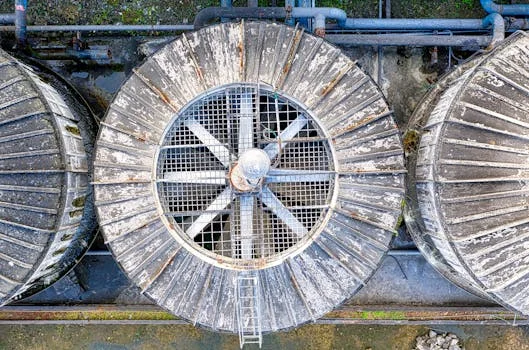
Ensuring that a compact sewage treatment unit consistently meets local and international discharge standards is paramount for operational legality and environmental protection. Globally, systems must adhere to diverse regulatory frameworks. The EU Urban Waste Water Directive 91/271/EEC mandates effluent quality of BOD ≤25 mg/L and TSS ≤35 mg/L for discharges into sensitive areas. In China, the GB 18918-2002 standard for municipal wastewater treatment plants sets stringent limits, with Class 1A requiring COD ≤50 mg/L and NH₄-N ≤5 mg/L. The US EPA’s National Pollutant Discharge Elimination System (NPDES) permits vary significantly by state and receiving water body but generally impose similar or stricter limits. For applications involving wastewater reuse, more rigorous standards apply. China’s GB/T 18920-2020 specifies quality for urban miscellaneous water use, while WHO Guidelines for Drinking-water Quality inform indirect potable reuse. Industrial applications have their own specific benchmarks; for example, textile wastewater often requires COD ≤100 mg/L, food processing wastewater BOD ≤30 mg/L, and pharmaceutical wastewater TOC ≤5 mg/L.
MBR (Membrane Bioreactor) systems are particularly adept at achieving these stringent discharge and reuse standards, consistently producing effluent with less than 1 mg/L TSS and less than 5 mg/L BOD. This high-quality output is largely due to the ultrafiltration capabilities of the membranes. Further insights into how flat sheet MBR membranes achieve near-reuse-quality effluent are available. Permitting processes for compact units can be streamlined; these systems often qualify for 'decentralized treatment' exemptions or simplified procedures, potentially reducing overall permitting time by up to 50% compared to large-scale, conventional plants.
Frequently Asked Questions
What is the typical lifespan of a compact sewage treatment unit?
A well-maintained compact sewage treatment unit, especially models like the WSZ series underground integrated sewage treatment plant, typically has a design life of 15-20 years for its main structural components. Mechanical and electrical parts usually require replacement or major overhaul every 5-10 years, depending on usage and maintenance frequency.
Can compact units treat industrial wastewater?
Yes, many compact units are designed to treat specific industrial wastewaters, provided the influent characteristics are within the system's design parameters. For complex industrial streams, an integrated MBR membrane bioreactor system or a customized solution with pre-treatment may be necessary to meet stringent discharge standards.
How much space does a 100 m³/day compact sewage treatment unit require?
A 100 m³/day compact sewage treatment unit, when containerized, can fit within a standard 20-foot ISO container footprint of approximately 2.5 m x 6 m. Underground systems require no surface footprint, making them ideal for space-constrained sites with aesthetic requirements.
What are the primary operational costs for a compact STP?
The primary operational costs for a compact STP include energy consumption (typically 40% of OPEX), chemical reagents, sludge disposal, and routine maintenance. Labor costs are significantly reduced due to high levels of automation and remote monitoring capabilities.
Do compact units require constant supervision?
No, modern compact sewage treatment units feature advanced PLC control systems and remote monitoring, significantly reducing the need for constant on-site supervision. Daily operational checks typically take less than an hour, freeing up personnel for other tasks.