
A secondary clarifier is a gravity sedimentation tank that separates biological floc (activated sludge) from treated wastewater after biological treatment, achieving 95-99% total suspended solids (TSS) removal. Clarifier data efficiency mechanics performance real operating ranges include surface loading rates of 20-40 m³/m²·h and hydraulic retention times of 2-4 hours. Clarified water exits via peripheral weirs while floc settles under Stokes' Law, driven by particle size, density, and water viscosity, typically yielding effluent with <30 mg/L TSS.
Clarifier Data Efficiency Mechanics Performance Real: How Secondary Clarifiers Work
A secondary clarifier works by gravity sedimentation after biological treatment. Mixed liquor enters a quiescent tank where biological floc settles under Stokes' Law. Clarified water exits over peripheral weirs while settled sludge thickens in the compression zone. Typical systems remove 95-99% TSS at 20-40 m³/m²·h surface loading and 2-4 hour retention, producing effluent below 30 mg/L TSS.
68% of NPDES permit violations in 2023 were due to TSS exceedances, often linked to secondary clarifier performance (source: EPA NPDES Annual Report 2023). One upgraded municipal plant saw effluent TSS jump from 25 mg/L to 120 mg/L, triggering permit risk and fines. Cloudy effluent, a rising sludge blanket, sludge bulking, and unstable RAS concentrations usually signal the same root issue: weak coupling between upstream biology and clarifier hydraulics.
Sedimentation Mechanics: How Biological Floc Settles
Biological floc in a secondary clarifier settles mainly by Stokes' Law for a spherical particle in a fluid. The relation is V = (g * (ρₚ - ρₗ) * d²) / (18 * μ). Here V is settling velocity (m/s), g is 9.81 m/s², ρₚ is floc density (about 1.02-1.05 g/cm³), ρₗ is liquid density (about 1.0 g/cm³), d is floc diameter (50-500 μm), and μ is viscosity (about 1.0 cP or 0.001 Pa·s at 20°C). Changes in floc density or size shift settling performance quickly.
Floc size, often measured by laser diffraction, controls the d² term, so larger floc settles faster. Filamentous organisms or trapped gas bubbles can lower density and slow settling. Zeta potential typically sits near -15 to -30 mV; a less negative value usually means better aggregation. Well-operated systems show settling velocities of 0.5-3.0 m/h (per Water Research 2022, DOI:10.1016/j.watres.2022.118456).
Four settling zones form inside the tank. The clear water zone holds minimal solids for effluent collection. The hindered settling zone slows collective descent as particles interact. The transition zone raises solids concentration toward compression. The compression zone compacts sludge under its own weight. Adequate volume and time in each zone protect removal and thickening.
| Parameter | Typical Value/Range | Impact on Settling |
|---|---|---|
| Floc Density (ρₚ) | 1.02 - 1.05 g/cm³ | Higher density = Faster settling |
| Water Density (ρₗ) | ~1.0 g/cm³ (at 20°C) | Density difference drives settling |
| Floc Diameter (d) | 50 - 500 μm | Larger diameter (squared) = Significantly faster settling |
| Water Viscosity (μ) | ~1.0 cP (0.001 Pa·s at 20°C) | Lower viscosity = Faster settling (temperature dependent) |
| Settling Velocity (V) | 0.5 - 3.0 m/h | Direct measure of clarifier efficiency |
Secondary Clarifier Design Parameters for Stable Effluent
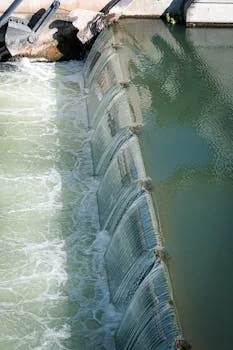
Surface loading rate (overflow rate) typically runs 20-40 m³/m²·h for municipal duty. High FOG or heavy-metal industrial streams often need 15-25 m³/m²·h to limit solids carryover. Solids loading rate usually sits at 3-6 kg/m²·h, and becomes critical when MLSS exceeds 3,000 mg/L. Exceeding that band can lift the sludge blanket and spike effluent TSS.
Hydraulic retention time is generally 2-4 hours. Cold climates or low-density floc may need up to 6 hours. Keep sludge blanket depth near 0.5-1.5 m with a sludge judge or ultrasonic sensor. Weir loading of 125-250 m³/m·d avoids high near-weir velocities that entrain floc. RAS flow, set at 15-100% of influent, tracks SVI and MLSS to hold inventory. Capacity follows Q = A * SLR. Where footprint is tight, a High-Efficiency Sedimentation Tank (Lamella Clarifier) can support higher effective surface loading in less area.
| Parameter | Typical Range (Municipal) | Considerations for Industrial/Special Applications |
|---|---|---|
| Surface Loading Rate (SLR) | 20-40 m³/m²·h | 15-25 m³/m²·h for high FOG/heavy metals |
| Solids Loading Rate (SLR) | 3-6 kg/m²·h | Critical for MLSS >3,000 mg/L; adjust for specific sludge characteristics |
| Hydraulic Retention Time (HRT) | 2-4 hours | Longer (up to 6h) for cold climates, low-density floc |
| Sludge Blanket Depth | 0.5-1.5 m | Monitored daily; crucial for stable RAS and effluent quality |
| Weir Loading Rate | 125-250 m³/m·d | Higher rates risk short-circuiting and floc carryover |
| RAS Flow Rate | 15-100% of influent flow | Adjusted based on SVI and MLSS to maintain sludge inventory |
How Do You Select a Clarifier System for Industrial Wastewater?
Selection starts with site constraints, solids character, and flow variability. Circular tanks often cost about $1,200-$1,800/m² and use simpler rotating scrapers or suction manifolds. They can short-circuit in high-flow events when density currents bypass settling volume. Rectangular tanks follow plug-flow hydraulics, cut short-circuiting, and handle higher solids loads, but cost about $1,500-$2,200/m² (20-30% more) and need more land.
Circular units commonly reach 92-95% TSS removal. Rectangular units often reach 95-97% (per EPA 2023 benchmarks). Municipal plants with variable flows usually favor circular layouts for simpler maintenance. Pulp and paper or food plants with steady high solids often prefer rectangular basins. Compact industrial trains may also use lamella clarifier systems for compact secondary clarification when surface area is limited.
| Feature | Circular Clarifiers | Rectangular Clarifiers |
|---|---|---|
| Construction Cost | Lower ($1,200-$1,800/m²) | Higher ($1,500-$2,200/m²), 20-30% more |
| Flow Distribution | Prone to short-circuiting in high flows | Better, plug-flow hydraulics, less short-circuiting |
| Solids Loading Capacity | Moderate | Higher, more robust for heavy solids |
| Space Requirement | Compact for equivalent capacity | Requires more space |
| Sludge Removal | Easier (centralized scraper/suction) | More complex (chain and flight, multiple hoppers) |
| TSS Removal Efficiency | 92-95% (EPA 2023) | 95-97% (EPA 2023) |
| Typical Use-Case | Municipal plants with variable flows | Industrial plants with consistent high solids loading (e.g., pulp & paper, food processing) |
What Design Criteria Separate Primary and Secondary Clarifier Types?
Primary clarifiers remove settleable solids before biology, typically at 50-70% TSS removal. Secondary clarifier duty follows aeration and targets 95-99% removal of biological floc. Primary sludge is denser (3-6% solids). Secondary sludge is lighter (0.5-1.5% solids) and returns as RAS or moves to sludge dewatering solutions for secondary clarifier underflow. Match surface loading, solids loading, and weir rates to that duty before comparing tank shapes.
Troubleshooting Secondary Clarifier Problems
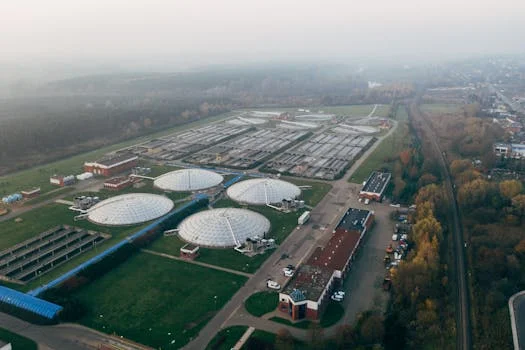
A rising sludge blanket often tracks high MLSS, low RAS flow, or filamentous bulking. Cloudy effluent points to pin floc, denitrification gas flotation, or hydraulic short-circuiting. Sludge bulking with high SVI usually starts in the aeration tank from low DO, nutrient imbalance, or a high F/M ratio. Measure SVI against an 80-150 mL/g target; values above 200 mL/g strongly indicate bulking.
Check MLSS against 2,000-4,000 mg/L and inspect floc under a microscope. For a rising blanket, raise RAS flow by 10-20%. For pin floc, dose PAC or ferric chloride through automated coagulant dosing for clarifier optimization. For bulking, lift aeration DO to 2-3 mg/L and rebalance nutrients. Weekly SVI tests, online turbidity, and quarterly RAS pump wear checks catch drift early.
| Symptom | Common Causes | Diagnostic Steps | Corrective Actions |
|---|---|---|---|
| Rising Sludge Blanket | High MLSS, low RAS flow, filamentous bulking, denitrification | Check MLSS, RAS flow, SVI; inspect for gas bubbles | Increase RAS flow (10-20%), reduce MLSS, address denitrification |
| Cloudy Effluent | Pin floc, denitrification, short-circuiting, poor flocculation | Microscope floc, dye test for short-circuiting, check DO in clarifier | Add coagulants (PAC/ferric chloride), improve upstream flocculation, address denitrification |
| Sludge Bulking | Low DO, nutrient imbalance, high F/M ratio, toxic shock | Measure SVI (target 80-150 mL/g), check DO in aeration, F/M ratio | Increase aeration DO (2-3 mg/L), optimize nutrient addition, reduce F/M |
| Foaming/Scum on Surface | Surfactants, Nocardia (filamentous bacteria), grease/oil | Microscope floc, check influent for FOG/detergents | Skim scum, adjust aeration, consider DAF systems for FOG removal before secondary clarification |
Optimizing Secondary Clarifier Performance: A 7-Step Checklist
Stable clarifier data efficiency mechanics performance real outcomes come from routine checks, not one-off fixes. Use the steps below to keep blanket depth, RAS, and effluent TSS inside design bands.
- Step 1: Monitor Sludge Blanket Depth Daily. Maintain the sludge blanket depth within the optimal range of 0.5-1.5 m. Use a sludge judge or continuous ultrasonic sensors to track changes, as a rising blanket indicates potential issues.
- Step 2: Adjust RAS Flow Weekly Based on SVI. Calculate and adjust the return activated sludge (RAS) flow rate to maintain the desired solids inventory in the aeration tank. A common calculation for RAS percentage is: RAS% = (SVI * MLSS) / 10,000, ensuring proper sludge return.
- Step 3: Test Effluent TSS Weekly. Regularly sample and test effluent total suspended solids (TSS) to ensure compliance with permit limits, typically targeting <30 mg/L. This provides a direct measure of clarifier efficiency.
- Step 4: Inspect Weirs Monthly for Uneven Flow Distribution. Uneven flow over the effluent weirs can cause short-circuiting and reduce effective settling area. Inspect weirs for levelness and blockages; use dye tests if short-circuiting is suspected to identify preferential flow paths.
- Step 5: Clean Clarifier Walls and Scrapers Quarterly. Biofilm buildup on clarifier walls and scraper mechanisms can reduce effective settling volume and impede sludge collection, potentially reducing efficiency by 10-15%. Regular cleaning is essential.
- Step 6: Calibrate Online Sensors Every 6 Months. Ensure accuracy of critical online sensors, such as turbidity, dissolved oxygen (DO), and sludge blanket detectors, through regular calibration to provide reliable data for operational decisions.
- Step 7: Review Aeration Tank Performance. The clarifier's performance is directly tied to the upstream biological process. Regularly review aeration tank parameters like dissolved oxygen (DO) levels and food-to-microorganism (F/M) ratio to ensure healthy floc formation and prevent clarifier overload from poorly settling sludge.
Frequently Asked Questions
Q: What’s the difference between a primary and secondary clarifier?
A: Primary clarifiers remove settleable solids (50-70% TSS removal) via gravity before biological treatment. Secondary clarifiers separate biological floc (95-99% TSS removal) after the aeration or biological reactor. Primary sludge is denser (3-6% solids). Secondary sludge is lighter (0.5-1.5% solids) and rich in microorganisms for RAS return or dewatering.
Q: How do I calculate the required clarifier surface area?
A: Use A = Q / SLR, with A in m², Q as peak flow in m³/h, and SLR in m/h. Municipal SLR often falls in 20-40 m/h. For Q = 500 m³/h and SLR = 30 m/h, A = 16.67 m², usually rounded to 17 m² or the next standard size.
Q: What causes denitrification in secondary clarifiers?
A: Nitrate from aeration meets low DO in the blanket. Facultative bacteria convert nitrate to nitrogen gas, which floats floc and raises effluent TSS. Keep DO >1 mg/L in the clarifier feed or add an upstream anoxic zone. Tight chemical control via flocculant dosing systems for improved clarifier performance can also stabilize floc quality.
Q: Can I use a secondary clarifier for industrial wastewater with high FOG?
A: Yes, but lower surface loading to 15-25 m/h and fit strong scum baffles and skimmers. Rectangular tanks often distribute flow better under high solids. Pretreat with a DAF system (like HydropureWater) for FOG removal before secondary clarification to remove 90%+ of FOG. See also DAF clarifier engineering specifications and selection criteria.
Q: How often should I desludge a secondary clarifier?
A: Base desludging on blanket depth and solids inventory, keeping the blanket near 0.5-1.5 m. Many plants continuously or intermittently pump 10-30% of clarifier volume daily as RAS and WAS. Weekly sludge-judge checks guide withdrawal before solids carry over.
Who This Is For / Who Should Look Elsewhere / Next Step
This guide is for plant managers, process engineers, and operators who must hold secondary clarifier TSS inside permit limits. It is less useful for teams seeking only primary clarification or FOG pretreatment without an activated-sludge train. If your next decision is sizing, retrofitting, or comparing lamella options against circular or rectangular tanks, share your flow, MLSS, and SVI data for a design review against the loading ranges above.