
Why the DAF-vs-Clarifier Question Matters for Gramercy Inorganic Chemicals Plants
The 12-mile stretch of the Mississippi River between Gramercy and St. James Parish concentrates some of the densest inorganic chemicals manufacturing capacity in North America: chlor-alkali cells producing chlorine, caustic, and hydrogen; sulfuric acid regeneration; phosphate fertilizer finishing; and titanium dioxide pigment plants. The wastewater signature from these operations is consistent and punishing — high total suspended solids (TSS), co-precipitated heavy metals, sulfate loads from acid neutralization, fluoride spikes from HF scrubbing, and pH swinging from <2 to >12 across batch discharges. Plants cannot route these streams to a municipal POTW without pretreatment, and 40 CFR 414 (the Inorganic Chemicals Manufacturing NESHAP) sets the daily-maximum and monthly-average limits on TSS, total suspended inorganics, and metals (including zinc, lead, nickel, and chromium) that any on-site primary clarifier must hit before discharge to the LDEQ-administered NPDES system. A comparable regional benchmark, the 2026 total nitrogen discharge standard guide, illustrates how nutrient and metals caps have tightened across the corridor, and primary clarification carries the first compliance load. The 2026-specific driver: rising LDEQ enforcement, Louisiana DEQ revisions, and reuse mandates are pushing plant engineers toward more compact primary treatment that can absorb shock loading from batch neutralization without sending a permit excursion downstream. For a parallel application in another chemical corridor, see this chemicals-wastewater DAF vs clarifier guide for Bishop.
How DAF and Clarifiers Actually Work in an Inorganic Chemicals Stream
Dissolved air flotation (DAF) is a buoyancy separation process, whereas conventional clarification relies on gravity settling. A pressurized recycle stream — typically 20–40% of the clarified effluent — is saturated with air at 4–6 bar in a saturation tank, then depressurized through a needle-valve or nozzle manifold into the main flotation cell. The pressure drop releases 30–50 micron micro-bubbles (per Clearwater Industries, 2025) that nucleate on conditioned flocs and lift them to a surface blanket skimmed by a chain-and-flight paddle or rotating scoop. The clarified underflow exits below the floating layer. A conventional clarifier relies on Stokes-law settling in a circular or rectangular basin, with hydraulic residence times of 2–4 hours and surface overflow rates of 1–2 m/h. A lamella clarifier stacks 55–60° inclined plates inside the basin to compress the effective settling distance, raising the surface loading rate to 20–40 m/h (per lamella clarifier product catalogs) without expanding the footprint. The mechanical contrast matters because inorganic floc behavior splits cleanly into two populations: metal hydroxides — Fe(OH)₃, Al(OH)₃, Ca(OH)₂ from pH-neutralized streams — form low-density, gelatinous flocs that float rather than settle, while gypsum (CaSO₄·2H₂O), calcium fluoride, and metal sulfides from fluoride scrubbers and acid neutralization form dense, crystalline sludges that gravity-separate readily. That density dichotomy is the single most important physical variable in choosing between flotation and settling.
Side-by-Side Performance: DAF vs Clarifier for Inorganic Wastewater
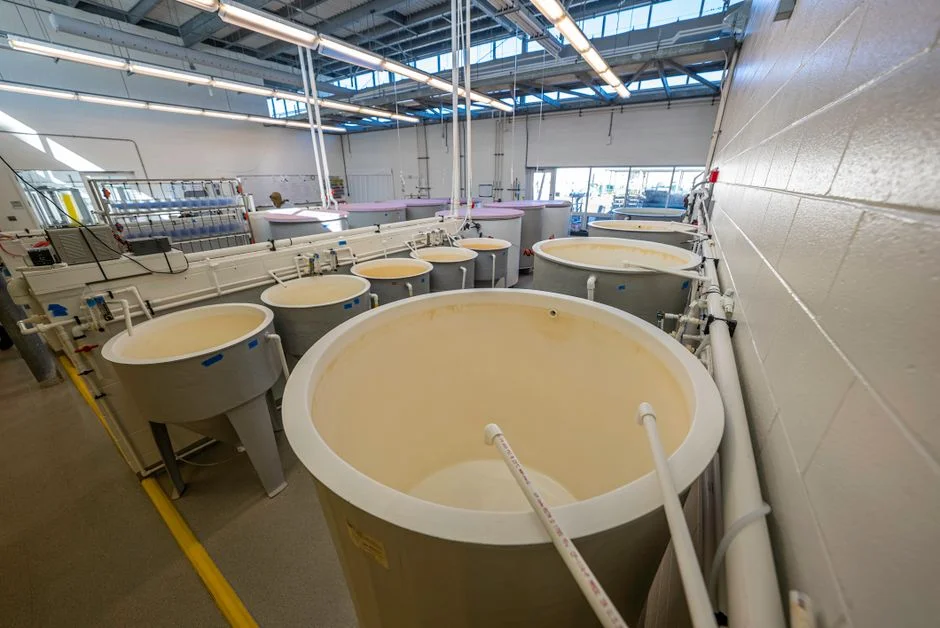
The table below provides a design-basis comparison for industrial wastewater treatment selection. TSS removal, footprint, and CAPEX figures are drawn from the DAF and lamella clarifier operating envelopes documented in the sources cited; the FOG and metals capture entries are drawn from DAF application literature (ProChem Water, 2025) and standard lamella clarifier references.
| Parameter | Dissolved Air Flotation (DAF) | Lamella / Conventional Clarifier |
|---|---|---|
| Typical TSS removal | 60–90% (one stage, coagulated) | 50–80% (lamella); 40–70% (conventional) |
| FOG / oil removal | 70–95% in same unit | Limited; requires separate skimmer |
| Heavy-metal co-precipitate capture | Strong on hydroxide flocs | Strong on sulfide / sulfate sludges |
| Footprint for 50 m³/h | ~⅓ of conventional clarifier | Lamella: ~½; conventional: 1× baseline |
| Hydraulic residence | 15–30 min | Lamella: 30–60 min; conventional: 2–4 h |
| Sludge solids content | 3–6% (float); can exceed 8% with thickener | 1–3% (settled); thickener / press typically required |
| CAPEX order of magnitude (50 m³/h) | 25–40% above lamella | Lamella: baseline; conventional: 60–90% of DAF |
| Dominant OPEX drivers | Recycle pump energy, polymer, compressor | Polymer, sludge hauling, scraper maintenance |
| Best-fit influent | Light flocs, oils, variable flow, batch shock | Dense inorganic sludges, steady flow, low OPEX priority |
Reference points: the DAF system covers 4–300 m³/h with 30–50 micron bubble generation (per Clearwater product documentation, 2025); the COMPACT DAF skid handles ≤66 GPM in a single pre-assembled unit (per Clearwater, 2025). On the clarifier side, lamella designs claim surface loadings of 20–40 m/h and sludge recirculation that can cut coagulant consumption by up to 30% (per lamella clarifier manufacturer catalogs). The decision rule embedded in the bottom row: DAF wins on light flocs, oils, and hydraulic variability; clarifier/lamella wins on dense inorganic sludges, low chemical cost, and minimum OPEX.
Sizing, Chemistry, and Hydraulic Design for a Gramercy Inorganic Plant
DAF sizing for an inorganic stream is driven by three specific ratios. Hydraulic residence in the flotation cell should run 15–30 minutes at average flow, extending toward 30 minutes if the incoming TSS exceeds 1,500 mg/L. The recycle ratio — pressurize-side flow divided by influent flow — should be set between 20% and 40%; lower values starve bubble flux on light hydroxide flocs, while higher values waste pumping energy. The air-to-solids ratio of 0.005–0.060 lb air per lb solids is the most sensitive tuning variable, and the only reliable way to fix it is jar testing on a representative grab. Clarifier sizing is simpler: conventional units run 1–2 m/h surface overflow with 2–4 h residence; lamella units run 20–40 m/h with 30–60 min residence. For inorganic grit service, specify a sludge-scraper torque rated at least 1.5× the standard municipal value, and include a scum baffle in front of the effluent weir to keep floating debris off the discharge. Chemical conditioning sits ahead of either unit. Coagulation with ferric chloride or aluminum sulfate (per ProChem Water, 2025) at 50–150 mg/L is typical, followed by anionic flocculant at 0.5–2 mg/L and pH adjustment to 7–9 with NaOH or lime. The flash-mix stage uses a flocculation tube — a serpentine pipe providing 15–45 seconds of contact (per Clearwater, 2025) — and is the right place to install an automatic chemical dosing system tied to a pH sensor and a streaming-current probe. Jar testing on a 1-L, six-paddle gang stirrer remains the only defensible basis for the final dose numbers in a design basis memo.
2026 Cost, Footprint, and Compliance Comparison
Procurement costs for a 50 m³/h reference plant — a flow rate common to mid-scale chlor-alkali and fertilizer operations in the Gramercy corridor — vary based on stainless-steel selection, explosion-proofing, and Louisiana site work. The table below presents a relative comparison based on documented engineering sources.
| Metric (50 m³/h reference) | DAF | Lamella Clarifier | Conventional Clarifier |
|---|---|---|---|
| Equipment CAPEX (relative) | 1.25–1.40× baseline | 1.00× baseline | 0.60–0.90× baseline |
| Civil / footprint area | ~20–30 m² (skid + tank) | ~40–60 m² (inclined plates) | ~120–180 m² (open basin) |
| Installed electrical load | ~12–18 kW (recycle, compressor, skimmer) | ~4–7 kW (scraper, pump) | ~5–9 kW (scraper, pump) |
| Sludge handling load | 3–6% float (lower hauling cost) | 1–3% (thickener / press usually added) | 1–3% (thickener / press usually added) |
| Compliance margin under shock load | High (hydraulic resilience) | Moderate | Low (large residence amplifies upset) |
The 25–40% CAPEX premium for DAF over a lamella clarifier at the same flow is consistently offset over a 3–5 year horizon by civil savings (a high-efficiency lamella clarifier still requires basin excavation), reduced sludge-hauling cost from a thicker float, and lower chemical consumption on variable feeds. Both technologies can meet 40 CFR 414 daily-max and monthly-average TSS and metals limits on a well-conditioned inorganic stream, but DAF's short hydraulic residence makes it materially more stable under the batch neutralization surges that dominate chlor-alkali and acid plant operations—a material reduction in NPDES excursion risk under 2026 enforcement.
Which Should Your Gramercy Plant Choose? A 4-Question Decision Framework
The following four questions help determine the appropriate technology based on your specific influent profile. Each maps to a primary mechanism, not a brand preference.
- Is your dominant suspended solid light or dense? Light flocs — metal hydroxides, pigment fines, latex carryover — point to DAF because they float before they settle. Dense sludges — gypsum from sulfuric acid neutralization, calcium fluoride from HF scrubbing, metal sulfides from precipitation — point to a lamella or conventional clarifier because gravity does the work for free.
- Do you also need to remove oils, FOG, or floatable organics in the same unit? If yes, DAF handles both in a single cell. A clarifier needs a separate API separator or scum system upstream.
- Is footprint constrained by existing civil works or a tight pipe rack? A DAF system or a packaged lamella unit will fit where a conventional circular clarifier will not.
- Is your flow highly variable from batch discharges? DAF's 15–30 minute residence absorbs the spike; a conventional clarifier's 2–4 hour residence propagates it. Steady-state flow with a tight OPEX target favors lamella for lowest chemical and energy cost per cubic meter.
If three of four answers point to DAF, specify DAF. If three point to clarifier, specify lamella over conventional. If the answer split is even, default to DAF for Gramercy-specific compliance margin. For a parallel case in another chemical corridor, see this Morristown chemicals wastewater comparison. Downstream of either primary unit, dewatering the resulting sludge through a plate-frame filter press brings the cake to 25–35% dry solids for landfill or off-site metals recovery.
Frequently Asked Questions
What TSS removal can a DAF realistically hit on a Gramercy inorganic chemicals stream?
On a well-conditioned inorganic stream, a single-stage DAF removes 60–90% TSS, with 30–50 micron micro-bubbles (per Clearwater Industries, 2025) attaching to metal-hydroxide flocs efficiently. Performance drops below 60% if coagulant dose, pH, or air-to-solids ratio
Frequently Asked Questions
Should an inorganic chemicals plant use DAF or a clarifier for primary treatment?
The choice depends primarily on the density and settling velocity of the inorganic solids. Dissolved Air Flotation (DAF) is superior when dealing with light, hydrophobic, or oil-laden particles that have a specific gravity near or below 1.0, as these often fail to settle effectively in gravity-based systems. Conversely, a conventional clarifier is more cost-effective for heavy inorganic precipitates, such as metal hydroxides or carbonates, which exhibit high settling velocities and require minimal chemical conditioning to reach a stable sludge blanket.
What is 40 CFR 414 and how does it affect DAF vs clarifier selection?
40 CFR 414 establishes the Organic Chemicals, Plastics, and Synthetic Fibers (OCPSF) effluent guidelines, which dictate stringent limits on pollutants such as Total Suspended Solids (TSS), BOD, and specific priority metals. Because these regulations mandate strict compliance at the point of discharge, the selection process must prioritize the technology capable of consistently meeting daily maximum and monthly average concentrations. If the plant's inorganic waste stream contains co-precipitated organic compounds or emulsified oils regulated under these guidelines, DAF is often necessary to achieve the lower effluent TSS levels required by federal standards compared to traditional clarifiers.
How much TSS can a DAF remove in an inorganic chemicals wastewater stream?
When properly optimized with hydraulic loading rates between 1.0 and 3.0 gallons per minute per square foot, a DAF system can achieve TSS removal efficiencies ranging from 80% to 95%. Performance is highly dependent on the air-to-solids ratio, typically maintained between 0.01 and 0.05 ml of air per mg of solids, to ensure adequate micro-bubble attachment to the inorganic flocs.
Is a lamella clarifier cheaper than DAF for a chlor-alkali plant?
A lamella clarifier generally offers lower capital and operational expenditures for chlor-alkali facilities characterized by high-density brine sludge or mercury-bearing precipitates. Because lamella units utilize inclined plates to increase the effective settling area without increasing the footprint, they avoid the high electrical costs associated with air saturation pumps and compressors required for DAF operation. However, if the wastewater contains significant suspended light solids or carryover from brine purification, the total cost of ownership for a DAF may be offset by reduced downstream filtration maintenance.
What coagulant and flocculant work best with DAF for metal-bearing wastewater?
For metal-bearing wastewater, inorganic coagulants such as Ferric Chloride or Aluminum Sulfate are typically preferred for their ability to neutralize the surface charge of colloidal particles at an optimal pH range of 5.5 to 8.5. This is followed by the addition of a high-molecular-weight, medium-to-high charge density anionic polyacrylamide flocculant. The combination creates large, robust flocs that exhibit excellent buoyancy characteristics when subjected to the micro-bubble injection process in the DAF contact zone.