
Hamburg Food & Beverage Plants in 2026: Why the DAF-vs-Clarifier Question Matters Now
For most Hamburg, NY food and beverage plants in 2026, a DAF system is the right primary clarifier: it removes 92-97% of TSS and more than 95% of FOG in 20-30 minutes using 10-100 µm microbubbles, versus a lamella clarifier's gravity settle which only suits low-FOG, low-fat streams. Choose a lamella clarifier instead only when FOG is consistently under ~50 mg/L, peak flow exceeds 300 m³/h, and chemical dosing is impractical.
Hamburg sits inside the Buffalo-Niagara food processing corridor, where WNY dairy plants, frozen-food manufacturers, and beverage bottlers discharge to the Buffalo Sewer Authority under NYSDEC SPDES permits mirrored from federal limits. EPA 40 CFR Part 405 caps dairy processing TSS at <30 mg/L (per EPA 40 CFR Part 405) and FOG discharge at <15 mg/L, with subcategory limits for meat, poultry, and grain processors that are equally strict. A typical Hamburg dairy or cheese line generates 800-1,200 mg/L FOG during a CIP cycle, which is three orders of magnitude above the discharge trigger. Plants that miss the cap pay surcharges in the range of $0.20-0.45 per kg of excess TSS/FOG, and a single quarterly exceedance can erase a plant's compliance margin. Cold Lake Erie winter influent, often below 10°C, actually helps: colder water holds more dissolved air at the same 4-6 bar saturator pressure, which slightly improves microbubble yield for a DAF system over the December-March window. That single fact is why the DAF-vs-clarifier question is not abstract for a Hamburg buyer; it is the difference between a 2-year payback and a 5-year permit fight.
How DAF and Clarifiers Actually Separate the Same Particles
DAF and gravity clarifiers see the same wastewater, but they exploit opposite physics. A DAF system pressurizes 20-40% recycle flow at 4-6 bar inside a saturator vessel, dissolving 70-100 mg/L of air, then releases that "white water" into the flotation tank at atmospheric pressure. The pressure drop flashes a cloud of 10-100 µm microbubbles that collide with suspended solids, oil droplets, and flocculated particles, attaching preferentially to hydrophobic FOG and proteins. The bubble-particle aggregate rises at 5-15 m/h (per S4), forming a 0.3-0.6 m thick floating sludge blanket that a mechanical skimmer removes at 3-5% dry solids. Total flotation-zone residence time is 20-30 minutes.
A lamella clarifier, including the HydropureWater lamella clarifier, does the opposite. Inclined plates at 55-60° from horizontal multiply the effective settling area so the unit can run at 20-40 m/h surface loading rate. Heavier suspended solids slide down the plates and consolidate on the tank floor; clarified water rises through the plate pack. Residence time runs 2-4 hours, and sludge reaches only 1-2% dry solids because the blanket is diluted by continuous underflow. FOG, with a specific gravity around 0.85-0.92, is lighter than water and physically cannot be settled by gravity alone. Without chemical aids and a long skimming zone, much of the FOG either escapes with the effluent or forms a recalcitrant surface layer that re-entrains during peak flow. That is the physical reason the same influent that a DAF strips to <30 mg/L TSS and <15 mg/L FOG will still show 100-200 mg/L FOG after a well-designed clarifier. DAF's buoyancy vector is the only mechanism that lifts low-density contaminants as effectively as it lifts heavy ones.
Influent Profile in Hamburg F&B Plants: Where Each Technology Wins
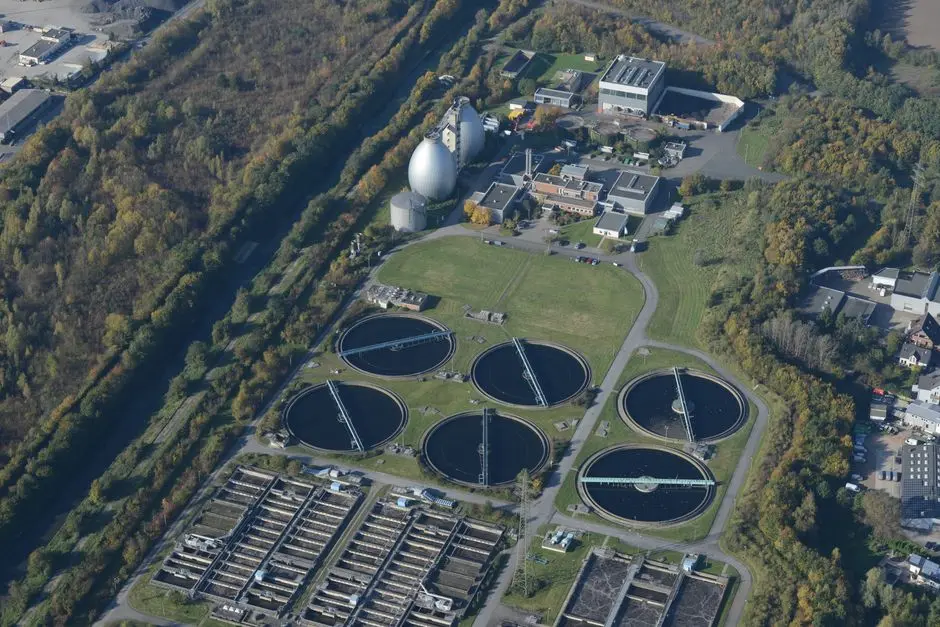
Generic food-processing numbers run 500-5,000 mg/L TSS and 200-2,000 mg/L FOG, but Hamburg's sub-segments cluster tighter. WNY cheese and yogurt lines sit in the 800-1,200 mg/L FOG band during whey separation and CIP, which is firmly DAF territory. Meat and protein-heavy streams in the Buffalo-Niagara corridor carry emulsified blood and soluble proteins that need coagulant (PAC 50-200 mg/L) plus polymer (1-5 mg/L) to floc before either technology can work; once flocced, DAF still wins on FOG and sludge dryness. Beverage bottling, including the soft-drink and iced-tea lines near the I-90 corridor, is the rare case where a lamella clarifier can hold its own: high flow, low TSS, FOG under ~50 mg/L, and the suspended material is mostly inorganic label adhesive and wash-water grit. Root-vegetable wash water from frozen-french-fry operations is the other narrow case where a clarifier can outperform a DAF on cost, because the contaminant is dense inorganic soil, not floatable organic.
| Sub-segment (Hamburg, NY) | Typical TSS (mg/L) | Typical FOG (mg/L) | Flow variability | Recommended primary |
|---|---|---|---|---|
| WNY dairy / cheese | 800-1,800 | 800-1,200 | High (CIP spikes) | DAF with PAC + polymer |
| Meat / protein processing | 1,200-3,000 | 400-1,500 | High (batch) | DAF, coagulated |
| Frozen-food wash water | 500-2,000 (mostly inorganic) | <100 | Moderate | Lamella clarifier (cost win) |
| Beverage bottling | 100-400 | <50 | Low-moderate | Lamella clarifier (low-FOG niche) |
| Citrus / soft-drink | 300-900 | <50 | Seasonal pH swings | DAF if pH is unstable; clarifier if steady |
| Brewery / distillery | 600-1,500 | 100-400 | High (campaign) | DAF for FOG + variable flow |
The table collapses to a simple rule: when FOG exceeds 200 mg/L, DAF wins on removal and on downstream dewatering load; when FOG stays below 50 mg/L and the suspended load is mostly inorganic, a lamella clarifier is the lower-CAPEX answer.
Side-by-Side DAF vs Clarifier: The 2026 Parameter Table
This is the artifact a Hamburg plant engineer can paste into a procurement memo. Numbers are anchored to manufacturer field data and the engineering specs published in 2025-2026 (HydropureWater field data, 2026).
| Parameter | DAF | Lamella Clarifier |
|---|---|---|
| TSS removal | 92-97% | 50-70% (no polymer); 70-85% with polymer aid |
| FOG removal | >95% | <30% unaided; 50-60% with chemical aid + long skimming |
| Footprint | 0.5-2 m² per m³/h | 0.2-0.5 m² per m³/h (but needs taller hydraulic profile) |
| Hydraulic loading | 2-10 m/h standard, up to 25-40 m/h high-rate | 20-40 m/h on plate area |
| Retention time | 20-30 min | 2-4 hr |
| Sludge dryness | 3-5% DS | 1-2% DS |
| Sludge volume index | ~25% of clarifier volume for same load | Baseline |
| Energy use | $0.10-$0.30 per m³ treated (saturator pump dominant) | $0.03-$0.08 per m³ treated (no saturator) |
| Chemical demand | PAC 50-200 mg/L + polymer 1-5 mg/L | Low; polymer optional |
| OPEX split | Chemicals 50-60%, energy 20-30%, maintenance 5-10% | Sludge hauling 60-70%, energy 20-30% |
| CAPEX band (2026) | $50,000 (4 m³/h) to $500,000 (300 m³/h); civil works +20-30% | 30-50% lower CAPEX at same flow, but narrows once dosing + dewatering are added |
| Cold-weather operation | Sub-10°C influent improves dissolved-air yield | Viscosity rise slows settling; FOG escapes as a cold skin layer |
| Best fit | FOG >200 mg/L, variable flow, biological pretreatment upstream | FOG <50 mg/L, mostly inorganic TSS, steady high flow >300 m³/h |
The clearest inflection point is FOG. DAF exceeds 95% removal at FOG loadings where a clarifier still passes a third of the influent grease downstream, and a Hamburg plant's NYSDEC SPDES permit fines start exactly there. Pair the table with a PLC-controlled coagulant and polymer dosing skid sized to the actual jar-test curve; the DAF removal numbers above assume that conditioning is in place.
2026 CAPEX, OPEX, and Payback for a Hamburg F&B Plant
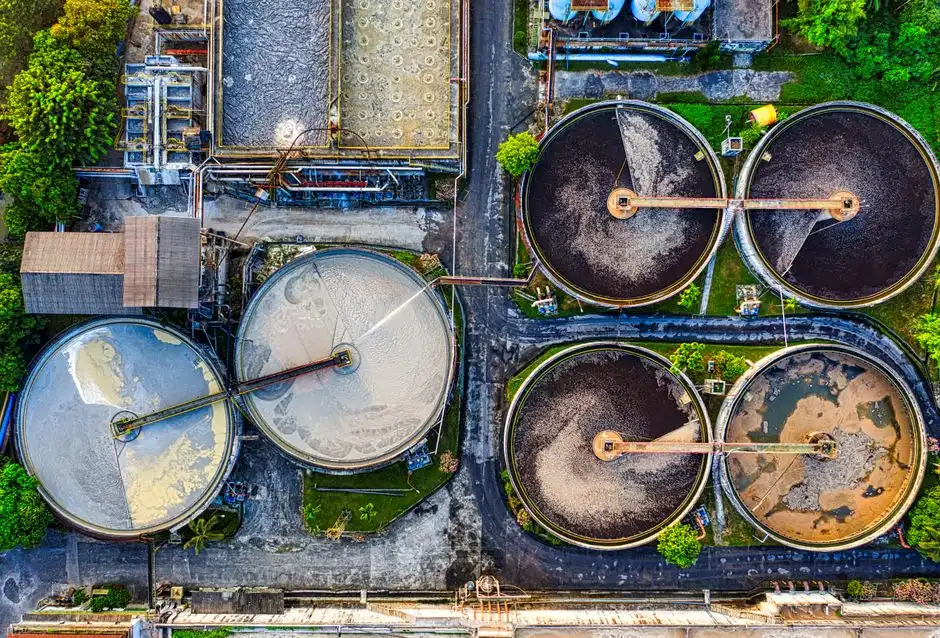
2025 baseline CAPEX for a turnkey DAF system runs $50,000 for a 4 m³/h unit to $500,000 for a 300 m³/h fully automated installation, with civil works and electrical adding another 20-30% (HydropureWater field data, 2026). A comparable lamella clarifier typically lands 30-50% below the DAF CAPEX at the same forward flow, but the gap closes once you add a polymer dosing skid, the dewatering press, and the larger sludge-haul fleet that 1-2% solids demands. OPEX is where the two technologies diverge in ways that matter to a Hamburg CFO. DAF OPEX is dominated by chemicals, which are 50-60% of the annual bill, balanced by sludge disposal costs that are roughly a quarter of what a clarifier incurs because DAF sludge exits at 3-5% DS versus 1-2% for settled sludge (per S3). A 50 m³/h cheese plant facing $120,000 in annual FOG/TSS surcharges can clear a $150,000 DAF in 2.1 years, exactly the published case. For comparison, the same plant on a clarifier avoids the chemical line but spends the saving on sludge hauling within 18 months.
Retrofit is the path many WNY plants take once permit renewal forces a FOG cap they cannot meet on legacy equipment. Adding a DAF stage in front of, or after, an existing clarifier is mechanically straightforward: equalization, flocculator, DAF skid, then a plate and frame filter press for the combined sludge. The full mechanical and controls scope is covered in the DAF retrofit and upgrade guide, and the broader pretreatment design context lives in the food processing DAF engineering guide. A defensible decision rule for 2026: if your average FOG exceeds 150 mg/L or your peak shift exceeds 400 mg/L, DAF pays back inside three years even at current 7-8% capital cost; below those thresholds and at flows above 300 m³/h, run a clarifier and revisit only if the permit tightens.
When a Hamburg Plant Should Still Choose a Clarifier
Honest counter-recommendation, because the right answer is not always DAF. A lamella clarifier is the correct primary when FOG stays consistently under ~50 mg/L, the suspended load is mostly inorganic (think root-vegetable wash water or bottling rinses), and chemical dosing is restricted by food-safety policy or permit conditions. It is also the right call at very high flows above 300 m³/h with steady, low-strength load, where the 20-40 m/h surface loading rate keeps the footprint manageable and a clarifier's lower energy cost, $0.03-$0.08 per m³, beats DAF's $0.10-$0.30 per m³ on a thin margin. Finally, if a plant already operates an underused clarifier that can be optimized with plate-pack retrofit and a small polymer system, replacement is usually the wrong capital move. In that case a HydropureWater lamella clarifier rebuild is the right CAPEX, with a DAF reserved for any future FOG-tightening permit cycle.
Frequently Asked Questions
What is the smallest flow rate where DAF still beats a clarifier for a Hamburg F&B plant?
Below ~10 m³/h, the CAPEX-per-m³ advantage shifts toward packaged lamella clarifiers because the DAF saturator, skimmer, and dosing skid are fixed-cost items. DAF pulls ahead once flow exceeds ~15 m³/h and FOG routinely exceeds 100 mg/L, which is the typical Hamburg dairy and frozen-food threshold.
Can I retrofit a DAF in front of an existing clarifier without replacing it?
Yes. A DAF stage upstream of an existing clarifier acts as a FOG and TSS polisher, and the existing clarifier then handles the residual load at much lower surface loading. Most retrofits in WNY dairies reuse the equalization tank and add a flocculator, DAF skid, and a sludge press. The mechanical and controls sequence is mapped in the DAF retrofit and upgrade guide.
Does cold Western New York winter influent help or hurt DAF performance?
It helps modestly. Henry's-law solubility rises as water temperature drops, so at sub-10°C influent the saturator at 4-6 bar dissolves 5-10% more air per unit of recycle flow, which slightly improves microbubble yield. The downside is that viscosity rises, slowing bubble rise velocity by ~15% at 5°C versus 20°C; net effect on TSS removal at design hydraulic loading is typically within ±2 percentage points.
What removal numbers should I expect from a properly sized DAF on a Hamburg dairy or cheese line?
At design loading with PAC 50-200 mg/L and polymer 1-5 mg/L, a DAF system hits 92-97% TSS removal and >95% FOG removal (per EPA-aligned field data, 2026), typically landing the effluent at <30 mg/L TSS and <15 mg/L FOG, which satisfies EPA 40 CFR Part 405 subcategory limits for dairy processing. Jar testing on the actual CIP stream is still required to set the dose curve.