Why Saint Clair Chemical Plants Face a Real DAF-vs-Clarifier Decision in 2026
For Saint Clair chemical plants, a Dissolved Air Flotation (DAF) system is the right primary unit when the stream contains free or emulsified oils, FOG, or light colloids, while a clarifier — especially a lamella plate unit — is the better fit when the wastewater is dominated by heavy settleable solids, metal hydroxides, or salt slurries. Under 40 CFR Part 433 Organic Chemicals limits, most Saint Clair plants pair a DAF or clarifier with chemical conditioning, since field data shows DAF removes 95% of FOG versus 70% for clarifiers, while clarifiers cut heavy sediment by 90% at lower operating cost. A DAF or clarifier for chemicals wastewater in Fredericksburg, US comparison reaches similar conclusions, but the Saint Clair decision carries an extra layer because of the local corridor's regulatory mix.
A DAF unit removes suspended solids, oils, and greases by attaching 10–100 micron microbubbles to contaminants and floating them to the surface, where a skimmer collects the concentrated float (per Komline product literature). A clarifier relies on gravity sedimentation: heavier particles settle to the bottom of a quiescent tank and are removed as underflow sludge, a configuration better suited to dense inorganic flocs and metal hydroxide precipitates (per Ecologix, 2026 update). Saint Clair Borough and the wider Schuylkill County chemical manufacturing corridor sit inside a documented polymer, intermediate, and specialty-chemicals cluster whose discharges are governed by 40 CFR Part 433 — the Organic Chemicals, Plastics, and Synthetic Fibers categorical pretreatment standard. The regulation sets numeric daily and monthly limits for organics, TSS, O&G, and select metals that POTWs enforce through local sewer-use ordinances, and those local limits frequently drive the technology choice more than raw removal efficiency does. A 2026-era decision therefore must weigh influent profile, CAPEX, OPEX, and POTW discharge limits together — not pick a unit on efficiency alone.
How DAF and Clarifiers Each Behave on Chemical Plant Wastewater
A DAF system pressurizes a recycle stream of clarified effluent to roughly 4–6 bar, saturates it with air, and then releases the pressure into the flotation cell, generating a dense cloud of 10–100 micron bubbles that attach to oils, FOG, and light colloids (per Komline). The buoyant aggregate rises in minutes; a mechanically driven skimmer removes the float layer to a discharge hopper, while clarified water exits under a baffle. A DAF system for FOG and light solids removal covers 4–300 m³/h across 13 standard models, which lines up with most mid-size chemical plant discharges in the Saint Clair corridor. RTW literature (2025) confirms that DAF delivers predictable performance under variable influent — a real advantage for plants running multiple product campaigns with shifting waste streams.
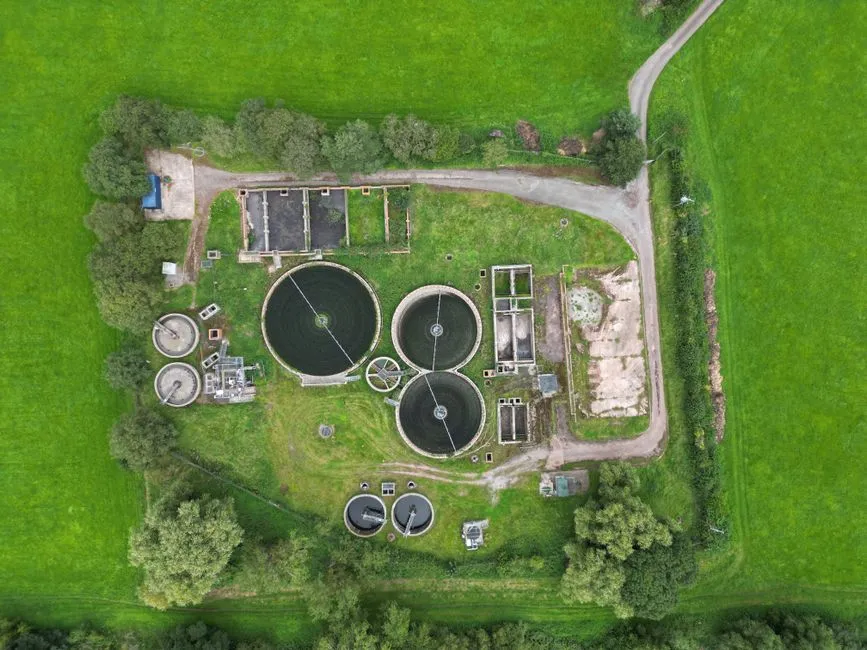
A clarifier is a gravity-sedimentation tank. Solids settle at a rate governed by Stokes' law; sludge is collected at the bottom by a rake or scraper mechanism, while clarified supernatant overflows a peripheral launder. Per Ecologix, a conventional clarifier hits 90% sediment removal on heavy mining-type waste; a lamella plate clarifier achieves comparable removal on a footprint up to 80% smaller by stacking inclined plates inside the tank, raising the effective surface-loading rate to 20–40 m/h. Dense brines, salt slurries, and metal hydroxide flocs — common in chlor-alkali, dye-intermediate, and inorganic-precipitation operations — settle cleanly in a clarifier but tend to foul DAF cells because the high dissolved-solids content interferes with bubble attachment. The opposite holds for organic-rich streams: solvents, plasticizers, polymer residues, and FOG from cleaning cycles do not settle well but float readily when conditioned and aerated.
Mixed streams are where the analysis gets more interesting. Ecologix's 2026 update flags hybrid trains — DAF primary for oil and FOG removal, followed by a clarifier for residual TSS polishing — as the standard configuration for complex chemical plant effluents. In every branch of the decision tree, chemical conditioning sits upstream of the physical separator. Coagulation and flocculation alter particle size, surface charge, and density, which is what actually determines whether DAF bubbles will attach or whether a clarifier sludge will settle cleanly (per EPA Process Design Manual for Suspended Solids Removal, 625/1-75-003a, Chapters 4 and 6). Bench-scale jar testing and, where budget allows, on-site pilot trials remain the only defensible pre-selection step because influent varies by product and by campaign.
Pair the separator with an automatic chemical dosing skid upstream of DAF or clarifier sized to the plant's peak flow and polymer demand.
DAF vs Clarifier for Chemicals Wastewater: 2026 Parameter Comparison
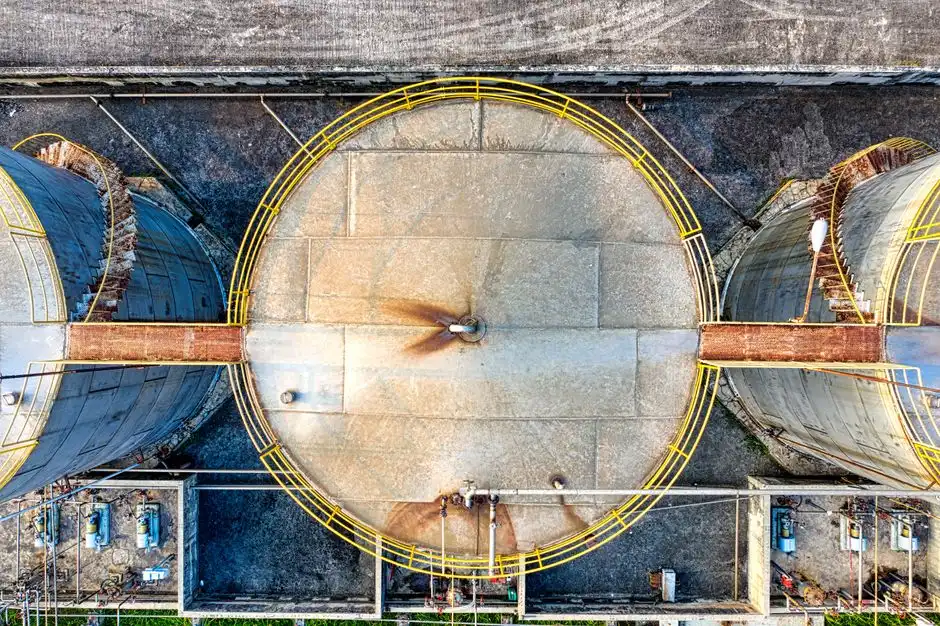
The table below consolidates the 2026-vintage operating parameters and removal efficiencies a Saint Clair engineer should compare. Removal values are anchored to published field results (Ecologix 2026, RTW 2025, HydropureWater catalog data).
| Parameter | Dissolved Air Flotation (DAF) | Conventional Clarifier | Lamella Plate Clarifier |
|---|---|---|---|
| Best-fit influent | Oils, FOG, light colloids, polymer residues | Heavy sediment, metal hydroxide flocs, salt slurries | High-rate inorganic streams with limited footprint |
| FOG / oil removal | ~95% (per Ecologix food-processing case) | ~70% (per Ecologix) | ~70–80% on free oil; not designed for emulsified FOG |
| TSS removal on heavy sediment | 80–95% on light/fine solids (per RTW) | ~90% on heavy sediment (per Ecologix mining case) | 85–95% on settleable TSS at 20–40 m/h surface loading |
| Hydraulic surface loading | 5–25 m/h across float cell | 1–3 m/h typical | 20–40 m/h (per HydropureWater catalog) |
| Recycle / air demand | 20–50% recycle ratio (per Komline); air dissolving system required | None | None |
| Footprint for ~50 m³/h | Compact skid; ~10–15 m² envelope | Large civil tank; ~80–120 m² | ~25–40 m² (per HydropureWater catalog) |
| Sludge consistency | Thicker float, 3–6% DS typical (per RTW) | Wetter underflow, 1–3% DS | Similar to conventional; 1.5–3% DS |
| Chemical conditioning need | Essential (coagulant + flocculant polymer) | Essential for sub-100 mg/L TSS targets | Essential; lamella cuts polymer use up to 30% (per HydropureWater field data, 2026) |
| Sensitivity to influent swings | More tolerant (per RTW 2025) | Less tolerant; upset events resuspend sludge | Less tolerant of hydraulic surges |
Read the table column-by-column against your Saint Clair influent profile. If FOG is the dominant load, DAF wins on removal efficiency. If heavy TSS and limited plot space are the constraints, a lamella clarifier for high-TSS chemical streams is the higher-rate, smaller-footprint choice.
Saint Clair Decision Matrix: Which Unit Fits Your Chemical Plant
Branch 1 — Choose DAF if the influent carries >100 mg/L FOG, free or emulsified oils, plasticizers, or polymer residues that resist settling. Saint Clair plants in plasticizer, resin, and intermediate-chemical production typically fall in this branch. Size to a DAF system for FOG and light solids removal with 20–50% recycle (per Komline) and confirm chemical conditioning through jar tests before finalizing the polymer dose.
Branch 2 — Choose a clarifier or lamella clarifier if the stream is dominated by heavy TSS, metal hydroxide flocs, or high-density inorganic salts and if the site can spare the civil footprint. Saint Clair chlor-alkali and inorganic-precipitation operations generally fall here. A lamella unit running 20–40 m/h surface loading matches DAF-class footprint at clarifier-class settling, and the polymer saving (up to 30% per HydropureWater field data, 2026) materially shifts the OPEX case.
Branch 3 — Choose a DAF-primary-plus-clarifier-polishing train for mixed streams where both FOG and heavy TSS exceed local POTW limits. Ecologix's 2026 update flags this hybrid as the standard configuration for complex chemical plant effluents. The DAF takes the oil and FOG load off the clarifier; the clarifier polishes residual TSS to meet the local limit. In every branch, sit an automatic chemical dosing skid upstream of DAF or clarifier sized to peak flow.
For downstream solids handling, a gravity thickener vs DAF thickener comparison is worth reading before you commit; the DAF float's higher dry-solids content (3–6% per RTW) changes the dewatering choice.
2026 CAPEX, OPEX, and Compliance Considerations for Saint Clair Plants
CAPEX in 2026 (USD, equipment + installation, ex-vat, per HydropureWater 2026 catalog bands and field data):
| System (50 m³/h reference flow) | CAPEX band (2026) | Footprint | Civil work | OPEX drivers |
|---|---|---|---|---|
| DAF (with recycle pump, air saturator, skimmer) | Higher mechanical CAPEX; civil work minimal | Compact, ~10–15 m² envelope | Low — skid-mountable | Compressed air, recycle pumping, polymer |
| Conventional clarifier | Lower mechanical CAPEX | Large, ~80–120 m² | High — large concrete tank | Rake torque, polymer |
| Lamella clarifier | Mid mechanical CAPEX; plate pack adds cost | ~25–40 m² | Moderate — smaller civil tank | Lower polymer vs conventional (per HydropureWater field data, 2026) |
| DAF + clarifier polishing train | Highest combined CAPEX | Combined envelope | Moderate | Air + recycle + polymer; lowest residual risk |
OPEX logic follows the EPA Process Design Manual Chapter 10 cost curves: DAF energy is dominated by the recycle pump and air compressor, while clarifier energy is dominated by the rake drive and any sludge pumping. Polymer dose typically drives the largest variable OPEX line for both, which is why a lamella clarifier's 30% lower polymer use (per HydropureWater field data, 2026) is worth pricing in. Compliance framing under 40 CFR Part 433 means the final effluent has to hit categorical limits for organics, O&G, and TSS plus any local POTW overlay for metals; both DAF and lamella clarifier can meet typical limits when properly sized and conditioned, so pilot data — not vendor claims — should drive the sizing decision. For downstream solids, route DAF float and clarifier sludge to a plate and frame filter press for DAF float and clarifier sludge; the thicker DAF float dewaters faster but both streams are well within press duty when polymer-conditioned.
A 3-Step Selection Checklist Before You Talk to a Vendor
- Pull a 7-day composite influent profile. Sample FOG, TSS, pH, conductivity, and metals across at least one full production campaign. Confirm 40 CFR Part 433 applicability and the local POTW discharge limits (O&G, TSS, metals) with the plant's industrial-waste coordinator before any vendor visit.
- Run jar tests, then a pilot if budget allows. Use EPA Process Design Manual Chapter 4 protocols to screen coagulants and flocculant polymers, then validate the winner on a DAF pilot (Komline rents pilots; equipment vendors can size from pilot data). Do not skip this step — chemical plant influent varies by product.
- Match the pilot winner to a standard model and request a compliance guarantee. Map the verified flow band to a DAF (4–300 m³/h) or a lamella clarifier, and require the vendor's performance guarantee to be tied to 40 CFR Part 433 categorical limits and the local POTW discharge permit — not a generic removal percentage. A wastewater treatment system sizing guide for industrial and municipal needs walkthrough helps frame the envelope before the meeting.
Frequently Asked Questions
What influent FOG level pushes Saint Clair plants toward DAF over a clarifier?
Once influent oil and grease routinely exceeds 100 mg/L, DAF's 95% removal (per Ecologix 2026) pulls well clear of a clarifier's 70% removal on the same stream, and the cost of failing a local POTW O&G limit is high enough that the DAF premium is defensible. Below ~50 mg/L FOG with heavy TSS, a clarifier or lamella clarifier is usually the lower-OPEX choice.
Can a DAF and a clarifier be used together on a chemical plant stream?
Yes. A DAF-primary-plus-clarifier-polishing train is a standard configuration for mixed chemical plant effluents (per Ecologix 2026). The DAF takes the FOG and light-colloid load, and the clarifier polishes residual TSS to meet the local POTW limit.
Does 40 CFR Part 433 require a specific technology?
No. 40 CFR Part 433 sets numeric effluent limits for the Organic Chemicals, Plastics, and Synthetic Fibers category, not a unit process. Both DAF and lamella clarifier qualify when properly sized and chemically conditioned; local POTW limits overlay the federal categorical standards.
How much chemical conditioning do Saint Clair chemical plants need upstream of a DAF or clarifier?
Significant. Coagulation and flocculation per EPA Process Design Manual Chapters 4 and 6 govern whether DAF bubbles attach and whether clarifier sludge settles cleanly. An automatic dosing skid sized to peak flow is standard practice, and polymer dose is usually the largest variable OPEX line on either unit.
What is the typical flow range a DAF covers, and how does it compare to a lamella clarifier?
The DAF line covers 4–300 m³/h across 13 standard models, with a 20–50% recycle ratio (per Komline) and surface loading of 5–25 m/h. A lamella clarifier runs at 20–40 m/h surface loading on a footprint up to 80% smaller than a conventional clarifier, making it the higher-rate, lower-footprint alternative for high-TSS chemical streams.