Why Greeneville Fabricated Metals Plants Are Re-asking the DAF vs Clarifier Question in 2026
Fabricated metals operations in Greeneville, TN — stamping, machining, and metal-finishing job shops discharging to the Greeneville Water & Light Commission WWTP under a local industrial pretreatment program — generate a wastewater signature that punishes a conventional clarifier: emulsified and free cutting and drawing oils, tramp oils from hydraulic systems, fine metal particles (Fe, Cu, Zn, occasional Pb and Cd from plated parts), and pH excursions from alkaline cleaners. Those streams fall under the U.S. EPA categorical standard for Metal Finishing at 40 CFR Part 433, which sets daily maximum limits on oil & grease, total metals (lead, cadmium, copper, nickel, zinc, total chromium), and pH (per 40 CFR 433.11 and 433.12). The categorical ceiling is the number that matters; local limits can be tighter.
Three forces are pushing the DAF vs clarifier question to the front of the engineering queue in 2026. First, the local FOG surcharge structure rewards lower oil & grease residuals on discharge, which a clarifier cannot reliably deliver when the oil is emulsified rather than free. Second, renewed EPA metals and PFAS scrutiny in 2025–2026 has increased the inspection weight on pretreatment compliance data, so a 50–70% TSS cut on a clarifier is no longer an acceptable margin against categorical metals limits. Third, energy and labor cost pressure penalizes oversized, underperforming clarifiers that hold 1–3 hours of flow in a quiescent tank while still leaving emulsified oil in the effluent. The decision is no longer "primary settling or fancy flotation" — it is "which unit reliably carries us under 40 CFR 433 on a worst-case shift."
How a DAF and a Gravity Clarifier Actually Treat Fabricated Metals Water
A DAF unit pressurizes a recycle stream of clarified effluent (typically 20–40% of forward flow) in an air saturation vessel, then releases that stream through a pressure-relief valve into the flotation cell. As the pressure drops, dissolved air comes out of solution as a cloud of fine bubbles — DAF Corp's Micro Bubble Generator is rated to produce 20–40 micron bubbles consistently with no coarse air, 24/7 (per DAF Corp). Those micro-bubbles attach to chemically conditioned oil droplets and fine solids, float the agglomerate to the surface, and a skimmer removes the scum. Total hydraulic residence time is roughly 3–5 minutes.
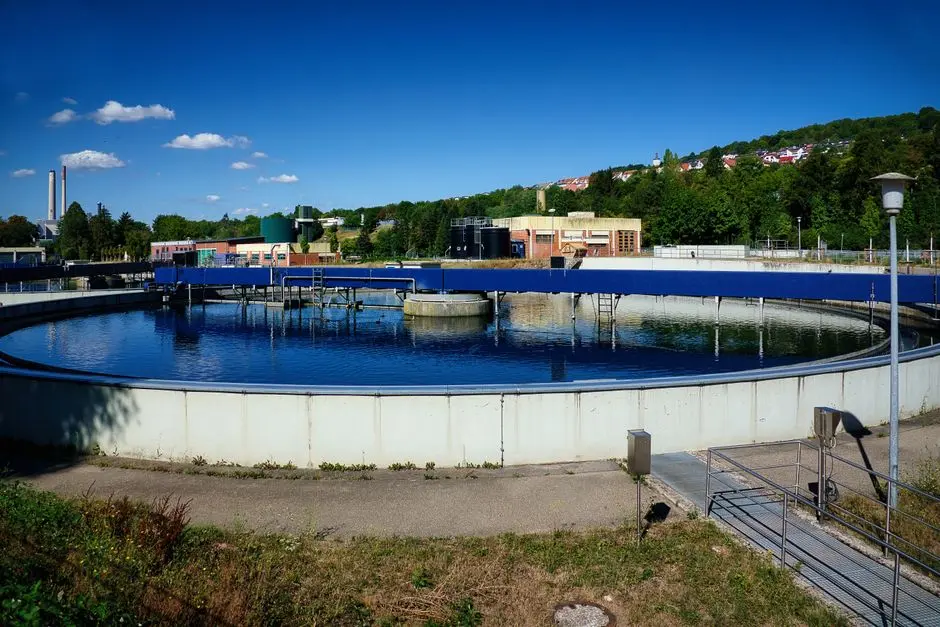
A conventional gravity clarifier does almost the opposite. Feed enters a quiescent tank, heavier metal fines settle under gravity over 1–3 hours, and clarified water overflows a weir. Oil removal is incidental: any free oil that rises to the surface can be skimmed, but chemically emulsified oil, tramp oil, and low-density fines largely pass through into the effluent. If a plant wants oil removal on a clarifier, it has to add a plate pack, a CPI separator, or a skimmer — and even then, performance on emulsified oil is poor compared with a properly conditioned DAF.
Sludge character is the other major difference. DAF Corp specifies a thickened float of 2–4% dry solids from its FC Maximizer and RC UniMax lines, which downstream dewatering equipment can handle directly. A clarifier underflow typically runs 0.5–1.5% dry solids — five to eight times more water per pound of dry cake, which shows up immediately in hauling and dewatering cost. DAF is the right tool for exactly the material a clarifier struggles with — free and emulsified oil, grease, fiber, and low-density solids that will not fall out of suspension under gravity (Spectrum Water, 2026).
DAF vs Clarifier for Fabricated Metals: 2026 Comparison Matrix
The table below consolidates the trade-offs a Greeneville plant engineer needs to put in front of a procurement committee. DAF numbers are drawn from DAF Corp, Spectrum Water, and ClearStream product data; clarifier numbers are stated as typical industry ranges because no single vendor dataset covers the full envelope.
| Parameter | Dissolved Air Flotation (DAF) | Conventional Gravity Clarifier |
|---|---|---|
| TSS removal rate | 85–98% (FC Maximizer 92–98%; RC UniMax 85–90%) | ~50–70% on the same feed (typical) |
| Oil & grease / FOG removal | High; meets 40 CFR 433 O&G with margin when chemistry is correct | Low–moderate on free oil; poor on emulsified oil unless CPI / plate pack added |
| Typical flow range | 48–11,000 gpm (skid 48–450 gpm; FC Maximizer up to 11,000 gpm) | Generally limited to a few hundred gpm before footprint explodes |
| Footprint (gpm per m²) | High throughput per unit area (3–5 min residence) | Low throughput per unit area (1–3 hr residence) |
| Sludge dryness | 2–4% dry solids (float) | 0.5–1.5% dry solids (underflow) |
| Capex class | Higher than a basic clarifier; gap narrows once chemistry, skimming, and a smaller building are included | Lower for the tank alone; rises when plates, oil skimmers, and equalization are added |
| Opex class | Lower on sludge disposal due to drier float; higher on coagulant + flocculant consumption | Higher on sludge hauling and any added plate-skim maintenance; no chemistry required |
| Retrofit ease | Skid-mounted units plug-and-play; rectangular DAFs retrofit into existing concrete basins (ClearStream) | New tank pours or existing tank repurposed; no moving parts to integrate |
| Suitability for emulsified oil | High — designed exactly for this | Low — relies on gravity and is defeated by emulsified oil |
| Chemistry dependency | High — requires matched coagulant + flocculant dosing | None for the basic unit |
The DAF column dominates on TSS, FOG, sludge dryness, and emulsified-oil capture — exactly the parameters that drive 40 CFR 433 compliance. The clarifier column only wins on simplicity, no-chemistry operation, and bare-tank capex, and it concedes everything else.
When a DAF Wins, When a Clarifier Is Enough, and When You Need Both
Pick a DAF when influent TSS is consistently above ~250 ppm, when emulsified oil is present in any meaningful concentration, when forward flow exceeds roughly 50 gpm, or when 40 CFR 433 limits must be met with margin on a worst-case shift. In practice, that describes the majority of Greeneville fabricated metals plants with mixed stamping, machining, and metal-finishing operations. The DAF replaces the primary clarifier in this case, and downstream equipment (filtration, biological, or recycle polish) operates on water that is already below categorical ceilings for TSS and FOG.
Pick a conventional or lamella clarifier when flow is low, oil content is essentially absent, the goal is bulk solids reduction ahead of biological or reuse treatment, or an existing tank can be repurposed cheaply. A lamella plate pack can lift a clarifier into the 70–80% TSS range in favorable settling conditions, but it still will not solve emulsified oil — that is the deal-breaker for any fabricated metals plant that runs cutting fluids or drawing compounds. For these narrow cases, a HydropureWater lamella clarifier can be a defensible primary step.
Use both when a clarifier acts as a pre-thickener for heavy grit and tramp metal, and a DAF polishes the oil and fine solids before discharge. This is common in larger stamping + machining plants where floor space allows two stages and where the grit load would otherwise shock the DAF's surface skimmer. ClearStream notes that rectangular DAFs retrofit into existing concrete basins, which matters for older Greeneville plants that do not want to pour new tanks (ClearStream, 2026). Placing a DAF ahead of biological treatment protects the biomass from oil smothering — a defensible reason to add a DAF even if a clarifier already exists on site (Spectrum Water, 2026).
Footprint, Cost, and Retrofit Reality for a Greeneville Plant
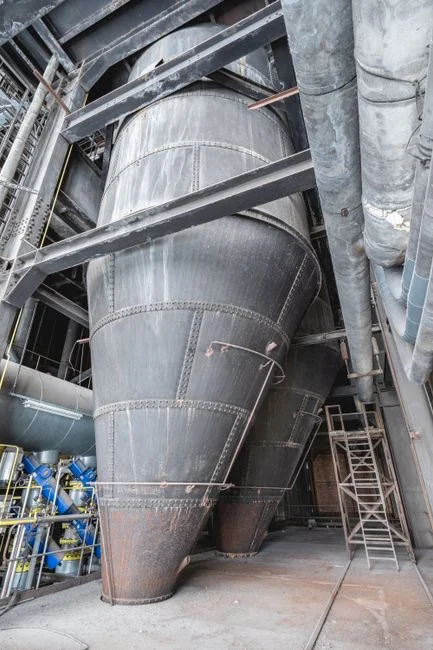
For a small-to-mid Greeneville job shop, the DAF Corp skid-mounted FC Maximizer at 48–450 gpm (6–15 ft diameter) is the baseline envelope. Above 450 gpm, plants either parallel skids or move to a larger field-erected unit; the FC Maximizer line scales to 11,000 gpm in a single circular tank (per DAF Corp). Spectrum Water's compact DAF units run 50–1,000 gpm in trailer or skid configuration and ship plug-and-play with chemical feed integration, which compresses commissioning from weeks to days. ClearStream's rectangular DAFs are typically shipped fully shop-assembled with integral coagulation and flocculation chambers, which makes them attractive retrofits into existing concrete basins. For plants that need an alternative primary and want to compare clarifier geometry head-to-head, the HydropureWater lamella clarifier covers the low-oil, low-FOG case, while the dissolved air flotation system covers the emulsified-oil case at small-to-mid flow.
Capex on a DAF is higher than a basic clarifier tank, but the gap narrows once you add the chemical feed skids, oil skimming, and the smaller building a DAF needs. Opex favors the DAF on sludge disposal because 2–4% float dewateres much more cheaply than 0.5–1.5% clarifier underflow. DAF effectiveness depends on correctly selected coagulant and flocculant; Spectrum Water's in-house jar-testing on the customer's sample is the model workflow, and the same lesson is why an automatic chemical dosing system is part of any reliable DAF installation. DAF Corp also offers retro-fit installations into existing concrete tanks and pits, which is a real option for older Greeneville facilities that do not want to pour new civil work.
2026 Implementation Checklist for Greeneville Fabricated Metals Operators
- Pull the last 12 months of discharge monitoring reports and benchmark every parameter against 40 CFR 433 daily maximum limits for oil & grease, lead, cadmium, copper, nickel, zinc, total chromium, and pH.
- Run a jar test — or a vendor-led pilot — on a representative shift's wastewater to confirm coagulant and flocculant selection and dose before sizing the DAF.
- Decide skid vs field-erected based on peak flow, available floor area, and whether a rectangular retrofit into an existing concrete basin is feasible.
- Coordinate with the Greeneville Water & Light Commission's pretreatment coordinator before purchasing, so the selected unit type is pre-accepted under the local IPP.
- Plan for downstream sludge handling: pair the DAF with a plate and frame filter press to convert the 2–4% float into a manageable cake, and confirm haul-off capacity with the renderer or waste hauler.
For a peer comparison on how the same decision plays out in a different regulatory and process environment, see the DAF vs clarifier guide for Birmingham fabricated metals plants, and for the broader pretreatment compliance posture, the 2026 pretreatment compliance playbook for industrial plants covers the multi-plant program design. For a deep-dive on the metal-finishing effluent train that typically sits downstream of a DAF, the electroplating and metal-finishing effluent treatment process guide is a useful cross-reference.
Frequently Asked Questions
What removal rates can a DAF realistically hit on fabricated metals wastewater?
DAF systems on fabricated metals wastewater typically reach 85–98% TSS removal (FC Maximizer 92–98%, RC UniMax 85–90% per DAF Corp) and corresponding FOG reductions that put effluent well below 40 CFR 433 categorical pretreatment limits when coagulant and
Frequently Asked Questions
Should a fabricated metals plant in Greeneville choose a DAF or a clarifier in 2026?
The choice depends primarily on the density and emulsification of your specific waste stream. Dissolved Air Flotation (DAF) is superior for fabricated metals facilities dealing with high concentrations of emulsified oils, greases, and low-density metal fines that resist gravity settling. If your 2026 production process involves significant use of synthetic coolants or tramp oils, a DAF is generally required to meet discharge standards.
Conversely, if your wastewater is dominated by dense metal hydroxides resulting from high-pH precipitation, a clarifier is often more cost-effective. Clarifiers are better suited for heavy, inorganic solids that settle rapidly without the need for the pressurized air and polymer dosing systems required by a DAF unit.
What TSS removal rate can a DAF realistically achieve on metalworking wastewater?
A properly optimized DAF system in a fabricated metals environment can realistically achieve Total Suspended Solids (TSS) removal rates between 85% and 95%. Performance is highly dependent on the influent oil-and-grease concentration and the precise application of coagulants and flocculants.
To maintain these rates, the system must be calibrated for the specific particle size distribution of the metal fines. In 2026, automated chemical feed controllers are standard, allowing plants to maintain consistent removal rates even when influent loading fluctuates due to batch processing or machine cleaning cycles.
Is a lamella clarifier a good alternative to a DAF for stamped metal parts?
A lamella clarifier is an excellent space-saving alternative for stamped metal parts, provided the process wastewater is relatively free of emulsified oils. Because stamping operations often involve heavy-duty press lubricants, the wastewater may require an upstream oil-water separator or an ultrafiltration unit to remove free oils before the water enters a lamella clarifier.
The primary advantage of the lamella design is its inclined plate configuration, which increases the effective settling area within a significantly smaller physical footprint compared to a circular clarifier. This makes it ideal for Greeneville job shops with limited floor space, as long as the primary contaminants are settleable metal chips and heavy particulates rather than suspended oils.
What size DAF does a small Greeneville job shop with 50–200 gpm of wastewater need?
For a flow rate of 50–200 gallons per minute (gpm), a shop should look for a DAF unit with a hydraulic loading rate typically ranging from 2 to 4 gpm per square foot of surface area. A system designed for 200 gpm will generally require a footprint of approximately 50 to 100 square feet for the flotation tank alone, excluding the peripheral sludge handling and air saturation equipment.
It is critical to size the unit based on the peak flow rather than the average flow to prevent solids carryover during high-production shifts. Consulting a local engineer is recommended to ensure the pump capacity and air-to-solids ratio match the specific chemical oxygen demand (COD) of your shop's wastewater.
How do Greeneville pretreatment limits under 40 CFR 433 affect the DAF vs clarifier choice?
The Metal Finishing Point Source Category (40 CFR 433) imposes strict mass-based or concentration-based limits on pollutants such as total chromium, copper, nickel, and zinc. Because these metals often precipitate as hydroxides, a clarifier is frequently the primary tool used to meet these limits by allowing the heavy metal solids to settle out of the effluent stream.
However, if your facility uses complexing agents or surfactants that keep metals in a colloidal state, a DAF is often necessary to capture the fine particles that a clarifier would miss. If your compliance testing shows consistent exceedances of total metal limits, a DAF is often the required upgrade because it provides the additional capture efficiency needed to strip out the fine, suspended particles that pass through standard clarifiers.