What a Bridgeview Fabricated Metals Plant Is Actually Treating
For Bridgeview-area fabricated metals factories in 2026, DAF is the better default over a gravity clarifier: it removes 85-98% of TSS and most free and emulsified oils that drive Metal Finishing (40 CFR Part 432) compliance, while a clarifier typically settles only heavier metal hydroxides (40-60% TSS) and leaves floatable oils and emulsified tramp oils for downstream polishers. Choose a clarifier only when solids are predominantly settleable and oil loading is low.
A typical NAICS 332/333 stamping, machining, coating, or finishing shop in the Bridgeview/Calumet corridor generates a mixed wastewater stream that punishes a single-technology treatment train. The matrix usually includes tramp oils leaking from stamping presses (50-500 mg/L free oil, spiking higher during press maintenance), water-soluble and emulsified cutting fluids from machining cells (50-300 mg/L emulsified oil), drawing compounds and lubricants from forming, and metal hydroxide floc from rinsewater pH adjustment. In coating and finishing lines, you add phosphate-bearing cleaners, chromate conversion chemistry, and zinc, nickel, or iron rinses that drive dissolved metals to 5-50 mg/L ranges per cation.
The combined stream commonly runs 200-5,000 mg/L TSS, 100-1,500 mg/L total oil and grease (free plus emulsified), and pH 5-11 depending on whether acid pickling and alkaline cleaning effluents are batched or segregated. The two compliance pain points that drive pretreatment equipment selection are oil and grease (the parameter that triggers MWRDGC surcharges) and dissolved/particulate metals (the parameter that triggers 40 CFR Part 432/433 categorical exceedance notices). Because floatable oils, emulsified oils, and settleable metal fines coexist in the same influent, the separation technology has to handle both fractions in a single pass or the plant pays twice — once for the clarifier underperforming on oil, then again for a polishing step.
How a DAF Clarifier Works (and Why It Fits Metalworking)
DAF systems clarify wastewater by attaching 30-50 micron micro-bubbles of dissolved air to flocculated particles and oil droplets, lifting them to the surface as a float blanket that a skimmer scrapes into a collection trough (per Clearwater Industries' dissolved air flotation design reference). A recirculation pump takes clarified effluent, pressurizes it in a saturation vessel with injected air, then depressurizes the stream at the DAF inlet; the pressure drop nucleates the micro-bubbles that do the lifting work.
For fabricated metals pretreatment, the process train is consistent: pH adjustment and coagulant dosing (typically ferric chloride or alum at 50-200 mg/L), flash mixing in flocculation tubes at 15-45 seconds contact time, then polymer flocculant addition in a staged mix tank or a second serpentine tube before the water enters the flotation cell. A properly conditioned metalworking stream produces a thick, well-formed float (often called the "white blanket") that skims off at 2-4% total solids — dry enough to send directly to a plate and frame filter press for final dewatering.
Most DAF designs also include a sediment compartment and bottom-sludge extraction, which is why a DAF handles both the floatable oil fraction and the settleable metal hydroxide fraction in one tank. For Bridgeview shops running 10-500 GPM, the HydropureWater DAF system covers 4-300 m³/h (roughly 18-1,320 GPM) across 13 standard models and is built with the chemical conditioning and skimmer package that metalworking pretreatment needs without extensive customization. The reason this architecture suits stamping and finishing is straightforward: tramp oils, emulsified oils, and light metal floc all float; heavier metal fines settle; one unit handles both without a secondary clarifier downstream.
How a Gravity Clarifier Works (and Where It Falls Short on Oils)
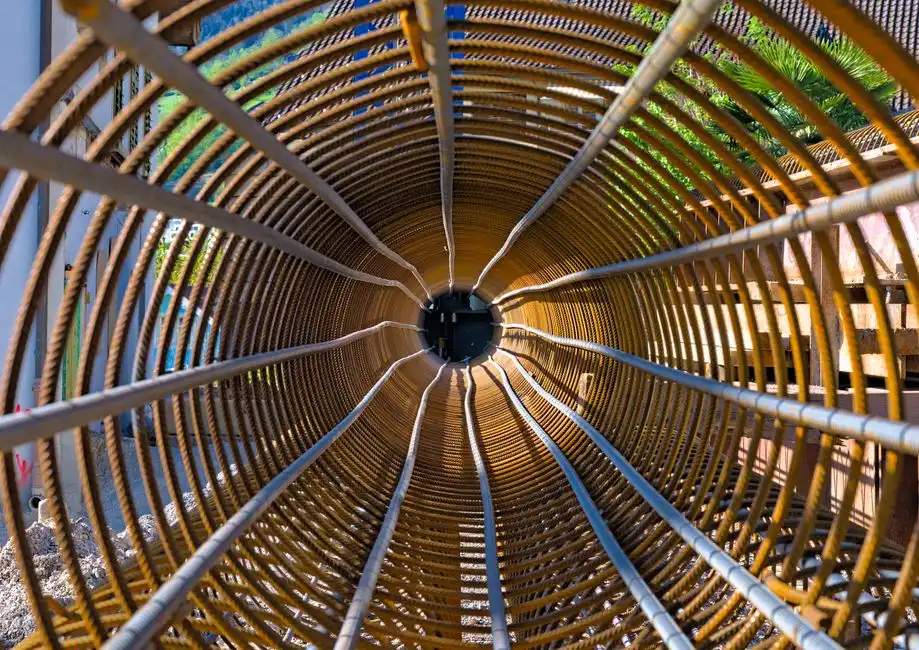
A gravity clarifier — including the lamella plate variety — relies on Stokes' law settling: particles with specific gravity above 1.0 drop out of suspension given enough residence time and surface area. Inclined-plate (lamella) designs pack more settling area into a smaller footprint by using 55-60° inclined plates, with typical surface loading rates of 20-40 m/h and effective settling distances shortened by the plate spacing (per lamella clarifier design data). Sludge collects on the plates, slides down to a hopper, and is pumped out as bottom sludge at 1-2% solids.
The clarifier's weakness on metalworking streams is physical, not design-related. Emulsified oils have specific gravity near 1.0 and droplets too small to settle at practical residence times; free oils are actually less dense than water and tend to coalesce at the surface, where a basic clarifier skimmer often pulls them off poorly. The result is consistent oil carry-over that either fouls downstream filters, pushes TSS past the 40 CFR Part 432 limit at the monitoring point, or triggers MWRDGC surcharges. A HydropureWater lamella clarifier works well as a polishing step after a DAF, where its job is to catch any floc that slips through, but it is a poor stand-alone primary for an oil-bearing stream.
DAF vs Clarifier: Head-to-Head Comparison for Bridgeview Metal Plants
For fabricated metals pretreatment, the head-to-head numbers tell a clear story. DAF units from major manufacturers consistently deliver 85-98% TSS removal — the DAF Corp FC Maximizer round tank claims 92-98% removal at 10-11,000 GPM, while their rectangular RC UniMax delivers 85-90% at 10-1,000 GPM (DAF Corporation, 2025). Standard gravity clarifiers on metal hydroxide streams land at 40-60% TSS removal and significantly worse on oil and grease. The comparison below summarizes the decision-relevant parameters for a Bridgeview stamping or finishing operation.
| Parameter | DAF (round or rectangular) | Gravity / Lamella Clarifier |
|---|---|---|
| TSS removal | 85-98% (FC Maximizer 92-98%, RC UniMax 85-90%) | 40-60% on metal hydroxide streams |
| Oil & FOG removal | High — float fraction skimmed; handles emulsified oil with chemistry | Low without pre-coalescer; free oil often carries over |
| Typical flow range | 10-11,000 GPM (DAF Corp); 18-1,320 GPM (HydropureWater) | 10-500 GPM per unit; multi-unit for higher flows |
| Footprint at 100 GPM | 6-10 ft tank diameter, ~80-120 ft² | Comparable width, taller profile, separate skimmer often required |
| Sludge consistency | 2-4% float solids (good for filter press) | 1-2% bottom sludge (more dilute, higher haul-off cost) |
| Capital cost (packaged) | Higher — aeration skid, saturation tank, recirculation pump | Lower — no air system, fewer instruments |
| Operating cost (annual) | Lower when oil surcharges and haul-off are priced in | Higher when oil carry-over triggers surcharges or polishers load up |
| Best application | High oil + high TSS metalworking streams | Low oil, mostly settleable hydroxide streams; DAF polishing |
The CAPEX gap shrinks once oil surcharges, third-party haul-off, and downstream polishing media replacement are added. A Bridgeview shop running 100-200 GPM with 200+ mg/L oil and grease will see the DAF pay back the capital premium inside 18-36 months on surcharge avoidance alone. For more on how this plays out in adjacent metalworking regions, the Memphis fabricated metals DAF vs clarifier guide covers a similar compliance regime with municipal discharge rules, and the Birmingham fabricated metals DAF vs clarifier guide treats a comparable stamping and finishing cluster.
Bridgeview & Cook County Compliance: 40 CFR Part 432 and MWRDGC
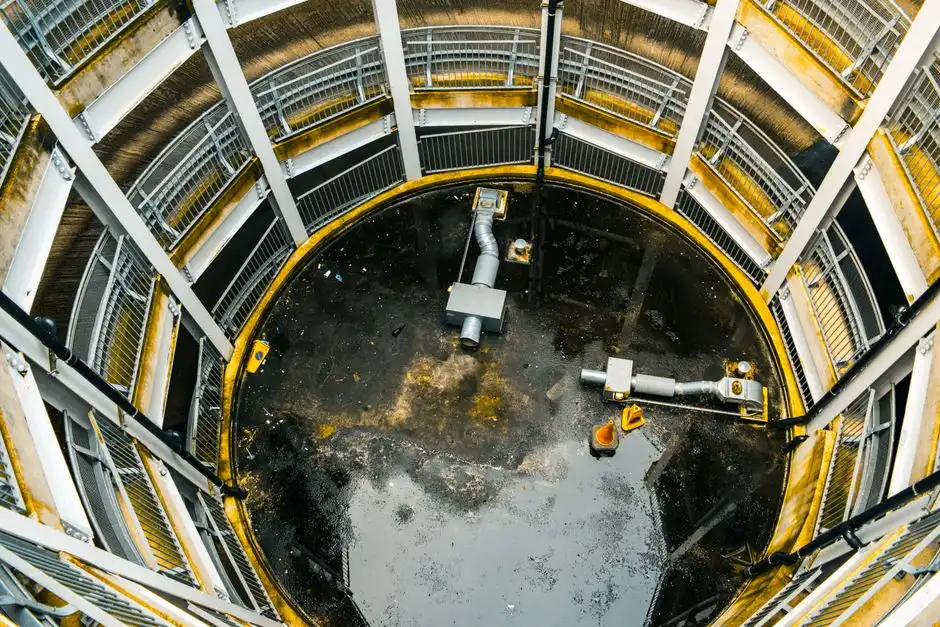
Bridgeview industrial users discharge to the Metropolitan Water Reclamation District of Greater Chicago (MWRDGC) Calumet Water Reclamation Plant, which enforces local sewer-use limits on top of federal categorical standards. Most fabricated metals shops in the Calumet service area fall under 40 CFR Part 432 (Metal Finishing) or 40 CFR Part 433 (Metal Products) as Categorical Industrial Users, with daily maximum and monthly average limits on oil and grease, TSS, and metals (Zn, Ni, Cr, Pb, Cd, Cu) measured at the pretreatment effluent monitoring point. The federal Metal Finishing category caps oil and grease at 52 mg/L daily maximum / 26 mg/L monthly average, and TSS at 60 mg/L daily maximum / 31 mg/L monthly average, but MWRDGC's local limits can be tighter depending on discharge location and SIU (Significant Industrial User) status.
The two limits that drive DAF selection are oil & grease and dissolved metals. A clarifier alone cannot meet oil & grease limits consistently on a stream with emulsified tramp oils, which is why DAF is the standard pretreatment unit across the Chicago metal-finishing cluster. The compliance parameters that matter most for Bridgeview CIUs are summarized below.
| Parameter | 40 CFR Part 432 Daily Max / Monthly Avg | MWRDGC Calumet Local Limit (typical) | DAF Achievable | Clarifier Achievable |
|---|---|---|---|---|
| Oil & Grease | 52 / 26 mg/L | 100 mg/L (local surcharge threshold lower) | <20 mg/L with chemistry | 40-100+ mg/L (carry-over) |
| TSS | 60 / 31 mg/L | 250 mg/L sewer limit, lower at CIU point | <30 mg/L | 60-150 mg/L |
| Zn (total) | 2.61 / 1.48 mg/L | Site-specific, often 1-3 mg/L | <1 mg/L with precipitation + DAF | Often > limit (dissolved fraction passes through) |
| Ni (total) | 3.98 / 2.38 mg/L | Site-specific, often 1-2 mg/L | <1 mg/L with precipitation + DAF | Often > limit (same issue) |
| pH | 6.0-9.0 (typical categorical range) | 5.0-10.0 (MWRDGC) | Adjusted upstream of DAF | Adjusted upstream of clarifier |
For self-monitoring frequency, baseline sampling, and reporting triggers, the 2026 wastewater self-monitoring compliance guide covers the SMR/SIU reporting cadence that Bridgeview CIUs need to follow. Whether or not a shop is formally a CIU, MWRDGC's oil & grease surcharge structure makes clarifier-only treatment uneconomical for any operation with significant stamping, machining, or drawing lubricant flows.
Cost, Footprint, and 2026 Selection Checklist
Order-of-magnitude CAPEX for a packaged DAF at 50-200 GPM runs higher than a comparably rated lamella clarifier once you include the aeration skid, saturation tank, recirculation pump, and air injection controls; a lamella unit of the same flow is mechanically simpler and ships with fewer instruments. OPEX reverses the picture: a clarifier treating oil-bearing metalworking effluent will trigger MWRDGC oil & grease surcharges, load up downstream polishers, and haul off dilute 1-2% bottom sludge, while a DAF produces a drier 2-4% float sludge that dewaters well in a filter press. Footprint-wise, a DAF at 50-500 GPM fits in a 6-15 ft diameter round tank or a comparable rectangular footprint; a lamella clarifier of the same flow needs a similar plan area but is typically taller, and still requires a separate oil skimmer to handle floatables.
Apply this three-step checklist on your P&ID before requesting quotes:
- Is free or emulsified oil greater than 100 mg/L? If yes, specify a DAF primary. Clarifiers will not meet 40 CFR Part 432 oil & grease limits on this stream.
- Are solids mostly settleable metal hydroxides with low oil? If yes, a clarifier or lamella can work as a stand-alone primary, especially in low-flow rinsewater applications.
- Both oil and settleable solids present? Specify DAF primary followed by lamella polish. Pair the DAF with an automatic chemical dosing skid for coagulant, pH adjustment, and polymer, and send float sludge to a plate and frame filter press for final dewatering to 30-40% cake solids.
Pilot testing is worth the lead time on any new stream. DAF Corp offers pilot FC-60 units at 48 GPM and RC UniMax pilot units at 80-100 GPM, both rated for 2,000 PPM TSS loading (DAF Corporation, 2025). A two-week on-site pilot with jar testing for coagulant and polymer selection removes the guesswork from full-scale design. For broader market context on where 2026 pretreatment capex is heading, the 2026 industrial wastewater treatment market outlook puts the global water and wastewater equipment market at roughly $390B, with pretreatment and primary separation representing a significant share of near-term capex.
Frequently Asked Questions
Can a gravity clarifier alone meet 40 CFR Part 432 oil & grease limits?
On most Bridgeview metalworking streams, no. The 40 CFR Part 432 oil & grease daily maximum of 52 mg/L is below what a clarifier consistently delivers on emulsified tramp oil (typical clarifier effluent runs 40-100+ mg/L oil & grease). DAF systems with proper coagulant and polymer conditioning routinely achieve below 20 mg/L oil & grease, which is the margin a CIU needs against monthly average limits and MWRDGC surcharges.
What flow range works for a small Bridgeview job shop with 10-100 GPM?
Packaged skid-mounted DAFs cover this range well. The DAF Corp FC Maximizer round skid is available from 48 GPM (6 ft diameter) to 450 GPM (15 ft diameter), and the HydropureWater DAF line covers 18-1,320 GPM across 13 standard models. A 10-100 GPM job shop typically lands on a 6-10 ft diameter packaged unit with an integrated chemical conditioning skid and a small sludge pump.
What sludge consistency should I expect, and how do I handle the float solids?
A well-operated DAF produces float sludge at 2-4% total solids — dry enough to pump directly to a plate and frame filter press for dewatering to 30-40% cake solids. The filter press cake is typically suitable for landfill disposal or, depending on metal content, may be sent to a metal recovery facility. For a Bridgeview shop generating 50-200 GPM, a 2-5 ft³ plate press is usually correctly sized.
Is pilot testing required, or can I specify a full-scale DAF from influent data alone?
Pilot testing is strongly recommended but not strictly required for every stream. DAF Corp offers pilot FC-60 units at 48 GPM and RC UniMax pilot units at 80-100 GPM, both rated for 2,000 PPM TSS loading. A two-week on-site pilot with jar testing for coagulant and polymer selection typically pays for itself in optimized full-scale design, especially for streams with mixed free and emulsified oils.
Can I retrofit an existing clarifier with DAF rather than replace it?
Yes — common retrofits add an aeration skid and saturation tank to an existing clarifier, plus a surface skimmer upgrade. This hybrid approach can be lower capex than a full DAF replacement and is often used when the existing clarifier has adequate volume but the float layer is not being removed effectively. Limitations apply: retrofit DAF performance typically trails a purpose-built DAF by 10-20 percentage points on TSS removal, so verify the math against your discharge limits before committing.