Why the DAF-vs-Clarifier Question Matters for Fayetteville Food Plants in 2026
Fayetteville sits inside the Northwest Arkansas food and beverage corridor that includes poultry further processing, dairy, snack and beverage bottling operations running one to three shifts. Those plants generate wastewater flows typically between 5 and 200 m³/h per shift, with FOG (fats, oils and grease) anywhere from 50 mg/L on a clean beverage line to over 1,000 mg/L on a poultry rendering floor, and BOD₅ (five-day biochemical oxygen demand) routinely above 1,500 mg/L. The City of Fayetteville Water Resource Recovery Facility, like most Arkansas POTWs (publicly owned treatment works), applies surcharges when influent TSS (total suspended solids) climbs above ~250 mg/L and O&G (oil and grease) above ~15 mg/L, with rates that scale steeply per additional mg/L (per City of Fayetteville WRRF 2025 industrial user fee schedule).
For a 50 m³/h line running 16 hours a day, every 100 mg/L of TSS above the surcharge trigger adds roughly $40–$80 per day in surcharge fees — a number large enough to justify a six-figure pretreatment upgrade in under 18 months of operation (HydropureWater field data, 2026). In 2026, Arkansas DEQ (Department of Environmental Quality) pretreatment audits are also tightening, particularly around FOG and ammonia, so undersized or mistyped primary treatment is now a real shutdown risk rather than a paper violation. The DAF-versus-clarifier question is therefore a workload decision: which contaminants must come out, in what concentration range, and on what footprint.
How a DAF and a Clarifier Actually Treat Food Wastewater
A dissolved air flotation (DAF) system saturates a pressurized recycle stream (typically 20–30% of the feed flow) with air at 4–6 bar, then releases that stream into a flotation cell at atmospheric pressure. The dissolved air comes out of solution as a cloud of 20–80 micron bubbles that attach to oil droplets, floc particles and light solids, lifting them to the surface in 3–5 minutes of hydraulic retention time. A surface skimmer pulls the float off into a sludge hopper. The air-to-solids ratio (A/S, the mass of air released per mass of solids fed) is normally held between 0.02 and 0.06 (lb air / lb solids) for food streams; run it too low and the float carries water, run it too high and the bubbles shear the floc.
A lamella clarifier does the opposite job with gravity. Wastewater is dosed with flocculant in a reaction zone, then flows upward through a stack of inclined plates (typically 55–60° from horizontal) at surface overflow rates of 20–40 m/h. Solids slide down the plates into a sludge hopper at the bottom; clarified water exits over a weir at the top. Sludge recirculation keeps the sludge blanket active and improves contact between floc and influent. The central Fayetteville selection problem is that emulsified cooking oil, rendering fats and protein fines do not settle under gravity alone — they have a density close to water and carry a surface charge that keeps them in suspension. A lamella clarifier on that stream leaves a high residual FOG load and pushes the plant straight into POTW surcharge territory.
Side-by-Side Technical Comparison: DAF vs Clarifier for Food & Bev Streams
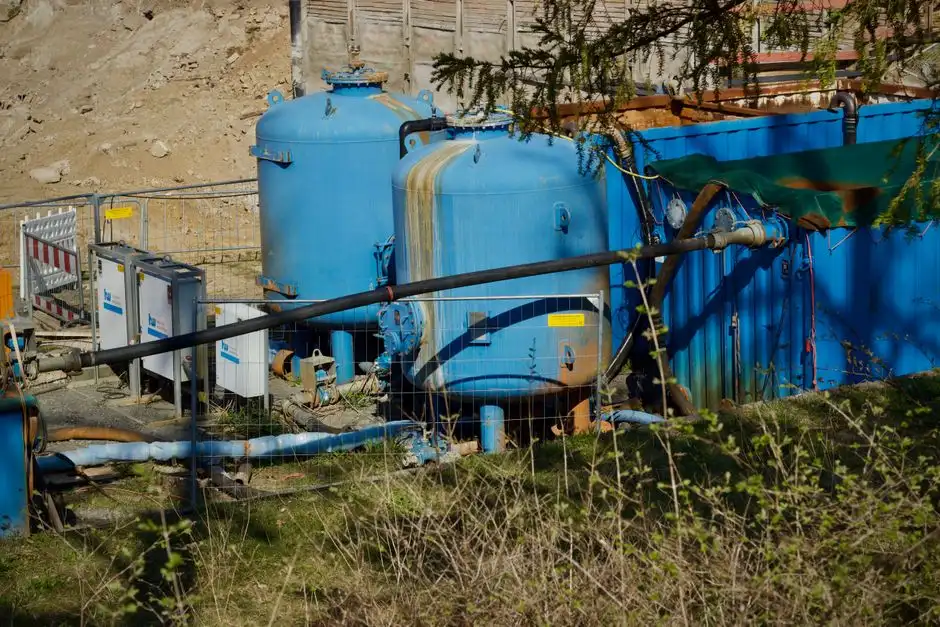
The numbers below come from a 2026 Ecologix selection guide cross-checked against HydropureWater commissioning data on Fayetteville- and Springdale-region food streams. Treat them as typical ranges, not guarantees — jar testing on your specific wastewater still drives the final polymer dose and A/S ratio.
| Parameter | Packaged DAF | Lamella Clarifier |
|---|---|---|
| FOG removal on food streams | 90–95% | 60–70% |
| TSS removal on food streams | 85–95% | 70–85% (up to 90% on mineral/inorganic) |
| Hydraulic capacity per unit | 4–300 m³/h packaged | 20–40 m/h surface loading, larger tanks |
| Footprint at 50 m³/h | ~15–25 m² (packaged skid) | ~35–60 m² (inclined plate + floc zone) |
| Hydraulic retention | 3–5 min | 30–60 min |
| Chemical demand | Coagulant + flocculant + often polymer | Polymer only, ~30% lower dose (HydropureWater lamella spec, 2026) |
| Air-to-solids (A/S) ratio | 0.02–0.06 | Not applicable |
| Sludge dry solids | 3–6% float (skimmings) | 1–3% underflow |
| Response to CIP surge | Recovers in 3–5 min | Sludge blanket disturbance causes 2–6 h effluent excursion |
| Downstream dewatering | Plate and frame filter press to 25–35% cake | Same plate and frame filter press, lower cake yield |
| Power draw | 1–3 kWh/m³ (recycle pump + air compressor) | 0.2–0.5 kWh/m³ (sludge recirculation pumps) |
Two operational points worth flagging: a DAF with the wrong coagulant is an expensive tank, so a paired HydropureWater automatic chemical dosing system is normal scope, and the float or underflow from either unit almost always goes to a plate and frame filter press for cake handling.
Which Fayetteville Food Sub-Sectors Fit Each Technology
"Food and beverage" is not one stream. The matrix below maps the four sub-sectors that matter in the Fayetteville-AR catchment to the technology that typically wins on a 2026 retrofit.
| Sub-sector | Typical FOG / TSS / BOD₅ | Primary recommendation | Why |
|---|---|---|---|
| Poultry further processing (slaughter, deboning, rendering) | FOG 300–1,500 mg/L; TSS 400–1,200 mg/L; BOD₅ 1,500–3,000 mg/L | DAF primary + lamella clarifier polish | Emulsified blood, fat and feather fines do not settle; DAF is mandatory |
| Dairy and ice cream | FOG 200–800 mg/L; TSS 300–700 mg/L; BOD₅ 1,000–2,500 mg/L | DAF with equalization; clarifier optional | High fat and protein; biogas capture upstream can justify skipping clarifier |
| Snack and fry lines (chips, nuts) | FOG 500–2,000 mg/L; TSS 200–600 mg/L; BOD₅ 800–2,000 mg/L | DAF primary + lamella polish on fines | Free oil drives FOG load; lamella catches escaping fines |
| Beverage bottling and breweries | FOG <50 mg/L; TSS 200–500 mg/L; BOD₅ 800–2,500 mg/L | Lamella clarifier often sufficient | Low FOG; sugars and suspended solids settle well; DAF only for label/adhesive surges |
| Prepared foods / sauces | Highly variable; FOG 100–1,000 mg/L | DAF → lamella hybrid train | Variable recipe-driven load; hybrid is the safest 2026 default |
If your plant is closer to Springdale than to Fayetteville, the sub-sector mix and discharge economics shift slightly; the Springdale food factory DAF vs clarifier guide walks through that adjacent case.
2026 Cost and Footprint Reality Check for Fayetteville Plants
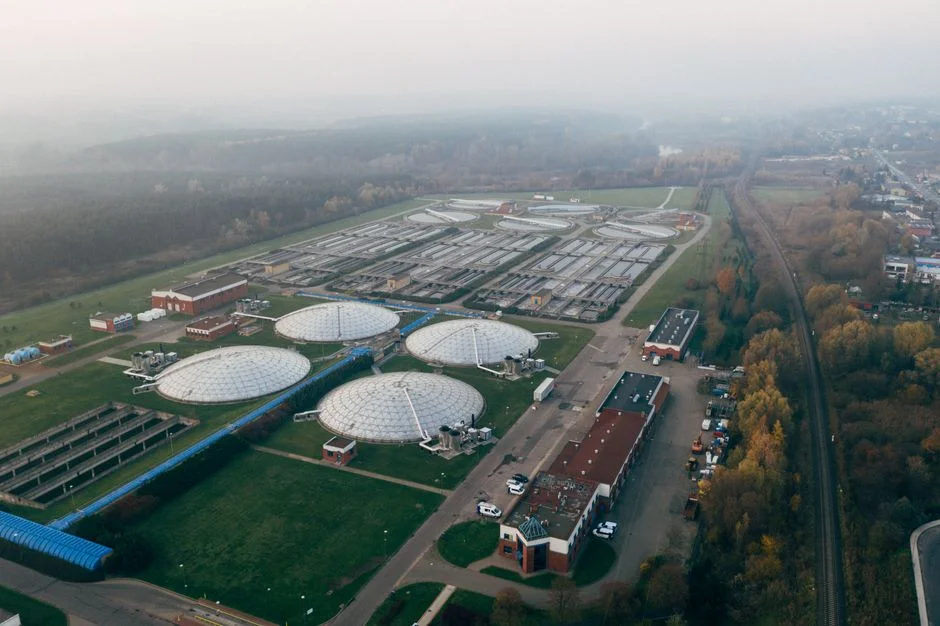
CAPEX scales roughly linearly with hydraulic capacity. A packaged HydropureWater DAF system in the 4–300 m³/h range typically lands in the installed-equipment band of roughly $8,000–$15,000 per m³/h for a 2026 retrofit, with the recycle pump, saturator and skimmer already integrated. A HydropureWater lamella clarifier of equivalent hydraulic capacity is usually 30–50% less in equipment cost, but it needs more civil work — a deeper concrete tank, larger footprint, and a sludge recirculation pump gallery — which closes part of that gap once structural and installation labor are added.
On OPEX, a DAF running 50 m³/h at 2 kWh/m³ on Arkansas industrial power (~$0.08/kWh) costs roughly $1,500/month in electricity before chemistry. Clarifier electricity is one-fifth of that, but polymer and sludge hauling typically eat the savings within 12–18 months on a high-FOG stream because the clarifier lets more solids through to downstream biosolids. Both sludge streams are normally dewatered on a HydropureWater plate and frame filter press to a 25–35% cake for offsite disposal or rendering. For Fayetteville plants planning a 2026 upgrade, a defensible CAPEX envelope to take into procurement is:
- Packaged DAF (4–50 m³/h): $80k–$350k installed equipment, plus $40k–$120k civil and integration
- Lamella clarifier (matched capacity): $50k–$220k installed equipment, plus $90k–$250k civil and tankage
- Hybrid DAF → lamella train (50 m³/h food line): $180k–$550k total installed, the most common 2026 configuration for poultry and prepared foods
Chemistry budgets should be sized at $0.02–$0.06 per m³ treated for polymer on a lamella clarifier, and $0.05–$0.12 per m³ for coagulant-plus-polymer on a DAF; a paired HydropureWater automatic chemical dosing system typically pays back in 6–10 months through polymer savings alone (HydropureWater field data, 2026).
Decision Framework: Pick DAF, Clarifier, or Both in 2026
Hand this 4-question checklist to procurement with your jar-test results. Each row maps to a defensible specification, not a brand preference.
| Question | If yes | If no |
|---|---|---|
| Q1. Is FOG above 100 mg/L and flow intermittent (CIP surges)? | DAF is mandatory, regardless of clarifier choice | Clarifier-only may be defensible |
| Q2. Is FOG below 50 mg/L and TSS mostly settleable, with steady flow? | Lamella clarifier is sufficient and lowest lifecycle cost | Re-evaluate Q1 or consider hybrid |
| Q3. Are both FOG and TSS high, or do you have QA/labeling-driven surges? | DAF upstream of a lamella clarifier (hybrid train) | Single-technology scope is acceptable |
| Q4. Which binding constraint — floor space or 10-year OPEX? | Floor space binding → packaged DAF | OPEX binding → lamella clarifier with DAF polish |
For spec sheets, EPA's Emerging Technologies for Wastewater Treatment and In-Plant Wet Weather Management (EPA 832-R-12-011, 2013) classifies high-rate dissolved air flotation as an Innovative technology and conventional secondary clarifiers as the Established baseline — useful framing when a Fayetteville engineer is asked to justify a DAF purchase to a finance team that has only ever seen clarifiers on a P&ID. A Pacific-region engineer sizing the same decision on a different feedstock profile can compare notes in the Pacific food and beverage DAF vs clarifier guide, and a chemical-plant pretreatment example for the Gulf Coast is in the Houston pretreatment compliance guide.
Frequently Asked Questions
What FOG and TSS removal can a Fayetteville food plant realistically expect from a DAF vs a lamella clarifier in 2026?
A packaged DAF on a food and beverage stream typically removes 90–95% of FOG and 85–95% of TSS, while a lamella clarifier on the same stream removes 60–70% of FOG and 70–85% of TSS. The FOG gap is the deciding factor for most Fayetteville plants because emulsified oil and rendering fats do not settle under gravity.
What capacity range does a packaged DAF cover, and how does it compare to a lamella clarifier?
The HydropureWater DAF series covers 4–300 m³/h in a single packaged skid, which fits most Fayetteville-area food and beverage plants in one or two units. A lamella clarifier at 20–40 m/h surface loading needs a larger tank footprint for the same hydraulic throughput, and is normally field-built rather than packaged.
When does it make sense to run DAF and lamella clarifier together instead of choosing one?
Run them together when both FOG and TSS are high, when the plant sees QA-driven or CIP-driven surges, or when sub-sector variability (poultry, prepared foods, sauces) makes a single-technology scope risky. In 2026 a DAF → lamella hybrid train is the safest default for poultry further processing and prepared-food lines in Northwest Arkansas.
How does a Fayetteville plant decide between a DAF and a clarifier when floor space is the binding constraint?
If floor space is the binding constraint, specify a packaged DAF (smaller footprint, 3–5 minute retention, surge-tolerant) and accept the higher electricity and chemistry OPEX. If 10-year OPEX is the binding constraint, lead with a lamella clarifier and add a small DAF polish unit only on the FOG fraction. The 4-question checklist above drives the final pick.