Why Springdale Food & Bev Plants Struggle With Solids Separation
Springdale, Arkansas anchors one of the densest concentrations of poultry processing in the United States, with Tyson, Cargill, and George's operating kill, debone, and render lines that generate a combined wastewater flow most municipalities never see. Dairy, beverage, and sauce plants layered on top of that base push the local FOG and BOD load to a level that overwhelms a standard primary treatment step. A typical Springdale food-plant influent runs FOG 200-2,000 mg/L, TSS 500-3,000 mg/L, and BOD 1,000-5,000 mg/L, with hourly swings of 3x or more driven by CIP releases and batch discharges (per Ecologix 2026 industrial wastewater guide).
Light-floating FOG defeats a plain gravity clarifier because emulsified fats stay suspended in the water column rather than settling, and temperature swings from hot CIP (often 55-65 °C) to cold well water reduce the density differential a clarifier depends on. The compliance ceiling compounds the problem: Arkansas Department of Energy and Environment, Division of Environmental Quality (DEQ) NPDES permits and the categorical pretreatment standards at 40 CFR Part 403 set FOG and TSS ceilings that a clarifier alone cannot reliably hit on this stream. Two real questions sit on a Springdale supervisor's desk: which unit belongs as primary, and where does the second unit sit in the train.
How a DAF System Actually Works in a Food Plant
DAF is a flotation step, not a settling step. A saturated recycle stream — typically 20-30% of the clarified flow — is pressurized to 60-80 psig and then depressurized through needle valves at the DAF inlet, releasing a cloud of 30-50 micron microbubbles that attach to chemically conditioned floc and float it to the surface (per Clearwaterind 2026-04-27 DAF system documentation). Skimmers sweep the float layer into a sludge trough, while a bottom auger captures the heavier settleables that drop into the same vessel. Total hydraulic residence in the flotation cell is 20-40 minutes, which is why a HydropureWater dissolved air flotation (DAF) system typically occupies one-third to one-fifth of the footprint of an equivalent gravity clarifier.
Chemistry is the part of the process the salesperson never wants to talk about, and it is the part that decides whether the DAF hits 95% FOG removal or stalls at 60%. Coagulant first — typically polyaluminum chloride (PAC) at 50-150 mg/L or alum at 100-300 mg/L — neutralizes the charge on emulsified fat droplets and fine TSS, followed by a high-molecular-weight cationic polyacrylamide flocculant at 1-5 mg/L in a serpentine or stirred-mix stage. Hydraulic loading for the FPAC and FPBC DAF families runs 3-6 gpm/ft², and the Compact DAF cuts over from a single skid to a modular two-skid configuration at 66 GPM (per Clearwaterind 2026-04-27). Hit those numbers and the float blanket stays thick, dry, and consistent; miss them and the DAF turns into an expensive stir tank.
How a Clarifier Handles the Same Food Stream
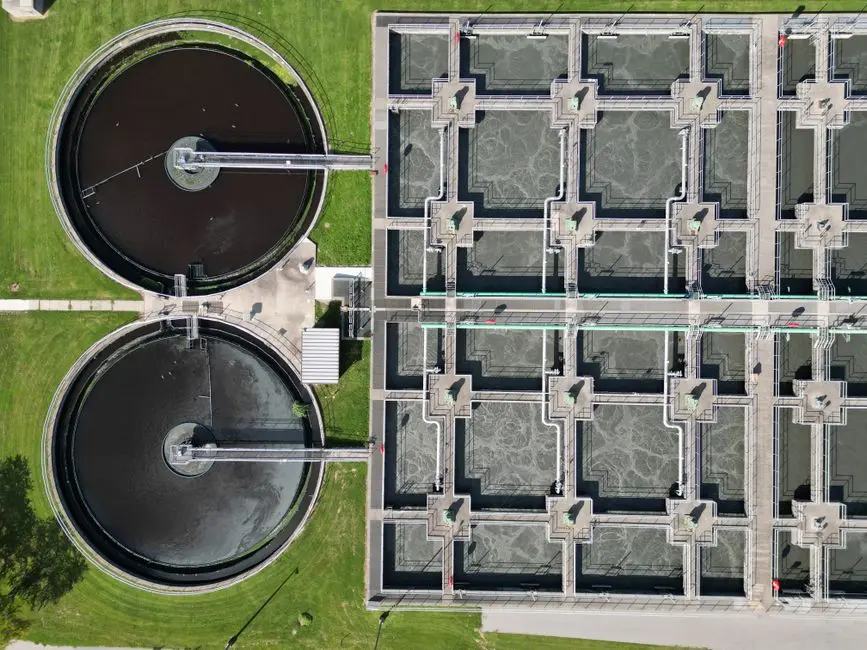
A clarifier is the workhorse of municipal and mineral processing: gravity sedimentation in a circular or rectangular basin, a conical or hopper bottom, and a slow-moving rake that drives sludge to a central draw. Inclined-plate and lamella designs compress the settling zone into a fraction of the depth, raising the effective surface loading to 20-40 m/h and cutting the footprint versus a conventional clarifier by roughly 60-70% (per the HydropureWater high-efficiency lamella clarifier product range). On a food-plant stream the lamella is a real option for polish duty and for low-FOG, high-TSS lines such as fruit wash or snack starch recovery.
The weaknesses are exactly the ones a Springdale supervisor already knows: poor FOG capture because the buoyancy vector points the wrong way, a large footprint (a 5-8 m diameter basin is common for 50-100 m³/h), and sensitivity to hydraulic and temperature shocks that knock settled solids back into suspension. On the same food stream Ecologix's 2026 case data shows a clarifier delivering roughly 70% FOG removal where a DAF delivers 95% — a 25-point gap that usually decides compliance before cost is even discussed.
DAF vs Clarifier: 2026 Side-by-Side for Food & Beverage
The table below summarizes the parameters a capital committee actually weighs when a Springdale plant proposes a primary solids-removal upgrade in 2026. FOG and TSS removal figures draw on Ecologix 2026 case data; footprint and CAPEX bands draw on the HydropureWater DAF and lamella clarifier product data.
| Parameter | Dissolved Air Flotation (DAF) | Gravity / Lamella Clarifier |
|---|---|---|
| Mechanism | 30-50 µm microbubbles attach to floc and float FOG/TSS to the surface | Gravity sedimentation; lamella plates raise surface loading to 20-40 m/h |
| Best FOG removal | 90-95% with proper coagulant + flocculant chemistry | 60-75%; emulsified fats stay in the water column |
| Best TSS removal | 80-95% including light colloidal solids | 70-90% for settleables only |
| Typical FOG residual | 10-100 mg/L downstream of DAF | 100-700 mg/L downstream of clarifier |
| Footprint at 50 m³/h | ~1/3 to 1/5 of equivalent clarifier | 5-8 m diameter basin or larger lamella pack |
| Operator skill | Moderate; PLC-automated, but chemistry-dependent | Low to moderate; no compressed air, no polymer dosing |
| 2026 CAPEX band (10-100 m³/h) | USD 80,000-400,000 packaged skid (304/316 SS) | USD 40,000-180,000 lamella; USD 60,000-250,000 conventional |
| 2026 OPEX band | USD 0.04-0.12 per m³ (polymer + compressed air + power) | USD 0.02-0.06 per m³ (sludge pumping, rake maintenance) |
The two rows that decide the choice in Springdale are FOG removal and footprint. A 25-point FOG gap pushes the clarifier off most poultry, dairy, and sauce lines, and a one-third-to-one-fifth footprint advantage lets a DAF fit into a headworks where a clarifier would force a concrete extension.
Choosing by Stream: Poultry, Dairy, Beverage, Sauce & Snack Plants
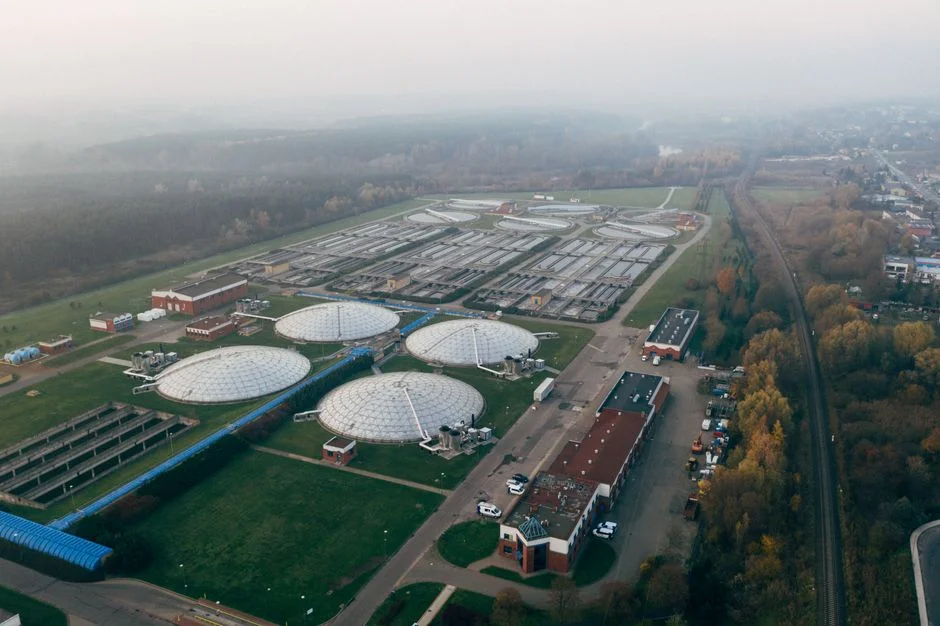
Poultry kill, debone, and render lines run FOG 500-3,000 mg/L with high protein and BOD; DAF is mandatory as primary and a lamella clarifier belongs downstream as a polish step before biological treatment. Dairy plants — cheese, fluid milk, whey processing — generate emulsified fats and CIP surges that defeat plain sedimentation; a DAF with strong cationic floc chemistry is the default, and a second DAF in series is justified when the first effluent still carries >100 mg/L FOG. Beverage plants (juice, soft drink, brewery) sit lower on FOG but high on sugar and BOD; a DAF as primary lifts suspended solids and yeast carryover before the biological step, and a lamella downstream thickens waste-activated sludge.
Sauce, dressing, and condiment lines hit the extreme-FOG end of the matrix — often above 2,000 mg/L FOG with high salt that compresses the double layer and complicates floc formation. Two-stage DAF trains are standard here, with a coagulant dose turned up to 200-300 mg/L PAC and a residence time pushed to 30-40 minutes per stage. Snack and grain processing is the one stream where a lamella clarifier can stand alone: high TSS, low FOG, and the option to recover starch for reuse gives the lamella a process-economics argument the DAF cannot match. The Ecologix 2026 guide frames this as the "high-TSS / low-FOG" carve-out where gravity clarification wins on cost (per Ecologix 2026 industrial wastewater selection guide).
2026 Costs, Compliance, and a Hybrid DAF-to-Clarifier Train
CAPEX in 2026 for a packaged food-plant DAF skid in the 10-100 m³/h band runs USD 80,000-400,000 depending on materials of construction (304 vs 316 SS), automation level, and chemical dosing integration (per HydropureWater DAF product range, 2026). Lamella clarifiers in the same hydraulic band run USD 40,000-180,000, with conventional circular clarifiers in the USD 60,000-250,000 band (per HydropureWater lamella product data, 2026). OPEX swings on chemistry: DAF polymer plus compressed air plus power lands at USD 0.04-0.12 per m³ treated when paired with the HydropureWater automatic chemical dosing system running at 92-97% flocculation efficiency (per the polymer dosing system engineering guide); a clarifier sits at USD 0.02-0.06 per m³ but pays for it in FOG non-compliance risk.
Compliance is the lever that overrides pure cost. Arkansas DEQ NPDES permits and the categorical pretreatment standards at 40 CFR Part 403 cap FOG and TSS at levels a clarifier alone cannot meet on a Springdale poultry or sauce stream. The 2026 best-practice flowsheet for a high-load line is DAF (primary FOG/TSS) → equalization → biological (MBR or SBR) → lamella clarifier (final polish and sludge thickening). A low-FOG, high-TSS line — snack, grain, or fruit wash — can run a lamella clarifier as primary with a small DAF inserted only where starch or product recovery justifies it.
| Cost Item | DAF Primary | Lamella Clarifier Primary | Hybrid DAF → Lamella |
|---|---|---|---|
| CAPEX (10-100 m³/h, 2026) | USD 80K-400K | USD 40K-180K | USD 120K-580K combined |
| OPEX (per m³ treated) | USD 0.04-0.12 | USD 0.02-0.06 | USD 0.06-0.18 combined |
| FOG residual to biological | 10-100 mg/L | 100-700 mg/L | <50 mg/L |
| Compliance margin (40 CFR 403) | Comfortable | Tight to failing on poultry/sauce | Highest |
| Best-fit Springdale stream | Poultry, dairy, sauce, beverage | Snack, grain, fruit wash | High-load poultry and render |
Decision Framework: Which Unit Should a Springdale Plant Buy in 2026?
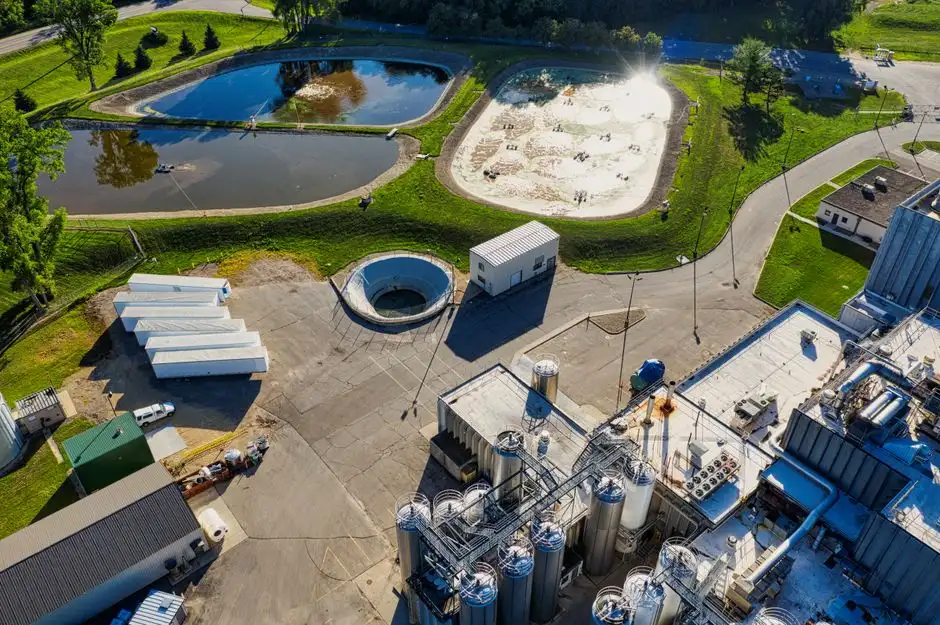
Run the four-question test below before a capital committee meeting. A "yes" on any of the first three questions points the answer at DAF; a clean "no" across all three and a "yes" on the fourth points at a lamella clarifier.
- Characterize the influent. If FOG exceeds 150 mg/L or the hourly stream varies by more than 3x, DAF wins as primary. A grab sample at 7 a.m. and a second at 2 p.m. is enough to settle this.
- Check the footprint. If the existing headworks cannot accept a 5-8 m clarifier basin, the DAF's smaller footprint is decisive. Most Springdale plants built before 2010 cannot.
- Check the reuse goal. If the plant is targeting water reuse for CIP rinse, DAF effluent (low FOG, low TSS) feeds RO more cleanly than clarifier effluent and protects membrane life.
- Apply the 70/95 rule. If a clarifier alone cannot meet the FOG limit implied by the 95% DAF benchmark, do not select a clarifier as primary — even at lower CAPEX, the non-compliance risk is the more expensive failure.
Output: if the answer to questions 1-3 is "yes" or "uncertain," specify a DAF; if all three are clean "no" and question 4 holds, specify a lamella clarifier; if the stream is high-load poultry or render, specify a DAF-to-lamella hybrid train. The 2026 industry framing of automated PLC operation lowering DAF labor burden (per Clearwaterind 2026-04-27) means the operator-cost gap with a clarifier is narrower than it was five years ago.
Frequently Asked Questions
Can a clarifier handle poultry wastewater?
Generally no. Poultry kill and render streams run FOG 500-3,000 mg/L with emulsified fats that defeat gravity settling. Specify a DAF as primary and a lamella clarifier as polish, per the Ecologix 2026 case data showing 95% FOG removal with DAF versus 70% with a clarifier on the same stream.
DAF or clarifier for dairy effluent?
DAF. Dairy CIP chemistry keeps fats emulsified and the temperature swings (often 55-65 °C down to 20 °C) collapse clarifier performance. A DAF with cationic polyacrylamide flocculant is the default, and a second DAF in series is justified when first-stage FOG residual stays above 100 mg/L.
What is the typical DAF removal rate for FOG?
90-95% with proper coagulant and flocculant dosing, per Ecologix 2026 industrial wastewater selection data. Falling short of 90% usually points at chemistry — under-dosed polymer, wrong charge, or insufficient mixing time — not at the DAF vessel itself.
Can DAF and a clarifier be used together?
Yes, and on high-load Springdale lines they should be. The 2026 best-practice train is DAF (primary FOG/TSS) → equalization → biological → lamella clarifier (final polish and sludge thickening). The clarifier doubles as a sludge thickener in this arrangement, which lowers downstream dewatering cost.
How much does a packaged DAF cost in 2026?
Roughly USD 80,000-400,000 for 10-100 m³/h food-plant skids, with 304 vs 316 stainless steel and the level of PLC automation as the main cost drivers. Add USD 15,000-40,000 for an integrated automatic chemical dosing system sized to the same flow, and the total installed cost typically lands 1.4-1.6x the equipment price once freight, pads, and tie-ins are included.