
Why Silverado and Sierra Plants Generate a Different Wastewater Stream
For Chevrolet Silverado and GMC Sierra assembly and paint plants, choose DAF as the primary clarifier in 2026: stamping lubes, e-coat/phosphate drag-out, and sealer washwater produce the emulsified oils and low-density solids that gravity clarifiers handle poorly. DAF units in the 50-1,000 gpm range typically remove 85-98% of TSS and 90-95% of FOG, far above a clarifier's 70% oil capture, and pair with a polishing clarifier or lamella plate for any heavy grit load.
A light-truck assembly line discharges a wastewater fingerprint that has almost nothing in common with the food-processing or mining case studies that dominate generic DAF-vs-clarifier articles. The Silverado and Sierra plants operating in Michigan (Flint, Fort Wayne-adjacent), Texas (Arlington, Denton), Missouri (Wentzville), and Mexico (Silao) all run some combination of high-tonnage stamping, a full e-coat/electrodeposition paint line, zinc or iron phosphate conversion coating, and sealer/PVC underbody application. Each station dumps its own waste stream into the plant collection sump.
The characteristic contaminants are: stamping lubricants and drawing compounds (typically 500-3,000 mg/L oil & grease as-received), e-coat paint drag-out and DI rinse overflow (sub-100 µm solids), zinc/iron phosphate conversion coating sludge (gelatinous, low-density floc), sealer and adhesive washwater (solvent-emulsified residues), cooling-tower blowdown (high TDS, periodic biocides), and parts-washer solvent emulsions. This mix is gravity-unfriendly: tramp oils are emulsified rather than free, phosphate floc has a specific gravity close to water, and e-coat paint solids resist settling entirely.
The performance gap is measurable. A 2026 update from Ecologix benchmarks DAF at 95% oil & grease removal on an oily industrial stream versus 70% for a clarifier on the same stream. DAF Corporation reports 92-98% TSS removal across its FC Maximizer circular line, with the rectangular RC UniMax in the 85-90% band. That gap is the reason flotation must be the lead technology, not gravity, when the upstream stream is dominated by lube oils and paint solids. For context on how nearby EV/auto facilities are framing the same decision, the 2026 EV/auto plant pretreatment compliance guide for Denton, TX works through identical fingerprints for EV assembly on the same regional POTW feeds.
DAF vs Clarifier: How the Two Technologies Treat Truck-Plant Waste
A DAF unit pressurizes a recycle stream (typically 20-30% of forward flow) with air at 60-80 psig, saturates it, and then releases the pressure inside the flotation cell. Air comes out of solution as a cloud of fine bubbles — DAF Corporation's Micro Bubble Generator delivers a consistent 20-40 µm bubble (per Spectrum Water DAF technology descriptions), and that fine bubble population is what gives the unit its performance on emulsified oil. The bubbles attach to chemically conditioned floc and lift it to the surface, where a skimmer sweeps the float layer into a sludge hopper. Emulsified stamping lube, e-coat paint solids, and sealer residues all respond to this mechanism because the bubble surface area is high enough to capture sub-100 µm particles and because oil-coated bubbles rise fast.
A clarifier, by contrast, is a gravity sedimentation tank — often a lamella-plated design that multiplies the effective settling area inside a small footprint. It drops heavy phosphate floc, metal hydroxide sludge, and any grit that enters with plant runoff. Where it struggles is exactly the contaminant set a truck-OEM plant generates: oil sheen escapes over the weir, low-density paint solids stay in suspension, and emulsified lube reads as colloidal rather than settleable. Lamella plates give a high surface-loading rate (typically 5-10 gpm/ft² projected area) but they do not change the physics — if the particle will not fall, the plate pack will not make it fall.
Flow-range fit lines up cleanly with truck-plant sumps. Spectrum Water's compact DAF line covers 50-1,000 gpm in skid or trailer form, sized for a single plant-side wastewater collection train. DAF Corporation offers the FC Maximizer circular line from 10 to 11,000 gpm, with skid-mounted units from 48 gpm (6 ft diameter) up to 450 gpm (15 ft diameter), and the rectangular RC UniMax from 10-1,000 gpm. Both manufacturers document hybrid stacks — DAF first to remove oils and paint solids, then a lamella clarifier or a second-stage DAF Corp FC Maximizer to polish carryover TSS and capture any settled grit, an approach also supported in Ecologix's hybrid-system guidance. For primary flotation on a Silverado or Sierra line, a HydropureWater dissolved air flotation system in the 100-500 gpm class is the typical anchor unit.
Decision Matrix: Pick DAF, Clarifier, or Both by Line Rate and Contaminant Load
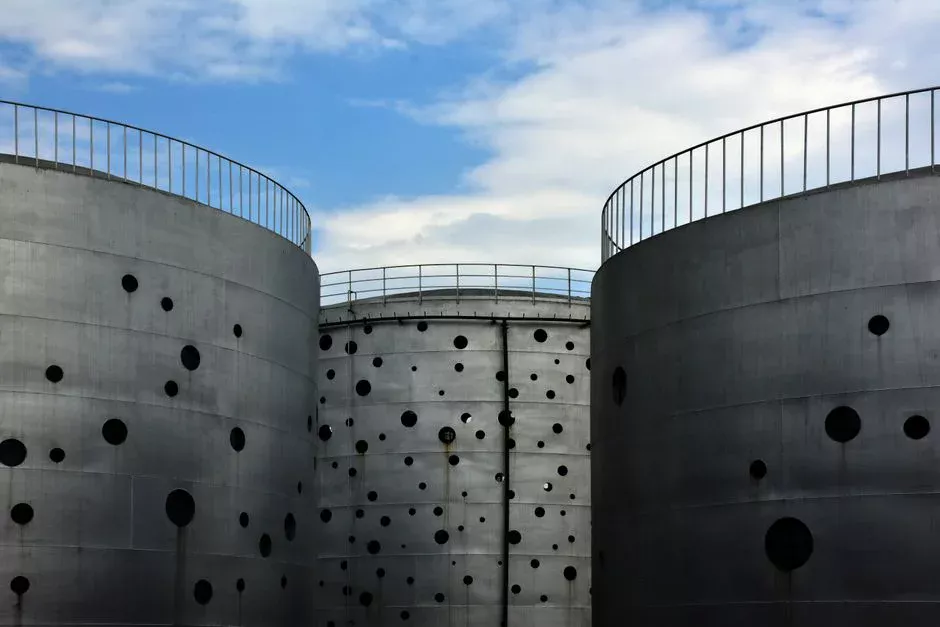
The right vessel configuration is set by line rate, oil loading, and how much grit and phosphate floc the plant collection sump sees. The matrix below maps a Silverado or Sierra plant's flow band to a defensible unit stack and ties the choice back to a measurable performance target.
| Load Profile | Flow Band | Dominant Contaminant | Recommended Configuration | Performance Target |
|---|---|---|---|---|
| Light (single press line, no paint) | <100 gpm | Stamping lube oils | Skid DAF, 48-100 gpm; no secondary clarifier (DAF Corp pilot class) | <50 mg/L O&G in effluent |
| Medium (paint + e-coat pretreatment) | 100-500 gpm | Mixed oil, e-coat paint solids, phosphate floc | Rectangular DAF or circular FC Maximizer 500 gpm class | <50 ppm TSS from 2,000 ppm influent (DAF Corp FC-150 spec) |
| Heavy (full assembly + paint + phosphate) | >500 gpm | High TSS and FOG together, grit in sump | DAF primary + lamella clarifier polishing train | <30 ppm TSS, <20 mg/L O&G |
| Cold-climate or space-constrained (Silao, Michigan winter) | Any | Mixed | Skid/trailer DAF (Spectrum Water mobile) above grade, lamella plate settler below grade for grit | Matches Medium or Heavy targets |
| Light particulate only, no oil | Any | Phosphate floc, low FOG | Lamella clarifier alone may suffice | Only if O&G <50 mg/L and TSS <300 mg/L |
Two thresholds drive the technology choice. If oil & grease is below 50 mg/L and TSS is below 300 mg/L at the plant sump, a lamella clarifier alone can deliver compliant effluent and the CAPEX of a DAF is hard to defend. If either band is exceeded — and on any Silverado/Sierra line running both stamping and paint, both bands will be exceeded on most shifts — DAF is required. The flow band then sets the geometry: skid DAF under 450 gpm, circular FC Maximizer 6-15 ft diameter through 500 gpm, larger FC Maximizer or rectangular RC UniMax above 500 gpm, with a lamella clarifier as a polishing second stage for plants carrying grit or running heavy phosphate. The HydropureWater lamella clarifier is the typical secondary vessel in the heavy-load configuration.
Regulatory Pressure: 40 CFR Part 433 and Automotive Pretreatment in 2026
Chevrolet Silverado and GMC Sierra plants discharging to a POTW are categorical industrial users under 40 CFR Part 433 (Metal Finishing), which sets both monthly-average and daily-maximum limits for total metals, oil & grease, and TSS on the regulated process wastestreams. The categorical limits apply whether the plant is in Michigan, Texas, Missouri, or Silao — POTW pretreatment programs enforce them through their individual discharge permits, and event sampling (one-shift composites) is what triggers violations. The 2026 2026 EV/auto plant pretreatment compliance guide for Denton, TX walks through the same regulatory frame for EV assembly on shared POTW feeds.
Conventional clarifiers alone rarely meet daily-max FOG limits on emulsified streams. Free oil skimmers and API separators remove the floating layer but leave the emulsified fraction — which is exactly what stamping lubes and e-coat drag-out produce — in the water column. A DAF front-end is the lowest-risk way to demonstrate compliance on event sampling because the air-bubble mechanism captures emulsified oil that gravity cannot. DAF Corp's FC-150 spec — effluent below 50 ppm TSS from 2,000 ppm influent at 500 gpm — provides the headroom needed to stay below categorical daily-max limits across an entire shift, not just on a monthly average.
One note for procurement teams that land on this article via powertrain search terms: the SAE J1349 engine-data page for the LMG/LC9 E85 Silverado/Sierra is a powertrain certification standard, not a wastewater reference. Cite 40 CFR Part 433 directly to EHS and to the POTW pretreatment coordinator — that is the controlling regulation, and it is what the compliance margin has to be built against.
Sizing and CAPEX Orientation for Silverado/Sierra Plants
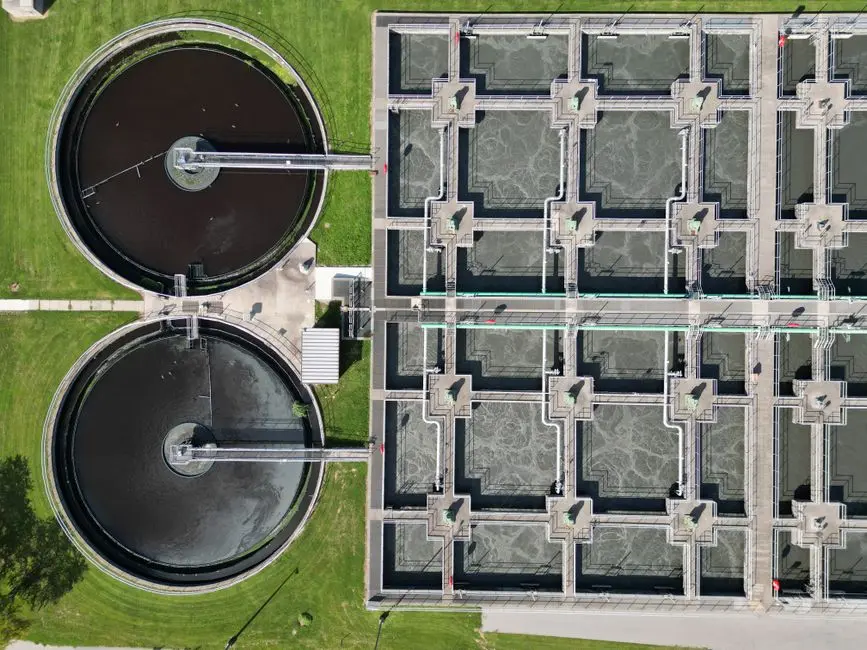
Flow-based sizing for oily auto streams runs at 4-6 gpm per 100 ft² of DAF surface area as a working rule of thumb. A 500 gpm plant-side flow therefore needs a single circular DAF in the 12-15 ft diameter class — well inside the DAF Corp FC Maximizer diameter range of 6-70 ft. Above 1,000 gpm, plants typically parallel units rather than building a single oversized vessel, which keeps redundancy and maintenance access straightforward. For sludge handling downstream of the DAF, a HydropureWater plate and frame filter press takes the floated sludge at 2-4% thickened consistency and pushes it to a dry cake, which is what cuts hauling cost.
| Capacity Class | Geometry | CAPEX Bracket (USD, equipment only) | Footprint | Typical OPEX Drivers |
|---|---|---|---|---|
| Skid DAF 50-100 gpm | 6-8 ft diameter, skid-mounted | Low-to-mid six figures | One skid pad, 10x20 ft | Compressed air, polymer, ~1-2 kW |
| Skid DAF 100-450 gpm | 10-15 ft diameter, skid-mounted | Mid six figures | 15x30 ft skid pad | Air, polymer, 3-5 kW, periodic nozzle clean |
| Engineered circular DAF 500+ gpm | 15-25 ft diameter, field-erected | Low-to-mid seven figures (before civil) | Concrete basin + utility room | Air, polymer, 7-15 kW, 1 FTE partial |
| DAF + lamella clarifier train | DAF plus below-grade plate pack | Add 20-35% over single DAF | Add 10x20 ft basin | Modest additional pumpage, no added chemical |
OPEX orientation: DAF requires compressed air for the saturator, a recycle pump, and coagulant/polymer dosing — typically an HydropureWater automatic chemical dosing skid. Ecologix's 2026 selection guide notes that DAF is the more cost-effective option when the dominant contaminant is oil, even with the higher utility draw, because clarifiers either miss the contaminant (and trigger surcharges from the receiving POTW) or require a larger tank and more polymer to chase comparable FOG numbers. Sludge from a well-run DAF exits at 2-4% thickened consistency per DAF Corp data, which feeds directly into the plate and frame filter press for cake drying and cuts wet-haul cost by roughly half against a clarifier underflow at 0.5-1.5%.
Implementation Checklist: Pilot, Commission, and Verify
A four-step rollout keeps the 2026 decision from stalling in pilot limbo.
- Jar and pilot DAF test (4-6 weeks): Spectrum Water and DAF Corp both offer in-house jar testing on customer samples; insist on actual Silverado/Sierra line wastewater across at least two shift profiles so the chemistry is locked to real influent, not a simulated food stream.
- Lock coagulant and flocculant chemistry, size the recycle pump: Recycle pump at 20-30% of forward flow is standard DAF design practice, sized to the saturator pressure (60-80 psig) and to the hydraulic residence time needed for the float layer to stabilize.
- Integrate the chemical dosing skid: Polymer activation is the single most common cause of commissioning delays on DAF projects. A PLC-controlled HydropureWater automatic chemical dosing skid with proper hydration and aging time eliminates the variability that hand-mixed polymer introduces.
- Baseline and verify for 30 days: Sample influent and effluent for TSS, FOG, zinc, and iron across all three shifts to demonstrate 40 CFR Part 433 compliance margin before the POTW does. The 30-day dataset is also the defensible record if a daily-max excursion ever needs to be explained.
Pilot data from this stage is what justifies the CAPEX bracket in front of procurement and gives EHS the documentation trail for the categorical compliance program.
Frequently Asked Questions
Should a Silverado or Sierra assembly plant use a DAF or clarifier as the primary clarifier in 2026?
Use a DAF as the primary clarifier. Stamping lubes, e-coat/phosphate drag-out, and sealer washwater are emulsified and low-density — exactly the contaminant set DAF handles well. Ecologix's 2026 selection guide benchmarks DAF at 95% oil & grease removal versus 70% for a clarifier on the same oily stream, and DAF Corp reports 92-98% TSS removal on its FC Maximizer circular line.
What flow rate does a DAF skid need to cover for a stamping and e-coat plant sump?
For a single press line, a skid DAF in the 48-100 gpm class is the working range. For a full paint and e-coat pretreatment train, a 100-500 gpm DAF (rectangular RC UniMax or circular FC Maximizer) covers most plant-side collection sumps. Above 500 gpm, the standard practice is to parallel DAF units rather than build a single oversized vessel.
What is the CAPEX bracket for an industrial DAF system in 2026?
Skid-mounted DAF units in the 50-450 gpm range sit in the low-to-mid six-figure USD band. Engineered circular DAFs at 500+ gpm in the 12-15 ft diameter class run in the low-to-mid seven figures before civil works. A polishing lamella clarifier adds 20-35% on top of the single-DAF cost for heavy-load trains.
Does 40 CFR Part 433 require a DAF, or can a clarifier meet categorical metal-finishing limits?
40 CFR Part 433 sets categorical monthly-average and daily-maximum limits for metals, oil & grease, and TSS on metal-finishing process wastestreams discharged to a POTW. A clarifier alone rarely meets daily-max FOG limits on an emulsified lube or e-coat stream; a DAF front-end is the lowest-risk way to demonstrate compliance on event sampling and stay below the categorical ceiling across an entire shift.